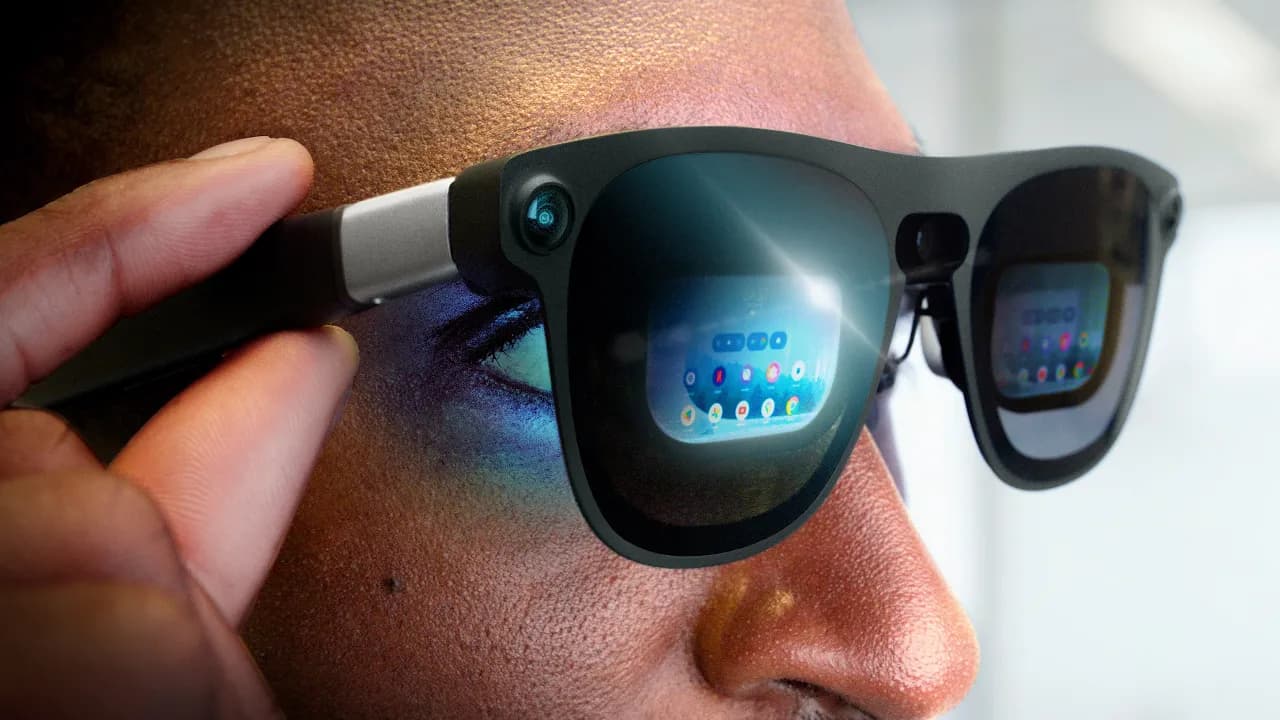
Meta VR Glasses: What Vision Pro 2 COULD Have Been!
In a Nutshell
Meta's 2026 VR glasses use a hybrid design with a separate compute puck containing the Snapdragon XR2 Gen 3, 12GB RAM, and active cooling, while the glasses themselves weigh only 100g with 70°×66° FOV micro-OLED displays. The system runs Meta apps, eye/hand tracking, and introduces surface-mapped virtual keyboards that provide physical feedback on flat surfaces. Priced at $1,300, these glasses position Meta between full headsets and everyday eyewear while Apple reportedly abandons Vision Pro development entirely.
These notes were generated by AI and may contain inaccuracies.
Meta unveiled new VR glasses in 2025 that will release in 2026. The glasses represent what Apple Vision Pro 2 could have been if development continued. Apple has reportedly stopped all Vision Pro development entirely.
Meta is pursuing both approaches to the wearable market simultaneously: starting with full VR headsets like Quest and working downward, while also building from glasses upward with audio-only and camera-equipped versions.
The new Meta VR glasses occupy the middle ground between traditional glasses and full headsets. They use video passthrough rather than see-through glass, so they function more like headsets than everyday glasses. The user would not wear them everywhere.
The glasses connect to a smartphone-sized compute puck via a removable cable. The puck contains the Snapdragon XR2 Gen 3 chip, 12GB RAM, 128GB storage, and a microSD card slot. It also includes an exhaust area and active fan system.
The puck can be clipped to a belt rather than kept in a pocket due to active cooling. The cable connects at both ends for easier repair and replacement. The glasses retain all motion tracking sensors, eye tracking, and passthrough cameras, with additional sideways and downward-facing cameras on the arms.
The hybrid glasses form factor reduces material and weight compared to closed-off headsets. It allows some ambient light to enter from top and bottom, creating a sunglasses-like experience. The official field of view is 70 degrees horizontal by 66 degrees vertical, which is less than typical 110-degree immersive headsets.
Magnetic rubber light blockers attach to the eyepieces for full darkroom experiences like movie watching. The micro OLED displays run at 2412 by 2288 per eye with up to 120Hz refresh rate. Magnesium frames and manual IPD adjustment reduce weight further.
The glasses weigh approximately 100 grams. Manual IPD adjustment uses a software-guided push-pull system without motors.
The glasses include eye tracking, hand tracking, Meta apps (Instagram, WhatsApp, Meta AI), and a web browser. Extended desktop functionality connects to computers for virtual triple monitors. Games are available but not the primary focus due to ambient light.
A new keyboard and trackpad feature maps virtual input to flat physical surfaces like desks. Users can touch type with physical feedback instead of air-poking, creating more satisfying interaction through surface mapping.
The glasses will retail for approximately $1300 in 2026. Meta continues developing multiple form factors while Apple reportedly pivots from Vision Pro to glasses development.
Keep Marques Brownlee in your library
Save the videos and channels worth coming back to, and find them again in one place.