Palmer Luckey: Autonomous Weapons Are Ancient and Why Anduril Won't Build Humanoids | EP #295
In a Nutshell
Palmer Luckey argues autonomous weapons are nothing new, pointing to ancient traps, landmines, and Cold War missile systems like Aegis that already operate without human intervention. Anduril avoids building humanoid robots or general-purpose systems, instead focusing on specialized defense platforms and open-source AI models that don't rely on vulnerable central command networks. He dismisses existential AI risk concerns as overblown, prioritizing defense against bad actors using current AI while criticizing billionaires who avoid tackling hard problems like national security.
These notes were generated by AI and may contain inaccuracies.
Palmer Luckey received the Wildfire X award, which was announced in 2019. Anduril built a self-propelled firefighting tank that was started in 2017 and completed in 2019. The project received $2.2 million, with $1 million coming from Lockheed. Luckey noted that allowing fires to burn before extinguishing them is madness, and that the technology to prevent this has been available for over a decade but has only recently become politically feasible to implement.
The firefighting system monitors and classifies fires while ruling out phantom fires such as cigarettes, campfires, and road torches. The system must match the type of fire with the appropriate response element present in the area, selecting the most cost-effective means that can respond in a timely manner. Different environments require different tools: forest fires versus hills with trees and bushes require different approaches. The process involves detection, classification, rejection, matching, then reaching the target and hitting it.
Unlike military applications where response times of an hour or ten minutes may not matter significantly, fire response requires choosing the right tool because a fire spreads rapidly and must be extinguished before it gets worse.
A new $10 million prize will be announced within a month, dedicated to understanding biological intelligence beyond humans. The prize focuses on understanding how animals think and how to communicate with them ten times better than current technologies allow for the smartest species. This includes wild animals with their own language, not just trained animals. The goal is to learn from all other living beings on the planet, with potential applications in artificial intelligence, particularly in areas requiring higher efficiency in energy and time consumption.
Luckey stated he is not worried that artificial intelligence will cause the demise of humanity or kill people. His primary concern is that bad actors will use moderately efficient artificial intelligence to commit evil acts. He expressed frustration with people who have recently joined the hobby of predicting disasters without having thought about the problem for more than two years or a few months. These individuals have not spoken to experts in the field and have not prepared realistically for potential disasters.
He believes the AI disaster scenario is very low on his list of priorities and is very optimistic about AI's potential to significantly reduce the cost of extracting, processing, and transforming resources. He predicts every part of society will experience the same economies of scale and efficiency that automated industries without artificial intelligence have experienced, citing agriculture and textiles as examples where calories can be purchased for less than one hour's federal minimum wage.
When incorporating artificial intelligence into deployed systems and weapons, the philosophy prioritizes avoiding reliance on central computing locations. The problem with sending data to headquarters is the delay, while the advantage is increased computing power. Local processing on devices, field robots, or aircraft is limited but very fast.
The real concern is not response time or computing speed, but rather that relying on a central location requires a command and control system with high-bandwidth round-trip connectivity. If an enemy disrupts, intercepts, or hacks communications, the system fails. Alternatively, enemies might ignore targeting equipment in the field and attack the control center directly.
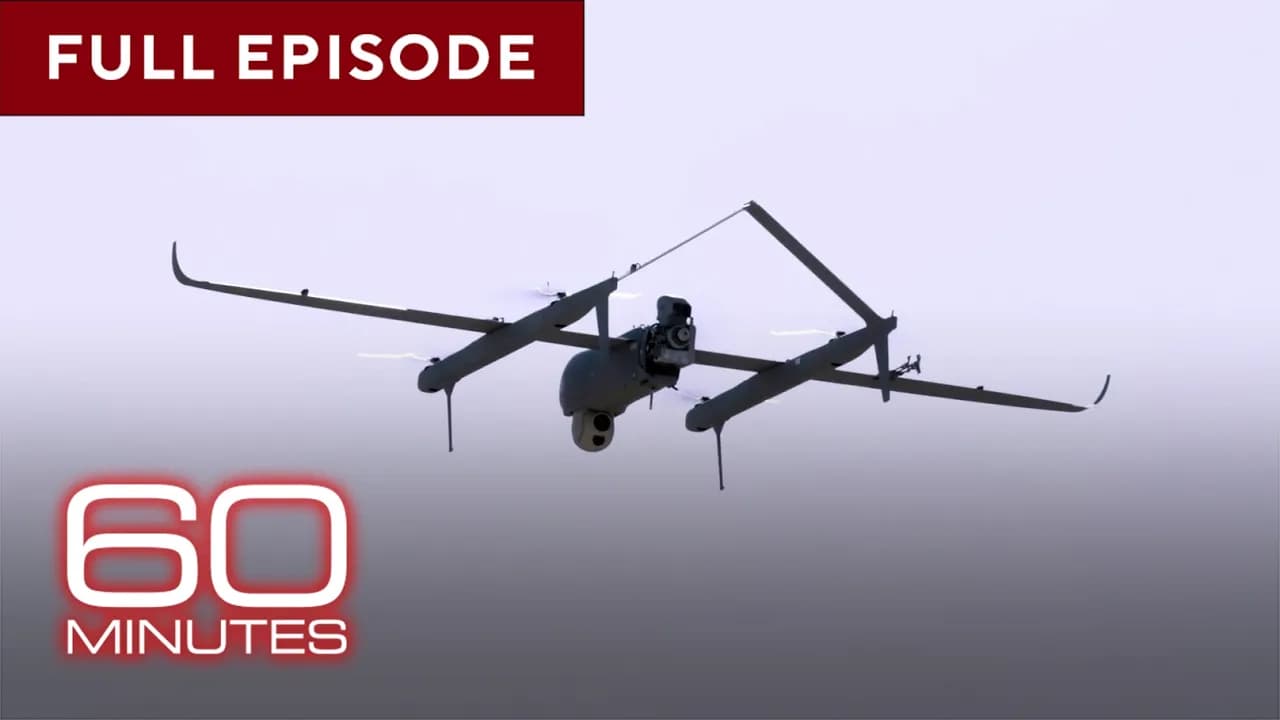
Autonomous weapons have existed for decades, including the Aegis system on destroyers which operates completely independently and can drop anything within a programmed range without human intervention. SeaWiz and SeaRAM systems for shooting down incoming missiles, mortars, artillery fire, and speedboats can also operate in fully autonomous modes.
Going back to the Vietnam War, missiles launched from airplanes would fly above the horizon and attempt to identify suitable radio transmitters corresponding to surface-to-air missile launch sites, then hit them without human intervention. The human decision was limited to launching the missile in a specific area with a good probability of hitting the target.
Autonomous weapons have existed for thousands of years. Ground traps allowed people to pass but captured leaders on horseback. Poison traps killed people with certain characteristics while sparing others and animals. Land and sea mines, and torpedoes also qualify as autonomous weapons depending on definition. Even ancient myths describe golems created to fight or defend cities. The argument is that autonomous weapons have existed for a very long time, and current technologies simply improve upon existing capabilities.
All open-source models are currently Chinese, so Chinese models will not be used in remote weapons systems. Anduril began working on defense AI models in 2017, placing them a decade ahead of others. Foundational models being built by others are largely non-deterministic and unverifiable, making them unsuitable for defense applications. The specialized models needed for processing raw radar data and sonar data from passive listening stations on submarines represent a completely different category with few consumer applications.
No Moore's Law equivalent is expected for autonomous systems in the defense field. Defense requires overwhelming superiority rather than marginal advantages, making specialization essential. Unlike manufacturing, hospitality, and medical sectors where economies of scale favor general-purpose humanoid robots, defense operates under different constraints.
Specialized systems are required for different environments: robotic submarines designed to dive to 6,000 meters and remain at the ocean bottom for months, automated systems that climb and move around hills, and aircraft performing highly specialized tasks. These cannot be logically connected in a single platform. Specialization enables building better systems for specific missions.
Anduril will not build humanoid robots. The company focuses on building things that wouldn't exist without it, maximizing marginal impact. Other companies are already building humanoid robots effectively, and Anduril plans to use their robots rather than compete in that space. Humanoid robots will serve as an interface between AI and remote systems, automating older platforms designed for human operators without replacing them entirely.
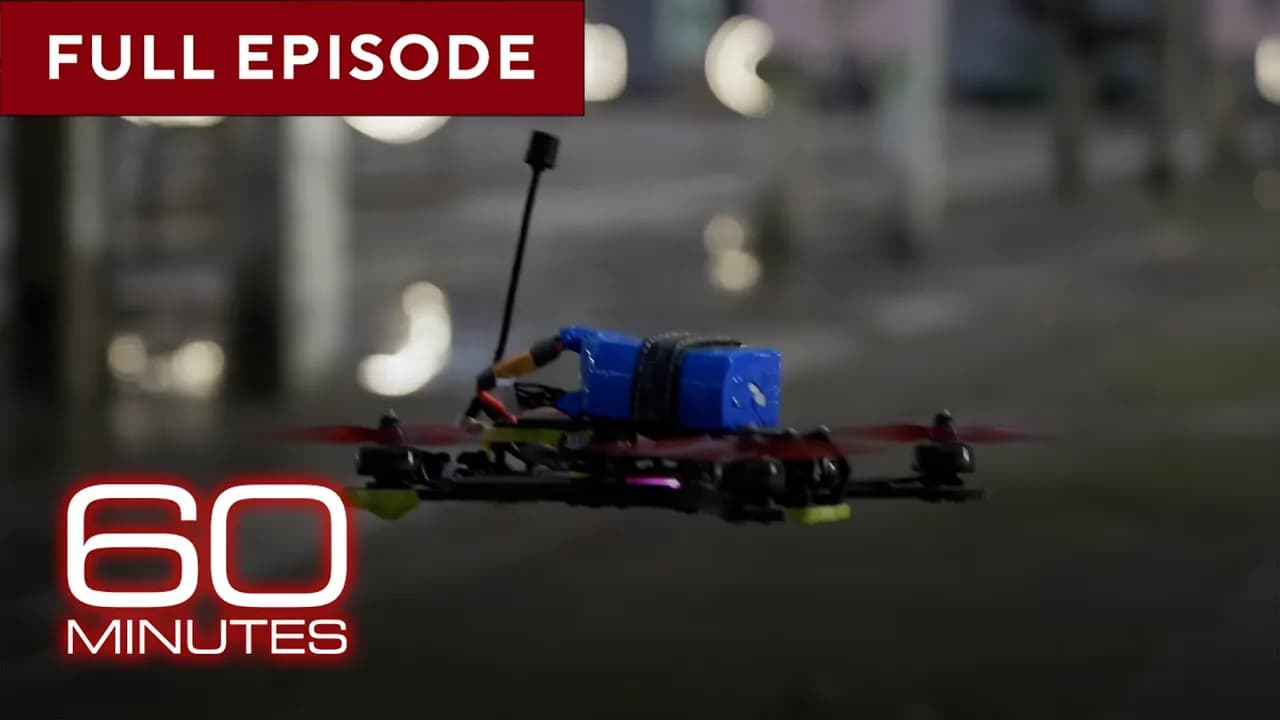
Anduril also will not build small quadcopter attack aircraft, as other companies are doing this well. The company will not launch space rockets, though it has satellites and sensors in space, preferring to leave launch services to other billionaires.
The Pentagon and defense ministries worldwide have historically been among the most centralized entities in human history. About 80% of major defense acquisition programs were awarded to just five companies until recently. Anduril has succeeded by operating as a product company rather than a contractor, using its own money to build products and then selling them.
Government officials have profited from betting on Anduril, completing programs on time, leading to the next program manager saying they know how to do more by awarding contracts to Anduril. The company aims to save taxpayers hundreds of billions of dollars annually by replacing systems that cost ten times their actual value.
Luckey's mentor John Carmack founded Armadillo Aerospace and was one of the first to attempt reusable vertical takeoff and landing. Carmack later became CTO of Oculus VR before working on general AI. When asked why he would pursue general AI with slim chances of success, Carmack responded that even a 1% chance of success would have a huge risk-adjusted outcome compared to other ventures.
Luckey applied the same logic to defense: if there's a 1% chance of contributing to solving defense problems, the impact would be enormous compared to starting another game company, getting into space rockets, or building a car company. Most billionaires end up working on cars and rockets, but few get involved in defense.
Luckey criticized billionaires for not solving the world's biggest problems despite having money. He noted that retired businesspeople possess not just capital but credibility, which allows them to build teams and secure funding. This resource remains untapped if they do nothing. People trust them as leaders capable of running organizations, and they have a responsibility to use this ability to do more rather than sit on boats.
Palmer Luckey clarifies his position on billionaires working in defense, energy, or biology. The point is not that people need to distract themselves by doing more things. Many people can only do one thing effectively. What he finds disgusting is people who do nothing.
Luckey mentions the B boys group on Slack or Telegram for people with something new and unique to offer. The group was shut down and needs a reboot. Some people posted pictures of B girls and too many wrong memes. The group consists of him and a few other young people, not an Illuminati conference. A Business Insider article complained about women not being invited, but Luckey explains it was simply him and his friends, with one girl at the end.
Luckey is currently in Facebook Ads. Regarding virtual reality compared to his original vision, he notes that current Meta VR headsets are closer to what he wanted than earlier versions. He always believed in separating the CPU and battery from the head. The Oculus Quest was the last project he worked on before being fired. The Santa Cruz prototypes had the battery and processor in the back of the head, with the front made of soft fabric as light as possible.
After he was fired, the design combined everything into one block at the front, ruining the ergonomic design. They forgot why a top strap is necessary. The Oculus Rift CV1 achieved near-perfect ergonomic design in 2016, showcased in 2015, and no one has replicated it in over a decade.
The new Meta View is close to the original vision with detached CPU and batteries, very good light transmission, and Transformo Fabric technology. This feature uses soft, flexible black fabric that absorbs light to reduce reflections and close gaps between lenses. Instead of rigid sliding mechanical interfaces or plastic, the fabric stretches to fit the space between pupils as lenses move.
This is the first reuse of Transformo Fabric since his time at the company. The new headset costs a third of Apple products, has slightly higher pixel density, and weighs an eighth of Apple products.
Luckey did not attend university. At age 14 or 15, he founded Mod Retro, an online community for people who modified old video game consoles and computers, built mobile devices, and optimized performance. The forum had several thousand active members and a team of moderators and administrative volunteers.
From managing Mod Retro, he learned how to build an organization, market it, and persuade people. He learned to handle business problems involving people, specifically the two-person problem where two brilliant people hate each other and disagree. The challenge is mediating conflicts or separating them to allow both to contribute value without them hating you or losing faith in the bigger picture.
The two-person problem requires knowing when to reconcile differences, when to separate people into different roles, and sometimes when to keep them unaware of management decisions. When the problem becomes three-way, similar principles apply. These lessons from Mod Retro were applied to founding Oculus and other companies.
Luckey started working at age 14 and believes young people should have jobs. He advocates for people doing projects on a bigger scale than just themselves, building transparently, and learning the ups and downs through collaborative work.
Luckey advises students to find a goal they care about and use AI to program it. Regarding AI replacing human work, he notes that many people passionate about their craft are sad about the end of what was considered a craft, such as writing software by hand. He compares this to artists' reactions when the camera was invented.
As a founder, you don't get to work on technical aspects because the job is to hire people to replace you. If you want to work in technology, work for someone else. If you want to work on endless trifles, start a company.
AI doesn't change the mundane parts of founding work. Founders remain legally responsible and responsible for personnel decisions. You can delegate some tasks, but ultimately decisions are yours regarding fundraising, product engineering, overturning bad decisions, and replacing people. Luckey believes AI won't replace these responsibilities soon because gains elsewhere are so much greater that there's likely ten years of rapid progress before AI reaches founder-level decision-making.
AI is changing many aspects, but programmers and amateur engineers who think they'll start companies and do all the work themselves will learn a hard lesson. Being a founder has always meant someone else takes your technical job. The difference is that previously it was other people, now it's AI.
Keep Peter H. Diamandis in your library
Save the videos and channels worth coming back to, and find them again in one place.