“No One Owes You Patience For Having A Hard Day”
In a Nutshell
The core message is that no one is owed patience or special treatment for having suffered disadvantages—pain doesn't earn automatic merit or immunity from criticism. True equality means being held to the same standards as everyone else, rather than protected by identity-based empathy or victim status. Blaming external factors keeps you powerless; the only useful path is taking responsibility and acting anyway despite hardship.
These notes were generated by AI and may contain inaccuracies.
Nobody owes you patience just because you've had a rough upbringing or a hard day. Life doesn't hand out pity passes. Use your pain as fuel, not a crutch. You don't build psychological resilience by feeling good all the time. You build psychological resilience by getting better at feeling bad.
The statement would not have been postable between 2016 and 2022 without cancellation or accusations of white male privilege. There are genuine victims who have genuinely suffered unfair circumstances not of their own fault and those people deserve sympathy, but they don't necessarily deserve anything more than that.
A very intense period occurred with entitlement associated with victimhood, described as the victimhood Olympics. This appears in super lefty groups where individuals compete by stacking identities such as abused indigenous person of color who grew up with three legs, then abused transsexual indigenous person with one leg, then adding gluten intolerance. The competition becomes about whose voice carries more weight based on accumulated victim status.
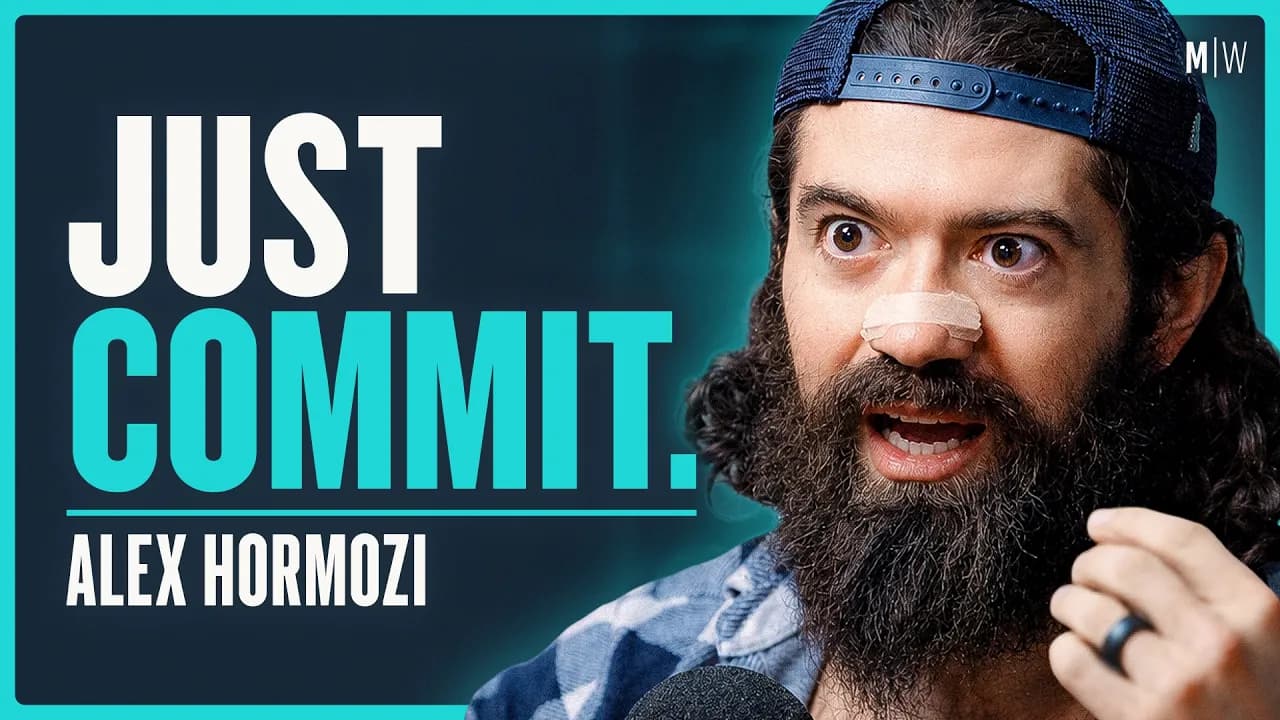
Pain cannot be measured daily as if it earns merit badges. Alex Hormozi got in trouble for saying nobody owes you patience just because you've had a rough day or hard upbringing.
Hormozi wrote: If you had disadvantages, it is harder to be successful if X happened to you, where X can be replaced with gender, race, birth deformity, different language, different country, abuse, etc. Despite the disadvantage, you only have one choice: what are you going to do about it.
Option one: take action anyway and become proof to other people like you, born into the same abused tragedy, that you too can overcome it. Option two: blame and complain. Only one decision will make you better.
The people who win by you not being successful are whoever and whatever you blame. You can lead a rebellion of one and blame the one thing you can control, which is you. Redefine the word blame as give power to. When you do that, there's only one person you're going to want to give more power to and that's you.
For everyone who had shitty circumstances, the long-term side is the side that wants you to win. Do it anyway with all the disadvantages and still tell them to shove it and win. If you had tough shit happen to you, it sucks and that's not your fault, but now what? Where do we go?
Creating any goal and degree of obligation can make people who feel that's out of reach for a reason that isn't their fault feel like they are being made to pay twice for something that hurt them. This makes communication clunky.
The middle 90% minus the two fives on the end are unrealistic to have thought about, yet the assumption is that the only way to be caring is to include all people rather than speaking to a very specific cohort.
Empathy becomes completely disingenuous when it is based strictly on the color of their skin, gender, and sexual orientation, which is exactly what they don't want to be empathized for. The whole strategy is backfiring.
True equality is when you have to put up with the same level of shit that everybody else does. If you want to be properly included, the most inclusive society is to not be treated with kid gloves. Being treated differently because someone thought you couldn't handle it is a kind of bigotry and patronizing cotton wool gentleness.
When it comes to including people in discourse, true equality is when you put up with the same level of shit that everybody else does. This does not mean pushing the person who's only just started training at the same level as a professional athlete, but when it comes to discourse, the standard applies.
In Sydney, James made a joke about being racist against Italians because he loves the food but still doesn't like the people. A woman piped up and said more care was needed because the judgments were making people uncomfortable and exclusionary.
In Brisbane, a sign language interpreter was present on stage for all shows. A segment about Freud's obsession with moms with dicks required the signer to interpret everything, making the signer uncomfortable. After the show, a woman chastised the speaker for transphobia and lectured about moral responsibility because of having a platform.
The crowd instantly started booing her. The response was that if something is so fragile it can't even be spoken of or laughed about because it needs extreme protection, that is not a quality, but actually the opposite of a quality.
Keep Chris Williamson in your library
Save the videos and channels worth coming back to, and find them again in one place.