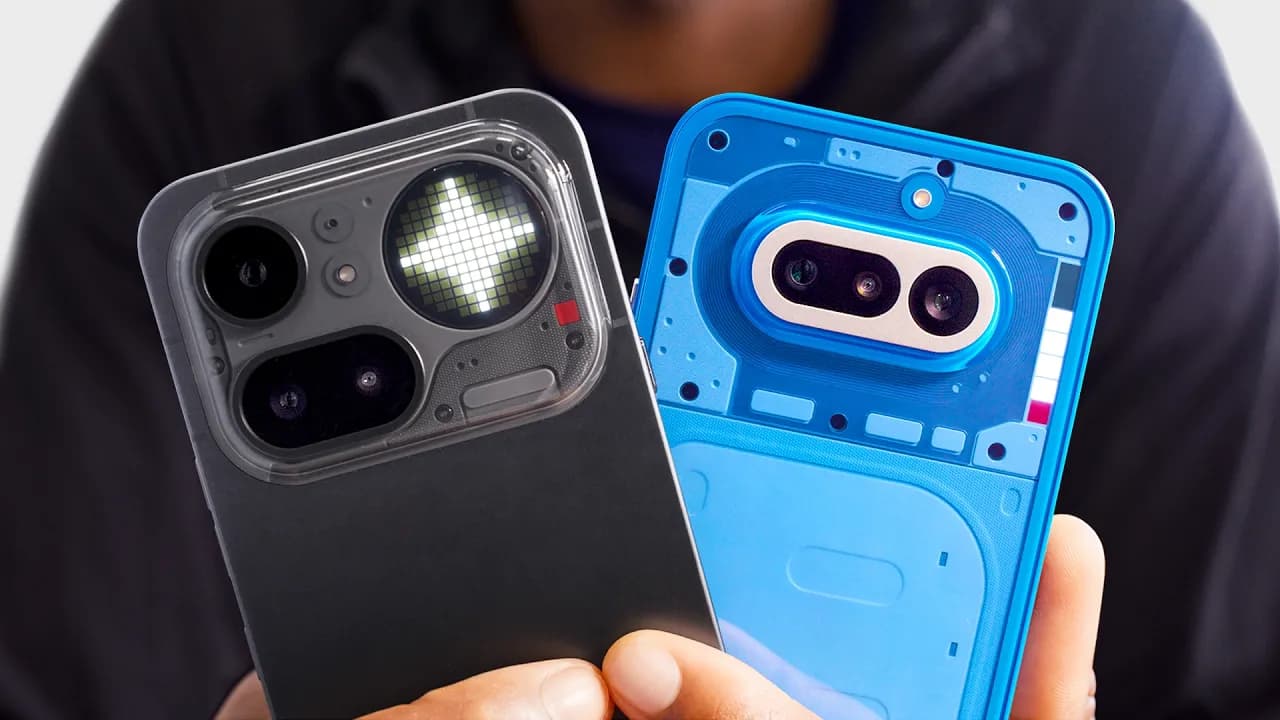
Nothing Headphone 1 Pro: They Copied the Wrong Thing!
In a Nutshell
Nothing Headphone 1 Pro delivers premium design, excellent physical controls, and versatile dual-mode sound with a switch between V-shaped entertainment EQ and neutral flat mode for critical listening. ANC performs well due to strong ear cushion sealing, but sound quality lags behind Sony XM6 and AirPods Max in bass punch and instrument separation. The $400 headphones are ultimately undermined by a terrible non-folding case that doesn't protect the headband and lacks pass-through charging.
These notes were generated by AI and may contain inaccuracies.
Nothing has entered the super premium $400+ active noise cancelling headphones market. This is territory dominated by Sony Mark 6's, Bose Quiet Comfort Ultras, new Beats 360s, and AirPods Max. These are headphones where users expect the best of the best with no major flaws. The Nothing Headphone One Pros cost $400 and represent the company's most expensive headphones to date. The review indicates they get many things right while making one huge mistake by copying the wrong thing from the competition.
The design is described as an evolution of previous Nothing products with refinements. The headphones maintain the cassette tape square shape and transparent aesthetic that has become a Nothing trademark. Materials are premium throughout with super soft ear and headband cushions, aluminum frames, titanium arms, and 9H panda glass on the sides to see inside. The glass does not show the actual drivers but creates a cool visual resemblance to speaker drivers. The design includes textures and text throughout.
The headphones are on the heavier side, weighing somewhere between all-plastic competition and the AirPods Max, which are described as ridiculously heavy. The red box on the right side features R for red and R for right, which is noted as clever. Fingerprint gathering on the glass is identified as the main annoyance.
The physical controls on the right ear cup are identified as the best in the headphone space. The rocker and roller system includes a roller on top that moves forward or backwards to adjust volume, and also functions as a button for play/pause with a single press or ANC on/off with a long press. Below the roller is a paddle that serves as forward/backward track buttons and can scrub through media apps when pressed and held. A single button on the outside of the right ear cup triggers the voice assistant by default.
More hidden buttons include the Bluetooth pairing button on the inside of the right ear cup and a new switch on the inside of the left ear cup labeled flat at the top left.
When evaluating headphones, the target demographic must be considered. The Sennheiser HD600's are reviewed for neutrality and flat sound signature for critical listening, while the Beats 360s are evaluated for music, movies, and travel use. These Nothing headphones attempt to serve both purposes with out-of-the-box sound that can be adjusted via EQ, plus a flat EQ switch that cuts all audio processing and coloration for hearing the original track without enhancements.
The headphones dropped the KE audio partnership from previous models and moved to a triple driver setup with three drivers in each headphone. The configuration includes one big bass driver handling 10Hz to 10kHz, a midsize precision driver covering 5kHz to 15kHz, and a treble driver handling 10kHz to 40kHz.
The sound signature is described as a classic very V-shaped EQ with plenty of bass, distinct mids, and bright highs. The overall sound is colorful with the full frequency range. The two biggest weaknesses identified are punchiness and precision of the bass, along with instrument separation. The bass is present but not as responsive or punchy, described as like hitting a drum with a mitten over it. Instrument separation was notably weaker than Sony XM6s and AirPods Max, with sounds described as more muddied together.
Overall sound quality is rated at approximately a 7 out of 10 when the competition is rated at 9.
The flat switch removes all processing with the EQ literally disabled. The sound changes from V-shaped to a more neutral character with less contrast and less bass. This mode removes the option for transparency mode but maintains noise cancellation functionality. The change is compared to switching from viewing video with a Rec.709 LUT to watching in log format, revealing extra detail in shadows and highlights.
Some music was found to be more enjoyable in flat mode, possibly due to familiarity with the Sennheiser HD600's neutral signature. The mode provides more evenness throughout the frequency range.
The Nothing app EQ has been significantly improved with 8 bands maximum, but now allows exact frequency selection for each point, granular control over band width, and precise adjustment of each frequency range. Additional custom EQ presets are available for different genres and listening experiences.
The noise cancellation is identified as potentially the favorite feature. It effectively removes mid-frequency office sounds like keyboards, voices, and furniture movement better than AirPods Max or Sony models without being uncomfortable. The performance is attributed to the excellent seal created by the cushions rather than software alone. ANC performance is rated at approximately 8 out of 10 when Sony's is rated at 9.
Call quality using the 10 microphones is described as perfectly average. Transparency mode has been significantly improved from the previous generation, sounding less muffled and more natural rather than like talking into a can or sweater. This improvement means less need to remove the headphones when talking to people.
The headphones use Bluetooth 6.1 for fast pairing and support multipoint connectivity for two devices simultaneously. Battery life is rated well over 30 hours with active noise cancellation, which is technically slightly downrated from previous models. The IP52 rating allows for workout use and sweat resistance.
The case design is identified as the single major flaw. The headphones do not fold, requiring users to flip them over to fit into a hard shell plastic case. The case is described as cheap fingerprint-collecting plastic that clamps shut like a cheap Lego set. The build quality is poor with visible hinge wiggle after only one week of use. There is no pass-through charging, requiring the case to be opened to charge the headphones. The top band remains unprotected when stored, making it prone to catching on items in bags. The case is described as the worst headphone case encountered, with no positive attributes identified.
The headphones offer dual-purpose functionality with a switch between fun listening mode with decent bass and extensive EQ customization, and flat mode for critical listening. This addresses a specific need for users who require both entertainment and editing capabilities in one device. However, the principle that two-in-one devices are rarely optimal at either function applies here.
At the $400 price point, dedicated alternatives like the Sony Mark 5s (available for approximately $300) offer better sound quality, superior ANC, and folding design. For reference listening, numerous neutral options exist under $400. The headphones' strength lies in providing a switch between two headphone types, combined with nice design and excellent controls. The case design is explicitly not respected while everything else receives respect for execution.
Keep Marques Brownlee in your library
Save the videos and channels worth coming back to, and find them again in one place.