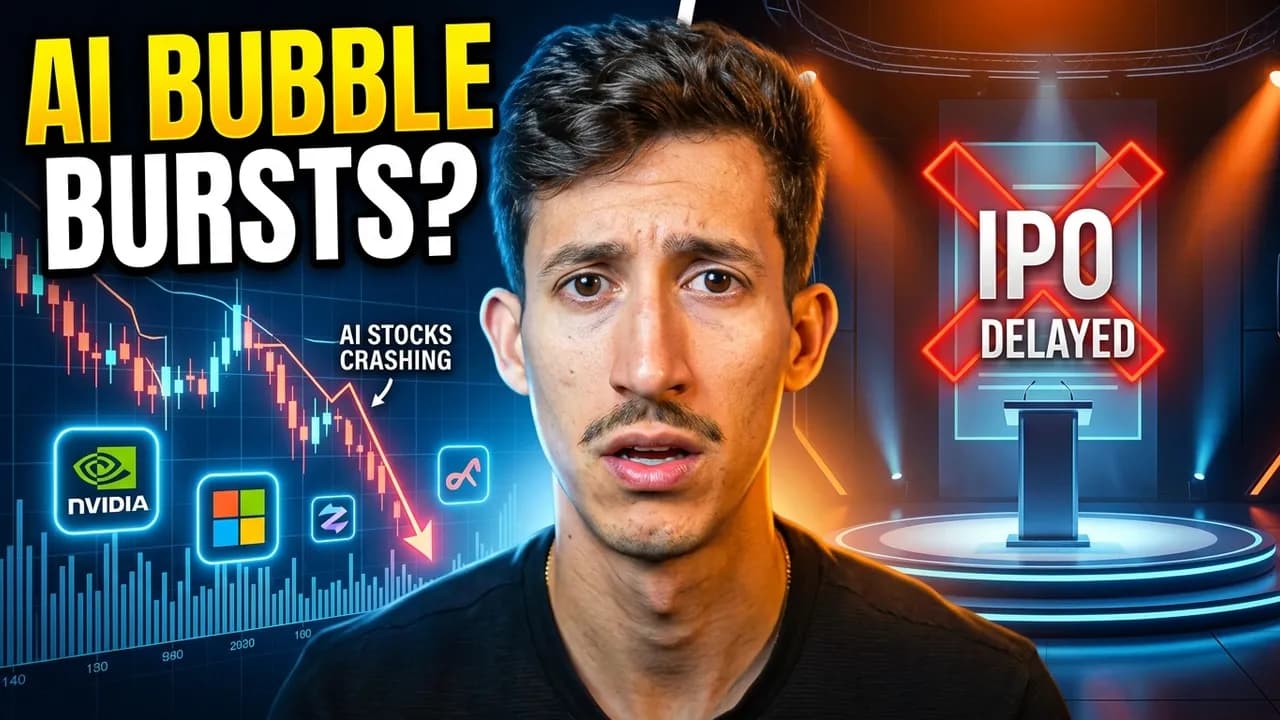
OpenAI Dev Day was... meh
In a Nutshell
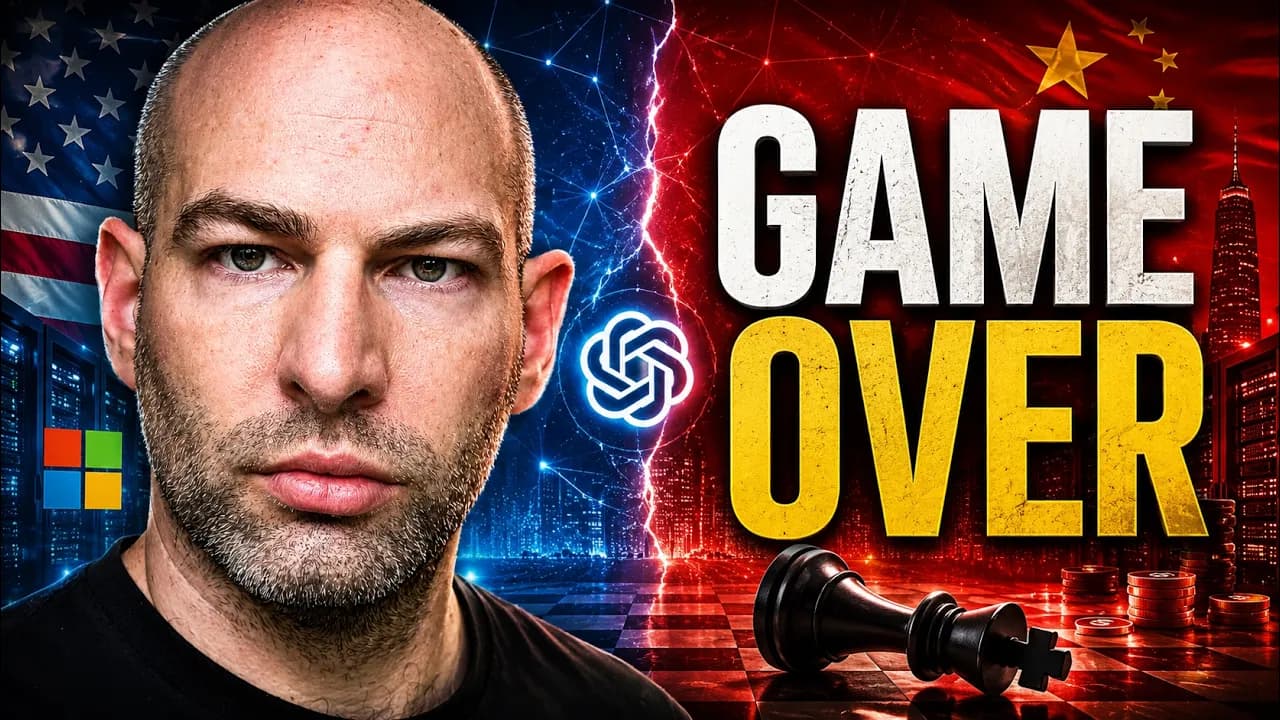
OpenAI's Dev Day was underwhelming, delivering incremental improvements rather than breakthrough innovation while facing intensifying competition from Meta, Google, and others. The speaker argues that OpenAI and Anthropic's massive losses are unsustainable, predicting their token-selling model will collapse as hardware companies like Nvidia enable local inference and models become commoditized. Hardware companies will ultimately capture the real value, as the market shifts from renting AI access to owning the chips that run it.
These notes were generated by AI and may contain inaccuracies.
OpenAI held its developer day at the time of recording. The event wasn't disappointing but wasn't impressive either. They announced Soul 6.1, Super Speed mode, and other features, along with promises of twenty new releases. However, these weren't really new developments. The event featured many improvements aimed at developers and was more polished than previous iterations.
The speaker believes OpenAI and Anthropic are particularly panicked following the developer day. Immediately after the event, leaders of major corporations signed a promise of self-regulation with Trump. This means Dario lost and the safety team lost. Instead of regulating, the US government said categorically: "No, we will not regulate. Let the market solve the problem. Let the Ministry of Justice solve the problem. Leave it to the courts to sort it out, and you need to figure out how to build this safely and move forward as quickly as possible." The speaker interprets this as the companies being aware they will not gain organizational dominance and that China will continue to introduce open-source models.
The dominance OpenAI and Anthropic enjoyed over the past two years faces increasing competition. Cloud appeared in 2024 and is gaining more adoption in companies while remaining at a lower level depending on the metric. Additional competitors include Group with SpaceX artificial intelligence, Grok, and Meta with Muse, which became very popular. Google has Gemini with leaks suggesting Gemini 4 Pro might be coming soon and could potentially outperform Astra.
Tipo, a person at OpenAI who constantly distributes resets, has written ridiculous tweets in the past few days that have destroyed his prestige and credibility. ChatGPT Pro implemented the same approach as Anthropic, informing users they're getting way less than they pay for, which has made many people extremely unhappy.
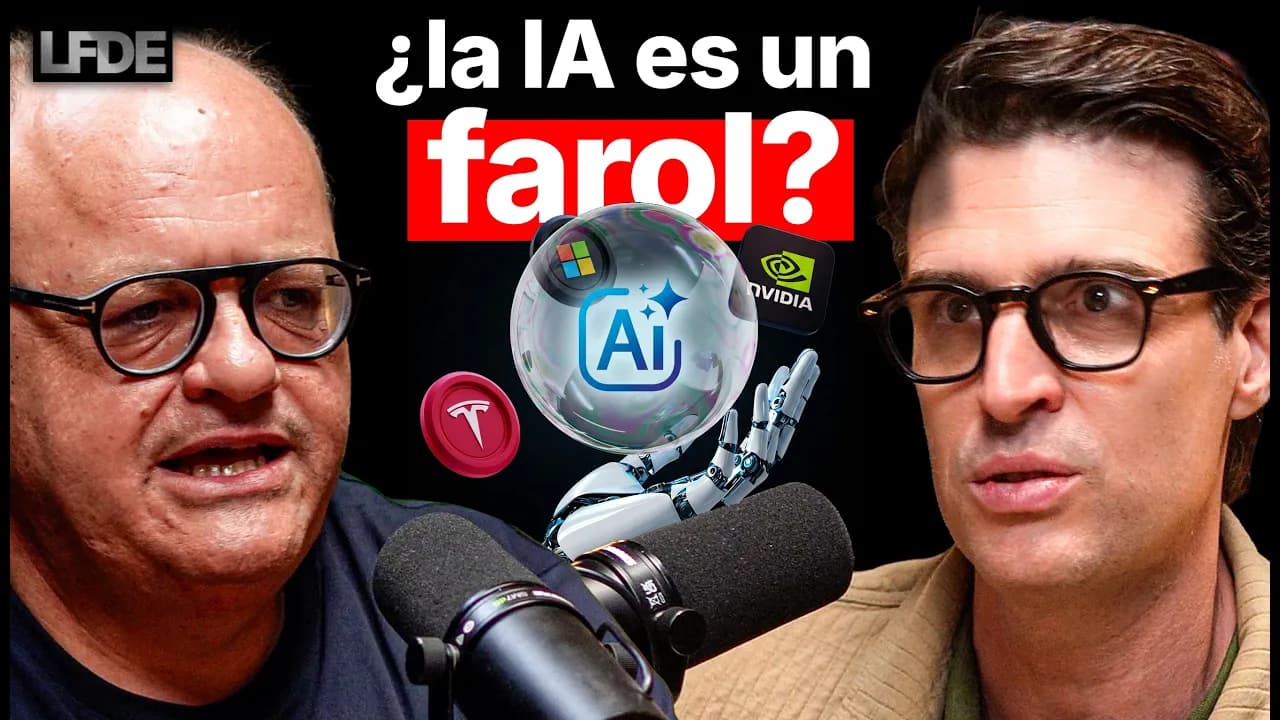
Both OpenAI and Anthropic operate at a loss, meaning the tokens users receive are heavily subsidized. Users don't pay for the value they receive. If users actually had to pay for those tokens, it could mean these AI services become less expensive. A statistic circulating indicated all AI companies would need to make $6 trillion a year by 2030 to justify all the data center construction. The speaker notes this doesn't seem like much, though others point out it's $1,000 per person per year. However, this revenue won't come just from subscriptions from ordinary people - most will come from corporations, governments, and militaries.
Only about 1.5% of people in America have a paid AI subscription, or even less - possibly around 3%. Reddit and other investment communities are laughing at Anthropic's IPO filings because while revenue has skyrocketed, they're operating at a loss of $46 billion. The speaker notes that a technology company going public with a valuation of hundreds of billions or trillions while still losing money is not unique to Anthropic and OpenAI. The real question is how to make margins sustainable in the long run.
The speaker believes Nvidia, TSMC, ASML, Intel, Qualcomm, and AMD will be the true backbone of AI development. These companies will save the situation because they know demand for artificial intelligence exists. The demand for more intelligence, more models, more code units, and better, faster, smarter AI is present, which requires chips, data centers, phones, laptops, graphics processing units, desktop computers, and servers.
The speaker doesn't see the point in selling tokens since selling tokens essentially means renting a graphics processing unit, making companies middlemen. From an economic standpoint, intermediaries are ultimately eliminated. In a few years when Nvidia produces more GPUs and models can run locally, users won't buy tokens or rent GPUs in the cloud - they'll buy a GPU and get unlimited tokens at home. Hardware companies expect models to become a public good, with devices being the cornerstone of the matter.
A company that loses tens of billions of dollars every year does not have a long-term future according to how the real world works. While companies like Tesla and SpaceX lost money for 10 to 15 years before achieving success, the question is whether such a timeline is viable for AI companies. The speaker expects the ultimate future for Anthropic and OpenAI might be a merger into a larger company. If Nvidia releases an open-weight model that works locally on its devices and is better and cheaper, Nvidia will make a fortune while companies relying on token sales could collapse.
Mandy Rowe appears as the star of the show. The dog is half Carolina and half husky, which explains why she has evolved to be very independent and very stubborn. She often does what she wants and was on time out earlier, which is why she's behaving well during the recording.
Keep David Shapiro in your library
Save the videos and channels worth coming back to, and find them again in one place.