"The window has closed"
In a Nutshell
IPOs from SpaceX, OpenAI, and Anthropic have normalized the AI industry and shifted the narrative toward America’s permanent lead, with Fable/Mythos-level models creating compounding returns that leave China and Europe behind. Satya Nadella argues that simply selling ever-cheaper tokens is unsustainable; the real value lies in owning the software, data loops, and applications built on top of that infrastructure. As a result, Microsoft’s future hinges on whether it captures those higher layers or gets displaced by companies turning raw model output into concrete products.
These notes were generated by AI and may contain inaccuracies.
SpaceX went public with their IPO, followed by OpenAI and Anthropic filing for their respective IPOs. Nothing has structurally changed in the bigger picture regarding where data centers are located or where models are developed, but the vibe and narrative have shifted significantly.
Two articles went heavily viral on Twitter. One was written by Satya Nadella and the other by Andrew Kuran. The article by Satya says that selling tokens isn't enough and that companies need an ecosystem and learning loops in their organization. People are interpreting this in different ways, with some thinking it means he's afraid of OpenAI. Elon Musk famously said that OpenAI is going to eat Microsoft.
Andrew Kuran's article states that the ship has sailed and the window has closed for nations trying to dominate AI, essentially declaring that America has won the race. The instigating event for him was the release of Fable or Mythos, which he sees as representing a tipping point. Once a country has Fable-level technology or Mythos-level technology, the compounding returns are going to accelerate. Because China and Europe don't have this technology, they are going to fall further and further behind, making it game over for them.
When OpenAI, Anthropic, and SpaceX all go public, artificial intelligence and the fourth industrial revolution become normalized. These companies are no longer private secretive startups in the Silicon Valley Bay area. They are now publicly traded companies joining the NASDAQ and joining the S&P 500, which means AI development is no longer hypothetical and no longer about whether someone is an insider or not. The companies are now trading on Wall Street.
Satya Nadella is criticizing companies that sell tokens only. A thought experiment illustrates the economics: if potatoes sell for 85 cents a pound this year, then 8.5 cents a pound next year, and then .85 cents per pound two years from now, that is what's happening to the cost of tokens. The cost per token is going to continue to go down dramatically.
The amount of tokens that humanity wants and needs is millions if not billions of times higher than the tokens available today. The demand for AI tokens is going to continue to rise. The question becomes who makes the tokens and who actually produces them. If potatoes are dropping in price but everyone wants potatoes, then instead of selling potatoes directly, the better business is to sell the tools that make the potatoes. This is essentially what Satya Nadella is saying.
OpenAI and Anthropic are going to generate infinitely more software than has ever existed. Microsoft is fundamentally a software company, though they also have cloud and Xbox gaming. Their bread and butter is software. If OpenAI and Anthropic function as software fire hoses, then Microsoft may need to get out of software. The question becomes what's actually valuable.
Tokens are like paying for electricity. People pay for electricity, but what matters is what the electricity does. The tokens are not the point. The point is the cancer research, the software, and the applications built on top of the infrastructure. Selling tokens is not in and of itself a business model of the future. It's just a utility. It's just an infrastructure.
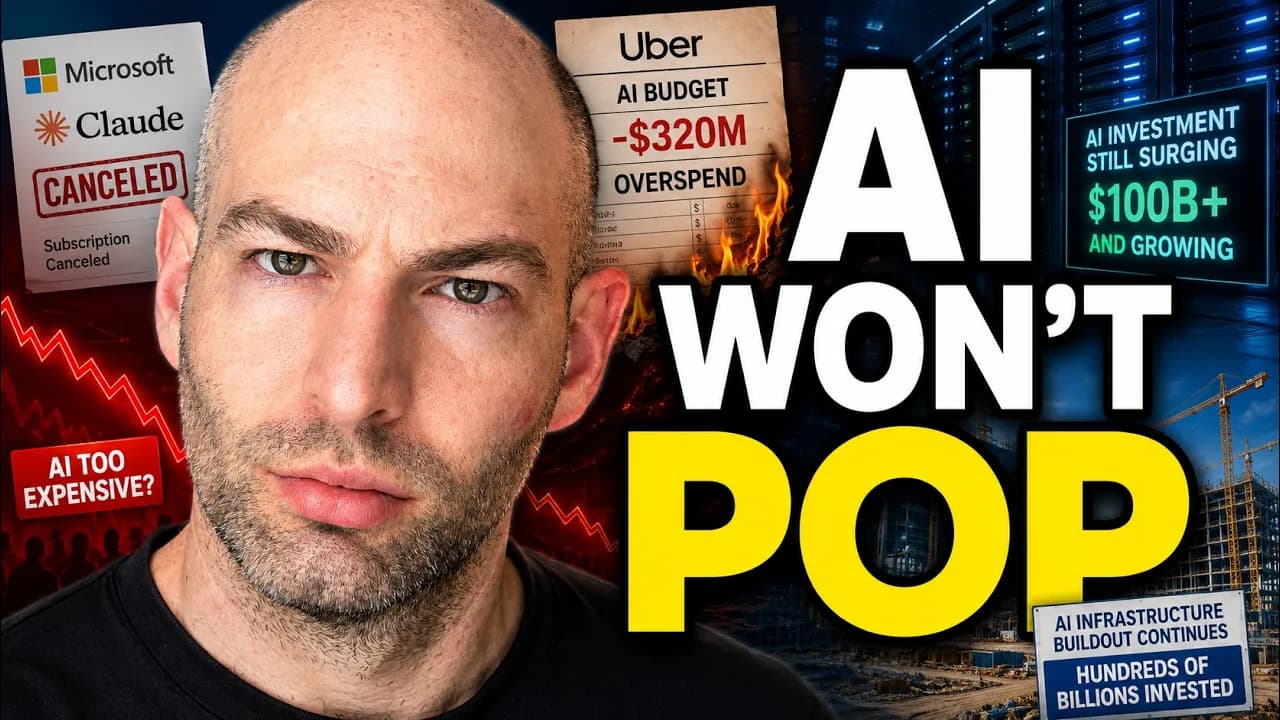
Microsoft could be in the lead, or OpenAI and Anthropic could completely eat Microsoft in the future. Either way, selling tokens alone does not represent a sustainable long-term business model.
Keep David Shapiro in your library
Save the videos and channels worth coming back to, and find them again in one place.