What I Learned Going From Failed Navy Officer to $450M Exit | Blue Water Autonomy, Rylan Hamilton
These notes were generated by AI and may contain inaccuracies.
Right out of college, joined the Navy on ships in the Pacific and Atlantic Ocean. The Navy 20 years ago had the world's most powerful navy with no pure competitor. As a junior officer in charge of a division, wasn't a great leader initially. In the Navy, you don't choose your team; you make the best of them. Learned to understand what motivates people, care about people—if you don't understand people, you can't motivate them, can't get the job done, and everything unravels.
Deck Plate Leadership
Learned leading from the front and deck plate leadership: be on the deck plates with sailors and team, helping solve issues, not just someone they report to, but part of the team. Spent hours in engine rooms troubleshooting. Faced losing steering at sea, power loss, flooding, fires. When team saw you standing with them, being patient, understanding problems and removing barriers, you earned trust.
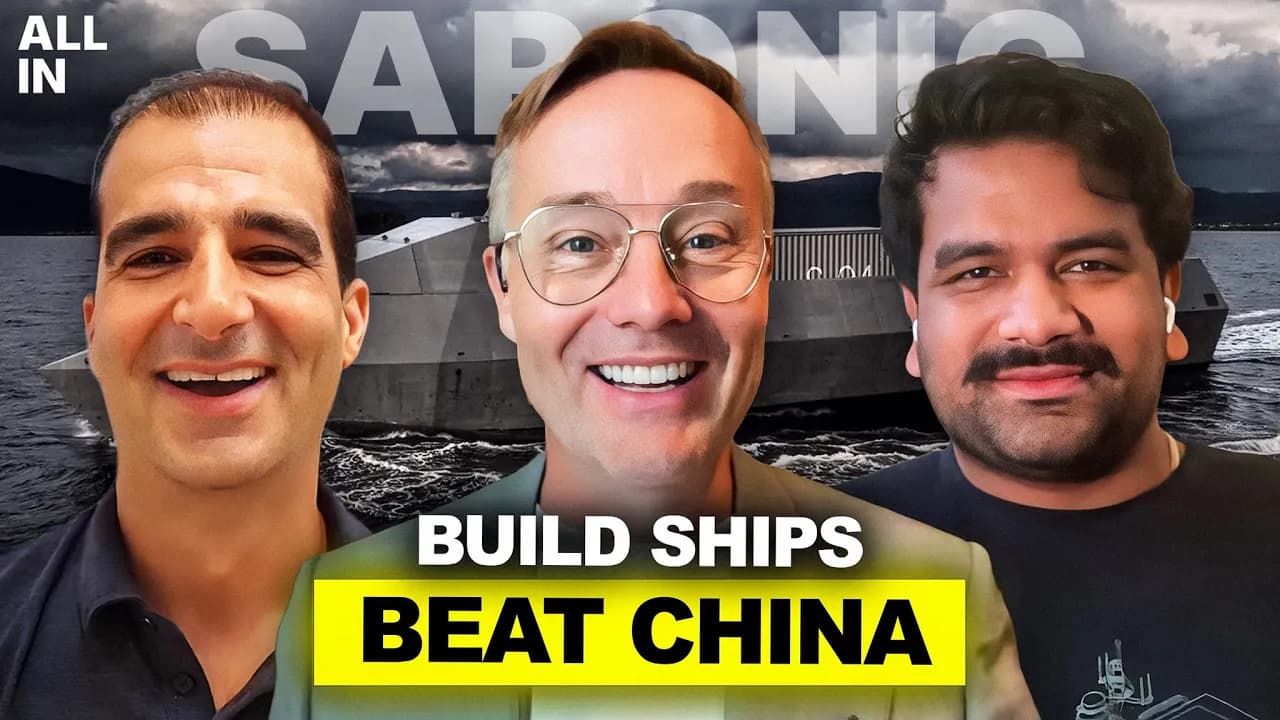
My name is Ryland Hamilton, CEO and co-founder of Blue Water Autonomy. First customer is the US Navy. Designing and building autonomous ships, focus on US Navy and future warships. Served on ships in Pacific, Atlantic, Northern Gulf looking for mines with 24/7 lookouts on front of ship using binoculars. Risky missions like mine hunting shouldn't require ships with 400 sailors. Launched autonomous test vessel, 145-ton vessel outside Boston testing technology. Google Ventures and investors put $50 million into company.
In college, 9/11 happened, shook everyone: "What do you really want to do with your life?" Traditional jobs were consulting or investment banking, but wanted something different, not suited for 9-5 desk job. Family Navy background: father Naval Academy graduate served on nuclear submarines in 1960s, two uncles in Navy. Joined Navy, one of best decisions.
Memorable First Ship Experience
First time on naval ship in open ocean, joined amphibious transport ship in Persian Gulf via helicopter from aircraft carrier. While waiting, Iran fired test missiles; ship went to general quarters. Still new to Navy in civilian clothes, didn't know where to go, ran up and down staircases. Someone grabbed and sheltered. Lesson: be aware, anything can happen; have a plan, but it won't materialize exactly as expected.
Don't choose your team in Navy. Initially thought everyone cared about mission and America, but in port, sailors wanted to go home at 3 PM for wife, kids, life balance. Focus on getting tasks done to go home early motivated them.
Deck plate leadership: on deck plates helping solve problems. Troubleshoot engine rooms, lose steering/power/flooding/fires. Team trusts when you stand with them, patient, understand issues, remove barriers.
Served four years, went to graduate school, transitioned to warehouse automation. Joined Kiva Systems in 2011 when couple thousand robots in field. After couple years, Amazon bought Kiva, became Amazon Robotics with over 1 million robots worldwide. Experience was concrete floor leadership in warehouses, spending time with team commissioning systems, traveling, showing care—team responded well.
Mission vs. Customer Obsession
Navy had mission obsession. At Kiva, customer obsession. As program manager, hit milestones for customer acceptance after sales signed contracts with objectives. Cross-functional work; did whatever to make customer happy—e.g., travel to remote Nevada warehouse, pay $100 cash to run fiber line. Think outside the box.
Startups are passion project, not best for work-life balance, wouldn't recommend, but best job if you love it, customers, obsessed.
Six River Systems
Started Six River Systems with ex-Amazon Robotics people: collaborative autonomous mobile robots (self-driving vehicles in warehouses), new automation form. Sold to Shopify (Amazon competitor) couple years later.
Took Jensen's (Nvidia) advice not to start another company—too hard—but itched to solve hard problems. Takes hard path for gratification. Explored verticals, learned from contact at Anduril (impressive defense tech startup) that you can start company and sell to defense market—new concept vs. 10-20 years ago. Explored defense/Navy space before committing, absorbed information. If started first idea, wouldn't be here today—kept open mind.
Navy 20 years ago dominant; today China builds half world's ships, shipbuilding capacity 230 times US. Can't compete on raw tonnage in Pacific. Rethink: US strong in autonomy/tech, apply to Navy. Not retrofitting existing vessels—redesigning ships from the keel up. Current naval/commercial ships have engineers standing watch daily; can't make unmanned for months due to single points of failure. Confirmed can't retrofit commercial designs for missions.
Early Stage Focus
At early stage startup, super focused on one customer, one product. Defense market had critical need (geopolitical threats in Pacific), willing customer, no commercial regulatory hurdles. Commercial interesting but hurdles remain. Focus on defense: Navy support, Congress allocated over $2 billion.
Being at sea: respect ocean, rely on team. On ship, can't go home—team effort for whole ship success. Thrilling startup moments similar. If teams don't trust, unhealthy interfaces, contingencies create conflict on delays. Trust removes contingencies.
Integrity and Transparency
Integrity key. Bad news does not get better over time. Encourage sharing good/bad news; hoarding bad news hurts. Transparency, truthfulness help best decisions.
Plans never perfect, outcomes differ. As founder, get best from limited resources/people for best outcome. Embrace downsides/upsides, move faster than expected.
In San Francisco, vision: be the Waymo for the open ocean. Waymo: software-defined vehicles, accept empty cars. Blue Water: create software-defined ships, replace dull jobs with software, best jobs on vessels for tasks/missions—beautiful experience like Waymo car.
Keep EO in your library
Save the videos and channels worth coming back to, and find them again in one place.