Patrick Clancy; AI Data Centers; Shergar, Where are you? | 60 Minutes Full Episodes
In a Nutshell
Patrick Clancy publicly forgave his wife Lindsay for killing their three children in 2023, attributing the murders to her untreated postpartum psychosis and rejecting online conspiracy theories that blame him. Communities across Texas are fighting back against massive AI data centers over concerns about electricity costs, water usage, noise, and loss of farmland, with the issue becoming a rare bipartisan priority in elections. Shergar, the champion Irish racehorse kidnapped in 1983, was likely killed by IRA members within days and buried in remote County Leitrim, with no arrests ever made in one of sport's most famous unsolved cases.
These notes were generated by AI and may contain inaccuracies.
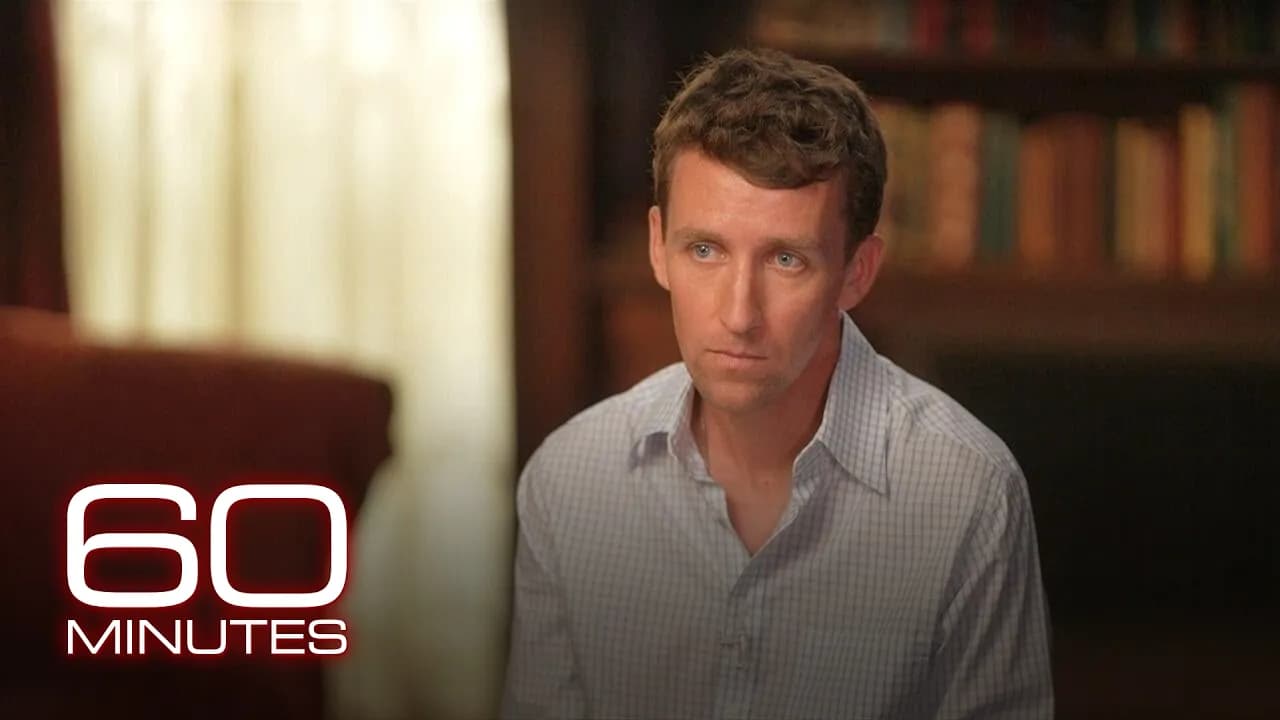
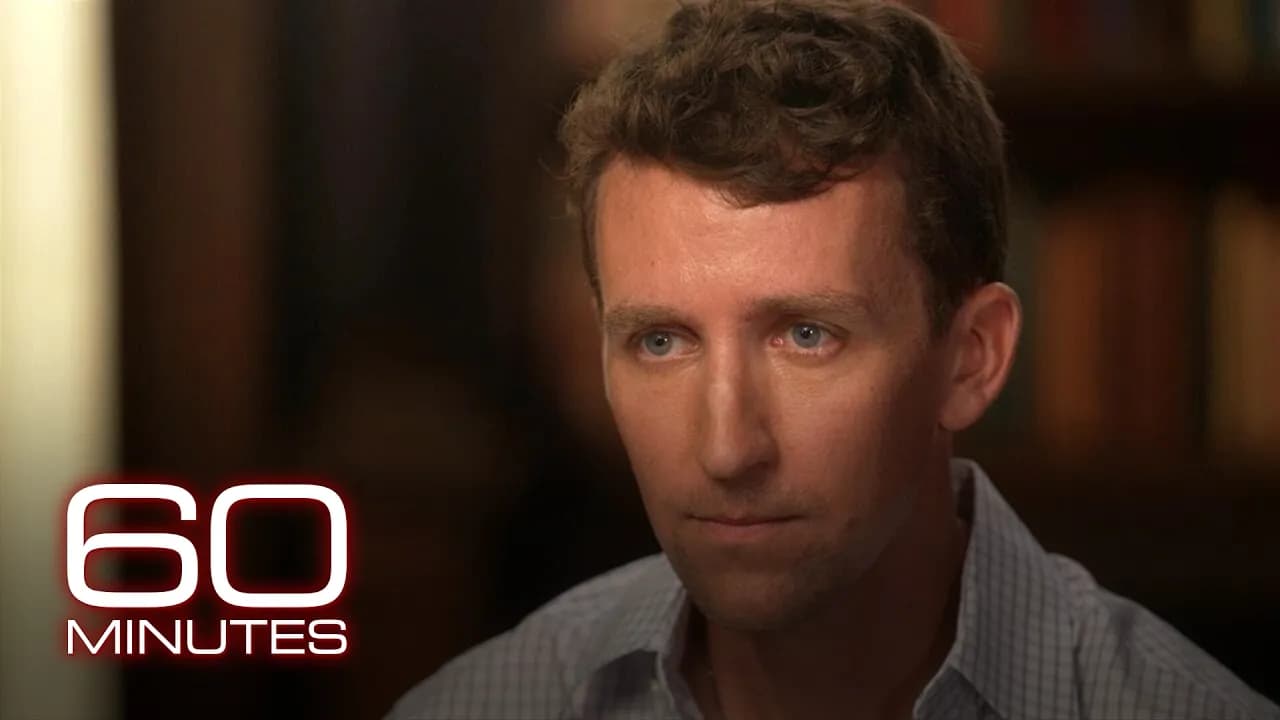
For the last few months, the Lindsay Clancy trial has become a national obsession. Patrick Clancy spoke for the first time outside the courtroom. He tries not to think about that night very often. The story of Lindsay Clancy, a labor and delivery nurse who killed her three children and then attempted suicide, has created a vortex of online theorizing and suspicion, and generated furious arguments about the relationship between mental illness and criminal fault, the ways in which the medical system fails mothers, and how men and women understand one another.
In the fall of 2022, when Ken was 5 months old, Patrick noticed that Lindsay was struggling. She went a few nights without sleeping and came downstairs one morning saying she didn't sleep at all the previous night. Patrick took the kids to school so she could focus on getting caught up on sleep. Patrick had no prior knowledge about postpartum mental illness before this experience. He could piece together what it was like to be really anxious or depressed, but he didn't know how to manage a postpartum illness. Mental illness has the ability to be tragically deceptive.
Patrick and Lindsay Clancy were living in the seaside town of Duxbury, Massachusetts. They were married six years. Months after the birth of their third child, Lindsay made repeated emergency room visits. She admitted herself to a program for patients with postpartum depression and was discharged after a day of treatment. She was also prescribed an escalating number of prescription drugs. Patrick struggled to help his wife navigate the medical system.
December was a big struggle for Lindsay with a huge lack of sleep, deep depression, and intrusive thoughts. At the end of that month she went to the hospital. On New Year's Eve, Lindsay checked herself into McLean's psychiatric hospital. She was treated for depression and days later was released. The family celebrated Kora's birthday on January 7th. Lindsay told Patrick she wanted to come home.
Seventeen days after Kora's birthday, the unthinkable happened. After taking Kora to a doctor's appointment earlier in the day, Lindsay asked Patrick to run an errand and pick up dinner. When he returned home, he found her lying in the backyard, her throat and wrists cut, paralyzed after jumping from an upstairs window. In the basement, he found his children strangled. Kora and Dawson were dead. Ken somehow survived and was airlifted to Boston Children's Hospital.
Patrick didn't have all the details of Ken's condition but knew they got a heartbeat back. He thought there was a chance that Ken would live. He remembers thinking, "Just give me one. Just give me one kid. And I would raise him as best I could and I would give him the best life I possibly could. And I tell him about his brother and sister." When he got to the hospital and saw the look on the doctor's face, he knew it wasn't going to be a good prognosis.
Ken's heart kept beating for 4 days. Patrick was grateful for those four days. During those hours with Ken, Clancy sat and wrote tributes to each of his three children, typing with one hand while he held his baby's hand with the other. He was afraid if he didn't write about them, they would be forgotten.
Patrick saw headlines that said "killer mom and baby murderer monster" and none of them were accurate. He believes it was her mental illness that caused that. When it comes to forgiveness, he felt that if he didn't get there, he would be eaten up inside forever.
When asked if he asked Lindsay why she did it, he said he asked her if she remembered it. She said it was like a dream, and she remembered it much in the way you would remember a dream after waking up.
Patrick believes he did the best he could with what he had at the time and lives with the outcome every day. Lindsay has never asked for his forgiveness, but he gave it to her.
In the weeks after the tragedy, the crowds of mourners dispersed and Clancy's world emptied out. There was no family routine, no bedtime stories, no purpose. Everything came to a screeching halt. One day he drove by their school at the exact time that all of their friends were getting dropped off, and he couldn't be there anymore.
Patrick had suicidal thoughts himself. There was a time where he didn't think he would live to see his 35th birthday, and he was completely fine with it.
In April, unable to stay in Duxbury, Clancy moved to New York City, seeking anonymity. Five weeks after moving to New York on May 26th, he had to figure out how to celebrate Ken's first birthday. He went to St. Patrick's Cathedral, lit a candle, and said "I love you, buddy." When he walked out on Fifth Avenue and started crying, nobody cared, and he thought "This is where I need to be. I can grieve."
Before moving, he emptied the house in Duxbury. He kept some of their toys, a lot of personal items, just things that reminded him of them. Reminders now purposefully placed around his Manhattan apartment include a baby sloth that Kora carried everywhere, a photo of Ken wearing a bow tie almost bigger than him, and Dawson's beloved and battered helicopter. He also kept their real handprints.
In their hometown of Duxbury, Clancy found another way to keep them close. A brand new playground was built to feature touchstones for each child: sloths for his daughter, a firefighter for Dawson, and down the way, a toddler's play pen for Callen.
Patrick dreams about them all the time. He remembers early on having a dream about 6 months or a year after where he was in the kitchen at the house and Kora walks in. He looked at her and said "Where have you been?" She came up to him and gave him a big hug. Those dreams are so real, like he's lucid in those dreams.
In July of this year, Lindsay Clancy went to trial for the killing of her three children. Her lawyers argued that she was suffering from dangerous postpartum psychosis and couldn't be held responsible for her actions. The trial ended with a hung jury after the judge declared a mistrial.
Patrick was suddenly facing a trial by TikTok. An online swarm of sleuths and influencers has been dissecting every detail of the case, developing theories that portray him as uncaring, unfaithful, and even the murderer of his children.
Patrick says these theories are deeply harmful to the legacy of his children and a huge distraction from what really matters, which is perinatal mental health. The stuff that's out there online is painful to see and makes it difficult to be in public. It's possible that some people after seeing lie after lie after lie start to believe it.
One of the catalysts for these theories was Patrick's apparent stoicism on the witness stand. Testifying was very difficult. On the second day, a lot was focused on the night of January 24th. They took a break right before they played the 911 call which he knew was going to be horrific. He went to a back room and started having a massive traumatic panic attack. His heart was pounding and they put him in an ambulance. They offered him medication but he said he didn't want it because he wanted to go back and finish the testimony. He went back and finished the testimony.
Patrick started reaching out to people at Postpartum Support International and reached out to psychiatrists and experts in the field. He asked them what they thought happened, and they had some pretty deep conversations. Those conversations helped Patrick come to terms with what happened.
Dr. Rachel Danis, a fertility doctor, says they met in January of 2024 in a run club in New York. They got to know each other over coffee. Rachel noticed an adorable photo of children as Patrick's phone wallpaper and asked who those cuties were. Pat said those are my kids, and when she asked if they live in Massachusetts, he said they died. Their relationship deepened as they logged miles together in the run club.
They got married in New York City this April. Rachel hopes she helps him carry the grief. Patrick says 100% - his life has changed since he met Rachel in such a positive way. Rachel always tries to take some of the weight from Pat and wants to honor his children and allow Pat to grieve but also continue to honor them in the present.
Patrick and Rachel are starting a family. Patrick says every parent can agree you have different relationships with your kids, but they're all your kids, and he can't wait to tell their child about their brothers and sister.
Patrick and Lindsay have each brought lawsuits against health care providers who treated her, alleging medical malpractice. Lindsay Clancy is being held in Taunton Hospital in Massachusetts, waiting to learn whether she will be retried for the murder of her children.
America and the world are in the midst of one of the most profound technological revolutions in human history with artificial intelligence poised to transform nearly every aspect of how we live and work. Behind this seemingly invisible revolution is something very physical - data centers. They are the factories of the AI age: vast industrial warehouses packed with powerful computer chips consuming enormous amounts of electricity.
With more than 3,000 data centers across the country and another 1,500 proposed, data centers are now one of the top issues in the midterm elections. In Texas, where everything is bigger including the development of data centers, backlash is happening nationwide.
Jasmine Viegas lives on a quiet farm just outside Dallas, Texas. When she learned that a data center campus almost three times the size of one a few miles away would be built next door, this mother of five and Marine veteran felt called back to duty. She stands strongly behind her oath to protect and defend the constitution against all enemies, foreign and domestic.
Viegas questions whether data centers are an enemy per se, but wonders how she knows these chemicals or this pollution, water, air, noise isn't going to affect her community.
In town halls and on social media, data centers have become vessels for other worries and fears of rising prices, the power of the tech elite, congestion and crowding, and a dawning AI era that threatens livelihoods and futures.
In Loudoun County, Virginia, which has the world's highest concentration of data centers, electricity bills have surged in the last year, at least in part because of growing power demand.
In Chandler, Arizona, residents worry about water being used to cool data centers when the state already has a shrinking supply. In Red Oak, Texas, where Viegas lives, construction workers' cars clog the roads for miles before dawn.
Residents in Red Oak accuse the city council of operating in secrecy. Not one single person in the room was for the data center and the city council just went ahead and approved it. Instead of feeling defeated, Viegas saw it as challenge accepted.
Michael Weber is a professor at the University of Texas, whose specialty is the relationship between water and energy. When tech companies want to build in Texas, they call Weber for advice. He tells them they need to pay their taxes and hire people and be power flexible, water positive, and carbon negative. His less technical, more direct message for some of these tech companies is "Don't be a jerk. Basically, don't take the water. Don't break the grid. Don't ruin the land if you're good."
Weber says data centers have been around for decades, but the speed of the construction and the size of those built for AI are unprecedented. The primary difference is they're larger. In the old days, meaning like two years ago, a large data center might have been five megawatts. A new data center for AI might be a thousand megawatts. It's like 200 times larger, so the scale is much different.
The numbers are mindboggling. Meta, Amazon, Google, Microsoft expected to spend 1.5 trillion building data centers through next year. Some smart people say this will satiate but then other smart people say the demand for intelligence will never be sated, so we will always want more data centers and more intelligence.
That intelligence developing inside these hulking warehouses supporters believe will generate what's called AGI or artificial general intelligence that can match or surpass human capabilities. This additional computing power could pave the way for groundbreaking discoveries like curing cancer.
Data centers aren't universally loathed. Building trade unions want more because of how much skilled labor is needed to build them. On the issue of water, they often aren't as draining as many believe. A CBS News analysis found golf courses nationwide use more than twice as much water as data centers.
There's a race to power, a speed to power right now where all the AI companies are in a race to train up their models to win the AI arms race. There are national security implications on the line as well as great economic gains. America wants to have it first before a bad actor like China.
In Texas, attracting big tech was the goal of Republican Governor Greg Abbott. Texas will be the centerpiece for AI data centers for Google in the entire world. The Democrat running against him in November, Gina Hinojosa, has made data centers a key issue in her campaign and is calling for a temporary moratorium.
Abbott took 20 million in campaign donations from data center executives and companies. Governor Abbott has changed his tune, pushing back against these AI data centers that are trying to build in neighborhoods.
In August, he paused approval of new data centers that withdraw from the state's power grid until they complete an audit.
Dave Lowe lives right by the proposed data center in Red Oak and told 60 Minutes he's a lifelong conservative Republican. This is the first time in his adult life where there's been an issue that's come up that he feels is going to directly impact him. He's made the decision that he's not going to vote red or blue. He's going to vote for the candidate that is willing to speak up and put up and do something to help with this issue.
Opposition to data centers is one of the rare issues uniting Americans across the political divide. More than 60% of Republicans, independents, and Democrats all agree they don't want a data center where they live.
Lowe and Viegas are part of a group of a few dozen Red Oak residents across the political spectrum who meet twice a month. Their primary focus is stopping a developer called Compass from building 10 two-story data centers in their rural neighborhood on agricultural land the size of Manhattan's Central Park.
If completed, this would be just one of seven campuses set to cover more than a quarter of the entire town of Red Oak, population about 20,000.
Compass CEO Chris Crosby said they want to be part of the communities they're in, long-term job creators, places where there's continued investment and growth.
Growth has also come to rural Hood County, 70 miles west of Red Oak, where there are nine proposals for data centers. Dave Eagle is one of five elected officials on the commissioner's court which votes on them. The developers come out to this very rural area and think they're dealing with some low information country bumpkins.
One of Eagle's concerns is that the proposals are shrouded in secrecy. The names of proposed projects include Project Yellow, Project Red, Project Lion, Project Panther. Eagle thinks developers want to make it hard to keep track of them.
Last year, an out-of-state company came to the table with something they said would be a big win, but wouldn't say who was behind it. They approached saying they were going to bring a lot of jobs, be good neighbors, upgrade the community, but wouldn't tell exactly what they wanted to do. Two months later, Eagle found out Amazon Web Services was behind the proposal.
Amazon Web Services asked the county for up to 90% in property tax rebates for 30 years. Eagle said he couldn't do that. Eagle voted against the Amazon Web Services project, but it is moving forward in the next county over where AWS got the tax rebate it wanted.
Blake O'Quinn is a third generation Texas rancher worried there won't be land for his cattle to graze or water for the herd to drink. He feels if they don't make a stand and educate the general public on what they do on a daily basis, their way of life can be threatened.
This technological revolution is expected to transform rural America with two-thirds of the proposed data centers planned in places more used to farmhouses than warehouses.
O'Quinn says they're not all against change, but the values and traditions matter. They were blessed with this land and are stewards of this land, here to take care of it and pass it on to the next generation of Texans. Rural Texans are going to fight as hard as anybody because that's all they know how to do. They won't give up. They're going to keep fighting against big tech AI.
Legends, lore, the oral tradition for centuries have come stitched into the Irish national tapestry. Add this one to the anthology: the story of Shergar, a champion racehorse, Ireland's answer to Secretariat, who dominated tracks in the early 80s until he was kidnapped.
The crime was thought to be an Irish Republican Army plot launched amid the troubles, the violent conflict that convulsed Northern Ireland for 30 years. All this time later, the horse was never found, no one's been arrested, and one of sport's great unsolved mysteries has never moved beyond cold case status. With central figures dying off and memories fading, the investigation ventured to horse country, not far from Dublin in County Kildare.
A vast carpet of unfurling grass, the Curragh (Gaelic for "place of the running horse") was where kings and chiefs raced chariots a thousand years ago. Now it's the beating heart of Ireland's thoroughbred racing industry and the last place you'd expect for an ill-fated kidnapping. Over the last weekend in June, the Curragh hosts the Irish Derby, drawing the best horses from all over.
In 1981, the Irish Derby was won by a local horse named Shergar, born in a nearby stable. Commentator Derek Thompson observed Shergar's overwhelming speed and stride that distinguished him at the 1981 Epsom Derby, England's equivalent of the Kentucky Derby. Shergar won by 10 lengths, and the jockey who rode the second horse was long-sighted and couldn't wear glasses while riding, so when he passed the post, he thought he'd won.
Shergar was considered probably the best thoroughbred racehorse of all time by those who witnessed his career. After racing, the typical future for a champion horse like Shergar was to become a stallion, which meant becoming "a very lucky lad" according to racing insiders.
After getting a hero's welcome back in County Kildare, Shergar was retired to Ballymany Stud Farm by his owner, the late Aga Khan, spiritual leader of the Ismaili Muslims and one of the richest royals in the world. The Aga Khan syndicated the horse, selling 40 shares for $250,000 each, totaling more than $50 million in today's currency.
Fortunes changed on the night of February 8th, 1983, when masked men with guns broke into Ballymany and kidnapped Shergar. Jim Fitzgerald, Shergar's head groom who was there that night, was interviewed by Belfast-based filmmaker Allison Miller for her documentary "Searching for Sugar." Fitzgerald described how gangsters with guns knocked on the door, shouted everyone to get down, put his wife and children on the floor at gunpoint, and ordered him to take them to the stable where Shergar was.
Fitzgerald was bundled into a car, driven about 30 miles from the farm, then released while the kidnappers made off with Shergar. He had a gun pointed at his head and was told to get out of the car and "shut up. Don't talk about this." This forced silence was familiar in Northern Ireland as a hallmark of the IRA, but unusual in pastoral Kildare.
The kidnapping occurred during the Troubles, when Northern Ireland had just come through many years of bombings, shootings, and killings. The sectarian violence rocked Northern Ireland for almost 30 years, pitting Catholics against Protestants over questions of British rule. The IRA raised funds for their campaign through bank and post office robberies, but these weren't paying off, leading someone to come up with the idea of kidnapping Shergar and holding him to ransom.
Police arrived at Ballymany the next morning with hardly any clues. The following day brought an unusual call to Derek Thompson in London at 2:00 in the morning. The press association informed him that "The kidnappers of Shergar want to talk to you" and directed him to fly to Belfast. Thompson and two other horse racing journalists were summoned to the Europa Hotel in Belfast, known as the most bombed hotel in Europe.
A voice on the hotel intercom directed Thompson to a farmhouse 30 miles outside Belfast. For the next 12 hours, they received phone call after phone call. The kidnappers said "We've got the horse. We want you to negotiate a price for the horse. This is what we want. We want the money." The Aga Khan's office received calls too. Ransom demands kept changing: £40,000 one day, £2 million the next.
Three days after the kidnapping, a vague final call came to Derek Thompson's camp: "The horse has had an accident. He's dead." And the phone went down. That was the last contact with the kidnappers.
With a champion stallion missing, the investigation continued with police giving daily updates saying not much. The country became captivated by the deepening mystery, leading to an Irish folk song about how the kidnappers had "baffled all the boys in blue." The circus included crimesolving clairvoyants and people turning up claiming they would find the horse, with helplines getting "bonkers" calls from people saying they'd found the horse when it was actually a dead sheep.
As the story became an international sensation, theories toggled between the preposterous and the merely unlikely: that Shergar was stolen to pay off US mafia debt, or shipped to Libya for Omar Gaddafi. The Curragh features 80 miles of gallop surrounded by unplowed grass rich in limestone (good for horse bones) and fertilized by roaming sheep - in other words, equine heaven.
Richard Brabazon, whose family has trained horses at the Curragh for generations, believes there was an accident and Shergar was killed. The puzzle for him is that "it's a very big operation to take a horse" and questions how the kidnappers would deal with disposing of such a large animal, noting it took him half a day to bury a donkey.
Most people believe the kidnappers couldn't handle a stallion like Shergar and shot him within a couple of days. This theory was circulated in a 1998 memoir by former IRA member turned informant Shaun O'Callaghan (now dead), who wrote that the kidnappers drove Shergar to County Leitrim near the border with Northern Ireland.
Journalist Tommy Conlon, who wrote a book about another 1983 kidnapping, says that if the local IRA leader got a phone call saying they needed to dispose of the horse, there would have been people to do it in Leitrim. The area is so sparsely populated and remote that it would be an ideal place to bury a body that you never wanted found. Conlon led investigators to boggy terrain where lore has it the kidnappers disposed of Shergar's remains.
The area would have felt almost deserted on a winter's night in February 1983, and more than likely anyone met on the road would "say nothing" - a reference to the IRA code of silence.
Whispers emerged about one man in particular: Kevin Mallon, a convicted IRA operative once broken out of prison by helicopter. Mallon is named in Shaun O'Callaghan's book as the ringleader of Shergar's kidnapping. 60 Minutes attempted to contact Mallon by phone at a seaside house near Dublin, but he denied knowing anything about the horse.
Some cold cases eventually thaw through crisis of conscience or dying declarations, but in Shergar's case, it seems like a long shot. As one observer noted: "I think there's a massive shame that the IRA took this on. What was the point of it? It was pointless. The horse is such a symbol of Ireland and its beauty, its wildness, its magic. And there's a shame that they shot and killed the most famous horse in the world at that time."
Ariel Levy, one of the new contributors at 60 Minutes, reflects on the modern attachment to devices, comparing it to how people used to smoke cigarettes - knowing it was bad but continuing until it became too inconvenient and stigmatized. Levy wishes the same social shift would happen with phones and misses the concentration people used to bring to daily life, which drew Levy to journalism and the chance for intense, intimate conversations with people who shape our world.
Keep 60 Minutes in your library
Save the videos and channels worth coming back to, and find them again in one place.