Return to RAM; Ghost Train; The Mardi Gras Indians | 60 Minutes Full Episodes
In a Nutshell
Remote Area Medical (RAM) provides free pop-up clinics for uninsured Americans facing skyrocketing healthcare costs, treating 1,200 patients in Knoxville with dental, vision, and medical care amid Medicaid cuts and 10 million projected to lose insurance. California's high-speed rail project exemplifies government waste, ballooning from $33 billion to $125 billion with minimal progress, while private Brightline advances a viable Las Vegas-LA line by 2029. Mardi Gras Indians in New Orleans preserve a secretive 1800s tradition of hand-sewn suits honoring African and Native American roots through resilience, artistry, and generational handover despite gentrification and personal sacrifices.
These notes were generated by AI and may contain inaccuracies.
Parking for the free clinic fills days early. People sleep in their cars for a chance at medical care. If you didn't have Remote Area Medical (RAM), what would you do? Suffer. With millions losing insurance, desperation meets compassion.
About one-third of Americans say they have skipped meals, borrowed money, or cut back on utilities to pay for health care, per a Gallup poll released in March. The Trump administration lowered prices on more than 50 drugs but let premiums rise, even double, in the Affordable Care Act marketplace and made the biggest cuts ever to Medicaid. Already, 3 million have lost insurance and it's estimated 10 million will in three years.
RAM started parachuting doctors into South American jungles but in the 1990s turned to Americans cut off from health care by cost. Recently returned to RAM at one of its free pop-up clinics. For Americans long on pain and short on hope, RAM is a ray of mercy.
Parking lot in Knoxville, Tennessee, began filling early in frigid February; many drove hundreds of miles. RAM opened clinic inside empty exhibit hall but could take only so many patients on a weekend, so lines formed days before.
Met Sandra Tallent at 5 a.m.: from Huntsville, Alabama, been in parking lot since 4:30 Wednesday night (two nights sleeping in car, 200-mile drive) for lack of dental insurance. If no RAM, she wouldn't get teeth taken care of.
Nearby, Dave Bird spent night in truck aching for full set of dentures. Lost teeth from uninsured drunk driver hitting him head-on at 80 mph (almost killed, two years rehab, three surgeries, $140,000); later at work, drill hit rebar, cracked jaw, broke teeth again. By then thin on money; employers assumed meth addiction (he says only nicotine and caffeine). Wrapped in four layers against 27 degrees. If no RAM? Suffer; no other way. Teeth are life-changing: "When they hand you your life back, that's life-changing. I can be a normal human again."
Line stretched to 1,200 patients over Friday-Sunday. Brad Sands, former paramedic and RAM clinic coordinator: Patients are everybody—neighbors, parents, friends, community, nationwide. All comers, no questions, no insurance needed, don't have to give real name.
Woman grateful but hates to ask: "I'm not gonna judge your story. Nobody here is gonna judge. We are here to help."
Half patients have no insurance; rest have insurance they can't afford due to co-pays/deductibles. Many plans have no dental, vision, or hearing care.
Chris Hall, volunteered at RAM at 12, now CEO: 65% request dental, 30% eye exams/glasses, 5% medical. Dental/vision isolated lacks. Screenings for blood sugar, blood pressure, breast/skin cancer.
RAM spends $100,000-$500,000 per weekend depending on size. Funded by public generosity: 81% individual donors ($5/$10/$20 monthly checks), leveraged with donated space/supplies/volunteers (887 volunteers in Knoxville from 30 states, brought medical students). Treat patients with dignity/respect like human beings.
"If you ever lose faith in humanity, go spend 10 minutes at a RAM clinic."
Dentist Glenn Goldstein from New Jersey: Patients with broken tooth tried removing with screwdriver—desperation. Young people beg to extract savable teeth: no money/way to fix. Heartbreaking; patients ask to take all teeth out (know can't care forward).
RAM founder Stan Brock: eccentric Englishman, daredevil pilot, Amazon cowboy. Walked 26 days in Amazon for injury treatment. Started airborne charity with army surplus C-47 (flew D-Day). Met at 72: no family, no salary, lived in donated office, showered with garden hose. Died 2018 in office. "Most dedicated person I've ever met." Hard to ask for day off when boss hadn't in 20 years.
2008: Staging 12 clinics/year. After broadcast, $4 million donations, thousands more volunteers. Grown to 90 clinics/year. Donor: 2008 story brought to tears, registered immediately from Jersey; volunteering family thing (son, wife, daughter-in-law, daughter, other son).
"Sounds like you get as much out of this as the patients do. Maybe more."
Sandra Tallent, Dave Bird got dentures via trailer with 22-year-old engineer Connor Gibson using computer design/3D printers (print set in ~1 hour). Gibson slept in trailer to keep printers running. "Mirror moment" priceless: stress melts, grown men cry (18-80).
Dave Bird: "You're a new man."
Sandra: "Happy tears... Lord made a way through RAM."
Knoxville: 500+ saw doctor, 700 lived without pain, 24 smiles restored.
With insurance out of reach for growing millions, RAM hurries to another city.
Hard to exaggerate train's role/romance in American story. Why no high-speed rail (common elsewhere) in U.S.? California state project (L.A.-San Francisco) lurched, derailed, cost billions, may never happen. Private Brightline betting to succeed.
U.S. high-speed rail a ghost train, stand-in for: Can America build big things?
High-speed rail (200 mph): revolutionized travel, national pride—in Morocco. U.S.: hardly passenger-ready.
2008: California voters approved L.A.-San Francisco in <3 hours, $33 billion, by 2020. Cut pollution, revitalize economies, clear gridlock.
Now: First tracks Bakersfield-Merced (1/3 distance, pop. 96,000), open 2033 maybe. $100+ billion so far.
Congressman Vince Fong (R-Bakersfield, House Transportation): "Quintessential government waste/mismanagement." Bait-and-switch: no trains/track 2026. 2008 plan theoretical, no specifics.
Toks Amiashkan (CA Sec. Transportation), Anthony Williams (rail authority board): Mistakes made, criticism fair. Voters/public sector didn't grasp delivery needs. Inland Central Valley route for buy-in, but 3,000 parcels negotiated for segments.
One farmer gums works. CA environmental regs trigger reviews/lawsuits/delays. High U.S. labor/construction costs. Financing incomplete at start.
2019: Costs ballooned, bipartisan pressure. Gov. Gavin Newsom 2019: No path Sacramento-San Diego, let alone SF-LA. Now focuses Central Valley (few want/ride), goal remains north-south.
"When budget no longer permits finish, cut off arms/legs."
Lou Thompson (Amtrak founder, CA peer review to 2024): "Failure is always an option."
Central Valley: Bridges/viaducts like Stonehenge—progress or monuments to unkept promises.
1800s: U.S. Transcontinental Railroad. 1950s: Eisenhower interstate highways, car culture.
Japan bullet train 1964. 20+ countries high-speed (150+ mph): Germany, France, China, Turkey, Indonesia, Egypt (ground broken).
Mike Reininger, Brightline West MD: U.S. can do it, economic engine.
Brightline Florida (Miami-Orlando 2018, 125 mph): beta for LA-Vegas (2 hours vs. 5 by car, 200 mph max, service 2029). Right-of-way on I-15 median; construction begun on stations.
More enjoyable/safer/reliable, changes behavior. Car culture crackable.
Florida: 200+ killed by street-level trains (Miami Herald/public radio). West desert safer (no street crossings).
Finances: Costs outstrip revenues; debt junk status. Florida slower build, fewer passengers than expected but growing.
Brightline West: Some federal funding, hopes $6B Trump loan. Welcomes government role (worldwide public-funded).
CA: State funds cover Central Valley. Full SF-LA: $125-126 billion (>$90B shortfall). Plan: cut costs, private investment, connect big cities sooner.
Political winds: Newsom now champions. Trump 2025 canceled $4B grants: "Worst cost overrun... Gavin Newsom."
Sec. Transportation Sean Duffy: Wasted billions, nothing delivered.
CA: Initial segment sans federal ok; full 494 miles challenging. Needs federal: public benefits (pollution/congestion/safety).
Other ideas: Dallas-Houston. Nothing else building.
Why not U.S.? They've decided/want/pay; we haven't. Dubious in lifetimes absent national will.
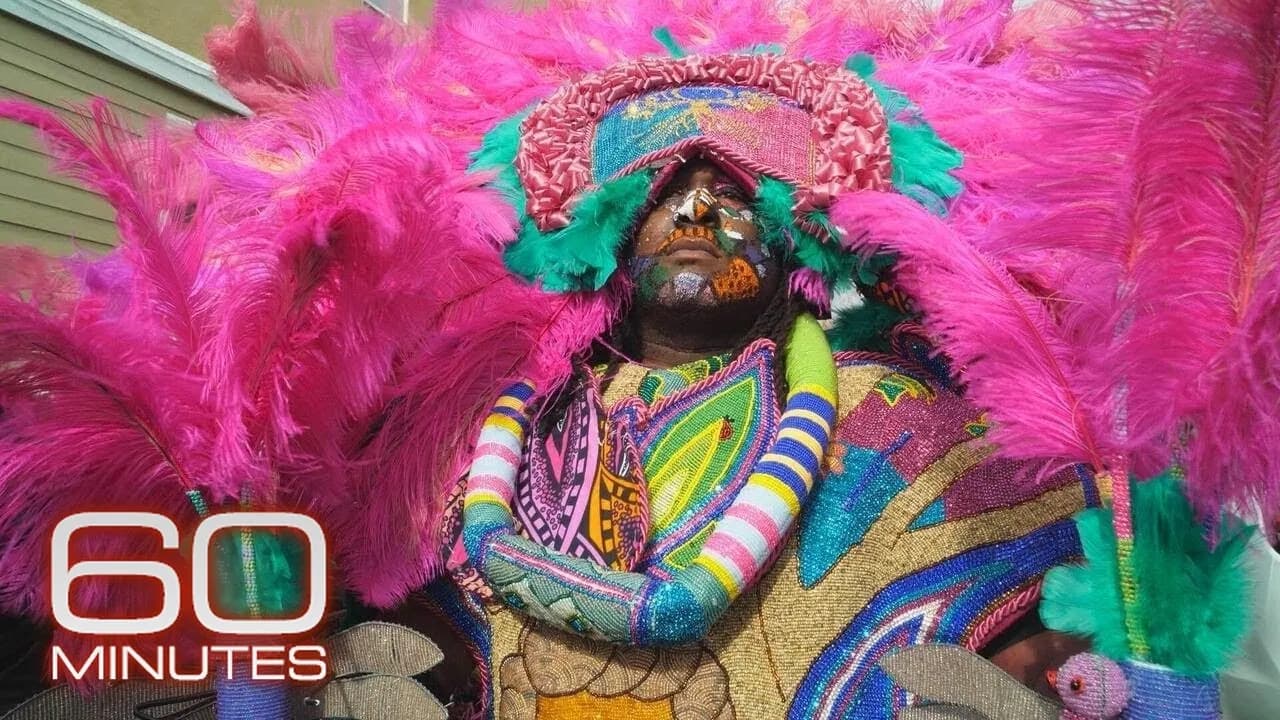
Every Mardi Gras morning, extraordinary: black revelers from back streets of New Orleans tourists miss. Mardi Gras Indians or Black Masking Indians, roam neighborhoods in dazzling hand-sewn suits.
Tradition from 1800s honoring ancestors; lore: respect Native Americans sheltering escaped enslaved Africans. Joy, protest, pride, generationally passed.
Easter Sunday: artists/musicians preserving, sights/sounds of America's last true secret societies. Vibrant African/Caribbean/Native American tapestry in New Orleans gumbo.
Suits plumed/bejeweled/beaded/sequined, hand-crafted secretly for year, unveiled Mardi Gras.
"Chawa!" Big Chief Demond Melanson, Young Seminole Hunters, announcing arrival. "Chawa! Who the best? Biggest tribe?"
Dozens tribes; Big Chief/ Big Queen/crew strut historically black neighborhoods seeking other tribes. When Big Chiefs meet: "You Big Chief Demond, I'm the Big Chief, come on!"
They square off in mock battle, competing to show whose suit is the prettiest. Chawa! Demond faced down tribes all over the city. What just happened back there? You look like he just bowed out. But you won. Yeah, I think I did. We don't fight. Who are you on Mardi Gras Day? When I put that suit on, I'm Big Chief Demond Malone. Is that different from the Demond sitting here now? Yes, indeed. Somebody that's ready to honor everything that I was taught by my elders. And I'm ready to kill you there with the needle and thread.
Big Chief Demond and his wife Alicia sew beads the size of chia seeds on a canvas and stitch rhinestones in place with dental floss. Painting with beads, making artwork for his suit. What makes a suit pretty? The hookup. How it's laid out, how the velvet gets around it, how you break the feathers, how you manipulate the feathers, how many rows of rhinestones you have around the beadwork. That's the perfection of knowing your hookup if you're that good.
This year's suit tells the story of the Amistad, a slave ship seized by captive Africans in 1839, led by Sinque. This panel shows when the Africans won their freedom in a case that went to the U.S. Supreme Court. John Quincy Adams was one of the lawyers on the case. You're doing this nonstop? I sewed from 6 in the morning to 12 at night. Every day. Why? Without these beads, I couldn't breathe. And every breath is hard-earned.
It can take thousands of dollars and thousands of hours to design and sew a suit. For years, Big Chief Demond laid concrete and cooked lobsters, pouring all his spare time and money into his creations. He now makes a living as an artist. This year's suit cost $25,000. This flamboyant display is the flowering of deep roots. The community is what makes me, it's my fuel. The people. It fuels the fire. Because you're doing it for them. It is the greatest kept secret in America. And throughout the world today is the Mardi Gras Indian culture.
This culture dates back to slavery days. Howard Miller is the president of the Mardi Gras Indian Council, a governing body for the tribes, and chief of the Creole Wild West. It's a culture shaped by resistance to oppression and sustained by resilience. How would you explain the Mardi Gras Indians to people who don't have a clue? We weren't allowed to go to those big parades. This, in our community, was about uplifting our people in a proud manner.
No one definitive origin story, but historians have found references dating back to the mid-1800s. Enslaved people who escaped New Orleans were given refuge by Native Americans in the bayous. Today, many tribe members claim indigenous and African roots. Masking began as a way to honor those indigenous tribes while disguising their African identity. Everything about Africa was forbidden, especially in the South. So we went behind a mask as Indians to practice our culture.
Was it easy to join a tribe? No. In 1969, it took then 12-year-old Howard Miller six weeks to get in the door of a big chief's house, the tribe's headquarters. I had a friend in it. I would go around there with him, trying to get in. But they wouldn't let me in the gate. I had to stay outside the yard. Eventually, I got on the porch watching the magic with the suits. A rainstorm hit: thunder, lightning, raining hard. The chief said, Is that boy still on the porch? Tell that boy to come on in here. That's how I got in.
Visited the home of Joseph Pierre Boudreau, better known as Big Chief Monk of the Golden Eagles tribe. Big Chiefs are mentors and community leaders. Big Chief Monk is one of the most respected. Working class neighborhoods that sustain the tribes have been thinned by Hurricane Katrina and gentrification. 84-year-old Monk Boudreau is preparing for his 72nd year of masking. We gonna do it. Let the world know that we here, that we been here. We ain't just got here. We been here.
Joined the Boudreaus in a sewing circle before Mardi Gras. For decades, Big Chief Monk sewed suits for his children and grandchildren. This year, they gathered and helped him sew his. My whole family's talent by just sitting there watching me for all these years as kids. It was always right there while I was sewing.
All those long hours of sewing inspired a song. That moment till the break of dawn. In the 1970s, Monk was one of the first to marry Mardi Gras Indian chants to New Orleans funk. His albums earned two Grammy nominations. His son Joseph and grandson Juwan often sang backup. Met them, Monk's daughter Wynoka and grandson Marwan, at Tipitina's. What's his impact on the culture? The impact that Michael Jordan had on basketball. You can't mention Mardi Gras without Monk. I never saw him take a break. My father took something made for the culture in the streets and pioneered taking it global. There's not a person in New Orleans that sews an Indian suit who doesn't put on his music. Big Chief Demond: Lord, that man make me cry. Monk do me something.
The expense almost left Demond destitute. You sacrificed a lot to make these suits. You lost a house because you were so consumed? Yeah. Losing a house didn't make you stop. I'm preserving the culture. His suits and beaded portraits have been displayed in museums and galleries worldwide. It's allowed him to buy a new house, every inch covered with plumes and patches the evening before Mardi Gras.
After working through the night, Big Chief Demond emerged in a suit over 10 feet tall weighing 120 pounds. He used a U-Haul to move from place to place. The spirits come down every time we put it on, especially with me. My elders lived through me, and it's the opening of the gates. That means they came down, coming through me to walk in their shoes on the streets of New Orleans like they taught us. Preserving it for the next generation. His work will be featured next month at the Venice Biennale in Italy, the world's most prestigious art exhibition.
Do you think your success will encourage a younger generation? I pray it does. And I pray one of them picks up a needle and will do what I do.
Preserving tradition for the next generation. Big Chief Monk lives for that. But this year, he was too weak to march. Just before Mardi Gras, diagnosed with cancer. He came out on his porch to see the tribe off with the most sacred hymn. What's it like to see your tribe march off without you? I knew that time was going to come, but I didn't know when. But you got to see it this day. The day is coming to pass his crown to the next chief. If you don't keep it going, if you lose it, it's gone forever. Not here in New Orleans. They keep it rolling.
Keeping it rolling and chanting and showing off. A culture in full bloom. Too pretty, too rooted to fade. Just yet. The anatomy of a showdown. It's warfare. It's basically a battle. At 60minutesovertime.com.
Evangelist Franklin Graham has preached in all 50 states and provided disaster relief to more than 100 countries. Which value shaped the nation the most? Faith. Faith in God is the value that most shaped America. Remember the pilgrims? They came to find freedom to live out their faith. People of faith have been the bedrock behind our nation.
After a disaster, people turned to the church, not FEMA or government. The church took them in, fed them, gave shelter, clothed them. People of faith established our health care. Higher education started by people of faith: Harvard, Yale, Princeton founded to train ministers. From remote villages in Alaska to the tip of the Florida Keys, houses of worship and people of faith making a difference.
As a follower of Jesus Christ, I want all people to know that God loves them, that he cares for them. Faith is the most important defining value in our nation and in every single life.
I'm Bill Whitaker. We'll be back next week. Happy Easter and a joyous Passover.
Keep 60 Minutes in your library
Save the videos and channels worth coming back to, and find them again in one place.