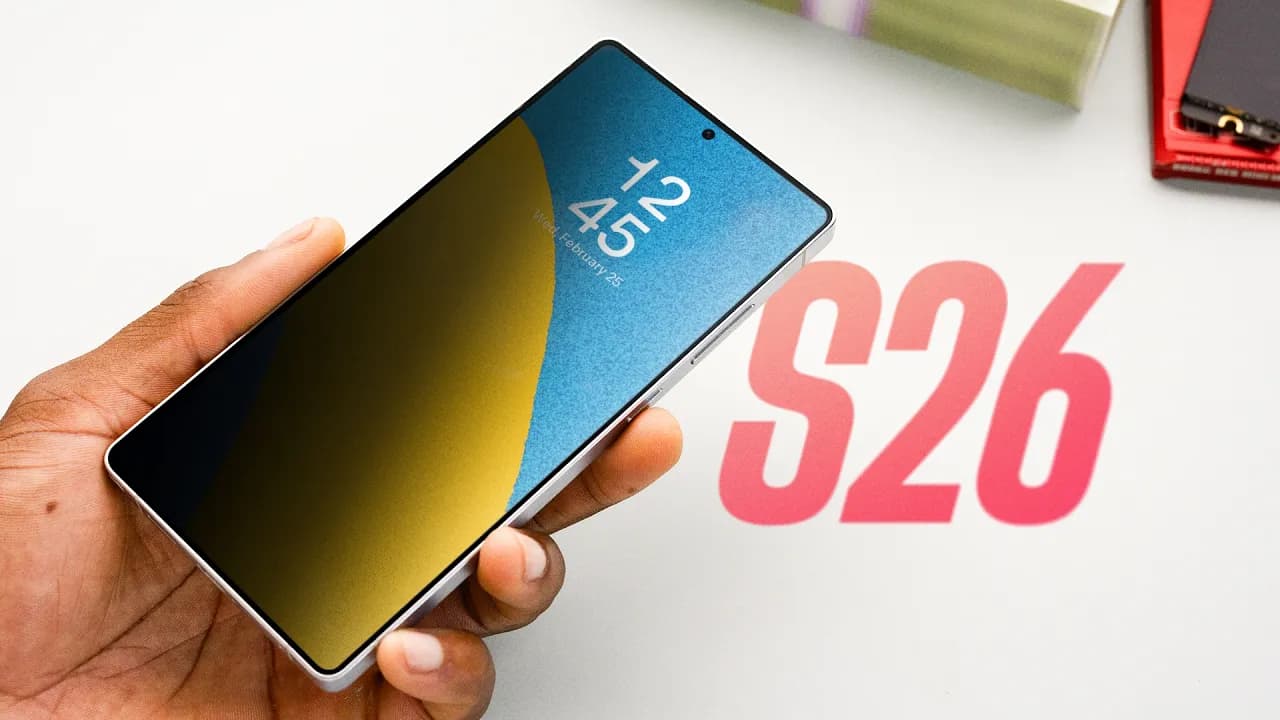
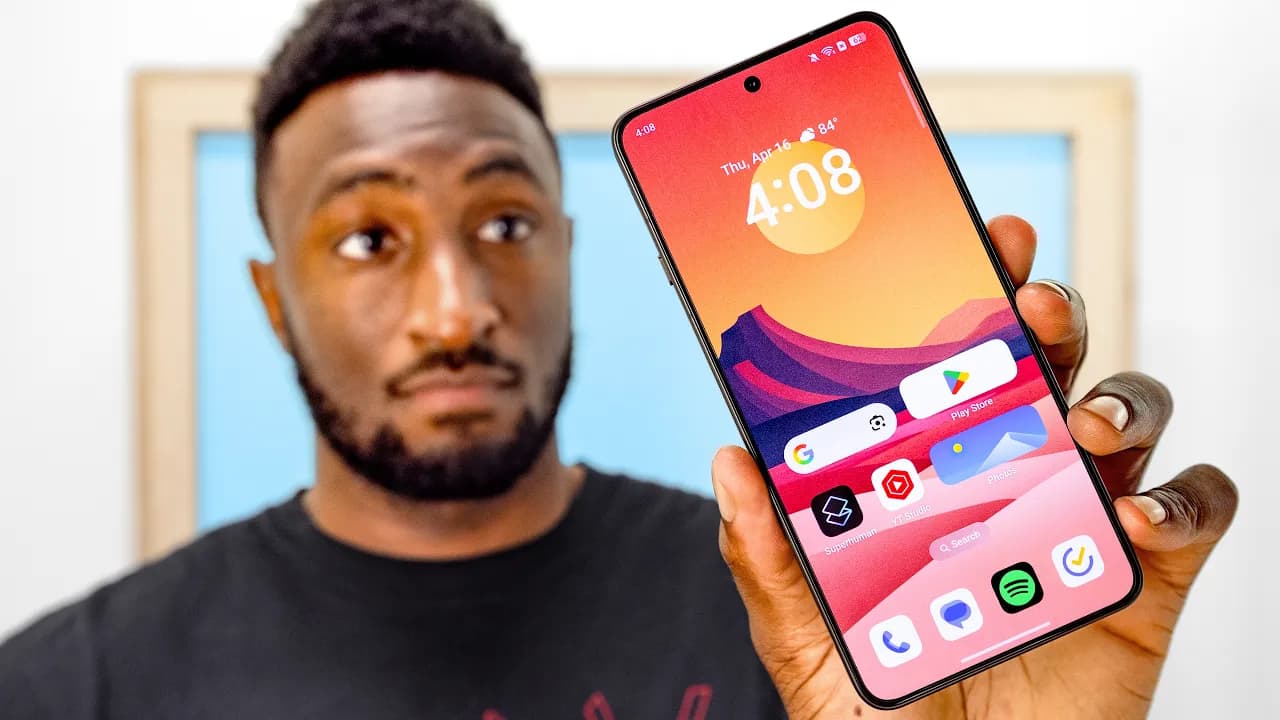
Samsung Galaxy S26 Ultra Review: There's a Catch
In a Nutshell
The Samsung Galaxy S26 Ultra impresses with its innovative Privacy Display that blocks off-angle viewing for apps like banking, but it halves resolution, dims brightness, and degrades overall viewing angles and anti-reflective coating compared to the S25 Ultra. Performance, battery life, and cameras see minor improvements via Snapdragon 8 Elite Gen 5 and larger apertures, but the thinner design worsens S Pen insertion and table stability, lacks Qi2 magnets or silicon-carbon battery, and starts at $1,300—making it a clever but compromised flagship outperformed in displays and value by rivals. Base S26/S26+ are poor deals with outdated designs, Exynos chips outside the US, and higher entry pricing.
These notes were generated by AI and may contain inaccuracies.
Initial impressions of the Samsung Galaxy S26 Ultra were positive based on pre-release footage, but after using it for a week, not much is new. A few new features are interesting, but every feature involves trade-offs. The new Privacy Display is a standout case study.
On paper, specs are similar to last year: 6.9-inch OLED display, 1440p resolution, 1-120Hz. The massive new feature is the Privacy Display, toggled on/off as needed. It limits viewing angles dramatically, preventing shoulder-surfing. Unlike $20-30 polarizing screen protectors that only block horizontal/vertical off-axis views, this blocks all viewing angles. Built into the display, it activates only for specific pixels/apps like banking or texting apps, or incoming notifications.
This is a genuinely useful innovation. It's really special that it's actually a new hardware feature, which we really don't get that often in the smartphone world these days.
The display has two pixel types: wide-angle pixels viewable from everywhere, and narrow-angle pixels with focusing lenses viewable only straight-on. Normally, all pixels are on. Privacy mode turns off wide-angle pixels, leaving only narrow-angle ones, halving resolution. This causes blockier text edges and reduced fine details/contrast. Under microscope: Privacy off shows normal pixels; on shows half turning off. Peak brightness is lower, though pixel output adjusts to maintain perceived brightness—still slightly dimmer at high levels. Display is slightly worse all the time due to narrow lenses on half the pixels degrading viewing angles permanently. It has a different coating, not as good at anti-reflective as S25 Ultra. Still an 8-bit display simulating 10-bit color, not native 10-bit like competitors.
Samsung sets 1440p screen to 1080p default for longer battery life. Pixel peepers switch to 1440p immediately and notice resolution/viewing angle differences, criticizing the 8-bit panel on Reddit. This trade-off prioritizes the cool feature to sell more phones. Still a really good display, but for $1,300, better-looking displays exist (likely Samsung-made). If display is priority #1, look elsewhere.
New design is thinner, lighter, rounder corners to match other flagships. Downsides: rounded corners curve the S Pen slot, so it inserts only one way (unlike flat S25 Ultra). Camera bump is now a larger camera plateau with rings, making the thinner body rock viciously on tables when typing without case (most use dbrand cases). Aluminum sides vs. titanium make no usage difference but invite iPhone-copy jokes.
Snapdragon 8 Elite Gen 5 for Galaxy benchmarks slightly higher than OnePlus 15's version, with expected 20-30% yearly CPU gains. Focus on NPU for AI features. Performance is great: smooth animations, heavy multitasking/gaming. Redesigned vapor chamber with less volume handles it fine. Battery life slightly better with same 5,000mAh battery due to efficient chip/software. Standby not as good as competitors but really good overall. Charges at peak 60W (slightly faster). No Qi2 magnets (frustrating for cases/MVP award). No silicon carbon battery (despite past scares, would qualify for Most Improved). Thinner phone without more battery/magnets misses universal appeal. Mrwhosetheboss/Arun's test shows slight improvement over last gen but outperformed by last year's silicon carbon phones.
Mostly same as last year but underrated. Bigger aperture on main and 5X cameras let in more light for better benefits, including softer bokeh on close-ups. Prefer faster lenses as photographer. Main camera minimum focus distance worsened (macro mode still there, not a disaster). Software changes: APV log codec works great. Horizon Lock super aggressive stabilization crops 200-megapixel sensor for stable Quad HD at 60fps. Wider main aperture improves video. All talking-head footage on latest AutoFocus episode with Polestar 4 shot on S26 Ultra (link below like button).
Rest is software: call screening useful for unknown numbers; Audio Eraser naturally removes background noise in videos; Photo Assist edits photos to create new scenes. Scroll Galaxy AI tab for new stuff. Take or leave it—use all or none. Now Nudge didn't work; AI text-based photo editor refused unsafe edits (yay safeguards). Not a reason to buy, as much will update to older Samsungs.
Base S26 and S26+ not good deals: unchanged designs, same cameras since S23, no millimeter wave, Exynos chip outside US, no 128GB version (256GB at same price raises entry to $900). Get more phone for $900 elsewhere; Samsung doesn't care—vote with wallets.
S26 Ultra starts at $1,300—price is most ultra thing. Big phone with ultra-ish cameras/chip, but feels like S26 Plus Plus Pro Max. Lacks advanced silicon-carbon battery, super-fast charging, Qi2 magnets, Bluetooth in S Pen. Bets on unique Privacy Display. Really good phone with clever features.
Keep Marques Brownlee in your library
Save the videos and channels worth coming back to, and find them again in one place.