Seriously, please watch this before you take GLP-1s (reta, ozempic, tirzepatide)
In a Nutshell
Dr. Sha Omeira warns that GLP-1 drugs like Ozempic and tirzepatide suppress appetite and cause weight loss but also strip away muscle and fail to distinguish between harmful visceral fat and beneficial subcutaneous fat. Weight returns rapidly after stopping, often as disease-driving fat, creating dependency unless tracked properly. He insists on baseline and follow-up MRIs instead of scales to measure real changes in muscle and visceral fat, and stresses lifestyle change over relying on medication.
These notes were generated by AI and may contain inaccuracies.
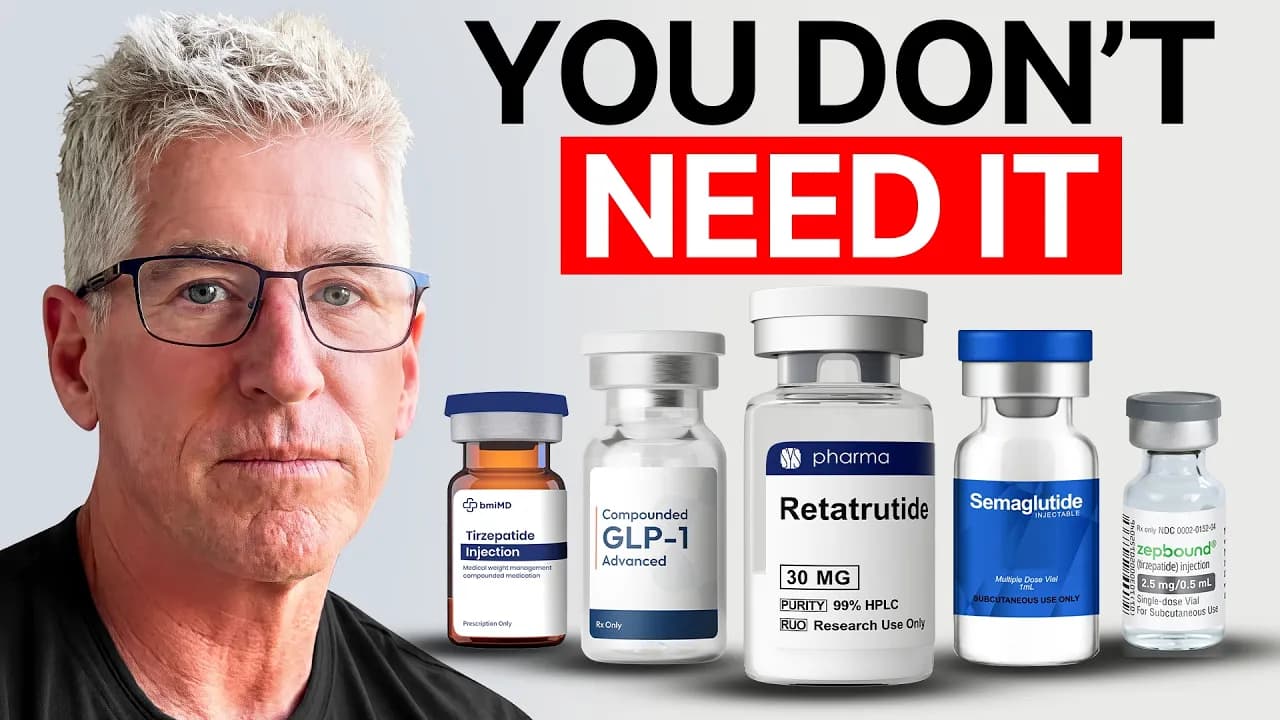
If you're thinking about taking a Zepic, Tzepides, reatride or any of the GLP-1 drugs for that matter, or someone close to you is, please give me the next few minutes before you make that decision. I'm Dr. Sha Omeira. I'm a physician and researcher, and I've spent years treating patients for what's underneath obesity, visceral fat disease, the metabolic damage, the things most doctors don't even measure.
In this video, I'll explain what these drugs actually do inside your body, the side effects almost nobody else warns you about, what happens when you stop taking them, the questions to ask before you start, and if you're already on one, exactly what to do so you don't end up regretting it.
What they are good at is suppressing the appetite. And because of that, your body shrinks because you're not eating as much and you become really catabolic. Now, to be sure, mostly you're catabolic consuming fat tissue. But what these drugs don't differentiate is the type of fat.
Does your doctor before he or she writes a script, do they know the difference between subcutaneous fat and visceral fat disease, inflammatory fat disease around your heart, around your organs, and filling your muscle? Should they be writing the script if they don't know the difference between that and that there's different types of subcutaneous fat, one is beneficial, the other is disease?
This is the problem with modern-day medicine. They don't know. And it's not taught in medical school, but I want to show you that difference.
First, this is visceral fat disease. The white stuff inside the abdomen. This is a super healthy individual with just a little bit of visceral fat inside their atom. Mostly the dark stuff, muscle and organ.
These are also muscles being filled with fat. These are the legs of this person filled with visceral fat. Are you beginning to see this trend? There's a lot of fat inside this person, a lot of fat inside their muscle. This person has huge, beautiful, healthy muscles. Their legs are large, filled with muscle, very little fat. So this is bad and this is good.
And subcutaneous fat is the fat on the outside. See this black line? This black line differentiates between deep subcutaneous fat, D for disease. It's inflammatory from the beneficial good subcutaneous fat called superficial subcutaneous fat and filled with rich atapene.
You just learned a lot more than what any physician probably writing scripts will ever tell you about this. You need to know what is happening inside your body. That's why I advocate everybody get an MRI and see what's going on.
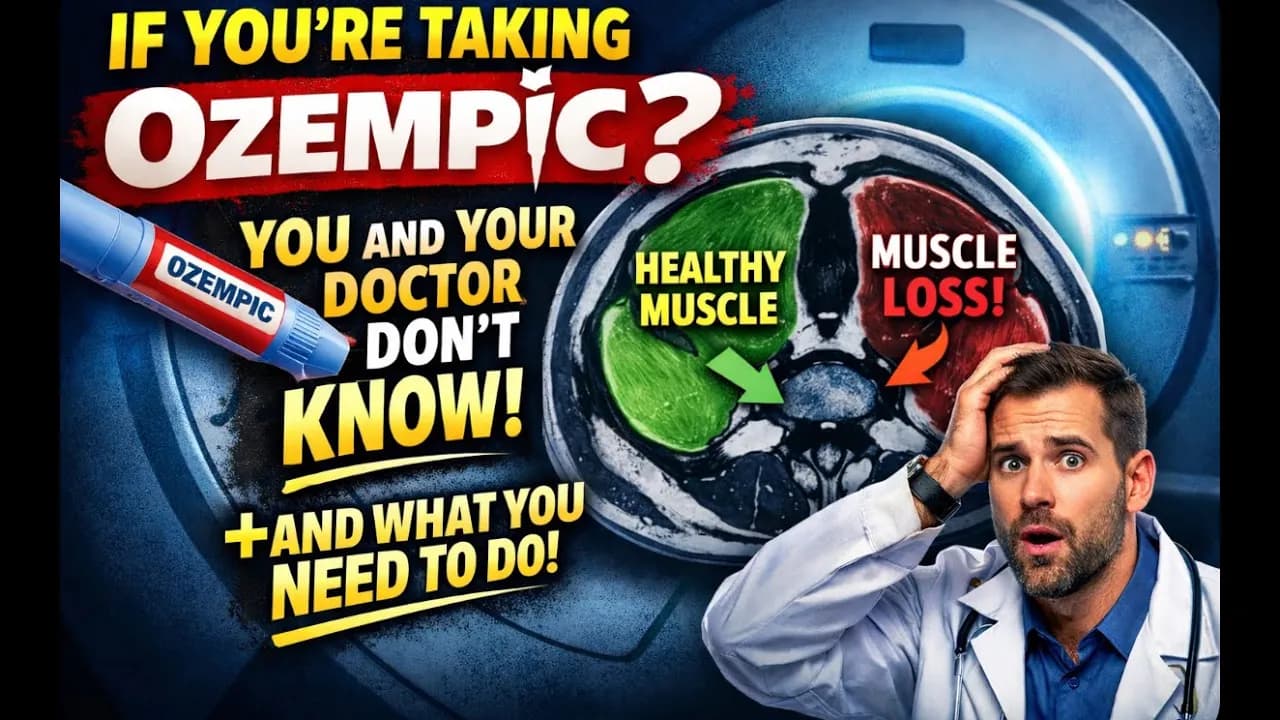
So, one of the big problems that happens when you take this is the good can go away with the bad. A recent study just came out showing it was up to 40% of what you were losing when you went on these dangerous drugs was beneficial tissue muscle. Nobody can afford to lose muscle when they're already obese and overweight.
But it looks like that number may have been overexaggerated. It's not quite as bad as that study reflects. Why? Because they were using a DEXA scan. A DEXA scan will not image this stuff, fat in the muscle. And so when this fat is disappearing, it looks like the muscle was disappearing. But the question is, how accurate are they in these studies looking at this fat and looking at this muscle?
To be sure, DEXA scan is a super poor way of imaging compared to MRI. It's why I only will work with client patients that get an MRI. Otherwise, it's a waste of time. Unless you know what you're tracking, you don't know if you're getting better or getting worse or really optimizing your treatment plan. Consider very well getting an MRI. They average 250 bucks to see what's going on in your body.
The weight returns. But let me characterize this more accurate. The disease returns. The weight would suggest that maybe muscle is coming back. But as it turns out, people regain the fat they lost in spades. And they become terrifyingly heavy again very quickly. And so they have to return to the medicines in order to stop the weight gain, the disease gain that they're experiencing. This is a rebound effect that's not being wellmanaged by a physician.
Doctor, I want to know where I am right now and I want to know where I am in 3 months and 6 months from now. Not just by a bathroom scale. My health is incredibly important to me. I want an MRI. Get an MRI, a baseline before you start these drugs to see where you are accurately with 100% certainty. Don't wait and do this afterwards. You need to know the difference. Demand an MRI. If your doctor won't order it for you, get one yourself. I already told you it's only $250.
In my honest opinion, they're really not best for anybody. The first thing you should be doing is trying to change your life and not relying on a drug. These drugs are always going to be second best to a life well-lived. You should try to change your life. Get an MRI and live in an optimal way and get the reinforcement you need to see that the decisions you made are working.
In many cases, muscle increases and disease is going away and you simply can't see it in a bathroom scale that barely moves because of the muscle gains you're getting and the loss of disease offset each other. Very, very important.
Who these drugs are not for are people who have irresponsible physicians and people who are not willing to track what is happening inside their body and end up getting themselves in a worse situation. I recommend you work with a physician who's experienced with managing these types of medications. They're complications and not just anybody.
I would again immediately get an MRI, see where you're at right now, and then continue taking the medications that you're on and see how this particular plan is working out for you. You don't really know how this drug is performing, the benefits, the side effects until you get that MRI.
So once again, the most important thing is finding your metric. It's not a bathroom scale. It's not cholesterol. When it comes to something as important as your health, you need the best metric. You need to look at actual disease in your body fleeing and the benefit when that disease flees of muscle growth. That only happens when you live optimally. You're not going to be building muscle and getting rid of disease just from taking a pill. Get an MRI. Your body, your health, and your life are worth it.
Whether you decide to take a GLP1 or not, the underlying thing you actually need to fix is the visceral fat disease and the metabolic damage these drugs are trying to mask.
Keep Sean OMara, MD JD, Health & Performance Optimizing in your library
Save the videos and channels worth coming back to, and find them again in one place.