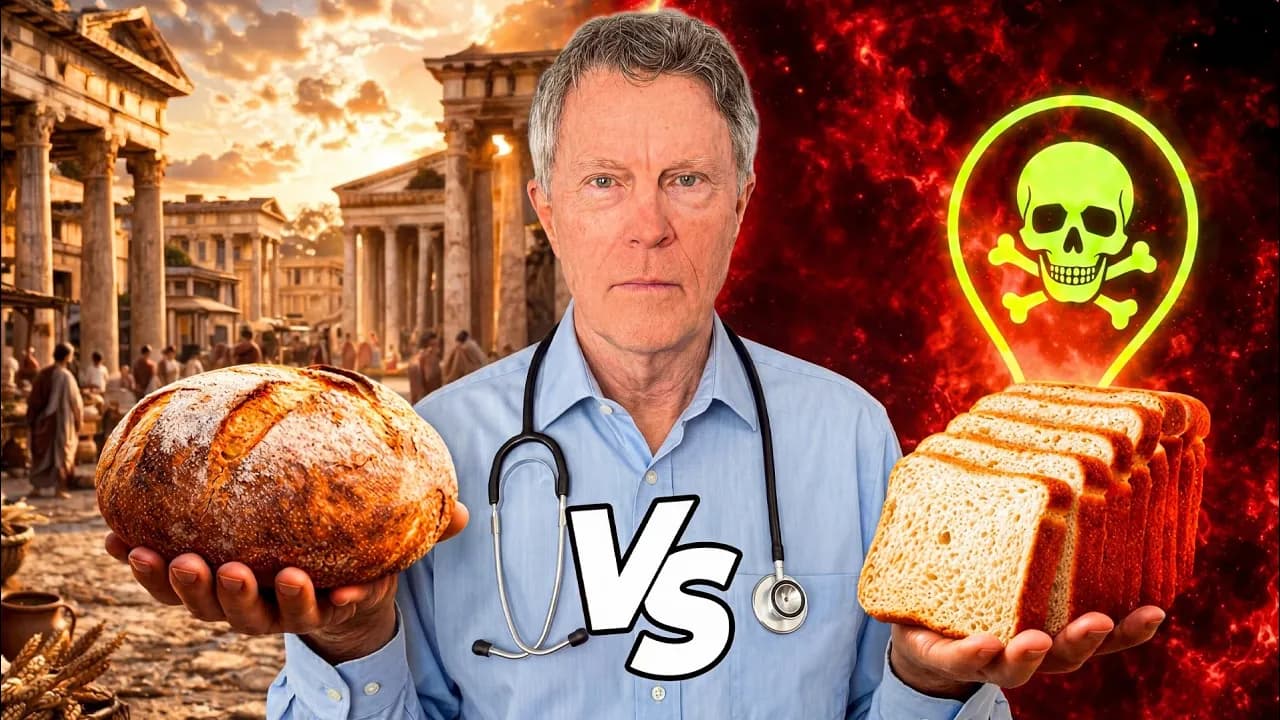
STOP Eating Bread Until You Watch This!
In a Nutshell
Bread's primary danger is its high starch content, which rapidly converts to sugar, causing blood sugar spikes (glycemic index ~75, similar to sugar) equivalent to hidden sugar, far more problematic for 90% of people than gluten, which affects only 1-7%. These spikes lead to insulin resistance, small dense LDL cholesterol, fatty liver, glycation damage (skin, eyes, kidneys, brain), and elevated fasting insulin (aim for 2-6). Whole wheat offers minimal benefits over refined (GI 75 vs. 72); opt for grain-free bread alternatives to avoid metabolic harm.
These notes were generated by AI and may contain inaccuracies.
The real danger in bread is not the gluten. Take a piece of bread, put it in your mouth, chew it for about 30 seconds without swallowing. It starts tasting sweet because your body releases an enzyme breaking down the starch into sugar. Bread is mostly starch, which is a string of glucose molecules on a chain—a different type of sugar that breaks down into sugar very fast. Even if the label says 0 g of sugar, it's hidden sugar. Wheat is in almost everything: morning toast, lunch wraps, pasta dinner, crackers, cereals kids eat, pizza, so-called healthy granola bars. An average American consumes wheat nearly every single day.
One of the biggest problems with bread is the blood sugar spike. The glycemic index for bread is 75, the same as for sugar. The glycemic index measures how fast a carbohydrate spikes blood sugar. On some charts, bread is even higher than sugar, creating a bigger spike than actual sugar. Everyone focuses on gluten, but gluten-free products replace wheat with potato starch, rice flour, tapioca starch, corn starch—all industrial starches with the same effect, minus the gluten.
Gluten is the protein in wheat, hard for humans to digest. A very small percentage of the population has a problem with it—devastating for some, but not the majority. 90% of the population has more issues with starch in wheat products than gluten. This applies to bread, pasta, cereal, crackers, biscuits, waffles, pancakes—metabolic explosions for blood sugar.
Starch affects LDL cholesterol: large particles are fine for most, but starch generates small dense LDL particles that invade arteries. High consumption creates excess blood sugar leading to fatty liver and glycation. Glycation occurs when sugar combines with protein (like hemoglobin in red blood cells) in the presence of heat, damaging the protein. A1C test measures average blood sugar over three months by checking glycated hemoglobin—how much sugar has damaged the red blood cells.
Chewing bread breaks it down to sugar, raising blood sugar. Insulin removes it fast, storing it in liver and as belly fat. Repeated spikes cause insulin resistance: cells lose sensitivity, pancreas produces more insulin. Normal blood sugar doesn't show insulin spikes, which occur 10-15 years before pre-diabetes or diabetes. Test fasting insulin—aim for 2-6. If 8 or 12, cut sugar and starch (hidden sugar).
Glycation damages skin (aging it), eyes (lens, retina), kidneys, joints (fragile), brain—not just blood vessels. For the majority, starch (hidden sugar) is the problem, not gluten.
Whole wheat bread's fiber doesn't buffer blood sugar much. Spike difference between whole wheat and refined wheat is minimal—still 65% starch. Test blood sugar before/after: almost the same. Glycemic index: whole wheat 75, refined 72—no real protection. Whole wheat as healthier is a myth.
1% of population has celiac disease (autoimmune)—devastating, avoid all gluten, but not replace with gluten-free products. 6-7% have non-celiac gluten sensitivity—avoid all grains. Modern wheat is hybridized for more gluten (stretchiness), with different genetics/chromosomes than ancient wheat.
This video targets 90% without gluten issues. If addicted to bread, use grain-free recipes. Links below for delicious alternatives tasting like real bread, safe for blood sugar.
Keep Dr. Eric Berg DC in your library
Save the videos and channels worth coming back to, and find them again in one place.