Fatty Liver Expert: Your Liver Is Filling With Fat Right Now - Dr David Unwin
In a Nutshell
Dr. Unwin argues that excess carbohydrate intake—especially from starch in bread, rice, potatoes, and cereals—is driving an epidemic of fatty liver, insulin resistance, and type 2 diabetes, even in young people, and that a low-carb, high-protein real-food diet can reverse these conditions for most patients. He shows that simple at-home checks like waist-to-height ratio and tools like continuous glucose monitors provide immediate feedback that packaged-food marketing hides. The key takeaway is that early dietary change, not medication, offers the best chance of restoring normal blood sugar and extending healthy lifespan.
These notes were generated by AI and may contain inaccuracies.
Your waist should be less than half your height. Half of a string measured to your height should go around the fattest bit of your belly. This is a simple test anyone can do at home. Fat on the belly is more worrying than fat on the legs or arms. Society has started to normalize things like the dad bod without realizing that is not how people are supposed to be.
Maybe a third of all people in the world with type 2 diabetes do not even know they have it. Every year of poorly controlled type 2 diabetes results in losing 100 days of life. People are being fooled by packaging and advertising.
A table of common foods was shown including cereal, potato, white rice, banana, and chocolate bar. The actual sugar content is much higher than most people expect. Corn flakes contain 8 teaspoons of sugar. A chocolate bar contains 7.5 teaspoons. A banana contains 6 teaspoons. A potato contains more sugar than expected. 150 grams of boiled rice also contains significant sugar. Rice is often mistakenly thought of as healthy.
Each person has multiple possible health futures, which could include cancer, multiple sclerosis, or other conditions. The goal is to help people pick a lifestyle that leads to the health future they want. The work focuses on behavior change.
Dr. David Unwin was named in 2018 among the top 10 most influential doctors in the United Kingdom. His main concern is that each person has multiple health futures and helping people choose lifestyles that lead to better outcomes. The particular focus is on young people because they have the longest time to make a difference. It is getting harder to make good health choices. There is a pandemic of poor metabolic health.
Yesterday in clinic, Dr. Unwin saw two people under age 25 with poorly controlled diabetes. One was too heavy to weigh. This situation is completely new. When he started practicing in 1986 just north of Liverpool, obesity was rare and there was not a single case of type 2 diabetes in anyone under 55. Type 2 diabetes was previously called maturity onset diabetes because it affected older people. The name had to be changed because of the epidemic now affecting young people.
Young people are losing life expectancy. Society is sleepwalking into a metabolic disaster, and young people are paying the greatest price. The normalization of the dad bod and big tummy is part of the problem.
The advice is applicable to people in their 50s as well. UK government figures show that for every year of poorly controlled type 2 diabetes, a person loses 100 days of life. Whatever age a person is, poorly controlled diabetes reduces life expectancy. About a third of people worldwide with type 2 diabetes do not know they have it because they have not been tested.
Cardiovascular issues are a major cause because high blood sugar damages arteries over time. A rising cause of mortality for people with diabetes is cancer. Eight forms of cancer are strongly associated with diabetes.
Type 1 diabetes is the form some people are born with. Type 2 diabetes develops differently. High blood sugar damages the non-stick lining of arteries called the glycoalix within six hours. Blood glucose comes from carbohydrate-heavy foods, not just table sugar.
Insulin is the hormone produced by the pancreas that pushes sugar out of the bloodstream and into cells where it can be used for energy. If more carbohydrate is consumed than needed, the sugar is turned into fat inside cells because it is safer than having it damage arteries.
Dr. Unwin developed type 2 diabetes from a heavy biscuit habit. As senior partner, patients brought him biscuits as gifts. He was taking in more sugar than he needed and not exercising enough. His waist grew larger. His insulin was working to remove the excess sugar, resulting in a belly and fatty liver. A third of people in the developed world have fatty liver.
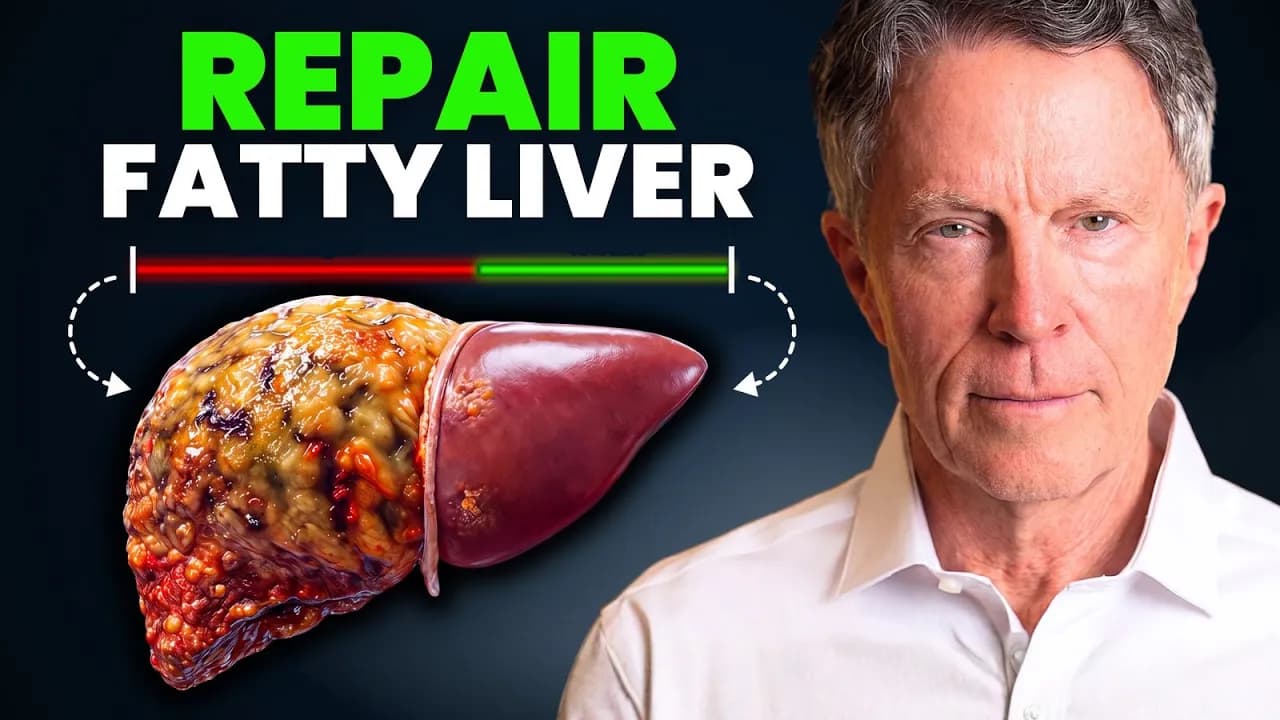
A healthy liver is shown next to a fatty liver. The fatty liver is yellow due to accumulated fat. The liver stores excess glucose. Fatty liver interferes with the work of insulin, leading to insulin resistance. Insulin is no longer as powerful, making it harder to deal with carbohydrate and sugar.
Fatty liver develops for about 10 years without symptoms. Professor Roy Taylor from Newcastle University identified this period. Fat is then laid down in the pancreas gland. The ability to produce enough insulin collapses. At that point blood sugar regulation fails. The concern is why wait until full type 2 diabetes develops.
Since 2013, Dr. Unwin has monitored hundreds of patients. Of those with pre-diabetes, 93% achieved completely normal blood sugar with a low-carb approach, and this lasted for years. For people who already had type 2 diabetes, there is a 73% chance of normal blood sugar if addressed early. Waiting five more years reduces the chance to 50%. The longer the delay, the lower the chance of avoiding medication.
The glycemic index compares different carbohydrates to pure glucose, which scores 100. The glycemic load is better because it predicts how a specific portion of food will affect blood sugar. Glycemic load accounts for the density of sugar in food. For example, a large amount of watermelon would be needed to equal the sugar impact of a chocolate bar because watermelon is mostly water.
For the first 25 years of practice, Dr. Unwin followed guidelines and tried to be a good doctor. He noticed the health of the population he cared for was deteriorating. Prescribing lots of drugs felt like a mini failure because how can someone be well if taking six tablets a day.
A patient Dr. Unwin had known for over 10 years had poorly controlled diabetes and was very heavy. He wrote to her concerned she was not taking her metformin. She came in angry and explained she had normal blood glucose despite stopping the medication. She had learned online that bread, rice, and breakfast cereals are sugar. When she cut those foods, she no longer needed metformin. She said it was schoolboy biology and asked why he had never told her. This was the first case of drug-free type 2 diabetes Dr. Unwin had seen in 25 years.
Dr. Unwin's wife Jen is a clinical health psychologist specializing in the role of hope in disease. Around the same time, she bought the book "Escape the Diet Trap" by Dr. John Briffa. The book explained the low-carbohydrate approach to insulin resistance and type 2 diabetes in medical terms. Jen suggested they try the low-carb diet themselves and invite patients to join. They offered to work for free in their own time so no practice resources were used.
They found 18 patient volunteers plus themselves and Jen, totaling 20 people. They met every Monday night to learn how to cook low-carb meals. Nurse Heather volunteered to help for free. Liver function improved dramatically, often by a third or 50% within weeks, even in people who had abnormal results for 10 years. Weight loss occurred consistently. Participants reported not feeling hungry and not needing breakfast. Dr. Unwin's own high blood pressure normalized. Hemoglobin A1C results showed spectacular improvements in average blood sugar.
Dr. Unwin's mental powers improved and he could concentrate better. He needed less sleep and no longer required a lunchtime nap on his doctor's couch to get through the day.
The speaker describes experiencing significant positive changes after modifying his eating habits: needing an hour less sleep per day, improved mental clarity and cognitive function, better ability to cope with problems, and feeling physically stronger as if being a younger man.
Everyone listening has a variety of different health futures ahead of them, and which future they end up in will be determined by the everyday decisions they make.
The speaker previously believed that exercise would not make much difference to health outcomes. He used to give patients the advice to eat less and move more, sometimes referencing the Belsen concentration camp analogy to suggest that starvation leads to weight loss. He acknowledges this was a horrible thing to say to patients because it blamed them for their obesity problems.
The speaker admits he used to blame patients when his advice failed. He would recommend two tablespoons of All-Bran cereal a day with skim milk, multivitamins, and a couple of pints of skimmed milk daily. When this advice did not work, he blamed the patients rather than questioning whether the advice itself was flawed.
For 25 years, the speaker blamed patients for their failure to lose weight when it was actually his failure because he did not give them advice that worked. He never joined the dots that the failure was not theirs but his own. He now believes that lifestyle is key, whereas previously he fundamentally believed that medication and drugs were what he should be using, with lifestyle as a sort of add-on.
Even successful, intelligent people often lack basic nutrition knowledge. Examples include a very successful businessman asking whether pizza or Nando's chicken was healthier, and a Premier League football superstar legend asking whether spaghetti carbonara was a health food because he had been told to carb load during his football years.
There are only three macronutrients: protein, fats, and carbohydrate. Many people have not even grasped these basic concepts.
In Dragon's Den, someone pitched a fruit snack business selling dried exotic fruit pieces like mango. The product contained 60 to 70% sugar, essentially making it candy, but it sold well because of the halo effect of the word fruit on the packaging.
A typical day often involves consuming sugar with sugar with sugar all day long: cereal for breakfast with orange juice, a snack bar or crisps on the way to work, a muffin mid-morning, an apple, sandwiches for lunch, cake or ice cream, then chips or pizza for dinner. There is hardly any protein in this pattern. Many young people now eat snacks all day long and struggle to consume proper protein-containing food.
The speaker laid out several foods for a test: corn flakes (unfrosted), a baked potato, 150 grams of boiled rice, a very ripe banana, and a chocolate bar. Each sugar cube represented 4 grams or one teaspoon of sugar.
Before learning the correct values, the speaker estimated: corn flakes (1 teaspoon), potato (1 teaspoon), rice (0 teaspoons), banana (1 teaspoon), and chocolate bar (3 teaspoons).
The speaker developed a system to represent glycemic load using 4-gram teaspoons of sugar instead of grams of glucose, making it easier to communicate with children, elderly people, and teachers about the consequences of dietary choices.
The correct sugar equivalents are: corn flakes (8 teaspoons), potato (9 teaspoons), chocolate bar (7.5 teaspoons), ripe banana (6 teaspoons), and 150 grams of boiled rice (10 teaspoons). Rice had the highest sugar equivalent of all the items tested.
The speaker helped set up the Public Health Collaboration charity with Dr. Rangan Chatterjee 10 years ago. Their sugar infographics are available in 35 languages, are not copyrighted, and can be freely used by anyone. The white rice fact has astonished people worldwide.
Orange juice contains a lot of sugar. When fruit is juiced, the sugar hit is fast. Drinking orange juice causes blood sugar to rise rapidly, triggering an insulin response, which then causes blood sugar to fall and leads to renewed hunger.
Eating biscuits causes blood sugar to rise, followed by a heavy insulin response that can cause low blood sugar, leading to the desire for more biscuits. This creates a cycle. Starting the day with a sugary breakfast without enough protein drives hunger and explains why people feel ravenous by 10 a.m.
In a chocolate making class in Peru, the speaker learned that white chocolate contains approximately 80% white sugar, with syrup and oil added. This knowledge led him to stop eating white chocolate entirely.
Many people claim to be addicted to chocolate. Milk chocolate contains many teaspoons of sugar, while 90% dark chocolate contains only about two teaspoons per bar. Those who say they cannot eat dark chocolate because it is too bitter are actually addicted to the sugar rather than the chocolate itself.
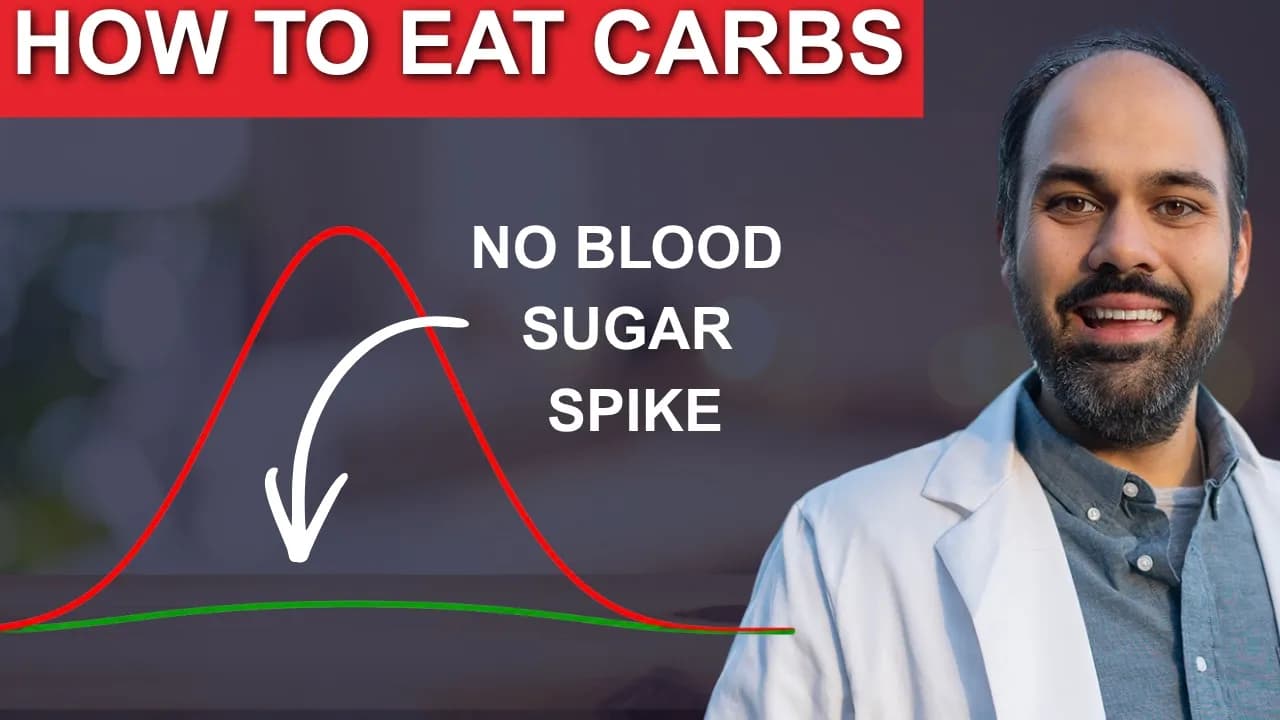
Smoothies are not healthy despite common perceptions. The speaker monitors his blood sugar using a continuous glucose monitor and can check readings on his phone at any time.
A normal person's entire blood system (approximately 5 liters) contains only one sugar cube worth of sugar. Glucose is vital but toxic in excess. The level in blood is controlled minutely.
For someone with diabetes or insulin resistance, eating a whole banana can double blood sugar levels because the body cannot regulate it properly. A banana contains far more sugar than the body needs at any given time.
People struggle to determine if foods are healthy because of marketing on packaging. Products may claim to be made with real fruit juice or contain fruit, which misleads consumers. The speaker advises looking beyond front-of-pack marketing claims.
For someone with insulin resistance or type 2 diabetes, meals should be based on protein such as chicken or eggs. Add green vegetables that the person tolerates, then make them tasty with full fat mayonnaise, butter, or olive oil rather than sugary sauces like barbecue sauce, which can contain 30 sugar cubes per bottle.
Eating real food that is not in a packet is preferable. Packaged foods require vigilance. Look at the carbohydrate content, remembering that every 4 grams is broadly equivalent to sugar.
Starchy carbohydrates should be understood as glucose molecules holding hands. Digestion breaks these bonds, releasing free sugar. Even though starch is not sweet, it becomes glucose once digested. This is demonstrated by the school experiment where chewing bread for a long time causes it to taste sweet due to amylase in saliva converting starch to sugar.
Patients often say they have given up sugary things like sugar in tea and coffee but still have high blood sugar. They do not realize that starch is sugar.
People frequently mention bread as a common food item. Research indicates a single slice of white bread contains approximately 0.5 sugar cubes, though a full loaf can contain up to 12 sugar cubes. The wheat in bread also converts into sugar. On a teaspoon of sugar equivalent scale, even a small slice of brown bread equals about 3 teaspoons of sugar.
Healthy Bread Options
Whether bread is healthy depends on insulin function. Young people who exercise frequently with good insulin sensitivity may tolerate brown bread. For those with insulin resistance, low-carb bread is recommended. Sprouted grain bread and 100% whole grain rye are often cited as healthier options because they contain zero added sugar and high fiber content.
To determine if bread is appropriate, consider exercise levels and measure fasting insulin. A continuous glucose monitor provides real-time feedback on blood sugar response. This allows experimentation with different foods to observe individual reactions within an hour.
Reading the back of food packages helps build mental models of carbohydrate, sugar, fiber, and protein content. Focus should extend beyond added sugar to total carbohydrate content. In the UK, carbohydrate is listed separately from fiber, while US labeling includes fiber within total carbohydrates, making absorption calculations more complex.
Protein supports muscle development. Carbohydrates are optional depending on individual needs. Fats help absorb fat-soluble vitamins. Products with many preservatives or lengthy ingredient lists raise suspicion.
Consuming foods like Mars bars or white rice causes not only glucose spikes but also increased hunger later, leading to more sugar consumption. Patients from 2013 noted the absence of hunger as a fascinating outcome. Higher carbohydrate intake correlates with increased hunger. Fasting reveals that skipping meals does not necessarily increase hunger exponentially.
On a ketogenic diet, hunger diminishes significantly. Foods like cinnamon rolls that previously triggered cravings become unappealing. The brain registers these items as non-food. This change represents a significant shift in relationship with previously tempting foods.
The ketogenic diet should be considered based on personal goals such as weight loss, managing type 2 diabetes, or addressing mental health conditions. Nutritional psychiatry shows promise for conditions like bipolar disorder. The approach involves identifying current carbohydrate intake and gradually reducing it while measuring outcomes like blood work or weight.
Ketosis provides mental clarity beneficial for extended speaking engagements, television appearances, and complex business meetings. Individuals report more consistent cognitive performance and articulate speech when following a ketogenic approach compared to days with fluctuating mental sharpness.
Health objectives include cognitive clarity, physical appearance, strength maintenance, and extending healthspan beyond lifespan. The ability to remain active and capable with age depends on current decisions rather than inevitable decline.
The GRIN model, developed from CBT principles, provides a structured approach to behavior modification. The components are:
- Goals: Define specific future outcomes in one year if current actions succeed
- Resources: Identify existing strengths, intelligence, past successes, and support systems
- Increments: Determine small, realistic steps toward established goals
- Notice: Observe and reflect on benefits when things go well
Rather than ambitious targets like daily gym visits or achieving a six-pack by summer, consistency serves as a sustainable goal. This approach allows flexibility for shorter sessions on challenging days while maintaining momentum. Reducing the size of success prevents feelings of failure.
A WhatsApp group with friends created accountability through a rule where the least consistent member each month is removed and replaced. Workouts are logged in the group chat with weekly and monthly winners. This system has maintained consistency for four years.
The model engages individuals in thinking about a better future rather than focusing on guilt or past failures. This approach proves more effective than directive advice. In medical settings, exploring patient hopes alongside problems creates more energetic and hopeful interactions.
Living with someone facing addiction or health difficulties involves significant uncertainty and chaos. Engaging people in conversations about goals can facilitate change. The speaker's first wife struggled with severe multiple addictions over 12 years, highlighting the difficulty of supporting loved ones through such challenges.
The speaker's current wife of 30 years experienced ultra-processed food addiction, initially perceived as a weight problem. This led to cycles of boomerang dieting with attempts to create treats for children that were consumed personally instead.
An intelligent woman repeatedly ate foods that harmed her health, leading to arguments and defensiveness until she recognized her behavior as addiction. This parallels cigarette and alcohol addiction but involves ultraprocessed food. About 14% of the population shows aspects of ultraprocessed food addiction. Intelligent people often burst into tears when asked about their food addiction because they have never told anyone, especially regarding bread. Patients describe feeling embarrassed and unable to control their bread intake.
A successful, intelligent 55-year-old businessman with type 2 diabetes and severe knee damage needed surgery but was denied due to poor blood sugar control. He could not walk easily or run his business. Despite monthly low-carb advice over four years, he repeatedly lost and regained weight with excuses about grandchildren, holidays, and Christmas. His wife revealed he was eating bread from the fridge at 4 a.m. She tried throwing bread away, then adding liquid detergent to discarded bread, but he still ate it from the bin. She escalated to spraying bleach on the bread and leaving the bleach can visible, yet the behavior continued.
The three-pronged intervention included low-carb eating, a continuous glucose monitor for immediate feedback on blood sugar spikes, and a low dose of GLP-1 drugs to reduce cravings. The patient could abstain rather than moderate. The CGM provided visible feedback, the medication reduced mental noise around food, and ongoing support helped him succeed. He eventually had the knee surgery. Maintenance is required for life.
A patient achieved drug-free type 2 diabetes remission but disappeared and returned with two dead toes requiring amputation due to diabetes-related poor blood supply. The wounds healed slowly because of high sugar levels. Remission was re-established with determination from both the patient and his wife, though it remains a struggle requiring ongoing support. Intelligent people still experience strong cravings where foods "call to them."
Honesty is the first step for people who cannot control their eating. Without acknowledging the addiction, change is impossible. Dr. Unwin shared his own year-long struggle to give up chocolate ginger biscuits, first switching to plain digestives, then oat biscuits, and finally almonds. He described it as weaning like methadone and admitted he was not ready for cold turkey. Jen Unwin advocates stopping abruptly.
After honesty, identify exactly which foods trigger the addiction. Then create a specific plan for abstinence, because one biscuit or one portion often leads to tomorrow's promises that never materialize. Share the issue with supportive loved ones and ask for gentle tolerance rather than policing, which can cause deceit and hiding wrappers. Jen Unwin's book "A Fork in the Road" addresses food addiction; all proceeds go to a charity helping people with this condition. It is available on Amazon for approximately £10.
A French study linked 100 ml of sugary drinks daily to nearly 20% increased overall cancer risk. Women consuming two or more diet drinks daily have over double the risk of early-onset colorectal cancer. High sugary drink intake correlates with 78% higher risk of estrogen-dependent endometrial cancer. Daily 20-ounce sugary soda consumption shortens telomeres by an amount equivalent to 4.6 years of biological aging. Chronic hyperinsulinemia inhibits apoptosis, allowing damaged cells to survive. Fructose processed in the liver becomes lipids that some tumors use to build cell membranes. High added sugar diets elevate C-reactive protein, an inflammation marker linked to tumor progression and metastasis.
Diet ranks as the second most common cause of cancer after smoking. A premortem exercise imagining receiving a cancer diagnosis from lifestyle choices helps clarify that no sugary drink is worth the regret. In the UK, health span is declining while lifespan slowly increases. Healthy life expectancy has fallen by roughly 2 years over the last decade. Men and women can expect about 60 years in good health, followed by up to 23 years of poor health and chronic illness. Every taxpayer in England pays an extra £7,000 per year in taxes due to ultraprocessed food consequences, with two-thirds of the cost stemming from lost productivity and tax revenue from people too ill to work.
The United States has the largest health span to lifespan gap globally, with worse statistics than peer nations despite lower overall life expectancy. A simple low-cost test uses a piece of string equal to one's height, cut in half. The half-length should fit around the waist at its widest point. A waist larger than half one's height indicates excess abdominal fat, which is more metabolically concerning than fat on limbs. Insulin resistance tends to deposit fat on the belly.
A real-food, lower-carbohydrate diet with plenty of protein and healthy fats is preferred for obtaining necessary nutrients. Modern crops have poorer nutrient profiles than in the past due to current farming practices.
The nutrient profile of crops grown today is not nearly as good as it was 100 years ago. This problem relates to soil depletion. Continuously adding nitrogen and harvesting crops results in produce that contains less zinc and magnesium in particular. Although the goal is to achieve health through a real food diet, some nutrients that grandparents could obtain from food are now difficult to acquire. Magnesium is especially challenging to get in sufficient amounts without supplementation.
Magnesium is very difficult to obtain in adequate quantities from the modern diet. Absorption decreases with age, and many medications interfere with magnesium uptake, particularly drugs for acidity. Magnesium supplementation is recommended for most people.
In personal experience, magnesium supplementation was effective at eliminating muscle cramps and improving sleep quality.
Different forms of magnesium serve different purposes. If someone tends to be constipated, magnesium citrate is beneficial because it has a laxative effect and some absorption occurs. For individuals without bowel issues who seek better sleep or mood support, magnesium glycinate or threonate is preferable because it crosses the blood-brain barrier without affecting constipation.
A story illustrates magnesium deficiency in modern farming. After receiving a cow as a gift, the farmer mentioned losing 15 cows that year to a condition called staggers. The grass was so deficient in magnesium that cows would die from fitting without supplementation. The farmer required a promise to provide magnesium supplements before allowing the cow to be taken.
At the same time, a patient experienced repeated fitting episodes that led to intensive care admissions. After ruling out other causes like brain tumors, the issue was identified as magnesium deficiency caused by medication the patient was taking.
Magnesium deficiency affects most people on the modern diet. Blood tests are problematic because serum magnesium does not reflect intracellular levels. The accurate measurement requires an intracellular magnesium test. A practical approach is to try a magnesium supplement and observe how one feels.
Five daily supplements are taken: vitamin D due to limited sun exposure and darker skin tone, magnesium, creatine, a fiber supplement to help reduce LDL cholesterol based on blood test results, and a multivitamin to cover nutritional gaps.
Taking too many supplements is a common issue. People sometimes arrive with carrier bags full of various supplements, making oversupplementation easy, particularly with vitamin D and other vitamins. Blood test results should guide supplementation decisions.
Two blood tests were conducted recently: one through Function Health and another through Nico Health, a company founded by Spotify's Daniel Ek. Nico Health offers a $299 screening that includes blood tests, circulation assessment from neck to toes, a body scanner taking 2,000-3,000 photos to track moles and heartbeat, and immediate results displayed on a large screen showing all body systems. This contrasts with previous £7,000 private screenings that took six to seven hours with results delayed by two weeks.
Processing blood test results with AI tools revealed deficiencies in omega-3 and vitamin D, along with high LDL cholesterol. A fiber supplement was recommended to address the LDL levels.
Screening should not simply frighten people. It needs to connect results to actionable steps and help individuals understand what they can do. Leaving patients worried without guidance is unhelpful. Knowing one will die at a certain age from a specific cause provides no value if nothing can be done about it. The focus should be on optimizable factors.
Health inequality is worsening. In the UK, moving northward correlates with declining health outcomes. Similar disparities exist in the United States between regions like California and other areas. Private healthcare access creates unfair privilege. Working exclusively within the state health service is a deliberate choice to avoid contributing to this inequality.
Social media helps democratize health information because it costs little to access. Podcasts reaching millions of people contribute to education. However, conflicting messages from newspapers and experts create confusion. Real-world data from clinical practice provides a more reliable basis than cherry-picked studies.
Publications are based on real-world data from the UK National Health Service in northern England near Liverpool. Patients are allocated by the state rather than selected, preventing bias toward wealthier or longer-living individuals. This approach serves as proof of concept. Success achieved in this setting, if replicated in Australia, New Zealand, and North America, strengthens the validity of the findings.
The question left for the guest was: If humanity organized to make contact with a more intelligent species, who should represent humanity and why? The response nominated David Attenborough. At 100 years old, he has spent decades thinking about the planet. His selection reflects passion for biodiversity, sustainable agriculture, and sustainable food systems. Aliens would likely appreciate him.
Notable qualities include being a very kind human with a pleasant speaking style. Natural storytelling ability is rare and valuable because the human brain is oriented toward stories. The cow story about magnesium deficiency remains memorable long after facts might be forgotten. Depth of experience, humility in admitting past mistakes, and willingness to acknowledge imperfection build trust. The ability to simplify complex information and build bridges between science and the average person is remarkable. Forty years in general practice develops this skill through careful observation of audience engagement and patient reactions.
Following on X (formerly Twitter) at @lowcarbGP helps amplify the message. Supporting the Public Health Collaboration charity is encouraged. The charity was founded ten years ago by 16 clinicians seeking to improve public health advice. Conferences are open to attendees. Each person should view themselves as an experiment on their health journey, set clear goals, notice what works, measure outcomes, and avoid fear of experimentation.
Continuous glucose monitors offer hope for individualized feedback. Devices costing $20-30 on Amazon allow real-time blood sugar monitoring. Giving one as a gift instead of a useless ornament could help loved ones learn about their blood sugar responses. Personal experience revealed that many foods assumed to be sugar-free, such as ketchup, actually contain significant amounts. Once glucose responses are visible on a phone, they cannot be unseen.
A continuous glucose monitor reading showed completely level blood sugar, which is desirable. This stability results from avoiding foods that raise blood sugar. Stress can also elevate blood sugar levels. The absence of a spike during the conversation indicated a safe and comfortable environment.
Type 2 diabetes is a new problem for pediatricians. It is now an international issue affecting children under 16 worldwide. Pediatricians have received no training for this disease because it was not previously seen in children. A group of pediatricians requested training on managing type 2 diabetes in their patients.
Keep The Diary Of A CEO in your library
Save the videos and channels worth coming back to, and find them again in one place.