Bread is a Distraction, Get it Out of Your Life!
In a Nutshell
Bread spikes blood sugar above 140 mg/dL, inflaming arteries and seeding plaque that leads to heart attacks and strokes. Individual finger-stick testing shows even "healthy" whole-grain, sourdough, or homemade breads raise glucose dramatically, while almond-flour or coconut-flour alternatives may not. Skip bread entirely and test, don't guess, to protect arterial health.
These notes were generated by AI and may contain inaccuracies.
The Dr. Brewer Show focuses on preventing heart disease, heart attacks, strokes, blindness, and kidney disease through arterial health. Dr. Ford Brewer, former head of preventive medicine at Johns Hopkins, hosts the program with colleague Dr. Jesus Vega.
Dr. Brewer identifies bread as his personal weakness. He avoided pasta and spaghetti but found bread irresistible, particularly New York bagels from food trucks. Bread served as his primary calorie source when eating out frequently due to work travel.
Bread holds deep cultural significance across religions, including Christian and Jewish traditions with phrases like "let us break bread together." Despite its universal acceptance and comforting nature, bread's health impacts warrant examination.
Johns Hopkins promoted low-fat dietary recommendations 30-40 years ago, with the DASH diet still being taught by physicians. This low-fat, low-salt approach contributed to bread being viewed as an acceptable calorie source.
When wheat is milled into flour, bran and germ are removed, leaving pure starch that converts to glucose within seconds. This glucose floods the bloodstream within minutes, triggering rapid insulin response. The process creates unnecessary stress on the metabolic system when repeated three to five times daily.
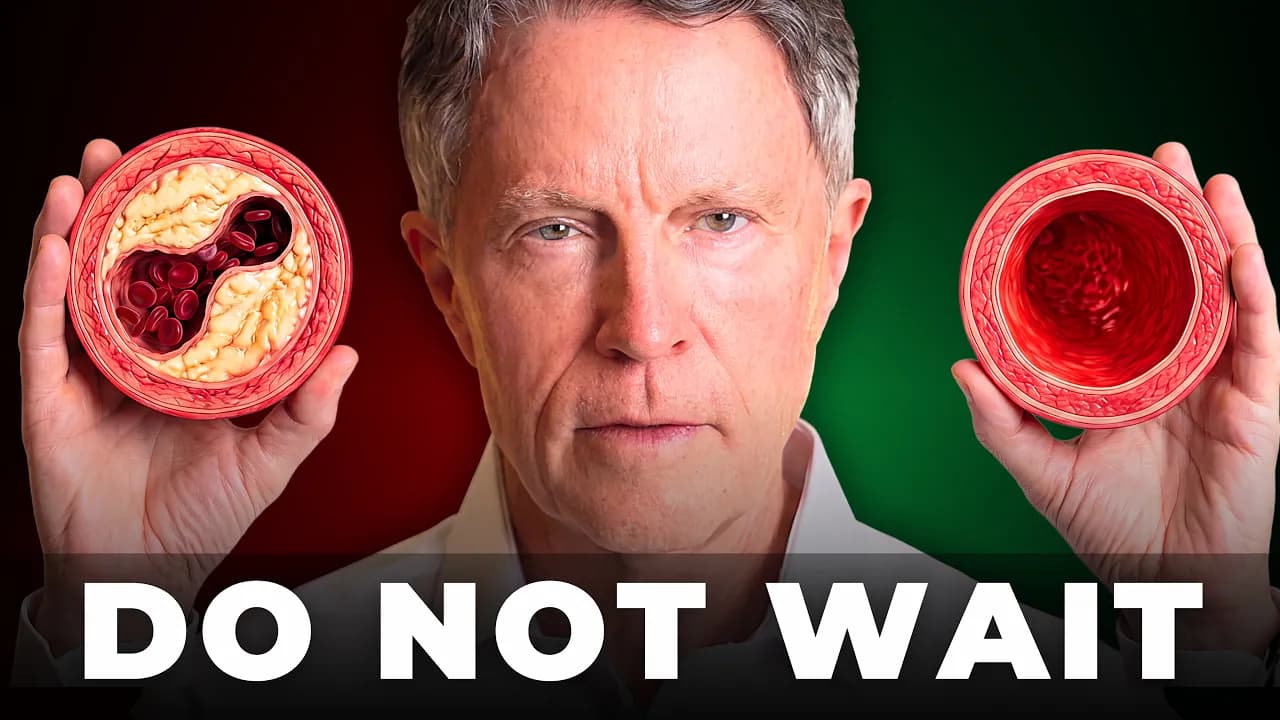
Blood sugar levels exceeding 140 mg/dL cause arterial inflammation and damage. The inner lining of artery walls becomes irritated, creating the starting point for plaque formation that leads to heart attacks and strokes. Bread consistently drives blood sugar above this threshold.
Bread occupies plate space that could contain artery-protective foods like vegetables, legumes, eggs, and fish. It provides satiety without delivering cardiovascular system requirements, functioning as a nutritional distraction.
Bread manufacturers market products as healthy alternatives through labels like "whole wheat," "multigrain," "ancient grains," "sourdough," and "sprouted grains." These claims often disguise refined flour content. Brown coloring does not indicate nutritional quality.
Individual blood sugar response to specific breads must be tested rather than assumed. A glucometer provides accurate data compared to theoretical health claims. The question shifts from whether bread is "allowed" to what specific breads do to individual blood sugar levels.
Almond flour substitution for wheat flour requires individual testing. The six-step protocol begins with "test, don't guess" to determine personal metabolic response rather than relying on general assumptions about alternative flours.
A house call demonstrated that homemade whole grain bread made from wheat berries raised blood sugar to over 250 mg/dL in one individual, proving that even high-quality homemade bread can significantly impact blood glucose levels.
A viewer described making microwave bread using flax seed, psyllium husk, baking powder, apple cider vinegar, and egg whites. Dr. Brewer noted that coconut flour-based breads did not raise his blood sugar, suggesting alternative flour options may work for some individuals.
Dr. Brewer describes his daily lunch approach: wrapping white American cheddar and bacon in ham or roast beef, eliminating bread entirely while maintaining a sandwich-like meal structure.
Modern bread differs significantly from historical varieties due to genetic modification through analysis of variance (ANOVA) techniques. Ancient bread contained lower levels of glutens and gliadins that trigger inflammatory responses in genetically susceptible individuals, affecting over 50% of the population.
Contemporary bread functions more like historical "cake" - a confection designed for palatability and convenience. The genetic modifications prioritized milling ease and taste over nutritional considerations, creating products that trigger inflammatory pathways.
Food epidemiology relies heavily on dietary recall questionnaires that ask participants to remember meals from days or weeks prior. This methodology introduces significant error rates, making much published nutrition research unreliable for individual dietary decisions.
Animal studies demonstrate that sugar and high-fructose corn syrup activate the same neural reward pathways as cocaine, providing biological evidence for sugar addiction mechanisms. Epidemiological studies require critical evaluation rather than automatic acceptance.
Grinding wheat berries for homemade flour does not guarantee safe blood sugar response. House call testing showed wheat berry bread raised blood sugar to over 250 mg/dL, indicating individual variation in metabolic response to whole grain products.
Oral glucose tolerance tests (OGTT) miss approximately 15-20% of metabolic dysfunction cases. Finger stick testing provides more immediate feedback on specific food responses compared to periodic A1C measurements taken every six months.
Dr. Brewer offers DJ from Illinois a free Heart Reveal lab test to assess inflammation and metabolic resistance levels. Given DJ's height of 6'4", there's concern about potential plaque formation, with strong advice to avoid bread including wheat berry varieties.
The show contact number is provided as 888-632-6163 for cardiovascular prevention and metabolism questions. The program emphasizes that the show belongs to viewers and covers broader topics beyond just bread.
Discussion addresses skepticism around leaky gut terminology, noting that researcher Dr. Fasano at University of Maryland developed the zonulin research program. Initial medical community skepticism has shifted, with the research program having an annual budget of approximately $50 million and having sequenced both the zonulin protein and gene.
Zonulin is identified as a pre-protein haptoglobin 2. The gene mutation creating differences in haptoglobin protein originated in India approximately 20 generations ago.
Mark from Georgia shares his experience with mitral valve replacement and frustration that his cardiology team (surgeon, cardiologist, electrician, and plumber) never discussed food or plaque. He has been unsuccessful in obtaining a CIMT test recommendation.
The discussion highlights that cardiologists have shifted toward interventional procedures, spending time on advanced disease rather than prevention, similar to how endocrinologists focus on severe diabetes cases.
Sourdough bread is compared to sprouted grains as theoretically beneficial due to fermentation potentially decreasing carb load. However, Dr. Brewer recommends testing blood sugar response rather than relying on theory.
The advice is to "test, don't guess" when evaluating food impacts. Mark receives a glucometer offer to test his response to sourdough bread specifically.
The Heart Reveal panel examines cardiovascular inflammation markers beyond standard cholesterol testing. It includes blood fat markers to understand metabolic disease and insulin resistance markers, recognizing that undiagnosed prediabetes is the primary cause of inflammation.
The panel differs from conventional approaches by going beyond fasting glucose and A1C testing. Results include consultation with staff to interpret findings and determine next steps.
Fred from Arizona, who participates in endurance cycling, running, and triathlon events, questions the conventional advice to consume more carbohydrates for endurance performance.
Dr. Brewer shares his experience as a former endurance runner who completed multiple official marathons, typically running half marathons twice weekly, and one ultra-marathon. He describes experiencing digestive issues during a marathon after consuming the traditional pre-race spaghetti dinner.
The discussion challenges the myth that endurance requires carbohydrate intake, noting that fat-adapted athletes don't need carbs for endurance or intensity. The body preferentially burns carbs when available, but once fat-adapted, performance can be maintained without carbohydrate fueling.
Fred's training includes 30-40 miles on weekends, 15-20 miles during weekdays, and preparation for a 150-mile bike ride (century and a half) over two days in late July.
The panel is offered free to DJ from Illinois, with affordable pricing available for others. The test identifies cardiovascular risk through inflammation markers in arteries and specific lipid particles related to insulin resistance.
A new AI system called My Digital Twin is being developed specifically for metabolic disease and prediabetes, designed to provide more accurate guidance than general AI systems like ChatGPT. The system recommends appropriate labs based on clinical experience, interprets results, and coordinates with human coaches.
Deborah from Maine reports nutrient absorption issues, malabsorption problems, and requests B12 and D3 testing. Her B12 level measured 236 (within range 200-1000) and D3 levels consistently in the 30s despite supplementation attempts.
An EGD showed minor inflammation, and she suspects leaky gut issues. Discussion emphasizes that B12 blood levels are poor bioindicators as they can be high during functional deficiency or low when functionally adequate.
Methylmalonic acid (MMA) testing is recommended as superior to standard B12 testing, citing New England Journal research from 10 years prior. Most physicians don't order this test despite its established validity.
D3 levels in the 30s are considered too low, with recommendation to supplement with 5,000 international units daily for one month before retesting, targeting levels of 50-90.
Einkorn flour is identified as better than modern wheat varieties due to fewer damaging genetic strains. However, the discussion returns to AI applications, noting that ChatGPT reflects existing internet content, which may contain inaccuracies.
The metabolic disease-focused AI system aims to address gaps in medical community understanding of prediabetes prevalence and its relationship to diabetes complications.
Jeff from South Dakota confirms personal experience that white bread, wheat bread, sourdough, and sprouted bread all elevate his glucose and cholesterol levels beyond acceptable ranges.
His cardiologist recommends switching from 500 mg niacin to 10 mg ezetimibe (referred to as "azanamide"), citing better large-group test results. The question of why niacin was originally prescribed for cholesterol management is raised for further consideration.
The transcript ends mid-sentence with discussion of lipid-lowering drug necessity when plaque is absent.
If you don't have plaque you don't need a statin. You don't need lipid-lowering drugs even if you have high lipids. The question becomes: do you have plaque? A caller confirmed they had a positive calcium score and positive CIMT from Amy Donahue at Cardio Risk, with both tests showing high carotid measurements.
Niacin was discussed as a medication that does four things: increases HDL, decreases LDL, decreases LP(a), and affects triglycerides. However, niacin alone is not recommended for plaque treatment. The caller was already on baby aspirin and 5 mg of rosuvastatin.
The caller's CIMT indicated arterial age was about three or four years above their actual age of 78. Arterial age is considered one of the least reliable measurements, even from Cardio Risk which has some of the best and most reliable CIMTs. Arterial age is not what to focus on - the presence of soft plaque matters more.
The caller's plaque was majority calcified with some heterozygous and echogenic components (marked as H and E on reports). CT angiogram with AI plaque analysis is recommended over human-read CT angiograms, as radiologists cannot read fine enough detail to understand soft plaque.
Ezetimibe is discussed as an option for lowering LDL levels, but the focus should be on inflammation and soft plaque rather than LDL levels alone. Japanese studies showed plaque reversal when combining ezetimibe 10 mg daily with low-dose statin like rosuvastatin 5 mg or 2.5 mg daily.
An offer was made to help the caller Jeff with an order for a CTA with AI if interested.
Joe had an Agatston score of 964. His scheduled CTA became a CAC due to plaque burden motion artifact. He inquired about photon counting CT from Siemens and where to access it.
CRP is the most common biological false positive for inflammation testing. It responds to anything the liver encounters, such as cuts, scratches, or medical devices. The caller had CRP levels of 1.67 as baseline and 5 post-LAAO, which could relate to device and plaque inflammation.
A panel of four inflammation markers is recommended: CRP, LP-PLA2, MPO (myeloperoxidase), and microalbuminuria ratio. IL-6 is one of two dozen or more inflammation markers associated with vascular inflammation. LP-PLA2 responds to LDL particles and cholesterol.
The practice has about 50 team members, with a third being health coaches who are doctors in coaching roles. Options include seeing Dr. Brewer personally or asynchronous medicine with health coaches presenting cases to senior docs on Tuesdays and Wednesdays.
Low-carb lifestyle is part two of a six-step program. While effective, medications may still be necessary for conditions like atrial fibrillation where blood thinners reduce 5-8 times stroke risk regardless of carb intake.
Most people don't feel atrial fibrillation or plaque. Nobody feels plaque when growing it. First step is to test and not guess.
Exclusive videos available for channel members. A live show for members is being considered. Join button next to subscribe provides exclusive content.
Dr. Brewer, age 68 turning 69, stated: "Growing old is not for sissies. But it's a lot better when you got healthy arteries." A link in the description allows becoming a patient for second opinions.
Keep Thomas Fordham Brewer MD MPH in your library
Save the videos and channels worth coming back to, and find them again in one place.