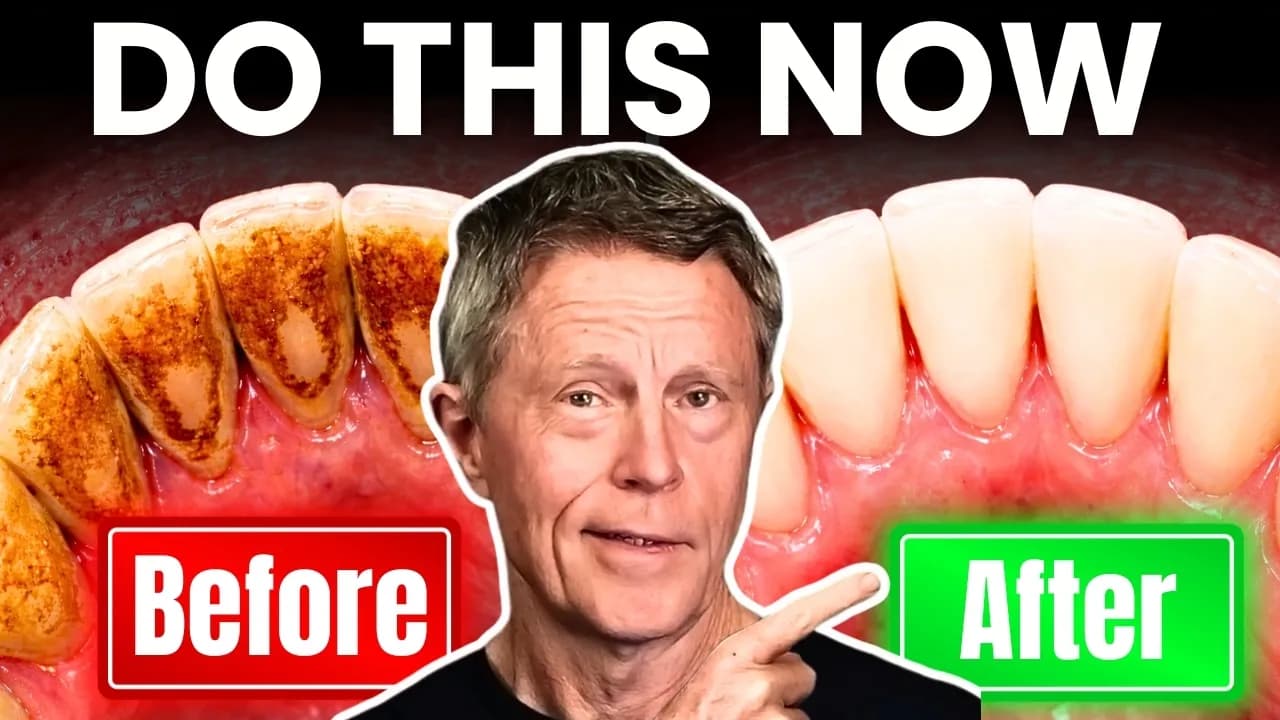
Tartar Keeps Coming Back in the Same Spot? (Here's How to Stop It)
In a Nutshell
Tartar recurs in the same spots because salivary glands below the jaw constantly release highly calcium-rich saliva onto the inner surfaces of lower front teeth, creating ideal conditions for rapid mineralization within 8 hours. Once formed, tartar destroys protective anti-calcification chemicals in saliva, accelerating future buildup, and rough tooth surfaces left after professional cleaning further promote recurrence. To prevent this, brush the inner lower teeth thoroughly twice daily with baking soda toothpaste, sleep with your mouth closed, and ensure dental cleanings include polishing after scaling.
These notes were generated by AI and may contain inaccuracies.
Tartar may initially appear as a cosmetic concern, but it presents significant health implications. Tartar grows below the gum line, creating inflammation, irritation, and bleeding. This allows bacteria to enter through microscopic openings in the gums, penetrating tissue and entering the bloodstream. Studies show that brushing teeth can increase bacteria by 23% due to gum irritation, while professional deep cleaning can increase bacteria in the blood by up to 75%. DNA testing of heart attack and stroke patients has revealed dental bacteria within arterial plaque. Similar bacterial DNA has been found in the synovial fluid of rheumatoid arthritis patients' joints. Research also indicates connections between gingivitis enzymes and autoimmune disease triggers, particularly rheumatoid arthritis.
Plaque consists of soft, living bacterial biofilms that have not yet calcified. The pH environment of plaque is acidic, which increases cavity risk. Tartar forms when biofilms become fossilized through chemical cementation. Once formed, tartar cannot be removed by regular brushing and requires professional dental tools. Tartar creates an alkaline environment, reducing cavity risk but promoting further tartar formation. Adjusting oral pH alone does not prevent tartar development.
Tartar forms consistently in specific areas due to salivary glands located below the jaw line. These glands drain through tubes that open behind the lower front teeth, producing saliva with significantly higher calcium saturation than blood. People who do not develop tartar possess more inhibitory chemicals that prevent tartar formation. However, existing tartar destroys these protective factors, creating a cycle where tartar formation accelerates over time.
After tartar removal, dental professionals must polish teeth to prevent recurrence. The roughened surfaces created by scraping provide ideal conditions for bacterial adhesion and renewed tartar formation.
Mineralization begins within 8 hours on the inner surfaces of lower teeth. Within 2 days, up to 50% of biofilms can mineralize with calcium. By 12 days, 90% of biofilms convert to calcium deposits. Once fossilized cement forms, only professional dental cleaning can remove it.
- Brush teeth twice daily, with particular attention to the inner surfaces of lower teeth for 30 seconds before bed, reaching close to the gum line
- Breathe through the nose during sleep to reduce saliva production that contributes to plaque and tartar formation
- Use toothpaste containing baking soda, which provides anti-biofilm and antibacterial properties while penetrating areas other substances cannot reach
- Additional anti-biofilm ingredients include xylitol and zinc citrate
- Tom's of Maine toothpaste contains these recommended ingredients
Individuals following ketogenic diets may experience increased tartar formation due to the shift from acidic to alkaline oral pH. While keto diets reduce cavity risk and gum inflammation, the altered bacterial environment may promote protein fermentation and different oral chemistry. The recommended prevention steps remain effective for managing this side effect.
- Brush teeth twice daily with focus on lower teeth inner surfaces
- Sleep with mouth closed, breathing through nose
- Use baking soda-containing toothpaste
- Ensure dental cleanings include polishing after scaling
Keep Dr. Eric Berg DC in your library
Save the videos and channels worth coming back to, and find them again in one place.