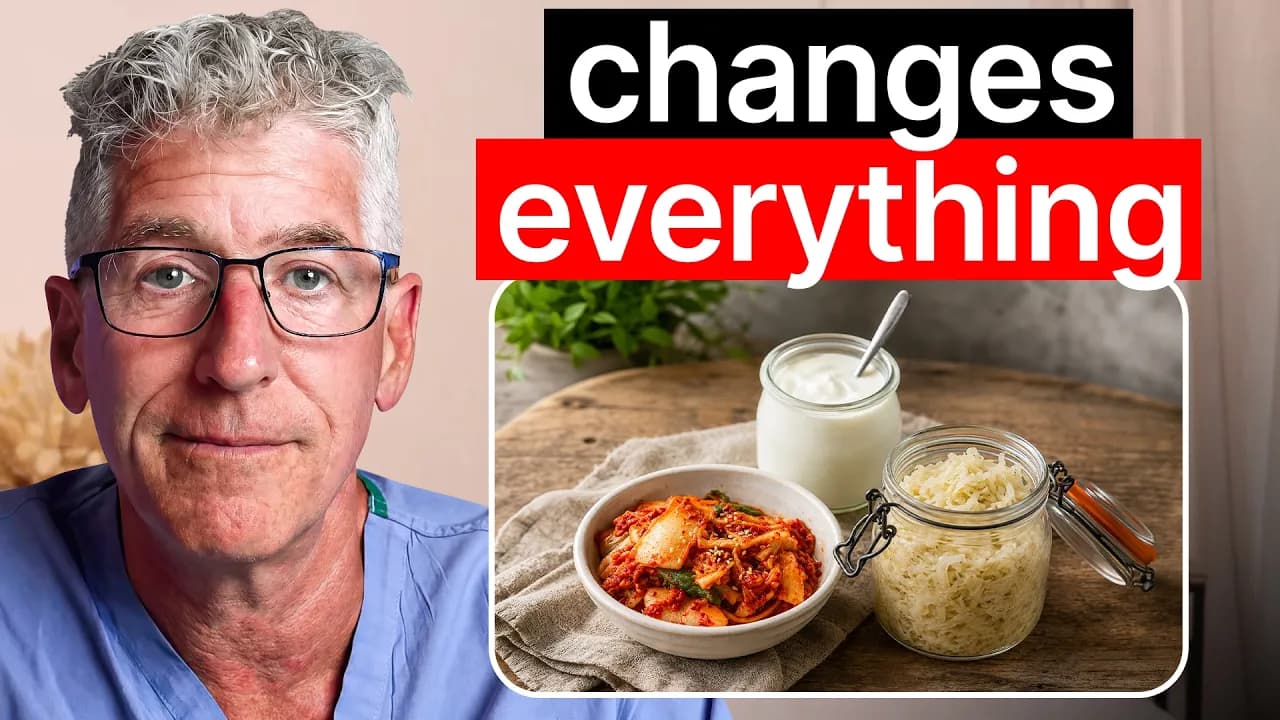
The #1 Most Dangerous Fiber in the World
In a Nutshell
Refined fiber, like inulin or chicory root extract, is the most dangerous fiber because it's stripped of polyphenols from whole foods, acting as junk food that lets harmful gut bacteria overgrow, causes SIBO, leaky gut, and even liver cancer (as shown in a 2018 Cell study on mice). Whole-food fiber bound to polyphenols selectively feeds beneficial microbes, producing anti-inflammatory short-chain fatty acids, per research in Journal of Nutritional Biochemistry and Frontiers in Nutrition. Avoid refined fiber supplements and bars; eat colorful whole plants, fermented foods, or try a carnivore reset instead of chasing high fiber intake.
These notes were generated by AI and may contain inaccuracies.
The number one most dangerous fiber in the world is refined fiber. Refined fiber parallels refined sugars and refined carbohydrates: sugar cane starts with vitamins and minerals, which are stripped away to create refined sugar that's bad for humans. Similarly, fiber is for microbes, and refined fiber acts as junk food for them.
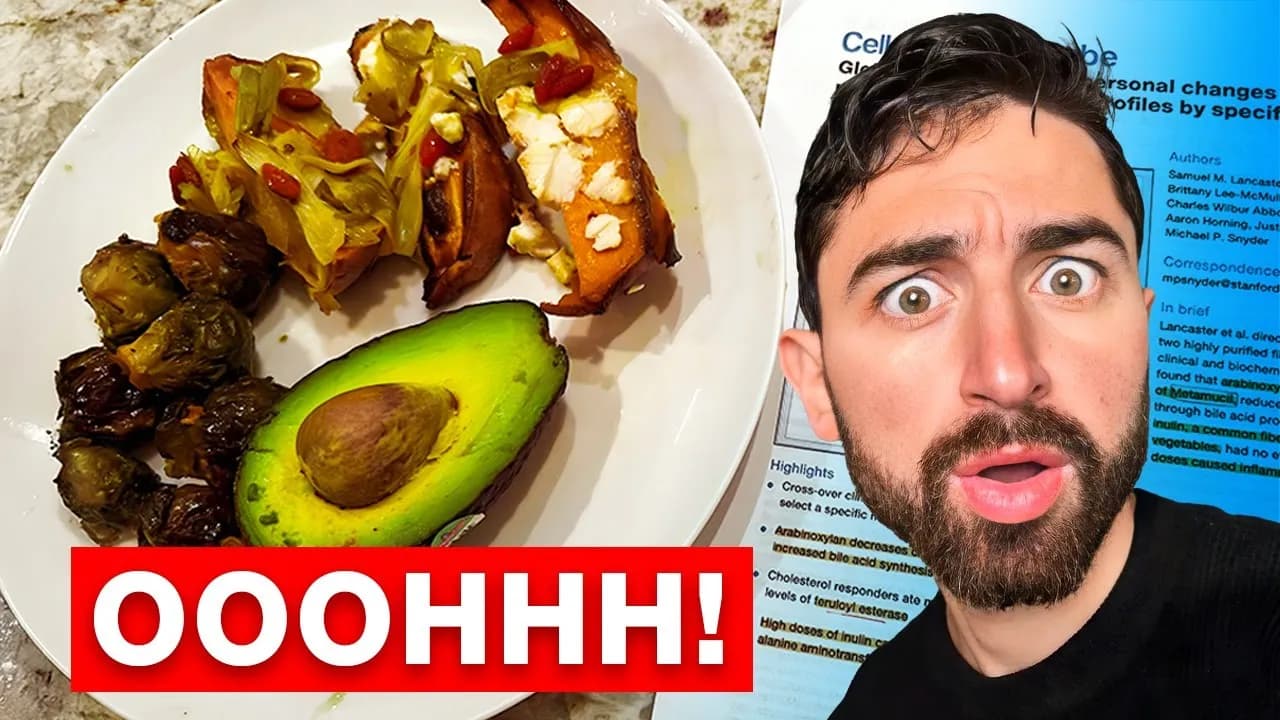
Certain fiber in whole form feeds microbes and makes them thrive, while refined fiber harms them. There's a fiber craze where people try to get as much fiber as possible, creating problems for many. Fascinating research shows feeding mice refined fiber leads some to develop liver cancer; the study was published in Cell, one of the most prestigious scientific journals.
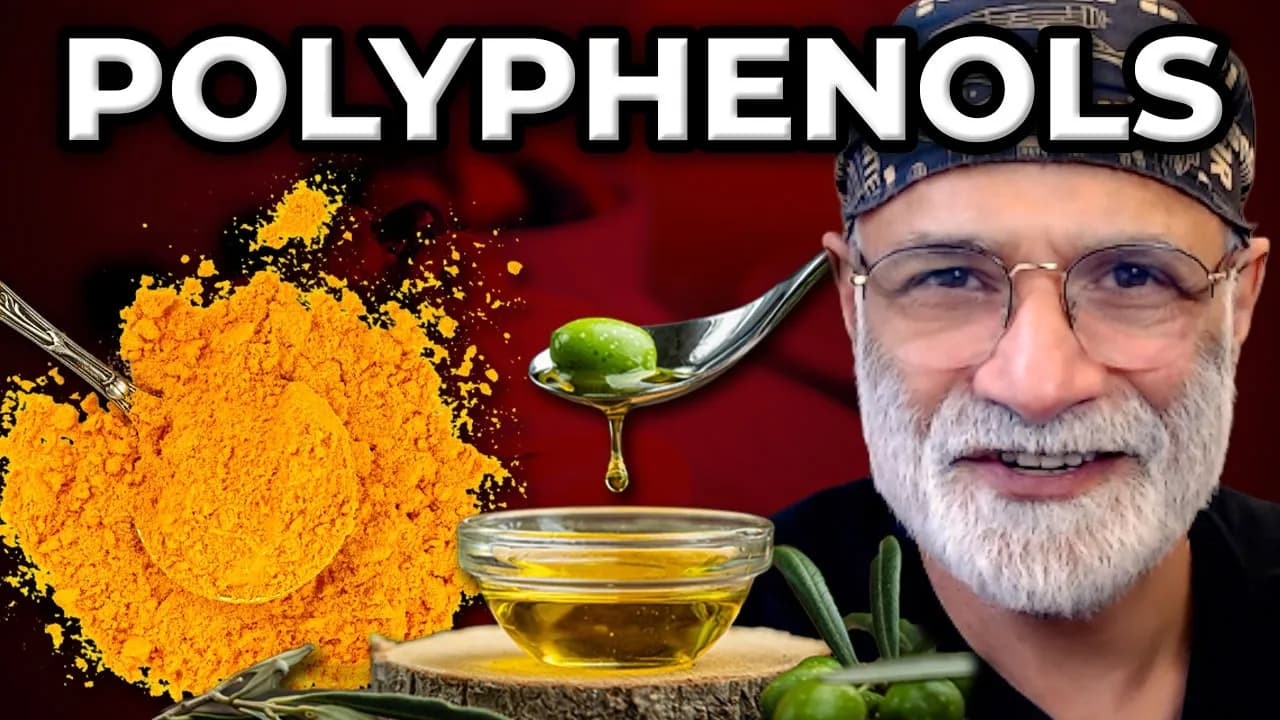
When eating a bean, onion, or berry, fiber is physically bound to polyphenols. Every plant on Earth has polyphenols woven together with fiber in the cell wall. They travel together through the digestive system to the gut, where the body breaks them apart. Microbes have evolved over millions of years to receive this unit, not isolated fiber.
Polyphenols are trapped in the fiber and decide which bacteria thrive and which get shut down. > "This is definitely what the fiber supplement industry does not want you to know."
Polyphenols act as air traffic controllers or a guidance system for fiber in the colon, like an airport where bacteria are flights seeking runway access and fuel. Whole fiber with polyphenols directs which microbes get fuel and how much, preventing excess.
Research in the Journal of Nutritional Biochemistry showed gut microbes breaking down polyphenols multiply beneficial species while bad bacteria ratios drop significantly. Polyphenols selectively promote good bacteria and suppress bad ones.
Promoted microbes produce short chain fatty acids, fuel for colon cells. A 2025 review in Frontiers in Nutrition confirmed across multiple human trials: foods rich in both fiber and polyphenols (nuts, spices, whole grains) grow more short-chain-fatty-acid-producing microbes. Anti-inflammatory effects are stronger than fiber alone or polyphenols alone. Fiber provides fuel; polyphenols direct it.
Refined fibers like chicory root fiber extract, soluble corn fiber, or tapioca fiber lack polyphenols, making them ultra-processed junk food for microbes. They're made like industrial starch and sugar using chemical processing, enzymes, heat to break the fiber-polyphenol bond.
Researcher at Penn State, Vishal Singh: "When we eat fiber from whole food, we're consuming a mixture of many different types of fiber alongside the compounds."
Fiber bars with 15 g of fiber equal 2 lb of real food fiber, hitting the gut all at once without guidance. Food industry adds synthetic refined fibers for texture and fat substitution in large amounts, causing excessive fermentation.
When consuming refined fiber:
- Wrong bacteria take over without guidance.
- Fiber ferments too fast in the wrong place (small intestine), causing small intestinal bacterial overgrowth (SIBO); fermentation should mainly occur in the large intestine.
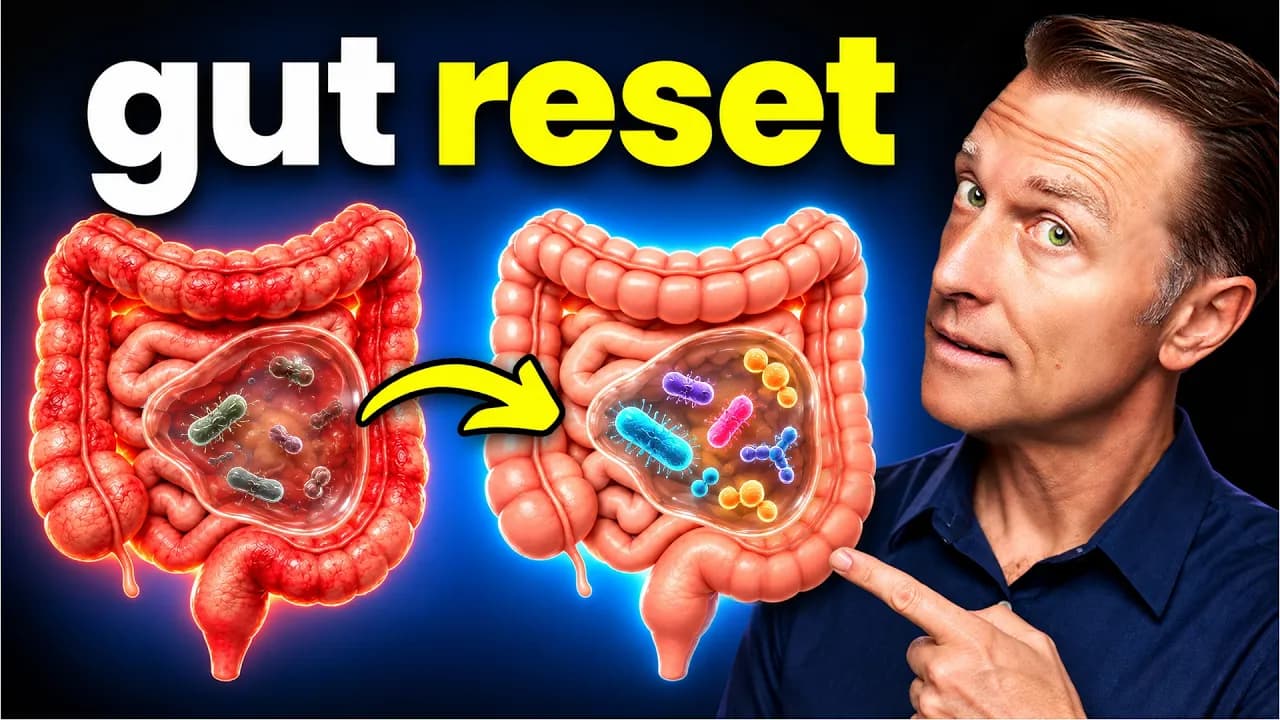
- Lower colon starves, eats its own mucus layer, leading to leaky gut, autoimmune issues, gut inflammation, pain, and GI problems.
In 2018, University of Toledo researchers published in Cell: mice fed a diet with inulin (a refined fiber) developed liver cancer. Mice fed the same amount of inulin in a whole-food-based fiber diet had no cancer.
Stop focusing on increasing fiber. Eat naturally colorful whole foods for polyphenols. Add fermented foods to support the gut. Avoid high-fiber supplements. Adding more fiber worsens issues; consider carnivore diet for a couple months to reset excess fermentation.
There's a video on fixing gut damage.
Keep Dr. Eric Berg DC in your library
Save the videos and channels worth coming back to, and find them again in one place.