The 28 pages of 9/11 intelligence that were in a secret vault | 60 Minutes Archive
In a Nutshell
The 28 pages from the 2002 Joint Congressional Inquiry describe a Saudi government-connected support network—including diplomat Fahad al-Thumairy and alleged Saudi agent Omar al-Bayoumi—that provided housing, IDs, and other assistance to two future 9/11 hijackers in California. Multiple former commissioners and officials who reviewed the still-classified pages, including Bob Graham, Bob Kerrey, and John Lehman, argue they should be released because they contain leads about lower-level Saudi officials and institutions that were never fully pursued. The central takeaway is that declassifying these pages would clarify the extent of Saudi-linked assistance to the hijackers and challenge the 9/11 Commission’s carefully worded claim that no senior Saudi officials were involved.
These notes were generated by AI and may contain inaccuracies.
President Obama was scheduled to visit Saudi Arabia in 10 days amid deep mistrust between the two allies and lingering doubts about Saudi commitment to fighting violent Islamic extremism. The White House and intelligence officials were reviewing whether to declassify one of the country's most sensitive documents known as the 28 pages. These pages relate to 9/11 and the possible existence of a Saudi support network for the hijackers while they were in the United States. For 13 years, the 28 pages have been locked away in a secret vault with only a small group of people having ever seen them.
Former US Senator Bob Graham believes it is implausible that 19 people, most of whom didn't speak English, most of whom had never been in the United States before, and many of whom didn't have a high school education, could have carried out such a complicated task without some support from within the United States. Graham considers the 28 pages a key part of understanding this support network.
Graham served as chairman of the Senate Select Committee on Intelligence and co-chair of the bipartisan joint congressional inquiry into intelligence failures surrounding the 9/11 attacks. The joint inquiry reviewed a half a million documents, interviewed hundreds of witnesses, and produced an 838-page report. The final chapter was blanked out and excised by the Bush administration for reasons of national security.
The 28 pages outline a network of people that Graham believes supported the hijackers while they were in the US. This support came from Saudi Arabia substantially, including the government, rich people in the country, and charities. Graham and others believe the Saudi role has been soft-pedaled to protect a delicate relationship with a complicated kingdom where rulers, royalty, riches, and religion are all deeply intertwined in its institutions.
Porter Goss, Graham's Republican co-chairman on the House side of the joint inquiry and later director of the CIA, also felt strongly that an uncensored version of the 28 pages should be included in the final report. The two men made their case to the FBI and its then-director Robert Mueller in a face-to-face meeting. The FBI pushed back very hard on the 28 pages and stated they could not be unclassified at that time. When asked why the pages were classified, the FBI's answer was essentially "because we said so and it needs to be classified."
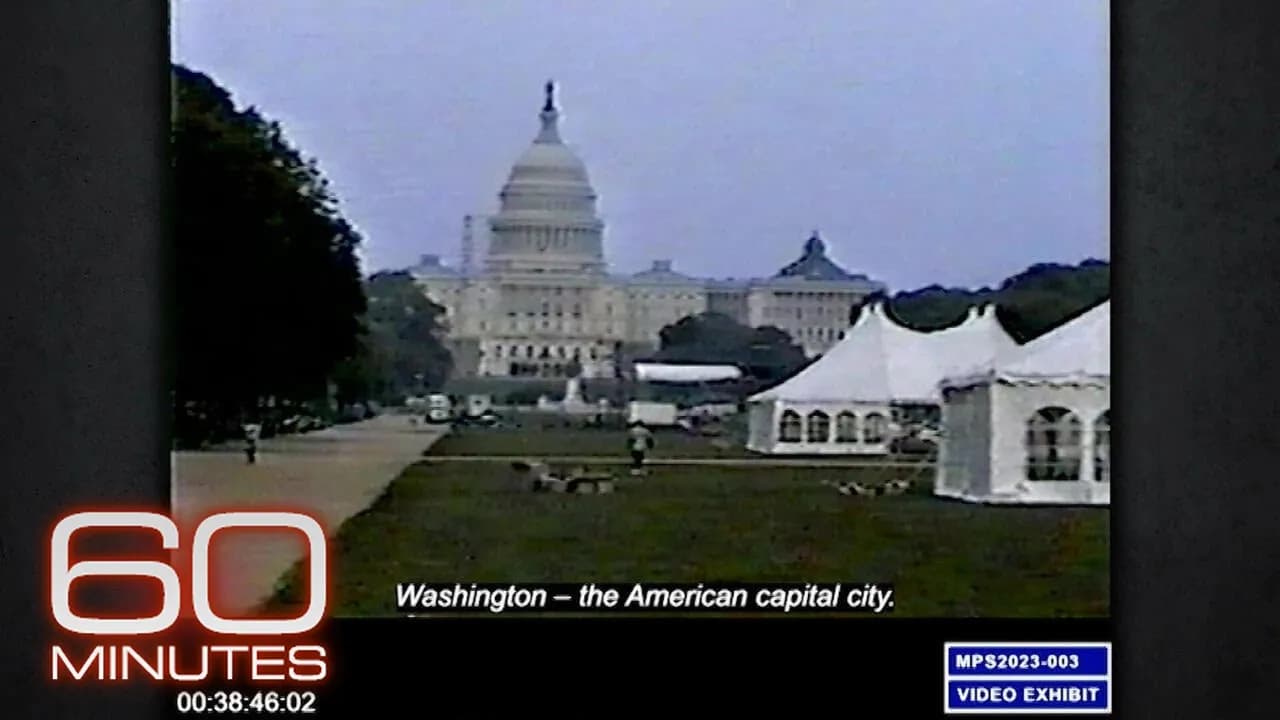
The 28 pages are locked away under the Capitol in guarded vaults called sensitive compartmented information facilities or SCIFs. This is a highly restricted area where members of Congress with proper clearances can read the documents under close supervision, with no note-taking allowed.
Tim Romer, a former Democratic congressman and US ambassador to India, has read the 28 pages multiple times. First as a member of the joint inquiry and later as a member of the 9/11 Commission. Romer describes reading these documents as very hard, noting they are tough documents to access. The 28 pages are described as a working draft similar to a grand jury or police report that includes provocative evidence, some verified and some not.
The 28 pages lay out the possibility of official Saudi assistance for two of the hijackers who settled in Southern California. This information was turned over to the 9/11 Commission for further investigation. Some questions raised were answered in the commission's final report, while others were not. Romer indicates that declassifying the 28 pages would surprise people, particularly regarding answers in the 9/11 Commission report about what happened in San Diego and Los Angeles and Saudi involvement.
In January 2000, the first of the hijackers landed in Los Angeles after attending an al-Qaeda summit in Kuala Lumpur, Malaysia. The two Saudi nationals, Nawaf al-Hazmi and Khalid al-Mihdhar, arrived with extremely limited language skills and no experience with Western culture. Through an incredible series of circumstances, they managed to get everything they needed from housing to flight lessons.
During their first days in Los Angeles, witnesses placed the two future hijackers at the King Fahd Mosque in the company of Fahad al-Thumairy, a diplomat at the Saudi consulate known to hold extremist views. 9/11 investigators found him deceptive and suspicious. In 2003, he was denied re-entry to the United States for having suspected ties to terrorist activity.
Phone records show that al-Thumairy was in regular contact with Omar al-Bayoumi, a mysterious Saudi who became the hijackers' biggest benefactor. Bayoumi was a ghost employee with a no-show job at a Saudi aviation contractor outside Los Angeles while drawing a paycheck from the Saudi government. He had been listed even before 9/11 in FBI files as being a Saudi agent.
On the morning of February 1st, 2000, Bayoumi went to the office of the Saudi consulate where Thumairy worked. He then proceeded to have lunch at a Middle Eastern restaurant on Venice Boulevard, where he later claimed he just happened to make the acquaintance of the two future hijackers. Bayoumi decided not only to befriend them but to help them move to San Diego and get residence.
In San Diego, Bayoumi found the hijackers a place to live in his own apartment complex, advanced them the security deposit, and co-signed the lease. He threw them a party and introduced them to other Muslims who would help the hijackers obtain government IDs and enroll in English classes and flight schools. There is no evidence that Bayoumi or Thumairy knew what the future hijackers were up to, and it is possible they were just trying to help fellow Muslims.
The very day Bayoumi welcomed the hijackers to San Diego, there were four calls between his cell phone and the imam at a San Diego mosque, Anwar al-Awlaki. The American-born al-Awlaki would become infamous a decade later as al-Qaeda's chief propagandist and top operative in Yemen until he was killed by a CIA drone. In January 2001, a year after becoming the hijackers' spiritual adviser, he left San Diego for Falls Church. Months later, Hazmi, Mihdhar, and three more hijackers would join him there.
Attorneys Jim Kreindler and Sean Carter represent family members of the 9/11 victims in their lawsuit against the kingdom, alleging that its institutions provided money to al-Qaeda, knowing that it was waging war against the United States. The US government has backed the Saudi position in court that it cannot be sued because it enjoys sovereign immunity.
The 9/11 Commission report states that Saudi Arabia has long been considered the primary source of al-Qaeda funding through its wealthy citizens and charities with significant government sponsorship. However, the sentence that received the most attention states: "We have found no evidence that the Saudi government as an institution or senior Saudi officials individually funded the organization."
Attorney Sean Carter says this is the most carefully crafted line in the 9/11 Commission report and the most misunderstood. When the commission states they found no evidence that senior Saudi officials individually funded al-Qaeda, they conspicuously leave open the potential that they found evidence that people who were officials they did not regard as senior officials had done so. This is the essence of the families' lawsuit - that elements of the government and lower-level officials sympathetic to bin Laden's cause helped al-Qaeda carry out the attacks and helped sustain the al-Qaeda network.
Former US Senator Bob Kerrey, another of the 10-member 9/11 Commission who has read the 28 pages, believes they should be declassified. He filed an affidavit in support of the 9/11 families' lawsuit. Kerrey states that you cannot provide the money for terrorists and then say you don't have anything to do with what they were doing. He confirms that not all leads developed in the 28 pages were answered in the 9/11 report, and that the commission did not get every single detail of the conspiracy due to time, resources, and not pursuing the entire line of inquiry regarding Saudi Arabia.
John Lehman, who was Secretary of the Navy in the Reagan administration, states that he and others make up a solid majority of former 9/11 commissioners who think the 28 pages should be made public. Lehman has no doubt that some high Saudi officials knew that assistance was being provided to al-Qaeda, but doesn't think it was ever official policy. He also doesn't think that this absolves the Saudis of responsibility, noting it was no accident that 15 of the 19 hijackers were Saudis who all went to Saudi schools and learned from the time they were first able to go to school this intolerant brand of Islam.
Lehman is referring to Wahhabism, the ultra-conservative puritanical form of Islam that's rooted in Saudi Arabia and permeates every facet of society. There is no separation of church and state. After oil, Wahhabism is one of the kingdom's biggest exports. Saudi clerics entrusted with Islam's holiest shrines have immense power and billions of dollars to spread the faith, building mosques and religious schools all over the world that have become recruiting grounds for violent extremists.
Lehman states that the 28 pages are not going to be a smoking gun that causes a huge furor, but they do give a very compact illustration of the kinds of things that went on that would really help the American people understand how these people are springing up all over the world to go to jihad. The Saudis themselves have said the 28 pages should be declassified. While declassifying them might involve opening a can of worms, the relationship with the Saudis needs to be one where both countries are working together to fight against terrorism.
Keep 60 Minutes in your library
Save the videos and channels worth coming back to, and find them again in one place.