Evidence could change our understanding of 9/11 attacks 25 years ago | 60 Minutes Archive
In a Nutshell
Newly unsealed evidence shows a Saudi intelligence operative, Omar al-Bayumi, conducted detailed pre-operational surveillance of the U.S. Capitol in 1999, including a 360-degree video of entrances, security posts, and flight paths—evidence the FBI received after 9/11 but withheld from its own field agents and the 9/11 Commission. The video, plus an airplane descent equation and his documented support for two hijackers, suggests Bayumi was an al-Qaeda facilitator whose role was essential to the plot. The Saudi government denies involvement and is seeking dismissal of the families’ lawsuit.
These notes were generated by AI and may contain inaccuracies.
Evidence has emerged that could change understanding of the 9/11 terrorist attacks more than two decades later. The evidence was turned over to the FBI in the weeks after 9/11 but was never shared with the bureau's own field agents or top intelligence officials.
The evidence emerged as part of a long-running lawsuit against the Saudi government by families of the nearly 3,000 people killed in the attacks. A chilling video shows a Saudi national filming the US capital. A voice on the video says in Arabic: "I am transmitting these scenes to you from the heart of the American capital, Washington." The video was recorded in the summer of 1999 and unsealed in federal court last year.
Exhibit A in the case is Omar al-Bayumi, who asked a bystander to film him in front of the Capitol. The FBI says Bayumi was living in the United States on a student visa and being paid by a Saudi Aviation Company in California despite not showing up for classes or work. Investigators say Bayumi was an operative of the Saudi intelligence service and had close ties to two of the hijackers.
The video was filmed over several days. Bayumi recorded entrances and exits of the Capitol, security posts, a model of the building, and nearby landmarks. Bayumi points out the Washington Monument and says: "I will get over there and report to you in detail what is there." He also notes the airport is not far away.
Richard Lambert, a retired FBI supervisor who led the initial 9/11 investigation in San Diego where Bayumi and the two hijackers lived prior to the attacks, is now a consultant on the case. He observed that Bayumi was "going out and making a detailed video record of the Capitol from all its sides and then conducting that 360° panoramic view."
Lambert noted that if you know where your other targets are, the Washington Monument "helps guide you to your intended target." Federal investigators believe the hijackers on Flight 93, which crashed near Shanksville, Pennsylvania, planned to hit the US Capitol as their likely target.
In the video, Bayumi references "the plan." Lambert interprets this as Bayumi talking to "the al-Qaeda planners who tasked him to take the pre-operational surveillance video of the intended target." The video was taken in late June and early July of 1999, within 90 days of when senior al-Qaeda planners reached the decision that the Capitol would be a target of the 9/11 attacks.
This timing corresponds to when Osama bin Laden decided to approve the so-called planes operation proposed by Khalid Sheikh Mohammed, the mastermind of 9/11.
During a raid on Bayumi's UK apartment about 10 days after the attacks, British police discovered the Capitol video along with about 80 other tapes and a trove of documents. An internal FBI report dated October 11, 2001 shows that copies of all recovered exhibits were sent to FBI New York via Federal Express, but the Capitol video never made it to the San Diego field office.
Retired FBI special agent Danny Gonzalez, one of the lead 9/11 investigators in San Diego, says he never knew about the video during the 15 years he worked on the case. "Not only did I not know, all of the case agents in San Diego didn't know. And the case agents in New York didn't know. And we're talking about the joint terrorism task forces that not only have FBI, but we have other state, local, and federal agencies. They didn't know either."
Gonzalez believes he could have used the Capitol video to build a case against Bayumi and would have taken it to the United States Attorney's office. He believes the video was so significant that "it should have gone all the way to the top to the White House" because "it's the Capitol building."
Gina Bennett, a senior counterterrorism analyst at the CIA for 20 years, evaluated the video and rejected the Saudi government's claim that it was a tourist video. "Who does a tourist video that is reporting back on this is where that building is and here's where the security guards are," she stated. Bennett was the first person in the US government to warn of the dangers of a global jihadist movement led by Osama bin Laden.
Bennett had no involvement with the 9/11 families' lawsuit and was unaware of the video's existence until asked to evaluate it. CIA Director George Tenet and Michael Morell, the president's daily intelligence briefer at the time, were also unaware of the video.
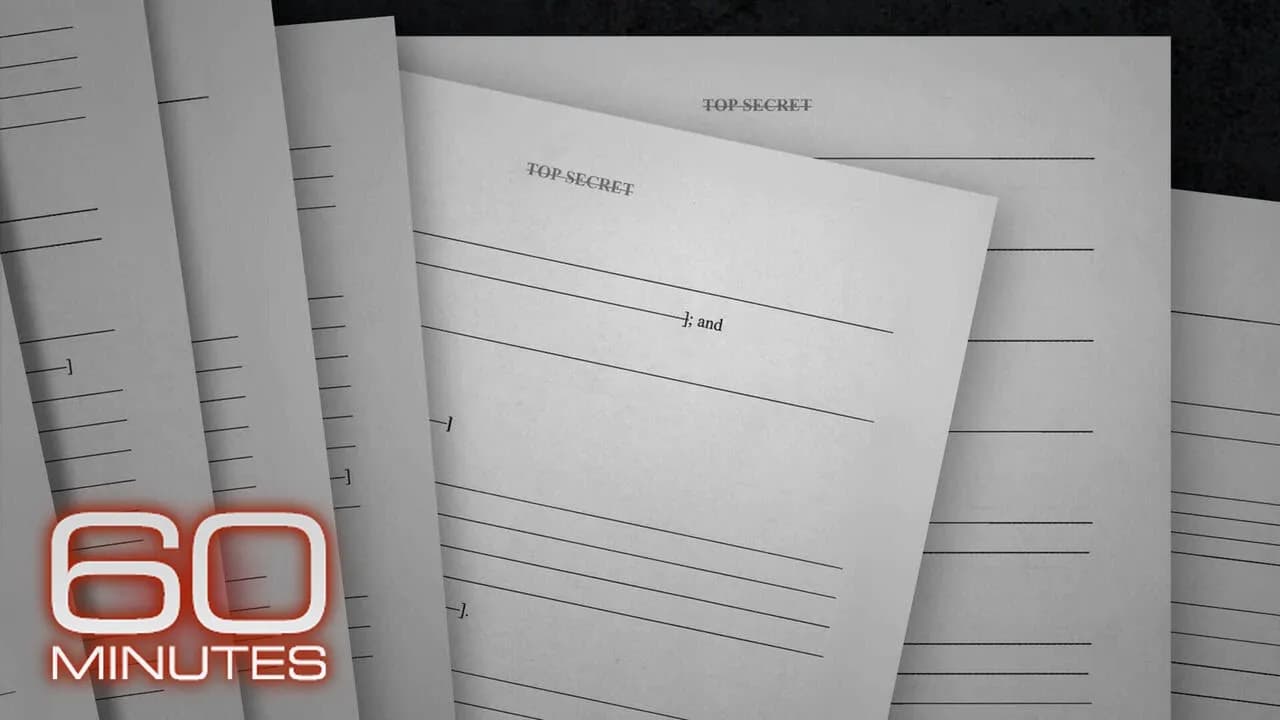
Additional evidence included an airplane sketch and math formula seized from Bayumi's UK apartment and turned over to the FBI in 2001. It was stashed away for more than a decade until Danny Gonzalez received a phone call in 2012 from an FBI evidence technician in Washington. The technician told him there were boxes with Bayumi's name in a warehouse in Washington DC that were going to be relocated or destroyed.
Gonzalez had aviation and aerospace experts analyze the equation for the FBI. Their conclusion was that a pilot could use it to calculate the rate of descent to hit a target on the horizon.
In 2004, the 9/11 Commission produced what was considered the definitive account of the attacks. Its executive director, Philip Zelikow, was unaware of the evidence during the investigation. Former senior US intelligence officials were also unaware.
Omar al-Bayumi was never charged with a crime and moved back to Saudi Arabia after 9/11. In a 2021 deposition as part of the lawsuit, he confirmed the sketch was his but said he remembered little else about it, including his handwritten notes that say "height of the plane from the Earth in mile and distance from the plane to horizon." When pressed, he offered the explanation: "Perhaps this was an equation that we studied before in high school and I was trying to remember whether I'm going to be able to figure out and solve it or not."
Bayumi met the first two hijackers to arrive in the US nearly two years before 9/11. He claims he met them in a chance encounter at a restaurant on Venice Boulevard in Los Angeles. He helped them move to San Diego, finding them a place to live in his own apartment complex, co-signing the lease, and helping them open a bank account. He even threw a party which he videotaped, capturing one of the hijackers on camera.
Bayumi introduced the hijackers to others who helped them obtain government IDs and enroll in English classes and flight schools. Bayumi and the Saudi government claim his actions were innocent, the result of coincidences.
Richard Lambert rejects the coincidence explanation: "Who else did he help besides those two hijackers? I don't know of any and I couldn't find any." Lambert's conclusion is that "Bayumi was an al-Qaeda facilitator. He had sympathies with al-Qaeda ideologically and that he provided substantial support to these two individuals, these two hijackers without which they may very well have been caught."
Gina Bennett states that Bayumi was indispensable to the success of the hijackers' plot because they spoke no English, had little formal education, and no prior exposure to life in the West. "I don't see al-Qaeda, as meticulous as it was with its planning, just throwing two operatives that are so instrumental to the success of this operation into a massive city without a soft landing, without a network there to catch them."
Bennett raises important questions including what other networks existed, whether individuals from those networks are still active, and whether other evidence remains locked away. She emphasizes the need to "work from that new information to learn what you got wrong, to learn how to not get it wrong again."
The government of Saudi Arabia has filed a motion in federal court to dismiss the 9/11 families' lawsuit, saying neither the kingdom nor Omar al-Bayumi had anything to do with the attacks. The judge overseeing the case is expected to rule on the motion soon. The FBI declined to comment on the ongoing litigation.
Keep 60 Minutes in your library
Save the videos and channels worth coming back to, and find them again in one place.