The Best Trick To Buying Your First AI Stock!
In a Nutshell
Buy one share of an oversold AI/semiconductor stock (like SanDisk, Micron, or SMH) to test the market with minimal risk. Use a free risk-to-reward calculator to ensure at least a 3:1 ratio before entering, focusing on potential upside far exceeding downside. Download a broker like Moomoo for signup bonuses and start small to gain real experience instead of waiting or overcomplicating.
These notes were generated by AI and may contain inaccuracies.
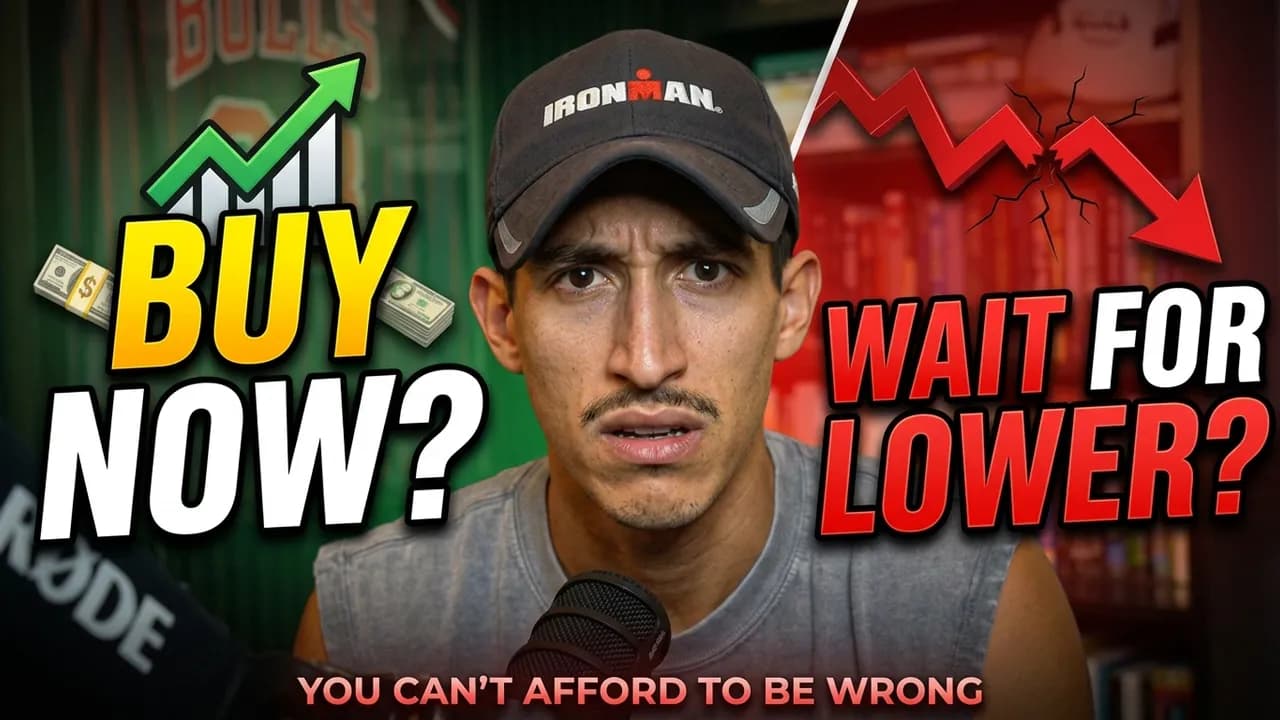
Ricky from TechBud Solutions created this video to encourage investing rather than trading, specifically for those who have never opened an investment or trading account. The goal is to show everything needed to feel comfortable buying a first stock.
The reason for focusing on this topic is that semiconductor and memory chip stocks are one of the best performing sectors in the market. Stocks mentioned include TSM, Nvidia, Intel, Marvell Technologies, Micron, SMH (the single leveraged ETF), the triple leveraged version, and SanDisk. Semiconductors have sold off significantly, creating a potential buying opportunity. The approach recommended is to reduce exposure to avoid fear.
Everyone should start at zero regardless of net worth. The one share test buy is the recommended approach for beginners. The concept is taught in the LPP lesson library. The hardest part is getting started. Semiconductors are technically oversold, though they can always get cheaper. The strategy is to buy one share to test the market during a possible deal without overcomplicating the process.
SanDisk is currently trading around 1564 to 1570. If it recovers to previous highs of 2380, that represents a 51% return. The video emphasizes not overcomplicating calculations for beginner investors who have time to continue investing. The one share test buy approach is recommended because things can get worse before they get better.
The LPP homepage contains a free risk to reward ratio calculator available via the second link in the description. Using the custom tab, users can input any stock for the one share test buy. SanDisk is used as an example with an entry price of 1573, stop-loss of 1450, and potential price target of 2380. This yields a 6.56 to 1 risk-to-reward ratio, meaning for every 1% of potential risk, there is 6.56% of potential profit. Stocks trading below a 3:1 ratio are not considered to have a big enough trading edge.
Before initiating the one share trade, both best-case scenario profit and worst-case scenario loss should be understood. Many traders focus on making money without understanding risk. The approach requires starting intentionally and in a calculated way, understanding both pros and cons, risk and reward.
Micron is currently trading around 894 to 895, with potential to recover to 1255, offering about 40% potential profit. Marvell Technologies offers 64% return potential if returning to previous highs. SMH is recommended as a semiconductor ETF alternative to SOXL, which is triple leveraged with greater volatility. SMH offers 14 to 15% potential return, which is less dramatic but also involves less potential loss.
The one share test buy allows testing the market during a semiconductor selloff when stocks are technically oversold. The goal is to buy and test with only one share. The trade must be planned intentionally with focus on at least a 3:1 risk-to-reward ratio, ensuring upside potential is three times greater than loss potential.
Moomoo is a free trading application where Ricky has an account along with many LPP members. The current sign-up bonus offers up to $1,030 of SK stock and Nvidia stock. Uninvested cash earns up to 8.1% APY. Deposit bonuses include $30 for deposits under $500, $100 for $2,000 or more, and $200 for $10,000. Depositing money does not require using it to trade.
Having only $1,500 and being able to buy only one share is not an excuse to avoid investing. The focus should be on the opportunity, not the number of shares. If bullish on AI and believing markets will recover, one share provides 50% exposure to potential profit. Risk exists, which is why only one share is purchased. The process involves opening an account, funding it, setting alerts, and initiating the trade when it makes sense.
The goal is to motivate people to start investing, including those who may have crypto but not stock investments. Moomoo can be downloaded via the first link in the description for the sign-up bonus, and the LPP risk to reward calculator is available via the second link. Any stock can be chosen, not just semiconductors. The challenge is to buy one share, plan the trade, and ensure risk to reward favors the investor.
After gaining experience with one share, calculations can be done to understand what larger positions would look like. On red days, a $300 loss with a larger position versus $30 with one share can be compared. On green days with 5-10% gains, being up $50 versus potentially $500 demonstrates the learning value. Real experience with real exposure is gained by keeping it simple. Overcomplicating should be avoided, and going all in is not recommended when just getting started and learning.
Keep Ricky Gutierrez in your library
Save the videos and channels worth coming back to, and find them again in one place.