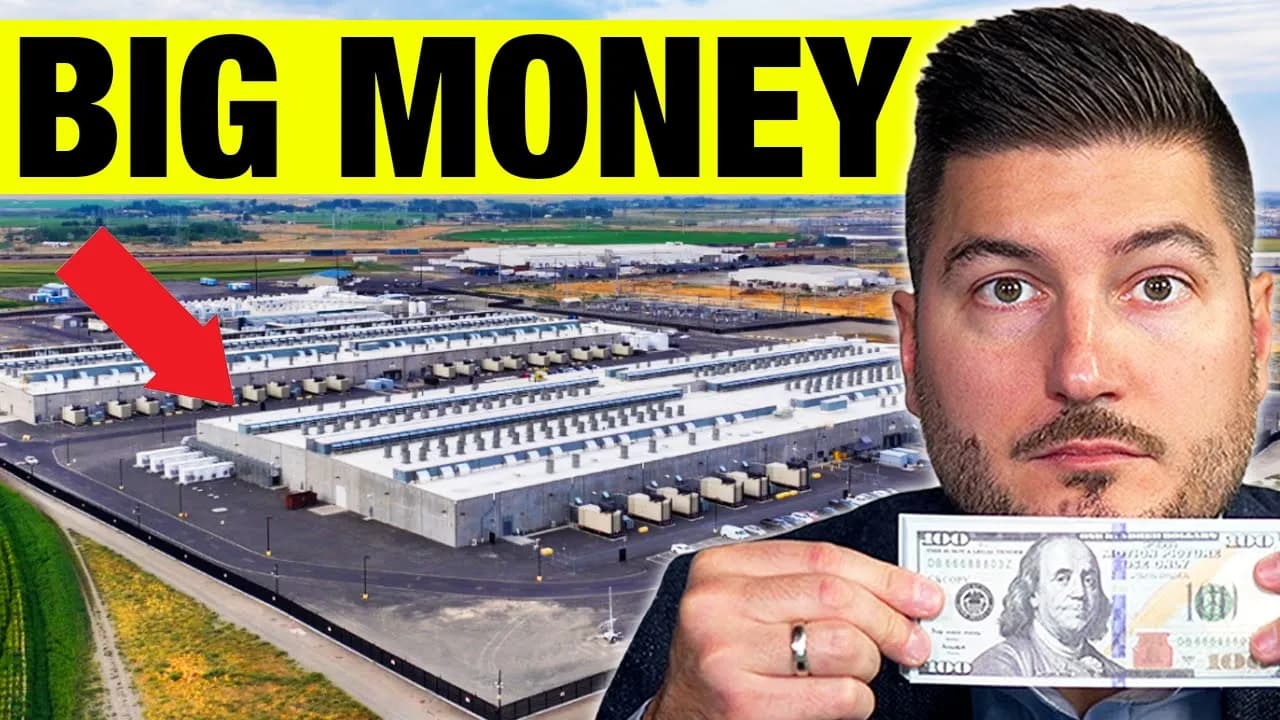
The company building America’s uranium supply from scratch
In a Nutshell
General Matter is building a domestic HALEU enrichment facility in Paducah, Kentucky to replace Russian fuel supplies before the 2028 import ban takes effect, targeting commercial operation by end of decade. The company is using a clean-sheet redesign of enrichment technology, in-house construction, and $900M in government funding to achieve cost-competitive production that existing European and Russian methods cannot match. The core bottleneck holding back US advanced reactors is fuel supply, not licensing or reactor design.
These notes were generated by AI and may contain inaccuracies.
The US dominated global uranium supply historically, exceeding 90% of production through first-generation technology developed for World War II and maintained during the Cold War. The Megatons to Megawatts program imported Russian warheads, blended them down, and used the material to power US reactors. Congress passed a ban on Russian uranium imports that takes effect January 1st, 2028. General Matter's first mission is to produce HALEU (high-assay low-enriched uranium) before the end of the decade to meet demand for new reactors.
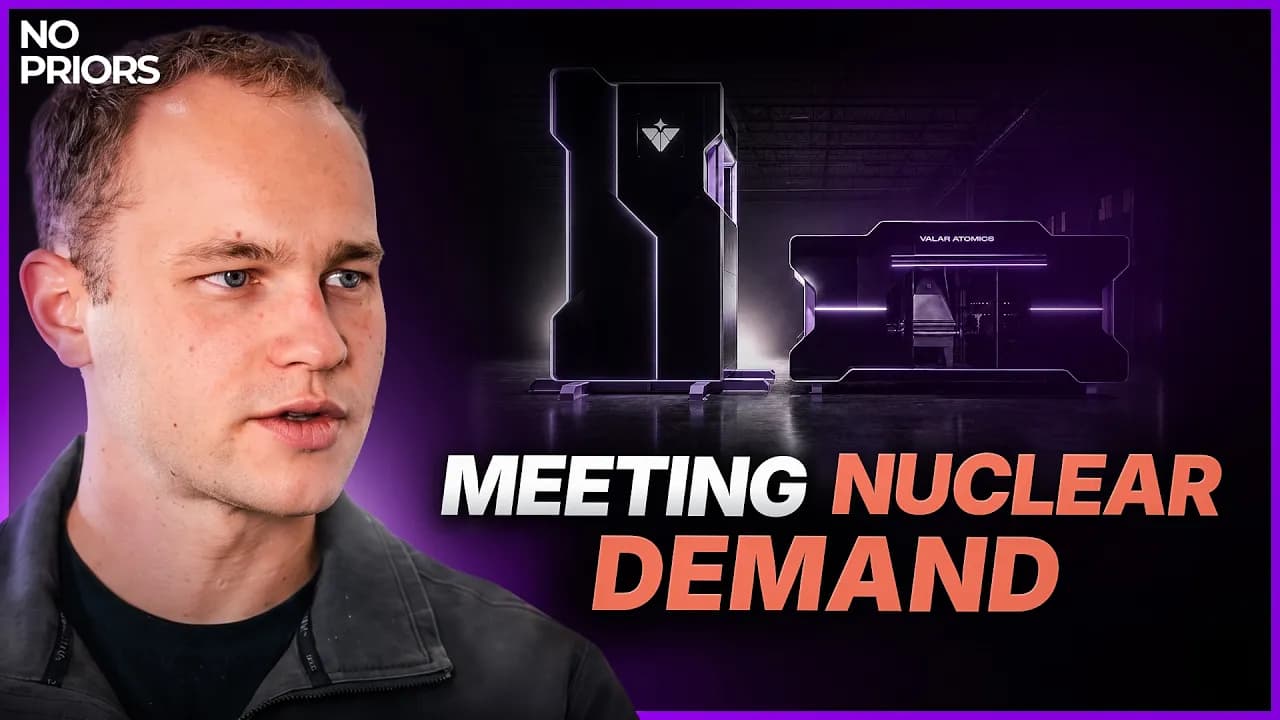
Scott Nolan leads General Matter, an advanced uranium enrichment company. The company's ultimate goal is to slash energy costs dramatically enough that entirely new capabilities become cheap and routine. When the company started in mid-2023, few were discussing uranium or nuclear energy. Nolan had spent 10 years investing at Founders Fund in reactor companies.
When Nolan asked reactor companies about their biggest challenges, they identified licensing as the obvious issue, but the actual problem was fuel supply. All their fuel came from Russia and was difficult to import. The 94 reactors on the US grid, representing 20% of US power, rely on existing fuel suppliers, but these companies do not produce the higher-enriched fuel needed for advanced reactors.
Nuclear fuel production involves five steps: extracting uranium from the ground, converting it to gas, enriching the gas to increase U-235 density, converting it back to solid form, and manufacturing fuel pellets. Most reactors on the grid today use 3-5% enriched uranium (low-enriched uranium or LEU). Modern reactors, including small modular reactors (SMRs) and advanced designs, require higher enrichment levels up to 20% (just under 20%).
Higher enrichment (19-20%) enables smaller reactor cores that can be factory-built rather than constructed on-site. This modularity allows shipping containers to be connected on-site, minimizing construction costs. Advanced reactors combine enhanced passive safety features not found in the existing fleet with factory-built modular designs that reduce costs.
Diablo Canyon and other US facilities currently source enriched uranium from Russia and Europe, with approximately a quarter coming from Russia until the 2028 ban. The remaining supply comes from French providers and the European consortium Urenco. While the US does mine uranium domestically, quantities are small. Most US supply originates from Kazakhstan and Canada, with conversion to gas occurring at various locations.
HALEU (high-assay low-enriched uranium) at 19.75% enrichment is currently only produced commercially by Russia. The January 1st, 2028 ban on Russian uranium imports creates urgency for domestic production. Advanced reactor companies face acute availability problems as they plan initial deployments and scale-up to tens of deployments in the early 2030s.
Commercial nuclear power and fuel sales fall under Nuclear Regulatory Commission (NRC) jurisdiction. Government sales may involve Department of Energy (DOE) paths, as do R&D reactors. The NRC focuses on safety, security, and environmental considerations. Licensing requires safety analysis, security analysis, and demonstration of low environmental impact.
Despite historical perceptions that the NRC is difficult to work with, General Matter reports positive interactions. The licensing process involves substantial paperwork and analysis but is considered straightforward when safety, security, and environmental requirements are met.
Virtually all US grid reactors are light water reactors using 3-5% LEU. Water serves as both moderator and coolant. These reactors produce pressurized steam and require large containment domes for radiological material containment in accident scenarios. The containment dome is significantly larger than the reactor itself to handle extreme accident scenarios.
Nearly all advanced reactor startups focus on modular designs with smaller cores, enabling factory production and deployment to stranded demand centers. These designs use HALEU in smaller, containerized formats. Higher enrichment levels function like higher-octane fuel, allowing smaller cores to maintain criticality longer. This enables extended refueling cycles of 5-10 years, which is essential for remote applications.
HALEU enrichment itself does not provide safety advantages, but reactor formats do. Molten salt reactors use thermal properties for self-regulation and feature a plug that melts during overheating, draining the system and stopping criticality. Helium-cooled reactors use helium that cannot become radioactive, preventing radioactive material release during cooling failures. Newer designs incorporate passive safety features or modern active safety architectures with self-correcting mechanisms.
AI scale-up has not significantly impacted General Matter's market or their customers' market. Nuclear power timelines are too long for near-term data center power needs. Most contracting volume is with the existing fleet for low-enriched uranium. While some data center demand may eventually come from SMRs, near-term demand remains dominated by existing utility customers.
Nuclear is the cleanest and safest base load power source, safer than wind power per terawatt-hour and producing the lowest CO2 emissions compared to wind or solar. The primary competitive challenge is cost. For data centers requiring five-nines reliability, significant battery storage would be needed if relying on solar, making nuclear more competitive for ground-based power.
Nuclear's cost issues stem from multiple factors. The industry never achieved economies of scale, never built robust supply chains, and experienced workforce disruptions between projects. Vogtle's cost overruns were partly due to interest payments during 10-year construction periods at historically low rates. The 1970s marked the beginning of nuclear's decline, coinciding with oil price shocks, low oil prices, and peak interest rates reaching 18% on mortgages.
Nuclear cost increases resulted from lack of strong economic pressure to reduce prices. Utilities operate as cost-plus organizations that outsource construction, creating dynamics similar to the pre-competitive space launch industry. Without competitive pressure to drive prices down, the market devolved into rent-extraction across various participants.
Nuclear experienced extreme optimism in its early days, with concepts like energy too cheap to meter and radium watches. This shifted to extreme pessimism, with nuclear becoming environmentalists' primary target despite being the safest and lowest-carbon energy source. The Sierra Club experienced internal division, with roughly half supporting nuclear as potentially the most environmentally beneficial energy source if consumption continued.
Nuclear support has improved significantly, with opinions varying by age demographics and younger people showing stronger support. Politically, nuclear has achieved bipartisan backing, with the Biden administration targeting tripling nuclear production by 2050 and the Trump administration aiming for quadrupling. Recognition that nuclear is the cleanest, lowest-emission, and extremely safe power source has driven this shift.
General Matter's customers range from smallest to largest applications. Antares targets forward-deployed military and space applications. Radiant produces 1-megawatt containerized reactors for remote base resilience. SMR-scale companies include Aalo, Valar, and Oklo. Larger formats from Oklo, X-energy, and TerraPower target data center markets initially, then grid-scale applications.
Not all advanced reactors use HALEU currently; some operate on LEU or LEU+ (6-10%) due to availability. All could technically use HALEU. Large gigawatt-scale AP1000 reactors cannot run HALEU but can operate on LEU+. Higher enrichment reduces refueling frequency and increases power output. Submarines use over 90% enrichment but operate under completely different regulatory regimes, which is why civilian SMRs specifically target HALEU at 19.75%, just under the 20% regulatory cutoff.
General Matter started at the end of 2023 and now has over 200 employees, scaling rapidly. Headquarters and engineering are in Los Angeles, with the main facility under construction in Paducah, Kentucky. The company submitted its NRC license application the previous week. All efforts target bringing the facility online by the end of the decade to meet the January 1st, 2028 Russian uranium import ban and serve both existing fleet utilities and advanced reactor deployments planned for 2028-2029.
The company operates on a "green lights to Malibu" planning approach, which assumes all traffic lights are green rather than building conservative buffers into schedules. This is contrasted with planning conservatively to ensure timelines can be met. The end-of-decade timeline is described as an external timeline that will be hit, while the internal timeline is to go as fast as possible.
The philosophy stems from the recognition that giving people more time results in them simply taking more time. However, there is a tension in running such an aggressive schedule: the risk of waste, making wrong architectural decisions, and challenges in managing people against perfection-level plans. Performance-based management becomes more difficult when plans are extremely difficult to achieve.
The "green lights to Malibu" approach serves as a constraints tool that reveals bottlenecks by removing all buffer from the schedule. When done properly, it becomes a bottleneck discovery tool. The critiques of this approach can be managed through exacting architectural decisions and leadership that remains deeply involved in engineering decisions, ensuring teams don't make shortcuts that compromise long-term quality.
Scott Nolan worked at SpaceX from 2003 to 2007, starting as one of the first interns when the company was founded in 2002. His early work included test stands for vertical engine mounting, surrogate engine work during winter break, and post-graduation work on engine systems for the Merlin engine. He contributed to thermal and structural loading analysis for individual components rather than designing engines himself.
Later work included the Dragon capsule (initially cargo-only) and various subsystems across multiple vehicles. Nolan notes that prior to SpaceX, there wasn't much interesting work in aerospace, making the timing of his graduation particularly fortunate.
Nolan's key takeaway from SpaceX is the value of working on problems that not everyone agrees are the most important. This aligns with Peter Thiel's philosophy of identifying industries that haven't lived up to their promise over the last 50 years, finding actual bottlenecks, and targeting markets that need fixing even if they're not completely new greenfield opportunities.
In the early 2000s, while everyone was discussing modern satellites, SmallSats, and CubeSats, the bottleneck was launch capability. When satellites cost a billion dollars, launch costs weren't the primary concern, but as satellite costs dropped, launch economics became critical.
The same principle applies to small modular reactors (SMRs), where the shift from multi-billion-dollar construction projects to smaller reactors makes fuel costs proportionally more significant. Some SMRs could see fuel costs representing up to 50% of total levelized cost of energy (LCOE) at current market prices.
Hardware companies face significant challenges with the dollars and time required until profitability or meaningful revenue. The company addresses fundraising risk through multiple funding sources: equity, debt, and non-dilutive funding.
They competed for a Congressional program addressing the ban on Russian fuel imports and the lack of availability for advanced reactor fuel. The company was down-selected under the Biden administration and awarded a $900 million contract under the Trump administration for capacity building, which helps establish the first facility and reduces initial capital requirements.
The enrichment facility requires relatively few nuclear scientists. The process involves no nuclear reactions and no chemical reactions—only separation of a gas. Chemists and nuclear scientists are needed primarily for safety analysis rather than core operations.
The uranium enrichment process begins with mining uranium as U3O8 (yellowcake), which today is typically done through in situ recovery rather than open-pit mining. The material is then chemically converted to a gas at a separate facility before arriving at the enrichment plant.
The company chose Paducah, Kentucky, after a year-long search across over 10 states and 1,000 plots of land. The decision was based on community familiarity with enrichment, local talent base, and the community's positive view of the industry. The site was the location of the last US enrichment facility, which used gaseous diffusion technology and was shut down in 2013.
Building on a DOE site provides shared services, 100 acres of land, existing security infrastructure, and environmental characterization that reduces permitting timeline. While the facility will be NRC-regulated for commercial sales, federal rather than state and local oversight applies.
Natural uranium contains 0.711% U-235, the fissile isotope needed for reactors. The enrichment process separates U-235 from primarily U-238. Multiple techniques exist for enrichment: gaseous diffusion (used historically at Paducah), gas centrifuges (used by Europeans), aerodynamic processes, aqueous processes, and laser enrichment.
The company will unveil their specific technique in the first half of the following year. The challenge isn't simply performing enrichment—multiple countries already do this—but making it globally cost-competitive with European, Russian, and Chinese producers.
The US was once over 90% of global uranium supply using first-generation technology developed for World War II and maintained during the Cold War. This approach became uncompetitive with European and Russian methods, leading to plant closures following the Cold War.
The "Megatons to Megawatts" program saw the US importing Russian warheads, blending them down for reactor fuel. Since the 1970s, the US has traded with Europe for enrichment services. The current market constraints stem from the Russian import ban affecting both HALEU availability for advanced reactors and LEU for larger reactors.
Cost advantages in manufacturing typically come from scale or design simplicity, but the company identifies a third source: decades of technology improvement not captured by incumbents. The last clean-sheet redesign of enrichment technology by major players (Russia, China, and two European firms) occurred decades ago.
With no public domain technology in this space since the 1950s or 1960s, the company can leverage technological progress over recent decades combined with a clean-sheet redesign to achieve competitive advantages beyond scale and simplification.
The company identifies a pattern of industry stagnation where established players miss opportunities for improvement, similar to patterns seen in space launch before SpaceX, defense before Anduril, and now uranium enrichment. These opportunities are discovered through deep engagement with the space rather than surface-level analysis.
The three examples (SpaceX, Anduril, and this company) are each approximately a decade apart, suggesting these windows of opportunity emerge periodically when industries become complacent.
Industries become stagnant often due to cost-plus contract structures that lack strong downward pressure on costs. Nolan's experience at Boeing on a military program showed how adding more people to projects doesn't necessarily increase speed when incentives aren't aligned with lean, fast execution.
The key to avoiding stagnation isn't company size but maintaining projects that are borderline existential—where failure would significantly damage the business. Companies must continuously pursue new projects rather than simply earning economic rents from existing businesses.
Cost-plus structures serve a purpose for projects with very uncertain costs where government urgency requires supplier participation despite cost uncertainty. However, once equilibrium is reached, this structure doesn't motivate the right behaviors for moving fast and lean.
Nolan's experience at SpaceX (sub-50 people) versus Boeing demonstrated that small teams moving quickly can beat incumbents despite being vastly outmatched in resources. This insight supports optimism about small startups' ability to succeed against established players.
Founders Fund was an early high-conviction backer of SpaceX as the first outside investor when few others were willing. The fund's approach emphasizes the "zero-to-one" mindset and working on important problems that others don't recognize.
Key principles include not going after trillion-dollar markets on day one, instead focusing on small markets that need new solutions, satisfying those customers, and expanding from there. Founders Fund does not programmatically start companies—everyone is selected for wanting to be an investor rather than hoping to become an entrepreneur.
The bar for starting something requires both vision and insights about doing things differently, motivated by long-term change rather than simply standing up a small business.
The bar when starting something should be extremely high. Being an investor is a great job and career, but to actually go start something, it had better be extremely important. You have to believe no one else is doing it, which is why in both Anduril and this case, there was a long search for someone doing it, because if there was, it wouldn't be worth starting a new company. The third criteria is that it should be something where the founder's skill set actually contributes to making it more likely to succeed. Extremely important, no one doing it, and actually lines up with skills is such a small Venn diagram that the activation energy is so high to go do it, it has to be extremely compelling.
Most of the risk ends up being on execution. There are forgotten opportunities that were overlooked for a long time but are actually really central to an industry taking off. It just so happens no one did them for a long time because there wasn't the convergence of market opportunity, and often it was just extremely hard.
The conviction on the idea before taking the jump and starting the company was extreme conviction.
As the company approaches production in Paducah by the end of the decade, there are short-term targets beyond the final goal. At the end, there will be a large facility filled with equipment that is operating. If it's operating, that means it's licensed.
One major workstream is licensing. Late last month, the company submitted their NRC license. That's one of the workstreams.
Another workstream is that the building exists. There's a large construction effort. Typically in the nuclear space, people outsource the construction of their facilities. In this case, the company copied the Tesla playbook of building their own in-house construction EPC team. EPC stands for Engineering, Procurement, Construct. They design their buildings, order the steel, and build it. They have their own GC on the construction side, and their own procurement and engineering teams internally. The building is being designed and built, and it'll exist in time to install hardware, commission it, and operate it by the end of the decade.
Beyond licensing and construction, the company needs all equipment inside, which involves ordering out of the supply chain, manufacturing, and manufacturing final designs that hit the economics desired. A lot of people think of nuclear and think it's all about core technology or licensing. For reactors, if you're a big reactor, it's probably about a construction project. If you're a small one, it may be mostly about building your factory. For this company, it's more about manufacturing. Manufacturing is the thing that relatively few companies in the US have really proven that they can do at scale. This will be the really exciting part in a year or two.
The key lesson from working at Founders Fund is to avoid competition, which happens automatically if you work on something that's really important that no one else is doing, and that you can uniquely be good at. Avoid competition is achieved that way, but it's also something that will inherently be true if you're solving a problem that's not solved.
The important truth that led to starting this company wasn't a desire to start a company, it was identifying what thing is actually holding back the nuclear industry. What is the bottleneck? What is the one thing that could prevent all the reactors from scaling, all the SMRs, or gigawatt-scale light water reactors? The answer is fuel. A lot of the other pieces have been solved, and so it's just fuel.
There are presumably equally big opportunities just staring future entrepreneurs in the face. It takes a lot of digging to see them. You only find out about these things if you follow some passion that you might have that not everyone's thinking about. It's usually not part of a trend, or at least it's ahead of the trend. If you're into something, and you think it has value, and you go deeper, and you work in that space, you'll see what the problems are. The problems become obvious to those who go deep enough.
Keep Cheeky Pint in your library
Save the videos and channels worth coming back to, and find them again in one place.