The FDNY band that played at funerals for fallen brothers | 60 Minutes Archive
In a Nutshell
The FDNY Emerald Society Pipes and Drums, a band of 70 full-time firefighters, played at roughly 300 funerals and memorial services in the months after 9/11, often doing 10-21 services a day and traveling hundreds of miles between churches. Their signature performances of "Amazing Grace" provided emotional support to grieving families while taking a heavy toll on the musicians, who struggled to stay composed when facing widows and children. Over time, the band transitioned from constant mourning back to normal duties, culminating in a joyful performance at member Brian Grogan's daughter's wedding.
These notes were generated by AI and may contain inaccuracies.
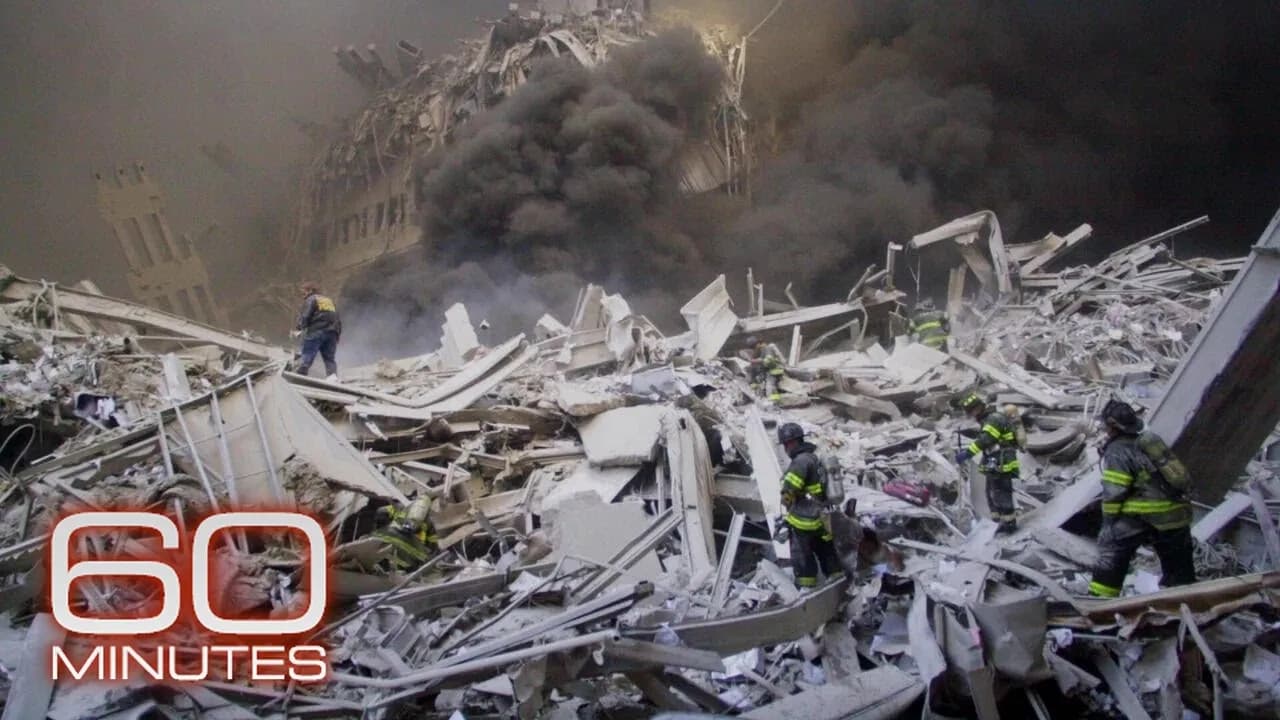
343 New York City firemen died under the rubble of the World Trade Center. A New York City Fire Department tradition is living on, stronger than ever, and more significant than anyone could have imagined. For 40 years, a small band of brothers, full-time firefighters and part-time musicians, have performed at department occasions, the happy and the sad, the weddings, the parades, and every once in a while, the funerals. Since September 11th, every once in a while has become every day, and on some days, every few hours. By the time Thanksgiving dinners are shared, the band will have played at about 300 services.
The snare of drums and the bellowing of bagpipes has been echoing in the canyons and suburbs of New York City ever since September 11th.
The 70 members of the New York City Fire Department Emerald Society Pipes and Drums have hung up their firemen's helmets and donned kilts full-time. One member played more in 6 weeks and buried more guys in 6 weeks than in 23 years as a firefighter. Burying them all is not likely. Only a few firemen in these ruins have been identified. For most, this will be their final burial ground. For those who are found, there are funerals. For the rest, memorial services. The band will be there for all of them. The men plan to be playing at churches beyond Christmas.
Jimmy Ginty is a founding member of the Pipes and Drums. Like several others, Ginty is retired from the fire department, but not from the band. He states: "It It's It's something that we have to do and we want to do. Because of the great loss and and the brotherhood in the job."
Brian Grogan has spent 20 years with the department, 16 as a bagpiper. Before September 11th, he played funerals and memorial services, but thanks to God, there weren't that many. After September 11th, it's been constant. He describes it as reminding him of the movie Groundhog Day, when every day just doesn't stop. Every morning he says he wants to do this but can't do it today, but he gets up and goes.
Tim Grant is leader of the band. He notes that a lot of people lose a family member or a friend, usually one person at a time. Everybody here knows 20, 30 people. He asks when you ever in your life lose that many people in one day that you know.
It is routine to have 10 services a day. One Saturday, there were 21. The band often is spread so thin that only a few players can show up at each service. Tom McAndrew remembers doing four in one day, starting at 10:00 in the morning with services at 10:00, 1:00, 4:00, and 7:00 at night. Many days the men traveled hundreds of miles driving from church to church.
The pipers and drummers find themselves playing miles from the city in the suburbs where most firemen and their families now live. On this day it was Battalion Chief Joseph Marchbanks' turn to be memorialized. He had served 22 years and left behind a 14-year-old daughter Lauren, an 8-year-old son Ryan, and his wife Teresa.
When asked if she didn't hear what's happening around her during a memorial service, Teresa Marchbanks responded that when they folded the flag and the honor guards were doing that, and they played, she heard everything. What she heard best and loved most was the final farewell. They always line up in the same formation and these days play the same song. She said she could have rode like that for a couple miles because she didn't want it to end.
The beginning of modern bagpiping is as old as the hills, the hills of Scotland and of Ireland. Centuries ago, it was a call to battle urging the brave to fight on. That piercing cry would echo from glen to glen. The blasts of bagpipes may seem more fit for marching than mourning, but their power is unmistakable.
Dennis Smith, who wrote the best-selling book about New York City firemen, Report from Engine Company 82, was a fireman and a member of the band. He states that bagpipe music is not in and of itself soothing. There is a kind of mystical magic to it. It's a very simple instrument in terms of what it does. It inspires. It generates extraordinary enthusiasm for the moment. Because of the wailing nature of it, it is able to move you to tears in a funeral environment in a second. To hear the bagpipers play Amazing Grace and to look at these young women with these little children at their knees is very very moving.
Amazing Grace is always played when the casket and family are entering the church. For pipers, this is a heartbreaking moment. They're always right in front of the church. They see the wife, the children, and everybody seems to always have a lot of children. Everybody's like lost and hurt and you're standing right there. You can't look at the children. Even the wife, you got to look away. Otherwise it'll tear you apart. You never get that. You never walk away from it. It's still a twist in the stomach and choke in the throat and a tear in your eye, no matter what. You think you would get hard to it, but you don't.
No matter how hard it is to play in front of the church, there is one period even tougher. It's the one thing they try to avoid. Bill Duffy talked about while waiting for a service to end. He notes that you'll notice a lot of guys in the band aren't going into the churches. He only goes in if he really knew the guy because it's just too much emotionally to bear to do that.
Several days later, every single member of the band came prepared to do just that. For their beloved drummer, their only member to die at the World Trade Center, Derrell Pearsall was 30 years old. Everyone called him Bronco. He left no parents, no wife, no children. The band was his family. And they gathered, as they say, to pipe him to heaven. Usually, one lone piper plays Amazing Grace. Not today. For Bronco, there was a symphony.
When the playing stopped, they all carried their instruments and their love through the church doors. This is not the end of the story. Life for the band, as for the rest of us, is slowly returning to normal. With every week, there are fewer funerals now, fewer endings, and more beginnings. Only 2 weeks ago, Brian Grogan got a taste of that himself. He felt like he was living in the movie Groundhog Day with funeral after funeral after funeral. But not this night. It was his daughter's wedding, and the men from the Emerald Society were there, playing a different tune, making at last a joyful noise. This was one day Grogan hoped would never end. He states: "You know, it sets aside what what I've been through and what the rest of the fire department has been through and the rest of the world has been through. This is the greatest feeling in the world."
The segment concludes with cheering, applause and cheering as the band plays at Brian Grogan's daughter's wedding.
Keep 60 Minutes in your library
Save the videos and channels worth coming back to, and find them again in one place.