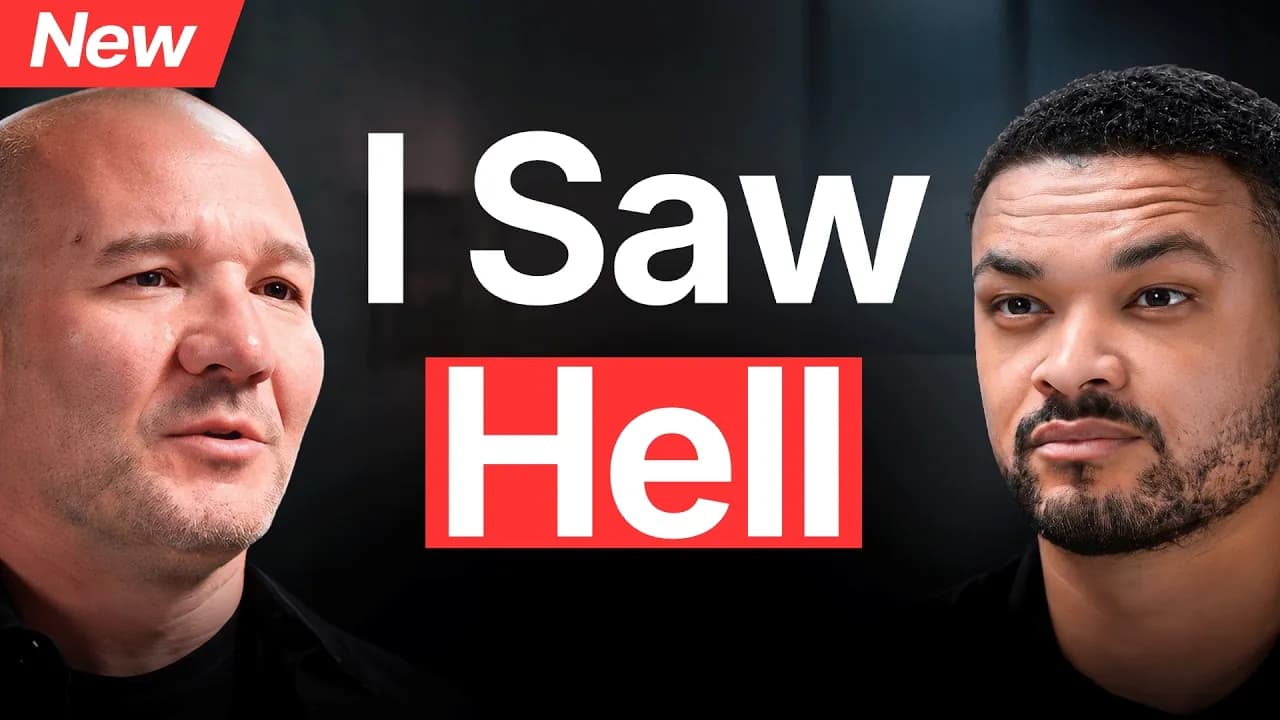
“The Fighting Preacher” Is The Best Story From WWII
In a Nutshell
Logan Weston survived multiple sieges, extreme combat across three wars, and repeated near-death experiences—including a suicide attempt where his gun miraculously failed to fire—after dedicating his life to God following the incident. He earned the nickname "Fighting Preacher" through his dual roles as a combat soldier and minister, serving in Guadalcanal, Merrill's Marauders' 800-mile jungle march, the Korean War defense of Busan, and as an early Green Beret in Vietnam while accumulating over 300 medals.
These notes were generated by AI and may contain inaccuracies.
Logan Weston is a World War II, Korean War, and Vietnam veteran who received over 300 medals and awards throughout his military career. He fought in multiple conflicts across three wars and became known as the "Fighting Minister" due to his dual roles as a preacher and combat soldier. Despite his extraordinary accomplishments, Weston did not have a Wikipedia page until after a video was made about him.
Weston grew up as a poor kid working in coal mines and as a lumberjack. During the Great Depression, he gave his job at a coal mine to a friend with a wife and children to support. A week later, the coal mine collapsed and many people died. His friend survived and gave him a lumberjack job, but another major timber-cutting accident occurred there as well.
Surrounded by death from all sides, Weston reached a point of extreme despair and attempted suicide. He put a gun to his head and pulled the trigger, but it did not fire. Before the hammer fell, he heard a voice say "Wait." He tried to stop but the hammer fell anyway - the gun still did not fire. When he went outside and tested the same gun on a tree, the bullets fired normally. He interpreted this as God giving him a second chance, so he dedicated his life to God, resolved to become a preacher, and enrolled in Christian college.
While in his second year of university, compulsory military service began with no exemption for religious college students. Weston was drafted in 1940 or 1939, before America entered the war and before Pearl Harbor. He was sent to basic training and joined his unit just before Pearl Harbor was attacked.
After basic training, he was initially assigned to guard the Mississippi River in anticipation of possible Japanese attacks across the waterway. He camped on the banks of the Mississippi River for six weeks before being reassigned to the Pacific theater.
Weston was sent to the Pacific expecting to be among the first forces to land, conducting amphibious operations in Higgins boats under enemy fire. He led a platoon as a platoon sergeant due to his pre-Pearl Harbor experience. When his boat reached Guadalcanal, they encountered no enemy fire and discovered the battle had already ended five months earlier.
He later participated in the New Georgia campaign, which involved brutal jungle warfare. His company was besieged for 29 consecutive days with no supplies, earning them the name "Lost Battalion." They ran out of food after three days and were literally starving while fighting off Japanese attacks. Weston was one of the last men still able to move when they were finally rescued.
After being shipped home to regain weight, Weston was sent on another mission and besieged again, this time for approximately two weeks. Having learned from the previous experience, the men handled the situation much better with local guides who led them to edible plants and organized cooking competitions.
When ammunition ran low, Weston was selected as the most experienced man to scout for gaps in enemy lines. He took a local guide and they encountered Japanese forces, diving into trenches and swamps to escape. Weston was shot multiple times - a bullet hit his helmet and spun around without penetrating, another went through his coat, one through his pocket, and another through the heel of his shoe - but he emerged completely unharmed.
The local guide, who had never seen anything like this, interpreted Weston's survival as evidence of divine protection. The guide asked to become a Christian, and they prayed together in the woods. The guide then began singing and dancing loudly behind enemy lines, believing bullets would miss him, while Weston tried to keep him quiet.
After returning from the mission, Weston received two letters from home that had been delayed six months. One was from his fiancée ending their engagement, and the other from his parents announcing their separation. When a dangerous voluntary mission was announced, Weston volunteered, stating he had "nothing left to live for."
He was transported to Australia, then India, where he joined what would become known as Merrill's Marauders - the predecessor to the 75th Ranger Regiment. This unit of 3,000 experienced jungle warfare veterans marched approximately 800 miles from India to China to conduct guerrilla warfare operations against Japanese forces attempting to link with Germany.
The Marauders operated in the jungle for nine consecutive months, receiving supplies only through airdrops that revealed their positions to the enemy. Their casualty rate was extremely high - of the original 3,000 men, only about 300 completed the full journey. Weston participated in almost every major battle fought by Merrill's Marauders before being medically evacuated due to injury.
After World War II, Weston stayed in the army, got married, completed his university studies to become a priest, and served in reserve forces. When the Korean War broke out, he attempted to join as a military chaplain but was rejected due to being one month over the maximum age of 32. He rejoined as an infantryman and was sent to Japan for occupation duty.
When the Korean War started, Weston was rushed to South Korea where North Korean forces had pushed South Korean troops to the southern tip of the peninsula near Busan. He was assigned to guard what was considered a safe perimeter around Busan.
While guarding the perimeter, Weston spotted 90 men approaching and correctly identified them as North Korean forces carrying Japanese rifles from World War II, despite headquarters insisting they were friendly South Korean troops. After multiple failed attempts to warn command, his position came under attack.
Weston led his 30 men in repelling a major attack, with his troops killing between 200 and 300 North Korean soldiers. This action prevented enemy forces from overrunning command headquarters and breaching the Busan perimeter. Weston was seriously wounded and nominated for the Medal of Honor, but his commander deliberately reduced the award to the Distinguished Service Cross to avoid appearing foolish for initially dismissing the threat.
Weston was hospitalized for 89 days before being returned to the front lines just as American forces had reached the Yalu River border with China. When Chinese forces entered the war and launched their massive offensive, Weston fought during the retreat.
During one engagement with enemy tanks, Weston requested an anti-tank crew with bazookas. The three-man crew was killed by tank fire, leaving Weston as the sole survivor. He single-handedly destroyed three tanks by firing a bazooka at the middle tank, then throwing grenades into the hatches of the other two tanks whose crews had opened them. Newspaper headlines proclaimed "The Fighting Preacher Destroys Three Communist Tanks."
During the tactical withdrawal south of Seoul, Weston was promoted to battalion commander. Under his command was Captain Louis Millet of Easy Company, who led the last bayonet attack in American military history at the company level. Millet had heard that communist forces were claiming Americans were afraid to fight with bayonets due to ammunition shortages, and responded by leading this historic charge that captured a hill.
After the Korean War ended when Weston was in his mid-forties, he was recruited for the newly forming Green Berets despite being 46 years old. He completed parachute training and became one of the first Green Berets. He was later sent to the Pentagon to help write jungle warfare and counterinsurgency tactics manuals based on his Merrill's Marauders experience.
Weston served as a U.S. government advisor in Laos during the Vietnam War, where he participated in covert operations alongside MACV-SOG forces conducting undisclosed warfare in Laos and Cambodia.
Weston survived multiple near-death experiences throughout his career. On his last day in Korea, he was shot directly in the chest by an enemy sniper, but the bullet was stopped by a Bible in his jacket pocket. He continued serving through Vietnam before retiring and serving as a chaplain at Texas A&M University for 10 years.
Click the subscribe button at the bottom of the screen to get early access to episodes before anyone else, support the show, help host better and more important guests, and make the host happy.
The host has started every morning the same way for the past five years with a glass of cold water and Element. Element is an electrolyte drink mixed with everything needed and nothing not needed. It contains a scientifically supported electrolyte formula of sodium, potassium, and magnesium. It has no sugar, no colors, and no artificial ingredients.
Element reduces muscle cramps and fatigue, supports brain function, and helps regulate appetite throughout the day. The host notices the difference when taking it compared to when not taking it, which is why the product is mentioned repeatedly.
Element is used by everyone from Dr. Andrew Huberman to Olympic athletes and FBI sniper teams, specifically the good ones.
Element has a no-questions-asked refund policy, so if you don't like it for any reason, they will simply refund your money. They also offer free shipping within the United States.
You can get a free sample of Element's most popular flavors with your first purchase by going to the link in the description below and heading to drinklmnt.com/modernwisdom.
Keep Chris Williamson in your library
Save the videos and channels worth coming back to, and find them again in one place.