The Future Of Wearables (Is Here)!
These notes were generated by AI and may contain inaccuracies.
New study from one of the best labs at Stanford hints that smart watches and health trackers could become more important than ever. The study from Nature Medicine showed that tracking just a single night of sleep could contain enough information to predict future risk for a wide range of serious diseases: dementia, heart failure, stroke, chronic kidney disease, heart attack, and all-cause mortality. Predicted from one overnight sleep study with genuinely impressive performance. Though the study used clinical-grade sensors, smartwatch companies will jump on this and implement something similar. This could be a game-changer if we get even part of the same performance with smartwatches, since many more people wear them and for more than just a single night. Examples include Apple Watch's high blood pressure feature and Oura ring hinting at more capabilities if regulators allow it. Data privacy is a very important issue.
For those new to the channel, my name is Rob and I'm a post-doctoral scientist specializing in biological data analysis. Today's video breaks down what this paper did, why the approach matters scientifically and in the real world for wearable users. Major part speculates on what happens if wearable companies implement something similar, as they will. If we don't build strong privacy and regulatory guardrails now, incentives won't automatically prioritize patients or users, as they might sell data.
Quick disclaimer: this is science communication, not medical advice. Risk prediction is not a diagnosis.
The paper is called A Multimodal Sleep Foundation Model for Disease Prediction. It's one of the most impressive disease models seen. Principles are not hard to understand and will be important if smartwatch companies adopt this.
Data from PSG (polysomnography), the gold standard lab sleep study combining brain activity, eye movement, heart rate, electrical activity, muscle activity, and breathing. PSG is incredibly information-dense, much more than smartwatches, but clinically often compressed into summary numbers or sleep stage charts, losing raw signal information. The model learns directly from full messy physiological time series, trained on over half a million hours of PSG.
From a single night of sleep, the model predicted future risk across many diseases and conditions. Tested over 1,000 diseases; strong performance for 130. Highlighted examples: all-cause mortality, dementia, heart attack, heart failure, chronic kidney disease, stroke, atrial fibrillation.
Does what ChatGPT does for text but for sleep: learns general patterns from huge raw data, then tuned for specific prediction tasks. Uses chunks of brain waves, breathing, heart rate signals, muscle activity instead of words.
Sleep links to diseases doesn't mean sleep causes them; this is prediction, not proof of causation. Sleep may act as a canary in the coal mine, an early warning signal, as many diseases affect brain, breathing, heart rhythms, or autonomic nervous system. PSG or smartwatch picks up early changes before clinical disease.
PSG is the everything test: brain waves, eye movements, high resolution gold standard. Upsides: amazing data quality, many modalities. Downsides: expensive, inconvenient, usually one night, for people with sleep issues in clinics.
Wearables are the mirror image: no clean brain waves, indirect breathing; each night noisier and less complete. But provide lots of nights over time in real world, learning baseline over weeks/months, flagging drifts like shifting sleeping heart rate patterns, worsening oxygen dips, irregular sleep timing. PSG gives snapshot.
Paper examined what mattered for predictions. Sleep stages contributed equally overall, but light sleep and REM sleep carried more signal for cardiovascular and brain diseases. Brain activity most important for mental/neurological conditions; breathing for respiratory/metabolic disorders and some dementia; heart rate electrical signals for circulatory/heart diseases. Best performance combines everything for cross-checking.
Wearables good at heart rate signals (depends on device); best devices top-right in overview. Most use optical PPG (not ECG), carries cardiovascular info. Some record ECG but briefly, not all night; PPG more relevant. Breathing: estimate oxygen saturation reasonably well, infer breathing rate/irregularity from motion and PPG.
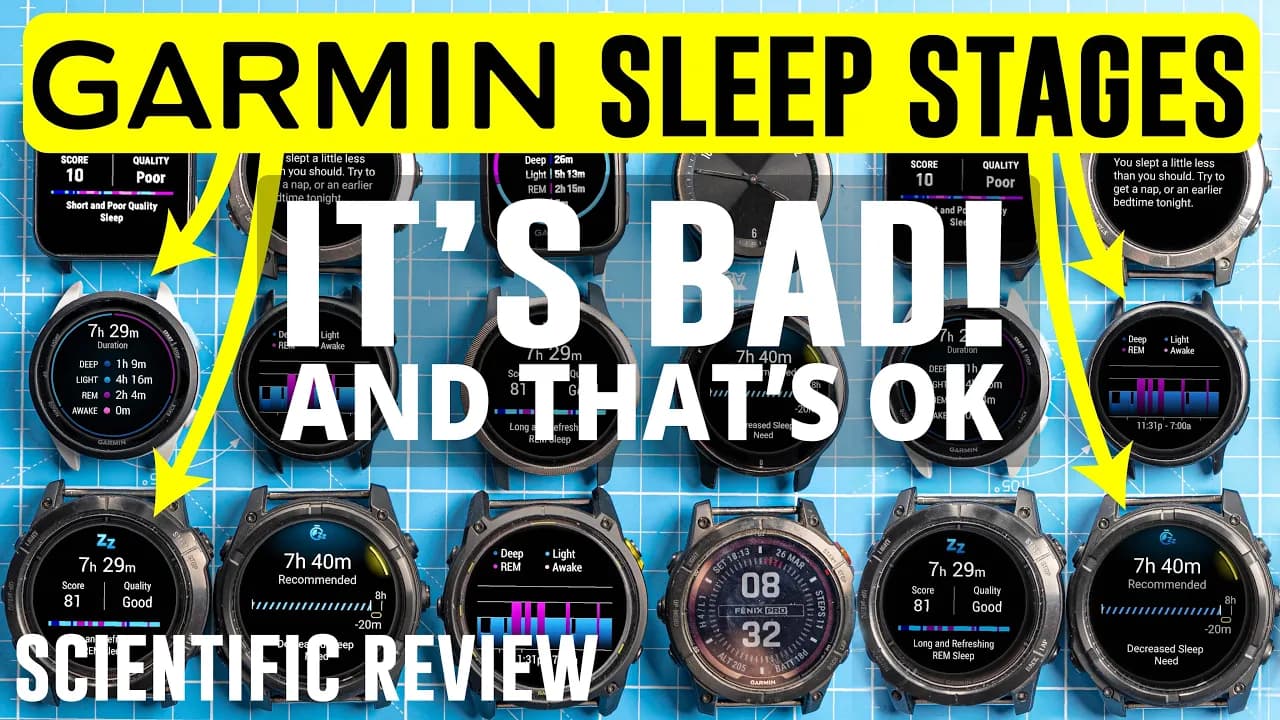
Biggest gap: no mainstream EEG for brain waves. Estimate sleep stages from movement/heart rate (proxy). Overview shows better devices top-right for sleep stage tracking.
Wearable version strongest first for heart rate/breathing signals: arrhythmias, sleep disorders, cardiometabolic risk. Harder for neurodegenerative diseases without brain data. But longitudinal data might detect brain-related changes via heart rate/movement. Power of wearables: massive scale, real-world, long-term data despite fewer/noisier channels, no direct brain waves.
Can't copy-paste model to wearables, but new model trained on wearable strengths (scale, real-world, long-term) dealing with weaknesses will predict diseases ahead of time.
Privacy/regulation unavoidable as wearables shift from sleep tracking (lifestyle) to disease risk prediction (dementia, stroke, heart failure), influencing medical decisions, insurance, employment, self-perception. Consumer wearables governed by terms of service, not healthcare law; risks of data selling, bankruptcy, sharing with partners/insurers affecting finances.
Hope for rules: validation standards, independent audits, model versioning, government checks; privacy by default, e.g., models run locally on phone so company doesn't have data. Rules preventing companies owning such data.
Data mostly from sleep clinic patients (referred for PSG due to issues), not general population; caution on translation without validation. Authors transparent, show transfer to other datasets. Demographics (age, sex, ethnicity) predictive alone, but sleep adds value.
AI can bring positive change if regulated well, shifting healthcare to prevention over treatment.
If getting a wearable for sleep, use affiliate links for discounts to support channel. For best sleep trackers from systematic testing, check linked videos; best overall health/sports trackers in another.
Keep The Quantified Scientist in your library
Save the videos and channels worth coming back to, and find them again in one place.