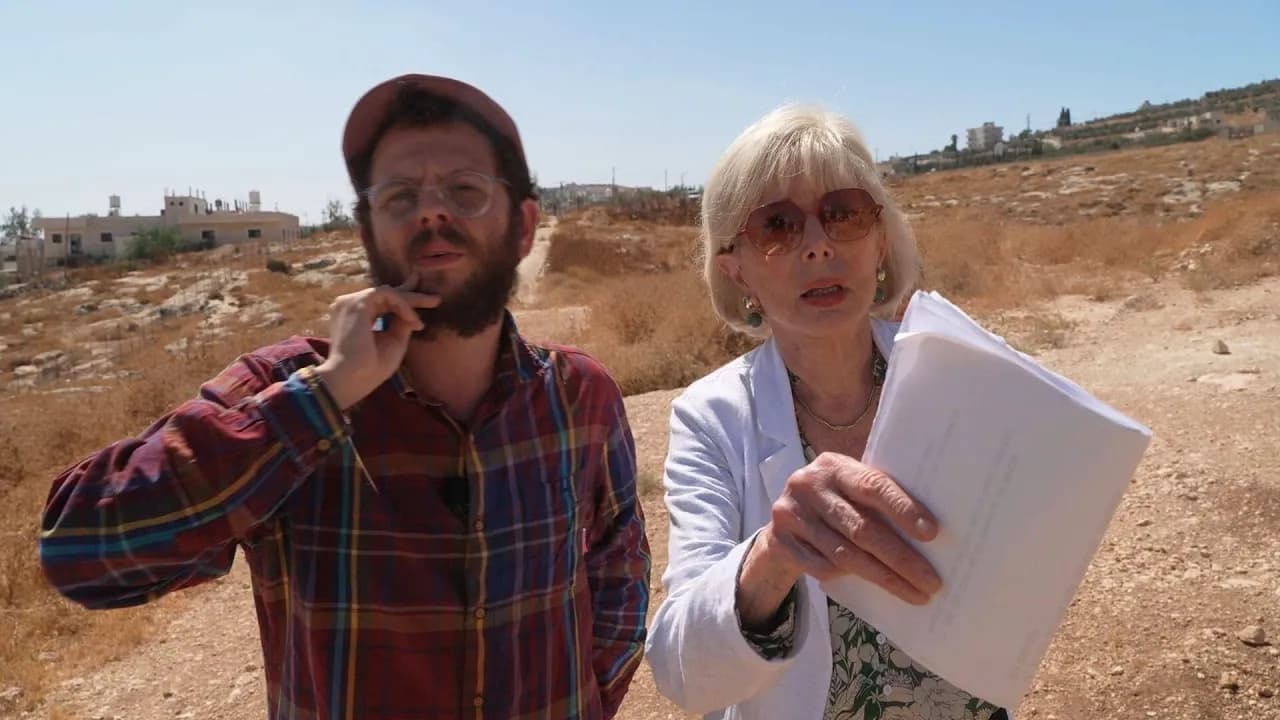
The Israeli settlers behind West Bank conflict with Palestinians | 60 Minutes
In a Nutshell
Israeli settlers in the West Bank are using sheep farms and militant "hilltop youth" to violently displace Palestinians from their land, with 200 farms seizing 20% of territory and driving out over 100 communities. Young settlers regularly attack Palestinian farmers with sticks, stones, and firearms—cutting olive trees, torching property, and killing villagers—while facing almost no prosecution from Israeli authorities. The Israeli government funds these settler operations with tens of millions of dollars, while the army prioritizes protecting settlers over enforcing the law against them.
These notes were generated by AI and may contain inaccuracies.
Israel has been at war with the Palestinian terrorist group Hamas in Gaza since the October 7th massacre. The West Bank, under Israeli military occupation for six decades, represents another increasingly volatile battleground. The area is home to over 3 million Palestinians who hope to establish their future state there, and over 500,000 Jews who call this Judea and Samaria their biblical homeland. Jewish settlers have built communities called settlements with the goal of incorporating this territory into Israel. In recent months, some militant settlers have intensified their campaign to violently drive out Palestinian residents, often with impunity as the Israeli government shows unwillingness to crack down on the violence.
The arid hilltops of the West Bank have witnessed shepherds coming and going for thousands of years. This represents a biblical story involving two populations—Jewish and Arab descendants of Abraham's sons Isaac and Ishmael—fighting over ancestral lands. Despite modern warfare technology including AI, drones, and supersonic missiles, the weapons employed here are sticks, stones, and sheep.
Mordechai Menster co-founded a sheep farm representing a new kind of settlement in the West Bank. His herd is driven deeper into surrounding Palestinian communities with the strategy that sending sheep to graze allows settlers to claim land ownership based on grazing activity. Menster explains that Arabs understand fighting over grazing lands, making sheep a method to delineate borders and prevent Palestinians from grazing, planting, or building in designated areas. The sheep farms have taken over huge swaths of land, representing 20% of the West Bank.
In one Palestinian village after another, herds from these farms have pressed in while village shepherds have been pushed out. The mayor of Burqa reports that settlers have seized land with their sheep. In Al Mu'er, a teacher describes settlers entering homes by opening gates and allowing sheep inside to eat trees around houses. Some 200 sheep farms have emerged in recent years, fundamentally changing the landscape where Jewish settlers previously erected fences for protection from Palestinian terrorism, but now Palestinians are penning themselves in.
Mordechai Menster acknowledges that violence exists in ethnic and religious communities fighting over land and resources in the Middle East, but maintains this doesn't change the merit of Jewish rights to the land. The violence is often carried out by young shepherds known as hilltop youth who have come for adventure, told they are on a god-given mission to redeem the land. These youth routinely storm Palestinian fields and villages, harassing farmers and livestock, cutting olive trees with over 1,600 incidents recorded this year alone. They have torched cars and destroyed property, with a hardcore group of up to 500 participants and up to 1,000 more drifting in and out.
The hilltop youth range in age from 15 to 25 years old. Many struggle in school and face behavioral problems that prevent easy army recruitment. Some end up caring for sheep or doing construction work in these settlements. Some have drug problems, smoke pot, or grow marijuana. The American ambassador to Israel has classified the violence against Palestinian farmers as terrorism, calling it thuggish and disgusting. Menster acknowledges that some children overreact and act in thuggish ways requiring control, but wouldn't classify the overall activity as terrorism. When asked about deaths occurring, he confirms people have died but maintains this doesn't change the legality and ancient nature of Jewish rights to the land.
Mahmoud Faraj's family has held deeds to their land for generations in the village of Janada, meaning paradise. Until March 26th, the area was considered paradise until a group of 20-25 settler invaders established a tent on their private property. The settlers began behaving as if they owned everything. Hilltop boys set up an outpost literally in the family's backyard, cutting off access to one of their houses. The young shepherds are attempting to force villagers to leave, succeeding as many houses have been abandoned. The settlers steal electricity and water from locals as part of their strategy to make areas unlivable.
Every time the family attempts to approach their house, teens from the outpost rush down to beat them. In March, Hassan tried with his uncle and cousin Mohammad to reach their property. Within seconds, settlers attacked in small groups using wooden sticks, stones, and tear gas, with three armed individuals present. One armed settler shot Mohammad in the head, then the attackers beat Hassan's uncle and his dead son with wooden sticks. When asked if anyone was prosecuted for Mohammad's death, the family reports it remains an open case. Only a tiny number of such cases ever reach prosecution.
Mohammed's brother Hassan attempted to take journalists to the family house but was blocked within seconds by hilltop youth in black hoodies running down the hill. The teens blocked Hassan from reaching the distant house, with some being very young. Hassan kept his hands behind his back during shoving to avoid accusations of hitting them. A group of Jewish activists called Sons of Abraham attempted to protect Palestinians under siege, stepping between Hassan and the teens as human shields, reasoning that settlers would be more hesitant to attack other Jews.
Most Sons of Abraham activists, like the settlers themselves, grew up in right-wing religious homes. Amona, Dvir, and Roi were once hilltop youth themselves but now work to protect rather than expel their neighbors, citing Judaism's call to protect neighbors. When settlers see these activists, they become angrier because they view them as ideological traitors. Amona notes the pain of seeing people she grew up with, some former good friends, behave this way. An older boy was particularly belligerent, head-butting Hassan in the face and later fracturing his nose. When the situation escalated, an Israeli army captain appeared and ordered everyone to clear out, allowing the Jewish youth to stay while kicking Hassan off his own property.
The army's priority appears to be protecting settlers, with some soldiers being settlers themselves who occasionally join the violence, though there have also been cases of soldiers being attacked by young settlers. The Trump administration has called on Netanyahu to address the violence, which he has condemned. However, his government has poured tens of millions of dollars into expanding sheep farms, arming them, and providing American-made off-roaders. Palestinian observers describe this as state violence rather than just settler violence. Over 100 Palestinian communities have been displaced or erased by settler violence and encroaching sheep farms. With US midterms approaching in three weeks, Democrats threaten to limit military aid to Israel partly due to West Bank attacks. Menster expresses concern about America turning against Israel but doesn't view it as an existential threat, stating Israel will find other allies.
Keep 60 Minutes in your library
Save the videos and channels worth coming back to, and find them again in one place.