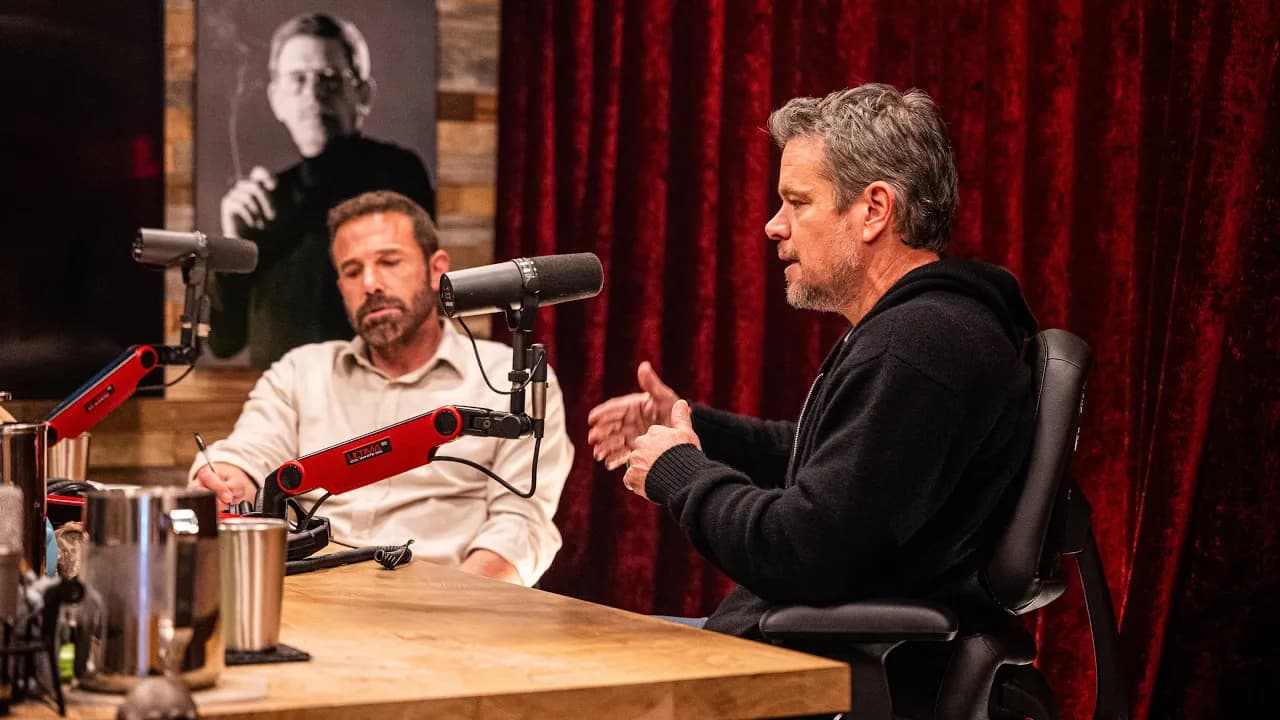
Navy SEAL: “Not Killing People Is Hard” - DJ Shipley
In a Nutshell
DJ Shipley explains that leaving the military was his hardest transition because his entire identity and skill set had no civilian value, leaving him without purpose, relationships, or transferable abilities. The job demanded total obsession—constant training, extreme compartmentalization, and 270+ days deployed—which destroyed his ability to function as a husband or father and left him addicted to adrenaline and medication. His recovery came only after psychedelic treatment with ibogaine and 5-MeO-DMT reset his addictions, trauma, and ego, allowing him to rebuild his marriage and shift from taking lives to saving them through mental health advocacy.
These notes were generated by AI and may contain inaccuracies.
No one prepares you for leaving the military. When you join the teams, especially special operations, it becomes your entire identity and the justification for everything you don't do. When you transition away, you expect to find the same love, passion, and energy you had for the military, but when you don't find it, it's a huge fall from grace.
The idea that a billionaire will pay you hundreds of thousands of dollars to live on his ranch and tell war stories, or that any place will hire you immediately because of your background and resume, is a lie. No one pays you to do a compound assault, skydive, or assault a cruise ship. The speaker spent his entire adult life developing a skill set nobody wants.
The speaker doesn't know how to do anything else. He avoided getting his picture taken for 20 years and avoided conversations with normal people. He has no rolodex because he never opened himself up to anybody outside his 12-man team. He doesn't know the CEO of Apple or Google.
The only option that exists is contracting, which keeps you in the same system with the same people, deployment schedules, and routine until you're too old to continue. This makes many special operators feel like they can never truly leave.
Even those who do leave are often miserable or transition to jobs so similar to the military that they're effectively still in it. Contracting work through agencies like Blackwater or Triple Canopy pays a little bit more but is essentially the same job. Some guys leave and go to Goldman Sachs to reinvent themselves, but most return within 6 months to 3 years because they miss it.
Wall Street trading is the closest thing in finance to war due to the adrenaline of million-dollar movements, but if that's not enough, you need something with more kinetic energy.
Kinetic energy is the core need. You've never felt more alive than when you're on the edge of death. Once you feel that and survive it, you want to feel it again. Whether it's skydiving, combat, or anything else, you're chasing the adrenaline dump.
The feeling is like surviving a bad car accident where your hands shake afterward. It becomes an ego check about how close you can come to danger or how successful you can be while buying down risk. Being a special operator is essentially the war equivalent of an extreme sport.
Many guys did extreme sports before or during their time in the teams. The speaker's background was skateboarding. Andy was into skydiving, base jumping, and wingsuiting. Many came from MMA and ultra-competitive worlds.
In this environment, there's no bronze medal. If you mess up, you die or others die. When putting friends' lives in danger, the goal is to buy down risk as much as possible by obsessing over your craft and controlling all variables.
The most dangerous person in the military is a skydiver with 180 jumps who thinks he's a ninja. To make skydiving safer, you must make it mandatory to skydive more. The speaker has 4,000 jumps.
To buy down risk, you have to do it more: fight more, shoot more, jump more, operate more. The speaker had a conversation about whether limiting combat exposure would reduce anxiety, suicide ideation, and the fall from grace when leaving. He said absolutely not. They need the exposure to get really good.
Locking someone in a room without playing and then putting them in a Super Bowl where losing means death is not good preparation. Playing every day with two-a-days builds confidence and buys down risk until the team believes they've covered all bases and are as good as humans can be.
There are times when people get into the team who shouldn't be there. A mentor discussed being "clonable" - if the answer to "Would we be better off with five of you?" is not yes, then you shouldn't be there at all.
Even if someone isn't the best, the strength of the collective makes up for deficiencies in shooting, moving, communicating, skydiving, or diving. Personality and cultural clashes are harder to navigate than performance issues. Everyone can perform the skills at a solid level, but personality mismatches create friction.
In music, you might have an unbelievable guitarist or bassist who's difficult on the tour bus. The job isn't finished with professional execution. You must consider how someone impacts team morale and the energy they bring going to and returning from operations, during debriefs, and when staying in touch off-duty.
Some people are universally annoying while others are idiosyncratically annoying. At tier one organizations, they do a draft based on performance, culture, and trust. If someone doesn't fit after 6 months to 2 years, they may lateral transfer to a different team where their personality fits better.
Everyone claims to be a higher tier than they are. SEAL teams are tier three, not tier two. Tier classification is based on the parent unit and response times to catastrophic events. If you're anywhere on the planet within 36 hours, you're high tier. Some operate on 30-minute recall, where a page or text sends you to an airplane in 30 minutes.
Tier one organizations receive more funding and have all logistics covered. They place you inside a compound with all ranges, assets, intelligence, human performance resources, and the best gyms, trying to lock you inside so you can focus entirely on the craft.
Other units follow a year or two-year workup, then forward deploy for 3, 6, 9, or 12 months before returning to rinse and repeat. Tier one organizations operate on constant revolution with no break.
The speaker joined the Navy in 2002 and retired in August 2019, totaling 17 years. He was on the tier one side from 2010 to 2019, spending significant blocks each year on alert status.
Being on alert means you matter. You wake up watching news and intel briefs, actively hunting targets with your team, waiting for a text to deploy. The speaker and his wife had code words like "going fishing with the boys" where she wouldn't know the destination.
This is the coolest thing in the military because it's like the movies. The pager goes off and you leave immediately. It's pressure, but it gives a reason to get up on days you don't want to. The team, mission, and nation deserve it.
After leaving, the speaker sees sub-ten athletes and observes their daily routines. Steph Curry, LeBron James, Michael Phelps, and Tiger Woods all broke out routines that exceed everyone else's minimum standard. Nobody else can maintain their level of discipline.
Steph Curry has a minimum shot routine, warm-ups, workouts, massage therapy, and cold plunges that he performs unbroken for longer than anyone else. That's why he maintained a 20-year career when the average NBA lifespan is 4.5 years. Michael Phelps is genetically gifted, but his discipline is why he has all the gold medals.
If you run reality back a thousand times, someone like Michael Phelps would become world class in 900 of those universes. The goal should be to construct a life where in as many universes as possible, you end up with the desired outcome.
If you live the routine and replace every rep with a different medium, that's the recipe for success. Breaking down 10,000 hours: 4 hours a day is roughly 8 years; 8 hours a day is roughly 4 years. The advice is to sacrifice everything else for the first four years to lay down those 10,000 hours, then find balance.
The speaker didn't do this. He spent his early 20s drinking, partying, and chasing women instead of frontloading discipline. You have to make up that time on the backside. Be a pro early.
Young guys often ask about using different leverage functions instead of white-knuckling. At 22, you're made of rubber and magic. You can do 14-16 hour days for multiple days, recover with one day of extra sleep, and repeat. The gains from frontloading skill acquisition and setting paths of least resistance early are a superpower.
Many SEALs were involved in sports as kids with disciplined routines. Even those who weren't had some spark that locked them in. Defining your path of least resistance by setting habits early is a superpower you can give yourself.
It becomes routine and easy. You don't realize you're doing it. The speaker has never hit snooze in his life. His tip: put your alarm 8 feet off your bed so you have to get up to turn it off, then continue the momentum. Lay out clothes the night before, have water and pills ready, and follow the exact order every morning.
He can be out of the house in 4.5 minutes. He dirt dives the night before for everything, learning traffic patterns and logistics so he's never unprepared or late.
It's exhausting to have the alert mindset on at all times. The speaker has been working to dial it down. Before, it was much worse. Surgeons and ER docs have similar states. If the phone rings, you have to go. Watching someone who lives on alert have zero bars or a dead phone causes panic.
You're constantly checking your phone. If it goes off in the next room, you jump for it. At 2:30 in the morning, falling back asleep is hard because you're on edge waiting to spring into action.
Being on a plane going out to an operation after having only 30 minutes to get ready but thinking about it for months or years is amazing. Even on a normal deployment helicopter flight, there's nothing that replaces sitting on the helicopter 30 seconds out, watching the guys who are calm and ready to send it. It makes you feel eerily comfortable.
The pressure is getting there. It's like meditating on the helicopter with the whine of engines, smell of fuel, and nobody talking.
Operators mentally rehearse every single detail of an upcoming operation while on the helicopter. They visualize the landing, the rotor wash, where they will sit, and every possible contingency. This obsessive level of preparation creates a sense of omnipotence because no detail has been left unconsidered. When unexpected events occur, the team can switch to pre-planned responses.
The job demands total focus. Upon arrival at the unit, operators sign paperwork committing not to pursue college degrees, real estate licenses, or other extracurricular activities for the first four or five years. Leadership recognizes both the price and the benefits of this level of obsession. Those who have been doing the work for years confirm that everything they do is purpose-built, including morning routines, workouts, recovery protocols, what they consume, and how they manage stress.
The highest-level operators demonstrate exceptional ability to compartmentalize stress. After returning from a four-and-a-half-month deployment, they can receive devastating personal news, such as a spouse leaving with the children, and immediately return to work with the attitude that they will address it later. They block out external concerns completely while on task. This skill becomes more difficult once operators have families and additional demands on their attention and bandwidth.
The speaker has long argued that, in a perfect world, operators would not marry or start families while serving in these roles. He draws a parallel to K-pop stars in South Korea, who sign contracts prohibiting them from having partners or children. South Korea has the world's lowest birth rate, and some demographers attribute part of this to the cultural influence of K-pop promoting unpartnered, childless lifestyles. The speaker describes an ideal operator as someone with no external commitments, similar to a James Bond figure who has no attachments, combined with the discipline of Neil McCauley from the film Heat.
Creating the perfect operator presents a contradiction. The public often wants a superhero figure who saves babies and rescues people while also eliminating threats. However, the enemy operates without empathy. The speaker notes that people cannot decide what they actually want from their forces.
Recent conflicts in Ukraine, Russia, and the Middle East have made kinetic operations more widely visible than ever before. This visibility has created additional layers of public scrutiny not only about outcomes but also about the manner in which operations are conducted. People demand greater empathy and less brutality from those acting on their behalf, even as they acknowledge that collateral damage has always been part of war.
Western forces, including the US and UK, place civilian protection as the highest priority. This approach puts operators at significant tactical risk to avoid killing non-combatants. Previous wars did not operate under the same constraints. The speaker wishes the public would simply express gratitude rather than criticize from a distance without understanding the realities involved.
High-profile cases in Australia and the UK have seen decorated operators investigated for alleged war crimes. Ben Roberts-Smith, an Australian SASR recipient of the Medal of Honor equivalent, faced accusations of murdering Afghan civilians. A UK SAS operator received recognition for an operation but later could not enter the US due to legal proceedings. The speaker states he has never witnessed a murder during his service.
Modern technology, including constant surveillance, makes it nearly impossible for operators to commit violations without detection. Adversaries have learned to exploit Western rules of engagement. They fire from buildings, then hide weapons behind false walls or have family members conceal firearms. When operators enter, they find no visible weapons, creating situations where legitimate engagements can be portrayed as killings of unarmed individuals.
Every person shot in Iraq or Afghanistan triggers a cash payout to the family, regardless of combatant status. Operators were also required to pay compensation for damaged property, such as $5,000 for breaching a door. These policies are framed as efforts at winning hearts and minds, which the speaker rejects as incompatible with effective operations.
Detainees receive regular meals, hot showers, clean beds, air conditioning, and television during short detention periods. They learn the system quickly and share this knowledge with others upon release. Operators build detailed profiles using cell phone intercepts, emails, and radio communications. Individuals without weapons are still detained based on atmospherics and known associations.
Somalia operates as a completely lawless environment where anything can happen. The speaker describes Mogadishu as resembling the setting of Black Hawk Down, with no rule of law. Foreigners, particularly white individuals, face extreme danger including dismemberment and execution.
Operators must follow rules that the enemy ignores, creating an inherent disadvantage. The speaker questions whether the public truly wants forces to win conflicts quickly, noting that rapid victories would require methods most people would find unacceptable to witness. Prolonged engagements generate significant revenue for defense contractors and technology companies developing armor, ISR platforms, body armor, and medical devices.
The speaker argues that the five-eyes nations could resolve conflicts in Iraq within six months if given full authority. He notes that leaders sometimes prefer drawn-out engagements. Regarding Iran, he suggests a rapid, decisive strike followed by withdrawal rather than extended involvement. He describes a hypothetical scenario involving nuclear capability where the only solution would be direct action.
The speaker expresses admiration for operations involving the nighttime extraction of high-value targets from secure locations. He describes the planning and execution of such missions as the ultimate objective for operators, representing the pinnacle of what the profession demands.
During the speaker's final rotation under the first Trump administration, the team was prepared to launch a major operation but was cancelled on the ramp after a phone call resolved the situation. The speaker notes uncertainty about the specific language or approach used but acknowledges the outcome avoided conflict.
Trump is viewed as highly effective at avoiding conflicts compared to previous leaders. The amount of conflicts he's prevented would earn him more praise if they were public knowledge. He doesn't discuss these incidents, treating them as routine rather than opportunities to take credit. An example includes the Maduro raid, where Trump simply said "send him" and expressed full trust in the force without losing sleep over the decision.
Trump would not make a good special forces operator due to his ego frequently getting him into trouble. His ability to function as a follower without overall control is questionable. The core issue is whether someone can adopt a plan that isn't their own. Many operators struggle with this, and ego manifests when plans aren't their creation.
Brad Gary, a retired SEAL, stated that "culture eats strategy for breakfast every day." This principle emphasizes aligning incentives at the group level through bottom-up cultural norms rather than top-down enforcement, while maintaining some top-down routines. The question remains how well someone would perform if they weren't the plan's originator.
Civilians often believe special operations resemble movies like The Expendables, where operators pick targets with Bowie knives, or Zero Dark Thirty, showing relaxed grooming standards with pop collars and camo. The reality is more routine and structured than expected, yet more lawless than people imagine. It functions more like a professional sports team than a traditional military organization.
Operators rarely wear uniforms except for promotions or funerals. Most maintain relaxed grooming standards with long hair and big beards. They avoid social media, don't write books, and don't take photos. The environment mirrors professional sports teams where individuals show up daily to earn their place while prioritizing the group. Successful operators are obsessed with their work, and 90% would pay to do the job if financially able.
Contrary to the caveman stereotype of uneducated, tattooed brutes who curse excessively and use dip, operators are often more philosophers than anything else. Conversations around tables about training methodology, target analysis, and navigating human terrain have been life-changing. These thought-provoking discussions surpass anything encountered elsewhere.
A chart shows the prevalence of violence by IQ standard deviation. The question asks whether respondents have been in a physical fight or deliberately hit anyone in the past five years. The prevalence decreases linearly with higher IQ. At 100 IQ, approximately 10% report such incidents. Between 110-119 IQ, the rate drops to 5.2%. Between 120-129 IQ, it falls to 2.9%. This data explains why elite special operators with both high IQ and combat inclination cannot be mass-produced.
Operators don't have flat top haircuts, don't blouse their boots, don't say sir, and don't salute. They possess the ability to perform these actions but recognize the job is too dirty for such formality. These standards are viewed as unnecessary pomp and circumstance that don't contribute to outcomes. They are only enforced as punishment, which explains why operators grow beards and hair upon leaving service.
Special operations navigates the gray area between black and white rules. As long as the objective is clear, operators find ways to accomplish it, even if methods aren't pretty. Rules will be broken if it benefits the team, even at personal disadvantage or career risk. This doesn't mean lawlessness in terms of murder, rape, or drugs. Few operators transition to police work because the constraints feel too limiting.
Everything encountered in military service has been above board and would pass scrutiny from cops, firefighters, or teachers. However, there are moments when operators want to "hoist a black flag and start slitting throats" against individuals known to be bad actors. Seeing what enemies do to children creates righteous anger where, without the flag on one's shoulder, lethal action would be taken immediately. The systemic constraint of rules creates resentment when justice cannot be served directly.
Extortion 17 occurred in August 2011 when a troop was shot down, killing 31 men including an entire troop from Kilo. Returning to the same deployment location and living in their beds while being unable to respond with full force was extremely difficult. The rules required handcuffing individuals and releasing them after ten days in detention, despite knowing they would have been beheaded if captured.
Rob O'Neill's appearance on Andy's show discussing the Osama bin Laden raid was regrettable. The team had successfully maintained silence about the operation. Rob served as Shipley's first team leader and brought him into the unit. When the raid occurred, Shipley was too junior to be selected. Teams were ranked one through seven, and operators ranked two and above were pulled from every team.
The bin Laden raid involved cherry-picking top performers from within the same squadron rather than creating an all-star team from across units. This approach preserves existing team culture and cohesion. When the mission was announced as a training exercise, the team held a blowout party, with operators buying new watches and expensive sunglasses because they believed they wouldn't return. Many thought the target was Gaddafi.
When Obama announced the raid, the team watched from Shipley's living room. The aftermath brought news cameras to homes and operators were recognized in public. The scrutiny was unprecedented. Marcus Luttrell's Lone Survivor incident in 2009 and the Captain Phillips rescue had previously brought attention, but nothing matched the bin Laden raid coverage.
After the bin Laden raid in May 2011, another squadron was shot down by RPG in August 2011. Conspiracy theories claiming this was an inside job to eliminate those who knew too much about the raid are considered deeply disrespectful. 95% of those killed were married, and their children have read comments questioning whether the government killed their fathers.
Books written by operators who left the command created hell for those remaining. People combed ceilings for listening devices, and fingers were pointed at everyone. Emails revealed that individuals were being followed home. Active operational information was being passed to those writing books, creating distrust within the unit.
The only reason many current operators joined special operations was because they read books or watched movies about Vietnam, Grenada, Panama, or Black Hawk Down. This creates tension between wanting operators to maintain silence while acknowledging that recruitment depends on stories from previous generations.
David Goggins and Jocko Willink have likely recruited more people into the services over the past ten years than anyone in the previous fifty. Their books and content have inspired millions to become cops, firefighters, and Navy SEALs. They positioned themselves as poster children and athletes rather than sharing war stories.
A tension exists between the noble silence expected of veterans and the need for inspirational content to recruit able-bodied individuals into police, FBI, and special forces roles. The UK has a very small veteran community and insufficient numbers of young people aspiring to military service despite its historical accomplishments.
As DJ Shipley walked past an older gentleman in a nicely dressed crowd, a bigger guy with short hair said "thank you for your service." Shipley felt his t-shirt had given him "stolen valor" and had no way to correct the assumption that he was American. He noted the reflexive response among older generations to revere military service, contrasting this with the British attitude where veterans are actively ignored or looked down upon as if they weren't smart enough for other careers.
Shipley emphasized that the only reason people aren't speaking German is because of the military, stating that freedom exists because the military prevents adversaries from attempting to take over. He noted that after 9/11, American appreciation for the military increased, though many have since forgotten that event.
Shipley referenced a YouTube short ranking global military capabilities, noting that the US Coast Guard is the fourth biggest navy in the world while the Navy is the first. The point made is that America is overpowered militarily, with someone else raising the speaker's mothers and daughters if war is brought to the United States.
An admiral's speech was referenced stating: "We have been honed into a machine of lethal moving parts that you would be wise to avoid if you know what's good for you. We will not be intimidated. We will not back down. We've seen war. We don't want war. But if you want war with the United States of America, there's one thing I can promise you, so help me God. Someone else will raise your sons and daughters." The line "fix bayonets" was noted as particularly powerful.
The principle that freedom isn't free was discussed, requiring one to be a formidable adversary or risk having everything taken away. Being ready and staying ready was emphasized.
Special forces operators adjust their entire lifestyle including people they associate with, wake-up times, and bedtimes. The majority suffer through alcohol, prescription pills, or injuries. Shipley described himself as the quintessential product of the culture, not a unicorn.
Hard time sleeping led to taking Ambien nightly, which stopped working. Memory issues from TBIs resulted in being put on Adderall. Pain management involved avoiding surgery. Compartmentalization became necessary: unable to be a husband, father, best friend, uncle, or son simultaneously, operators shift everything else away and attempt reintegration later, which often fails.
Upon returning home, operators find their wives off routine, they're late for bus stops, and they've disrupted established schedules. The home feels like an Airbnb or aunt's house. The refrigerator lacks preferred items after 8 months without grocery shopping. Shame prevents asking partners to purchase specific items.
Operators spend minimum 270 days, up to 325-350 days per year on the road. A typical day in Virginia Beach includes waking at 5 AM, gym from 5:30-6:30 AM, recovery sessions (float tank, cryo chamber, e-stim, cold plunge), 10 AM briefing, 3-4 hours training, lunch, more training, dinner, beers in the team room, returning home at 9 PM to find kids in bed and wife showering.
Operators fall asleep within 20-30 minutes or remain half-asleep, waking 4-5-6 times nightly. Kids aren't seen for the entire week. Two-hand texting occurs while frantically packing and doing laundry before leaving. Injuries stack up, sleep deprivation accumulates, diets deteriorate, drinking increases, and pills are consumed. Everything feels doctor-prescribed rather than excessive.
The environment is egocentric because everyone around is better. Operators feel compelled to demonstrate effort by arriving before others and staying after. The commitment is that it won't be for lack of effort, commitment, or discipline—showing up daily to be better than yesterday.
Operators become expert at hiding catastrophic injuries. Common injuries include shoulders, hips, knees, TBI, neck, and low back from shooting, skydiving, climbing, boats, and everything else. Sleep averages two hours nightly when overseas.
Deployments operate on "vampire hour" without seeing sun for 3-6 months. Operators wake at 5 PM, drink coffee all night, return home at 5 AM for breakfast, then attempt sleep while the sun is up. No Wi-Fi existed on first three or four deployments. Vitamin D was classified as hormone replacement and couldn't be prescribed. Fingernails and hair fall out from lack of sun exposure.
Food consists of hard-boiled eggs and white rice three times daily. Food allergies develop from repetitive meals. The contrast between optimized training stateside versus underoptimized conditions overseas was noted, particularly regarding sleep as the biggest performance enhancer.
Night profiles don't gear up until 8:30 PM and run until 2-3 AM, yet operators still clock in for full normal days. Hammocks are strung in cage areas (quarter room size containing guns, bullets, bombs) with Tempur-Pedic mattresses on the floor. Staying overnight avoids losing 30 minutes each way commuting home.
Weight fluctuates overseas as operators attempt to get "big and jacked on unemployment." Upon return, maintenance fails due to poor sleep and diet. Stints of excellent shape occur, but sleep remains garbage. Mental health spirals without routine; confidence drops without gym work despite knowing rest is needed.
Sleep is better overseas than stateside despite vampire mode and poor food. Being locked in without distractions enables better rest. The conditioning to sleep on floors with arm under head was referenced, making normal beds feel alien upon return.
Shipley stated he wouldn't trade deployment memories for anything, refusing $10 million to erase them. The most fun occurs overseas despite sleepless nights and medication. Balance proved elusive due to family pressures. Photos weren't displayed, FaceTime and calls were limited to avoid thinking about orphaning kids or making his wife a two-time widow.
Mentors advised that thinking about wife or kids on Hilo flights or during patrols was impossible. Focus remained solely on the target observed for 72 hours, the Hilo flight, walk-in, patrol, and atmospherics.
A psychological study examined attachment styles in a waiting room where computer smoke began emerging. Anxious individuals noticed first but avoidant individuals exited first. This explains needing varied attachment styles in 150-person tribes: hypervigilant watchers alongside decisive actors. Avoidant compartmentalization skills make elite operators effective but create difficulties in normal relationships.
Traits praised publicly are paid for privately. Inability to switch off adaptations that make operators effective creates relationship difficulties. Everything becomes a time or bandwidth suck. Conversations like the interview make operators want to return to work to avoid dealing with home issues.
Trauma emerges as venom, hate, and hostility that can't be controlled at home. Work never receives this because everyone shares the same culture, speaks in movie quotes, follows identical routines, and fights, showers, and sleeps together. Home never feels like one's place due to 300-day absences, changing pillows and bedspreads.
Partners are asked to maintain connection despite near-total severance, then immediately drop into problems upon return while operators lack capacity for their issues. Shipley's wife was described as a "Navy Seal of Wives"—previously married to a killed SEAL, with a SEAL father, understanding the culture completely. She handled everything: fixing fallen trees, managing the house, allowing focus on craft.
Reintegration fails because hypervigilance remains at 10, constant phone checking occurs, and vacations are refused in favor of jump trips for CQB improvement. The first four years focused entirely on craft, avoiding activities that didn't enhance work performance. This was later regretted as potentially a comforting myth masking addiction to work rather than mastery pursuit.
Reintegration after service creates significant difficulty because operators have built an entirely new life with their bandmates and squad. The transition back to civilian life represents where the real struggle occurs. The challenge involves returning to something one cares about deeply, something viewed as noble and done for the right reasons—to make the world and country safer—while simultaneously dealing with relational difficulties at home.
The discussion addresses whether the military should invest more in supporting relationships for special operators. If having a strong partner improves performance during deployments, then failing to support operators relationally represents a missed opportunity. The argument suggests that screening and preparing partners with appropriate psychological attributes would create better performers. This level of involvement into personal life seems extreme but makes sense given the high-stakes nature of operations where every detail from bullets to tactics receives meticulous attention.
The divorce rate in the SEAL teams exceeds 100% because people remarry and repeat the cycle. The first troop chief mentioned had been divorced five times. A business partner had been divorced three times. Most guys have been divorced at least once. This outcome is viewed as the cost of doing business.
The majority of guys entering the teams come in between 18 and 22 years old with no prior fleet time. Most marry their high school sweetheart or someone met in college or San Diego. The pattern involves moving the spouse to an unfamiliar location with no support system, then deploying for an entire year. Upon return, the operator appears distant and disconnected. After one or two deployments, the spouse requests the operator leave the teams, but the operator refuses. Divorce follows.
Sacrifice must be made and usually involves sacrificing the ones loved most. This represents a major regret—wishing for better balance. At the time, there was no capacity to justify balance or find it. With better mentors and role models earlier, following their routines and living their paths would have created a different outcome.
The biggest difference between early career and later career approaches involved living as a professional from day one until departure. This meant not drinking to excess. Early 2000s special operations culture carried over 80s and 90s patterns of drinking, fighting, and living like traveling musicians. This involved going to bars, beating up college kids, and stealing girlfriends. The lifestyle prevented training at full capacity.
Later in career, the most lethal operators lived differently. They limited themselves to two drinks in a single sitting and were never seen drunk. They never wore flip-flops. They maintained performance 24/7, 365. They lived the professional life consistently from age 19 like LeBron James or Kobe Bryant. They functioned as monks—never appearing at bars, never getting drunk, never receiving DUIs, yet remaining capable of performing at any moment.
The most impressive operator observed possessed exceptional well-roundedness. He maintained amazing physical shape, transitioned from high school wrestling to MMA, excelled as a skydiver and shooter. Culturally, mass-producing individuals with his qualities would be ideal. He lived his routine without deviation.
The routine involved showing up and completing a lift, then immediately going to Fight Club for Muay Thai and BJJ for an hour. This was followed by cryo chamber, float tank, E-stim work, and soft tissue work. Breakfast came next, then the 10 a.m. meeting, followed by four-hour blocks of CQB training, lunch, another four-hour CQB block, dinner, and finally returning home to function as husband or father. This pattern continued unbroken throughout the entire period known.
During training trips such as three-week shooting or jumping trips in Arizona, dedicated operators would complete 250 jumps rather than the minimum 50 to 75. They would jump every weekend, completing 10 to 12 jumps daily without interruption. This approach stacked the resume continuously. When called upon to execute, no warm-up period existed. The capacity to perform on demand without practice or second chances defined their approach.
The number of tier one special operators required to address conflicts in midsized countries with semicompetent militaries is remarkably small. The critical element involves supporting assets including helicopter pilots, drone pilots, and air coverage. The actual number of operators is somewhere between astronauts and Formula 1 drivers—representing 0.0001% of the military. On a typical assault involving a four-story compound, approximately 12 people can accomplish any objective.
The day after retirement involved feeling lost and alone. A medical retirement process had begun following a bad injury. Three weeks before separation, electrocution occurred requiring multiple surgeries. A contract with the Air Force began the Monday after Friday retirement.
A shoulder dislocation during a jump accident shredded the joint. During the medical retirement board process, a new doctor identified that multiple medications being taken together could cause a stroke. The medications had been taken for nine years without incident. The doctor arranged transfer to Walter Reed for a medical detox program that functioned as a psych ward.
Upon arrival, personal items including shoestrings were confiscated. Fighter pilots and other service members were present, including one with severe Parkinson's from an ejection seat incident. The patient appeared physically deteriorated with a sunken face and weight at 185 pounds. The process involved being strapped to a hospital bed for 31 consecutive days during a full medication washout. By day three or four, full detox symptoms emerged including vomiting and loss of bladder control. The realization came that the medication regimen had been equivalent to drinking a 12-pack every three hours, creating 24/7 intoxication from ages 10 to 22.
During the hospital stay around day 15 or 20, art therapy was offered. A skateboard was requested instead. A skateboard shop outside Bethesda, Maryland provided two boards. Sanding, painting, and papier-mâché work began. This creative process initiated Tribe Skates as a transition mechanism. Fracture burning was discovered during this period.
Fracture burning involves taking a microwave transformer, splicing jumper cables into it, connecting to an octopus outlet, and flicking a switch. Sanding lacquer from wood, driving nails in specific positions, clipping jumper cables, and pouring Coca-Cola across the surface creates burned patterns following wood grain.
On Father's Day morning, fracture burning had been underway since 4:30 or 5:00 a.m. An EOD technician brought 8-foot oars requiring sanding before burning. The machine was unplugged. After sanding completed, the machine was plugged back in, tripping the breaker and leaving live wires on the ground. The operator grabbed the live wires with both hands. The electrical current contracted muscles hard enough to shatter the collarbone and scapula. Exit wounds appeared through fingers, palms, top of head, thighs, and near the buttocks. Stepping backward landed in ankle-deep water, propelling the body across the yard while still holding the wires.
The EOD technician unplugged the machine. Upon waking, smoke was visible exhaling from the mouth with hair standing and smoking. Initial assessment indicated a dislocated shoulder. An attempt to walk to the car resulted in progressive vision loss. Complete blindness occurred by the fourth step with roaring in the ears. Hyperventilation continued for 30 to 40 seconds until a pinhole of light appeared and gradually expanded to superhuman visual clarity. Sensitivity to touch also increased dramatically.
The three-mile drive to the hospital involved hitting every pothole. At the burn unit during COVID, masked nurses with visible eyes provided care. A nurse commented on surprise that genitalia remained intact, explaining that electrocution typically causes loss of fingers, nose, ears, and potentially opposite limbs or rib cage opening depending on current path.
DJ Shipley describes being in exceptional physical condition before suffering a severe electrocution injury. A doctor explained that electrocution produces an enzyme similar to rhabdomyolysis, causing muscles to liquefy and go septic. The surgeon stated he would need to amputate affected muscle groups—pecs, lats, quads, hamstrings, delts, biceps, triceps, and shoulders—if blood markers reached critical levels. The doctor expressed certainty comparable to knowing the sun would set in three hours. Shipley experienced his lowest emotional state, wanting access to a firearm while his wife was present. After repeated hourly blood checks over five to six hours, the enzyme markers unexpectedly cleared completely from his system.
He underwent collarbone surgery involving a plate and approximately 15 screws. The incident required thumb reconstruction after a tendon fused to a nerve bundle, leaving his thumb immobilized for a year before a Z-lengthening procedure restored movement. His shorts caught fire during the electrocution event.
The electrocution experience became the foundation for Tribe Skates, which originated as art therapy. Shipley transitioned out of the military while managing these injuries.
Shipley received his DD214 retirement paperwork on a Friday and began working the following Monday. Due to recent surgery, he could not wear body armor and used foam plates instead. He taught CQB to others while wearing double arm slings, holding his kit manually because he lacked arm mobility. He describes this period as hiding injuries during his transition.
Shipley characterizes his transition as the worst experience of his life despite what appeared to be a gold-standard exit through Air Force work. He had anticipated freedom—growing long hair, smoking weed, and escaping military control—but instead craved returning to service more than anything previously experienced. He realized his developed skill set had no civilian application and that speaking publicly about his service would result in community criticism. Writing books or starting podcasts drew similar backlash.
He lacked college education, a real estate license, and meaningful family relationships, having sacrificed everything for operational excellence. Without a 30-year career path, he found himself without transferable skills, spiraling without purpose or structure.
While in rehabilitation at home, strength coach Vernon Griffith visited Shipley. Griffith challenged his self-pity by asking what physical capabilities remained. Shipley could walk minimally and curl his wrist despite double slings preventing bicep curls. Griffith provided a two-pound dumbbell for wrist curls and prescribed 20-minute daily walks. This routine continued multiple times daily until Shipley could pressurize his upper body, progressing to belt squats and lunges for eight weeks before advancing to upper body work.
Shipley credits the return to routine and surrounding himself with higher-performing individuals for pulling him from depression. He identifies absence from routine as the trigger for hitting bottom again.
Shipley experienced daily suicidal ideation from approximately 2013 through 2020-2021 without understanding the cause. Previously judgmental toward suicide, viewing it as selfish, he came to recognize the difficulty of comprehending such states until experiencing them personally. He described wanting to hit a metaphorical reset button for a different life.
Medication temporarily quieted persistent negative thoughts, allowing him to maintain activity through gym routines and range work. He operated under the principle of continuous movement like a shark. After the electrocution, he discontinued hard painkillers while remaining on Cymbalta, Adderall, blood pressure medications for nightmare prevention, and additional prescriptions.
Without purpose, Shipley engaged in behaviors he had avoided throughout his career: heavy marijuana use, reckless actions, and infidelity. He describes deliberately attempting to destroy his marriage because he lacked skills to reintegrate with his family. He viewed being a good husband and father as skill sets requiring repetition and presence, which he had never practiced. He sought employment that would remove him from Virginia Beach, eventually returning to Arizona for skydiving and contract work.
His wife reached a breaking point within a year. At this juncture, she discovered information about treatment in Mexico involving ibogaine and 5-MeO-DMT, presenting it as a final opportunity.
Shipley traveled to a compound in Tijuana with eight to ten other operators. The process spanned five days. Participants underwent drug testing and had to discontinue medications including Adderall and stimulants. Withdrawal from the Cymbalta and gabapentin combination produced hypnic jerks and uncontrolled nervous system firing.
At the time of treatment, Shipley was taking 40-50 pills daily across various medications. He discontinued everything completely for the first time, experiencing unmasked physical pain, fibromyalgia, and hand tremors.
The first treatment day involved ibogaine derived from the iboga plant in West Africa. Participants wrote intentions on paper to burn. Shipley wrote about eliminating himself. The session occurred in a room with sound equipment, disco lights, and a yoga practitioner playing bowls. He fell asleep within approximately 15 minutes.
The experience eliminated multiple addictions simultaneously. Shipley, who had consumed two cans of Copenhagen daily since age 18, found himself unable to use dip afterward despite craving it. Coffee similarly became unappealing for six months.
During the ibogaine session, Shipley experienced free-falling through a vertical wind tunnel with opening dresser drawers containing memories. He could enter these memories in third person or from others' perspectives, feeling their emotions and understanding their reactions. This built significant empathy and forced confrontation with past mistakes. The session lasted 16 hours.
The following day, he experienced intense homesickness for the first time. He recognized he would need to disclose his affairs upon returning home.
During group circles on the subsequent day, participants shared experiences. Shipley learned that multiple individuals in the room had been aware of his suicidal planning—including an episode involving a trash bag to minimize mess for his wife's benefit—but had not intervened. This prompted others to disclose their own hidden traumas, childhood sexual abuse, and long-carried secrets, revealing patterns of extreme compartmentalization.
Shipley emphasizes that the subsequent 5-MeO-DMT session was critical. Without it, he would have returned home in a state of unresolved guilt and self-disgust from the ibogaine revelations, potentially resulting in his death. The 5-MeO-DMT facilitated acceptance of his actions and prevented catastrophic outcomes.
DJ Shipley describes the DMT experience in detail during his ibogaine treatment. The substance was administered through a glass vial resembling a crack pipe, which he found intimidating. After exhaling, his entire body felt like it consolidated into a single spark that exploded, producing visual trails similar to Star Trek warp effects before reaching a stratosphere-like state.
The facilitator instructed him to surrender completely: if he thought he was going to die, to die; if he thought he was going to explode, to explode. Shipley initially resisted, throwing his arms out, screaming, balling up, and crying uncontrollably for 10 to 15 minutes, sometimes crying so hard he would throw up.
After the first round, the facilitator told him that was not it and instructed him to do another round. Shipley completed six rounds total. During the sixth round, a team guy present told him to stop with the theatrics and crying and to kill himself with the medicine if that was his intention. Shipley decided to smoke with the explicit intention of killing himself and held his breath as long as possible.
On the sixth round, Shipley envisioned the smoke as purple and tried to push it through his entire body to his toes. He held it until his eyes began to flutter. He described feeling a cell phone-sized vibration behind his sternum. Upon exhaling, the experience killed his ego and reset his baseline entirely.
When he opened his eyes, the nurse confirmed that was it. Shipley immediately felt an overwhelming need to get home to see his wife and daughters, marking a complete shift from his earlier desire to avoid going home.
Shipley clarifies that his trauma originated from childhood between ages zero and 16, not from his military service. He states he has no PTSD from his Navy SEAL experience and that none of his ibogaine or DMT journeys involved military-related content.
He emphasizes that trauma is trauma regardless of its source. During one journey with a co-ed group including civilians, he observed that everyone was processing trauma through the same path. He describes the treatment as equivalent to 15 to 20 years of therapy compressed into 5 days.
Shipley references the Netflix documentary Ways in War featuring Marks and Amber, which helped initiate broader acceptance of psychedelic therapy for veterans. The film showcased Green Berets and fighter pilots and demonstrated repeated success stories. He notes that psychedelics have been used for thousands of years and questions why modern society resists them due to outdated 1950s-1970s stigma.
Following the treatment, Shipley reports being completely medication-free—no pain pills, SSRIs, or Ambien.
The medicine eliminated all of Shipley's addictions instantly. He states he is no longer addicted to anything, though he acknowledges he still chooses to do some negative behaviors because he wants to. The treatment resets the baseline entirely.
Reintegration proved difficult because the version of himself that returned from Mexico was unrecognizable to his wife after 10 years of his previous behavior. While undergoing ibogaine treatment, his wife discovered his affairs through his phone, hired lawyers, prepared divorce papers, and boxed all his belongings.
Upon returning, Shipley received instructions to send a specific text message rather than calling. His wife did not respond. While traveling from San Diego through Atlanta to Norfolk, he discovered his Instagram password had been changed.
At the shop, he found 25 to 30 boxes containing everything he owned, perfectly folded. He grabbed his pistol, drove to a private beach on a military base, backed into a parking spot, and planned to walk into the water and shoot himself at the end of the song Experience by Ludacris, which had approximately 30 seconds remaining.
His wife had tracked his phone and arrived with others who flanked his vehicle. She approached him, removed his sunglasses, and they held each other crying. She acknowledged they had been together since she was 22 and said they did not have to stay married but should not ruin the moment for their daughters. She asked him to tell her every detail of every affair immediately so she would never have to ask again.
Shipley blocked and deleted approximately 150 contacts including all people connected to his affairs and toxic relationships. He and his wife signed a postnup giving her the house and all assets if he relapsed. He asked for one day at a time to demonstrate change, with the agreement that she could leave immediately if he failed.
He describes their current relationship as exceptionally strong, calling his wife a unicorn and his best friend. He feels guilt for having taken her for granted.
Shipley states he has no PTSD from his service and loved every aspect of it, including the bad parts. He says he would have paid to do the job and loved the people he sacrificed time with, especially his wife.
He asserts that the medicine was the only thing capable of navigating the level of conflict in his marriage, as marriage counseling, talk therapy, and date nights would not have been sufficient.
Shipley convinced his wife to undergo psilocybin and 5-MeO-DMT treatment. She later acknowledged his transformation. They plan to do an ibogaine journey together as a couple.
Shipley returned to the facility multiple times—once to support a friend on the verge of suicide, once to host, and once for the documentary with a severely wounded teammate from his second deployment. He flew to San Diego within 24 hours when his friend agreed to go.
Shipley notes the contrast between being on hair-trigger alert to kill people during his military career and now being on hair-trigger alert to save people through mental health treatment. He states he gets far more benefit from saving people than he did from killing them, though he loved that job as well.
He describes the medicine as magic that cannot be quantified and notes it has been used for thousands of years without becoming mainstream.
Shipley states that everybody has addictions of some form, whether ego, depression, suicidal ideation, substance abuse, or relationships. He recommends the treatment for anyone who does not feel right anymore.
Contraindications include pre-existing heart conditions and obesity because the medicine drops heart rate significantly. Shipley reports his own heart rate drops from the low 40s into the high 30s.
Shipley has never witnessed negative outcomes like psychic fracturing unless people reintegrate into the same toxic environments. He emphasizes the importance of preparation, intention-setting, and changing one's environment after treatment.
Many participants realize their marriages or addictions were the source of their problems and make major life changes. Some quit drinking completely. Shipley recommends approaching the journey with the seriousness of a yoga retreat or method acting.
He offers to accompany others on the journey and has coached dozens of people through the process despite not pursuing formal coaching credentials.
During a medical procedure involving the spine, laughing gas was used which prevented full awareness of the transition and onset. The needle was inserted between two vertebrae under ultrasound guidance with the patient watching the screen. The procedure involved a significant needle that was shown beforehand.
The experience resulted in an approximate 40% increase in HRV that was sustained for months afterward, suggesting significant impact on nervous system regulation.
Austin's culture as home to psychedelic spiritual tourism has created a complex relationship with plant medicine for healing. While it has normalized certain practices, it has also made some experiences feel like fashion accessories rather than genuine therapeutic work. Integration remains a critical but often overlooked component.
Ibogaine presents unique challenges from an integration perspective because its effects are difficult to escape. The Stellate Ganglion Block (SGB) offers a defined 6-week integration window that allows for reimprinting of neural patterns.
Fear is recognized as a major barrier preventing people from pursuing effective mental health interventions. The ambient fear of potential negative outcomes mirrors the core issue many people are trying to resolve through therapy.
No balls, no blue chips. Anything worth doing, it's got to have a risk component to it.
Half-measures and partial commitment waste resources and can damage the reputation of treatments like ibogaine. Veterans and first responders face long waitlists, making it particularly problematic when those with financial means bypass the line without serious intent.
Proper preparation before treatment and dedicated post-treatment integration are identified as the strongest predictors of positive outcomes. Those who approach the process professionally and completely consistently report phenomenal results.
Depression and PTSD symptoms show 80-90% reduction immediately following ibogaine treatment. Individuals who previously could not leave bed or function in social settings return to baseline normal functioning within 12 hours, with changes so dramatic that others may not recognize them as the same person.
The ibogaine experience typically lasts 12-18 hours depending on body weight, though some individuals report longer durations. Time perception becomes distorted, with the experience feeling simultaneously brief and like it has lasted a lifetime.
Participants can sit up, use the bathroom, and interact with staff while under the influence. The experience includes unusual perceptual phenomena where individuals report seeing through eye shades and having conversations that may or may not be occurring in external reality.
5-MeO-DMT is administered as two capsules from the root of the yopo plant. The onset involves approximately 15 minutes before effects become noticeable. Participants are given a maraca and instructed to stare into a mirror as a means of reconnecting with self and confirming the experience has begun.
Most participants experience significant purging, though the material expelled is understood as trauma rather than physical contents. The sensation is of vomiting large quantities into a bronze bowl, though nothing physical is present due to fasting protocols.
The two substances are separated by 24 hours at this particular clinic. Ibogaine brings all compressed and buried trauma to the surface, providing photographic recall of past events including early childhood experiences. This creates a situation where past trauma sits at the forefront while present trauma is pushed down.
5-MeO-DMT empties the cup completely in one session, removing the material that ibogaine has surfaced. The result is described as feeling 15 pounds lighter, with profound well-being persisting into the following day despite external life circumstances remaining chaotic.
Speaking engagements at military bases and with first responder communities consistently reveal reluctance to acknowledge mental health struggles publicly. Despite large audiences, zero hands are raised when asked about personal mental health challenges.
Direct messages received following public discussions contain accounts of severe mental health crises. The absence of open dialogue during active service is identified as a missed opportunity that prevented teams from becoming stronger.
Firefighters and police officers face unique challenges due to rapid transitions between horrific scenes and home life. Examples include recovering drowned children from bathtubs and returning home to bathe one's own children within 45 minutes. The lack of open dialogue within departments prevents processing of accumulated trauma.
Ibogaine is specifically recommended for alpha male personality types with strong egos because it overrides the typical defense mechanisms that allow individuals to power through other substances like MDMA, ketamine, or cannabis.
Attempts to control or direct the ibogaine experience fail. The medicine shows what it shows without possibility of steering or selective focus. One attempt to direct attention toward service-related trauma resulted in zero engagement with those memories, revealing instead that the core issue was heartbreak from leaving the job rather than events that occurred during service.
Veterans seeking plant-based medicine treatment are directed to Veteran Solutions or Ambio Life Sciences for ibogaine and 5-MeO-DMT protocols. Ambio Life Sciences operates a private compound across the border with shuttle service, high-quality food, and comprehensive support including sweat lodge ceremonies.
The power of a consistent 20-minute walk is emphasized alongside plant medicine as foundational practices. Ambio Life Sciences is credited with life-changing outcomes when other approaches have been exhausted.
GBRS Group content is available across social media platforms including YouTube and Instagram. Personal updates are shared exclusively on Instagram under DJ Shipley.
Keep Chris Williamson in your library
Save the videos and channels worth coming back to, and find them again in one place.