The Most Sickening Story the Media Says Doesn’t Exist: First-Hand Account of the White Genocide
In a Nutshell
A white South African farmer named Leon Lutz recounts the brutal murder of his father-in-law, the rape of his wife, and his own multiple attacks, asserting that white farmers are being systematically targeted for killing and land seizure by black South Africans under government policies. Lutz claims that the ANC government and politicians like Julius Malema openly incite violence against white farmers through rhetoric like "Kill the Boers," while the justice system fails to investigate or punish these crimes, with death certificates deliberately obscuring murder causes. The video argues that media and institutions deny these racially motivated attacks to avoid confronting the reality that South Africa has replaced apartheid-era discrimination with a new system targeting whites.
These notes were generated by AI and may contain inaccuracies.
If you remember the 1980s, you may remember the anti-apartheid movement, or as it was called in the United States, the anti-segregation movement. Apartheid was a long-standing system in South Africa, where the white minority controlled the political system. To some extent, it was a system of racial segregation, where Black residents lived in certain areas of the country in so-called townships, while White residents lived in their own cities, and there was legal separation between the two groups. It was a form of racial discrimination. As mentioned, this system continued for many decades.
In the United States, starting in the 1970s and then accelerating in the 1980s, this system was intensely disliked by activists, especially on universities. So, if we think about the protests that broke out in universities over the past 20 years against this regime or that, let's pick one: East Timor, Darfur, or whatever it was that angered civil rights advocates, activists, and extremists in the 1980s. They were angry about the apartheid regime. When we visited universities, especially the famous Brown University, we saw slums in the courtyards of many universities, where students had built humble shacks and huts that represented the misery that the black population in South Africa was living in. The apartheid system was difficult to defend; it was racial discrimination, there is no doubt about that.
Thus, over time, the anti-apartheid movement, not only in the United States but throughout the West, had its effect. It is worth noting that political figures in the United States did not oppose the anti-apartheid movement in universities, but rather supported and encouraged it, unlike the anti-Israel protests that broke out a few years ago in universities. No one was imprisoned for opposing the apartheid system on any Ivy League university campus. No one had their permanent residency card revoked or was deported. No, the ruling class in America fully supported the protesters on campus. Once again, they were protesting against something that was clearly unjust. Racial segregation is always unjust because one does not choose one's race. In any case, thanks to continuous pressure from the United States, Britain and the West in general, the apartheid regime fell in 1994. This happened peacefully. The White government handed over power in an election. Of course, on the other side was a famous figure at the time named Nelson Mandela, who was a revolutionary. He spent decades in prison for attempting to bomb a train, but by 1994, he had become a symbol of reconciliation, peace, and power-sharing between blacks and whites. And so, those elections took place in 1994, and the world breathed a sigh of relief and pointed to South Africa, saying: "Things will work out. They will be great."
Then the West largely stopped paying attention to what was happening in South Africa. This deliberate disregard continued for 32 years. But what happened in South Africa? Well, lots of things, and none of them were good. The country's economy collapsed, and it did not, incidentally, become any less racist. Over the past 30 years, the South African government, run by the same political party that came to power in 1994, the African National Congress, has enacted almost as many racist laws as the apartheid government. In some ways, it is even more brutal.
A large proportion of the white population has migrated to New Zealand, Australia, the United Kingdom, the United States, Canada, and to English-speaking countries around the world. If you talk to any of them, they will tell you that they left because they felt they had no opportunities in South Africa because of the color of their skin. At the same time, the economy and infrastructure collapsed. So, what existed in South Africa 32 years after the end of apartheid was the same amount of racism, but with a severe shortage of electricity. Perhaps that wasn't a victory.
But what is interesting is that most of those who called for an end to racial segregation in the United States and Europe were not prepared to acknowledge what had happened, partly because of their involvement in it. The situation in South Africa did not improve, but rather worsened, and racism intensified, which was the only thing they rightfully opposed in the apartheid system. Things have turned upside down.
Now, let's fast-forward from 1994 to May of last year and the White House. This was part of Trump's presidency, where the president was still trying to fulfill his campaign promises before abandoning them entirely in favor of waging war on Iran. But at that time, in May 2025, President Trump was doing what he had indicated during his campaign: speaking out about racism against white people, a racism that is rampant and, in some cases, even institutionalized, including in the United States, and in many ways the only institutional racism that is still allowed in the Western world. During his presidential campaign, Trump indicated that he would be the only person brave enough to speak out about it, based on the principle that all racism is wrong. Not because harming a particular group is bad, but because harming any group is bad. It is a universal principle that applies to everyone. Thus, in May of last year, Donald Trump held this press conference.
We have many people who feel oppressed, and they come to the United States. Therefore, we welcome immigrants from many places if we feel there is persecution or genocide. We had many of these immigrants. I must tell you, Mr. President, we have seen huge numbers of people, especially since they saw this. They are mostly white farmers. They are fleeing from South Africa. Sorry, please dim the lights. Dim the lights and turn this on. He's right behind you, Johan. This government can't do anything. With or without you, people will occupy the land. We don't need permission from you, or the president, or anyone else. These are articles that were published in the last few days. People died. death. death. death. A horrific death. death. I don't know. But you know that there are people who talk about this. Africans are fleeing because of violence and racist laws. That's all I mean, I'll show you this. So, when you ask what I want to do? I don't know what to do. Look at this. A white South African couple say they were violently attacked. But the lying media in this country don't talk about that. They don't want to talk about it, but now they are forced to talk about it, but they refuse. This topic will not even be brought up.
The man sitting next to him is Cyril Ramaphosa, the President of South Africa. The clip that Trump showed included two clips featuring a well-known political figure and ANC supporter, Julius Malema, openly calling for the killing of white people. Calling for the killing of anyone on racial grounds is a crime in South Africa, which has hate crime laws, but he has never been punished for it, and he continues to do so to this day. Once again, he is acting on behalf of the government run by the man you just saw sitting next to Donald Trump. So, Donald Trump, in his own obscure way - if you weren't familiar with the background - may not have understood exactly what he was talking about, but he was trying to draw the world's attention to the reality of South Africa. The reality is that this reality has long been a racist one. The government treats people differently based on the color of their skin, and if your skin color is "unacceptable" in South Africa, you could be harmed, raped, or killed. This is an indisputable fact, yet it is a subject of debate in the United States.
What is remarkable is not Trump's statement itself, although no president has come close to saying something similar, and this is to his credit. But the reactions to Trump's statement revealed everything about how such a system came about in South Africa, and why we still have a version of it here in the United States. A system in which white people suffer from a structural deficit in employment, university admissions, and government contracts. This system is still in place in the United States, just as it has been for decades, and everyone knows that. But no one is allowed to talk about it, or people feel intimidated by noticing it, because the American media, like others, uses racist terms whenever someone points out the existence of racism against white people. Here, for example, is how CBS News covered the press conference you just saw.
President Trump halted the acceptance of all refugees into the United States except for one category: the white Afrikaner ethnic minority who led the brutal apartheid regime in South Africa. The first group has already arrived in America claiming to be victims of violence and discrimination. Far-right groups often promote claims of white genocide. But this claim, says African academic Pete Crookamp, is completely untrue. There is no evidence of that, and there never has been any evidence. This is fertile ground for eggs. Everyone jokes that they were surprised to wake up to find that going out had suddenly become extremely dangerous due to what is called the white genocide. So, there's a humorous side and a frustrating side. As for African farmers, most of them would say that "Uncle Donnie," as they call President Trump, is being fed a false narrative.
So, there are two things to learn from the CBS News report. Firstly, none of this is happening, and if you believe it is, you are a racist. Secondly, the apartheid system was brutal. In other words, when white people were in power, they were brutal. The implication here, of course, and someone will say it outright, is that any brutality inflicted on white people during the past 32 years is justified because it is revenge for what other white people did 32 years ago. Good.
Now, of course, CBS News has no way of knowing that. That wasn't the CBS News employee you saw. CBS News does not have an office in South Africa. He was a freelance reporter, a freelancer hired by CBS. As for the Afrikaner academic, is he a dominant voice in South Africa? No, that's not the case. Then the claim: if you asked a white farmer in South Africa, how many white farmers did CBS News survey on this question? Well, as far as we know, no one.
There is nothing new in the news report you just watched. It is propaganda designed to intimidate you and prevent you from asking follow-up questions such as: Is there racial discrimination against whites in South Africa? Were white farmers killed simply for being white? If so, how many are there? These questions are left unanswered because if they were asked, they would find that everything the president hinted at was absolutely true. CBS News was not alone in doing this, and it is now run, incidentally, by Barry Weiss, a professional promoter of racism who has dedicated his career to protecting the interests of one group - a group he describes, in his own words, as "my people" - while any attempt by other groups to do so is immediately suppressed. You will notice that. In case CBS News wasn't alone, here's ABC News' reaction to the same press conference.
Tonight, an unusual scene unfolds in the Oval Office. President Trump surprises South African President with false claims that his country is committing genocide against white farmers. President Cyril Ramaphosa said he came to the White House to discuss trade. We are here primarily to reset the relationship between the United States and South Africa. But Trump had other ideas. The president insists that white farmers in South Africa are being persecuted and killed on a large scale. Unsubstantiated claims amplified by Elon Musk, who was born in South Africa. There is a crime problem in South Africa, but there is no evidence that it is racially motivated or amounts to genocide. White people make up only 7% of the country's population, but they own the vast majority of its agricultural land. So, again, this is not news. There is no information despite the small chart at the bottom, designed to let you know that eggs do have a lot. This is justice.
But it begins by describing the president's comments as a trap for the poor South African president, who came here trying to establish a new relationship with the United States. And this is where Trump sets the trap for him. In fact, this same president, Cyril Ramaphosa, has said anti-white things publicly for many years. He had recently referred to neighboring Zimbabwe, which had already committed genocide against its white population. Only a few of them remained in the country, their lands had been stolen, and they were allowed to be killed by mobs. Then he said, "This is a model for South Africa." This president, whom they defend as the victim of an ambush, has repeatedly stated publicly that his plan is to steal not only the real estate and land owned by white residents, but also their personal property without compensation. This is the official position of his party. In fact, as the African National Congress puts it, the compensation will be "zero," which means nothing. So, there are genuine questions here that might be worth investigating if you were a news organization, but instead, ABC News, like CBS News, dismisses everything Trump says as a lie without proving it's a lie, simply saying it's a lie. It's a lie. Anyway, eggs are bad.
This is the position of all news organizations in the United States, and has been for decades, not just the position of groups that I thought were committed to protecting human rights. Here is the Anti-Defamation League (ADL) statement on the allegations of white genocide in South Africa, and we quote from it: For decades, white supremacists around the world have been among the strongest supporters of the institutional white domination of apartheid South Africa. They expressed deep dissatisfaction with the end of this racist policy and with the progress made by South Africans in their pursuit of racial equality and reconciliation. Remember that the Anti-Defamation League (ADL) is a group that aims to protect Jews worldwide. This is what the association claims to exist for. So why attack white people in South Africa who say they are victims of institutional racism, which they are, and of organized violence, which they are also? Why would it be in the Anti-Defamation League's (ADL) interest to attack them for this reason? What exactly was the mistake they made? How can they be considered anti-Semitic simply because they do not want to be killed on their farms? They did not explain this, but the statement continued.
White supremacists have exploited some of the farm-related violence in South Africa since the end of apartheid to promote a propaganda campaign that exaggerates and distorts the situation, suggesting that whites in South Africa are in danger. Again, what interest could possibly motivate the Anti-Defamation League to attack white people in South Africa who claim to have been murdered, especially since there are already hundreds of deaths? This is documented. This is neither speculation nor a conspiracy theory. Each one of them was killed by a black South African. This is a racially motivated domestic crime, and the testimony of almost all the survivors confirms this. So why is it in the Anti-Defamation League's interest not only to deny that this happened, but to attack the survivors and their family members? You need to think about this for a moment.
Here is Wikipedia's response to this racist conspiracy theory. One person says: "The white genocide is a political myth built on pseudoscience, falsified history, and racial hatred, fueled by a psychological panic often called 'white extinction anxiety.'"
So, let's look at the publicly available population statistics for the largest white-majority countries in Europe and North America and ask a simple question: Is the percentage of white people increasing or decreasing? Let's say over the last 50 years, has it increased or decreased? In fact, it hasn't just decreased; it's reached its lowest point. The percentage of white people in the United States has dropped from about 90% in 60 years to almost half. Is this "white extinction anxiety"? No, these are facts. So, again, it's not enough to pretend this isn't happening. Wikipedia, like the Anti-Defamation League, CBS News, and ABC News, feels a moral obligation to attack anyone who observes what's going on. The facts themselves are racist. Objectively, as Wikipedia states, white people are not in danger of extinction or threatened with genocide. This claim is intended to justifying adherence to the white nationalist agenda and supporting calls for violence. Mere observation is hate, and observation is violence.
So, behind all this lie two questions: First, is this really happening or not? Wouldn't it be interesting to know the truth? Instead of dismissing it as an act of violence, it's important to acknowledge the rapes and murders. Wouldn't it be easier to talk to people in South Africa and learn about their experiences? And to do some reporting on this? The second question is: Is it acceptable to attack and harm people because of their race? And, of course, from the perspective of the Anti-Defamation League, anonymous Wikipedia authors, ABC, CBS, NBC, and most US news organizations, yes, it is acceptable under certain circumstances. Not all races are equal, and not all deaths are the same. The death of some groups and the persecution of others is completely unacceptable, while the death and persecution of other groups is considered morally justifiable. So, let's be clear: this is wrong. This is the definition of a racist, distorted worldview. The only acceptable view is that all human beings are of equal value. A global perspective. Not everyone is the same in terms of abilities, but everyone is equal in value. And it is always wrong, regardless of color, race, culture, or language, to kill innocent people. This includes Palestinians in Gaza, white people in the Transvaal, all Jews and Filipinos, indeed, every human being. It is always wrong to harm innocent people. This includes harming people because of the way they were born, which is not a crime, but an accident. So, you must understand that whoever denies the existence of objective truth reveals their true intentions, which are that killing some people is permissible. You must understand this.
People often assure us that Christians are safe in the Holy Land. Is this true? Well, the descendants of the first Christians, families who worshipped in the land of Jesus for centuries, even millennia, are now under immense pressure to flee their homes. War and anti-Christian terrorism are driving them away, leaving countless innocent people feeling lost and hopeless. That is why we are truly proud to support the Vulnerable People Project. This project is one of the few organizations in the world that helps Christians. We are constantly helping the vulnerable throughout the Holy Land. We don't harm them, we don't lie to them, and we don't try to morally cleanse them; we simply help them. Thanks to the generosity of our audience, the project raised enough support to host a summer Bible study camp for the children of Tabbi. We have seen photos from that camp. It's a wonderful place, and we are truly proud to be a part of it. This work is making a real difference in the lives of good people, but it wouldn't be possible without your support. A donation of just $33 provides a day of protection and support for vulnerable Christians in the West Bank. A monthly donation of $83 helps sustain this protection for the entire month. We hope you will visit savewestbankchristians.com and stand in solidarity with Christians in the Holy Land, the birthplace of Christianity, the land where Jesus Christ walked. This is savewestbankchristians.com. Thank you.
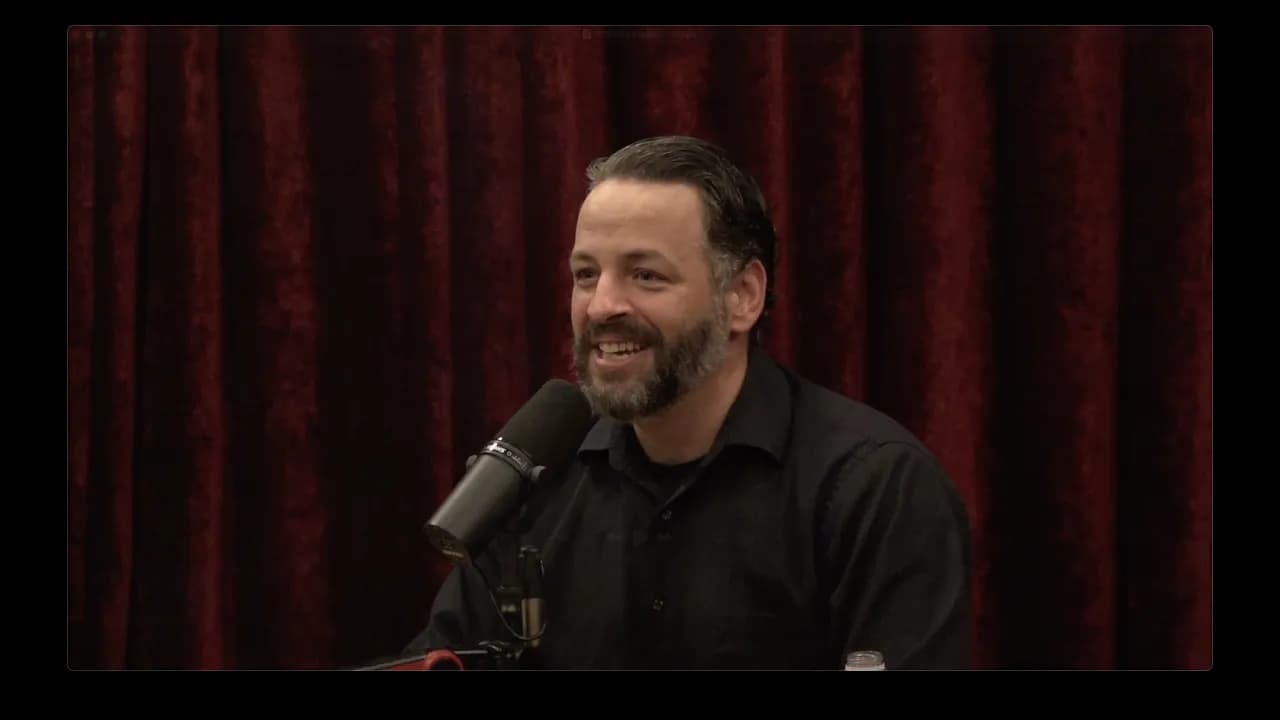
Meanwhile, we thought it would be helpful to talk to someone who lives in South Africa, a real South African farmer. So, we invited him over to our home and spent a long time with him. His name is Leon Lutz. We will now show you the interview we conducted with him. Two days ago. And we warn you before you watch it that it's one of the most painful conversations we've ever had. It's shocking. We believe every word of it, but you be the judge. Leon Lutz. Leon, thank you so much for what you've done. Well, in the United States, we're told that the farm murders aren't real, that people who talk about farm raids, the killing of white farmers in South Africa, are living in a fantasy, making up stories, and are racists. Well, is that true? Well, I can speak for myself and everyone I know. Well, I personally experienced a farm murder.
My father-in-law was shot and killed in front of my wife and children. My wife was raped at the same time by a neighbor. So, I moved from that farm to another one to get away from the scene of the crime. I moved to Karoo, where I thought it was safer. We stayed there for a few months, and then our next-door neighbor was killed. His wife survived. They shot her twice. I bought a farm from a woman named Marlies Daniels and Fred in Middleburg in the Eastern Cape. Her parents were executed kneeling; they were shot. Fire behind their heads. Two years ago, a guy who rented a farm in the same area, they slaughtered him like an animal. I have one here too. I don't know if the camera can capture it. I see it. Where did this come from? Another attack, I actually survived that one. There are a lot of attacks I've survived, three real ones, and this one's almost forgotten, but I got a deep stab wound in my leg on this side. I survived that one.
So, when you're attacked, you have to stay away from the police. Because if you report it, or if they catch someone, the first thing that happens is they open an assault case against you. They'll lock you up first. Then, hopefully, you'll be out in two or three days, depending on your lawyer connections or what happens. And most of these cases, the murders, aren't investigated. The case files are empty. We know a lot of them. We can prove it. It's not the government or anything, but it's not investigated. In some of these cases, the finger points right at the police. Brand's file is empty. And in Steinsberg, there's nothing. The other thing they lie about is the testimonies. Death. I have death certificates, and I have pictures of you. My father-in-law's death certificate forced them to write "murdered." In the end, they wrote "with great struggle." They wrote "gunshot wound to the abdomen." Other death certificates of people I know who were killed say "unnatural causes." So, they don't investigate murders. Nothing happens.
So how do the statistics prove that we are being murdered? There are only about 30,000 white farmers left in South Africa. How many were there in 1994 when the government changed? I think it was over 100,000. I'm not sure of the exact figures, but it must be over 100,000 farmers. And there are 30,000 farmers whose numbers are constantly increasing. We, small farmers like myself, are the first ones targeted. We have excellent farmers in South Africa, farmers who are really resourceful under these difficult circumstances. I salute some of these farmers who are producing food. And we are producing enough food under these circumstances that we can export it. So, to accuse us of lying is to say that our ambassador here in America, Mr. Roelof Meyer, he's a white South African and he's going to speak for us. I'd like Mr. Meyer to tell the truth. He should be arrested for what they've done to humanity, even within the National Party. He should be arrested. Let him close his eyes now and say we won't be killed. Come with us and we'll show you the truth. Come and live with me for three days. Mr. Robert said when he was here with Mr. Trump that he sleeps with his doors open. Mr. Robert is a billionaire. That's Johan Rupert. Yes, I'm not angry with him. I also raise racehorses, and Johan raises horses too. So I really need him in that field. Without him, we wouldn't have a racehorse industry. But he can't sleep with his doors open if he lives like me. He has all the security with him. We don't have that luxury.
If you drive around South Africa, everywhere you go, you see anti-theft measures, barbed wire fences, steel fences, alarm systems, cameras, dogs, and so on. When we drove through here last night, it was like a miracle. There are wooden houses. There are cars parked outside. We can't leave cars outside. They'll break into those cars, steal the battery, the tires, or the rims. They'll kill you for a car. The insurance we pay to be safe in our homes costs thousands of rand a month. My insurance costs 20,000 rand a month. I have insurance that
I have insurance that guarantees they'll come back and break into my house again. I've had three attacks on my farm. It's a way of life. The older I get, the more sick I am of all this nonsense. I'm sick of my own people. And of some Brit sitting in England, Pete Quickmoir, Rolf Meyer, Rhoda Landmann, whoever they are in your country, saying we don't get killed. They can't deny it, because it's the biggest scam in the world, that it's not mentioned on death certificates. These murders aren't investigated.
When they catch the killers, the one who killed my father, the police said he killed 23 people. No, I didn't say that. He was given life imprisonment for 146 years. From Mozambique, a Black man. They weren't even immigrants, yes, Mario Gonzo. A month ago I started looking for him. Then they came back and said they were very ashamed, but he was released after a year. So, when you're imprisoned in South Africa, you serve a maximum of 10% of your sentence, and then you're released. After you kill your father-in-law. Yes, murder.
There was someone who worked for me who stabbed his own people. And now he's been in prison for three years. None of his victims died. My father died. He raped my wife. He served a year and then he was released. How is that possible? They don't conduct any investigations. You can't reach any conclusion. If you don't present your case, you'll be imprisoned first. No, we're being killed.
The difference between the murders we commit and the Cape Flats murders is that the perpetrators are from the same ethnic group. If I talk about ethnic groups, I know the world will understand. We have Black people, we have Brown people, and we have White people in South Africa. And then we have immigrants from Mozambique and Zimbabwe. All of Zimbabwe is in southern Africa, and so is Mozambique. There are people from Malawi in southern Africa. So, every now and then, there's xenophobia, and they get kicked out. But I don't know how far they go, and then they come back again. I think these illegal immigrants will build houses, and when enough are built, they'll be kicked out, and they'll take them for free, and then they'll move on with their lives.
But I think the difference with the killings in the Cape Flats is that the same ethnic group is killing its own people. Malema will stand there and say, "Kill the Boers, kill the farmers." Boer is farmer in Afrikaans. In effect, he's ordering them to kill us. They don't steal. It's not a botched robbery. They come to kill us. They don't steal anything. They take weapons, they urinate on us, they put their feces on us, they rape us, they put their feces on us. The main thing is that when they do these things, they take their feces out and spread it all over the house and on the people they've killed. That's their way. To strip us bare. It's our humanity, no matter what they do.
Yes, that's their way, and they'll piss on them. Okay, I'll get to that now, but out of the 33,000 remaining farmers in South Africa, they represent our ethnic group. There are over 30,000 white people in South Africa, but there are only about 30,000 white farmers who actually farm. It's impossible for us as white farmers to stand around singing "Kill the worker, kill whoever, kill the blacks." We don't. We don't kill them, but if you open social media, you'll see black people reporting that we as white farmers are killing hundreds of thousands of black people. Where? Where are we doing that? It's impossible for us to sing like Malema. This is all over the place, and he did it again on Saturday. "Kill the farmer, kill the Boer." Politically, that's true for the ANC. We can't fly an old flag with hate speech. But this guy can order people to kill, like he did with some of the people here with me. They were chanting "Kill the farmer, kill the Boer," and then they attacked us. So, another ethnic group will come and kill us whites. Whites don't want to kill white farmers. There are whites who kill. This has to be... I don't know where we're going with them, but there are criminals in every society. But in a civilized society, how can you do things like this? How can you heat up a clothes iron, and when you rape a woman, you burn her with that iron on the inside of her thighs, on her face. While you're raping her, you bite off bits of her lip. And you keep doing that for days in a hut. You know, I know people who cut the washing machine pipes while they tied the wife to a chair. The husband had to look, the wife had to look at him. Then he shoved the pipe down his throat. Boil water and pour it into Ring. Then Rolf Meyer will say that's not going to happen.
Our own president calls it sovereignty now. Now that the US government has imposed visa sanctions. So, what does this sovereignty mean to him? It seems Jan van Riebeeck arrived in 1625. So, all people of color became poor. I was born in 1966. I bought my first farm with money I saved from my work as a blacksmith. I put it in a box. I bought a farm after Nelson Mandela was released. Now, they want to take my property for free, without paying me for it. No compensation. You were a blacksmith who put horseshoes? Yes. So, that's how I saved up to eventually buy a farm. I didn't inherit it. I didn't take out a loan. I wasn't eligible. So, now they want to take it. So, you didn't work for anyone. You didn't take your farm from anyone. I never killed anyone. I never seized any farm from anyone. I bought a farm that had been on the market for three years in New South Africa, after Nelson Mandela was released. So why didn't a Black person buy it? Do you think they'll try to take it from you because you're white? I think we're going to lose your farms inevitably. I don't think it will be long. That's what Nelson Mandela was demanding. That's what they're doing. They're hiding this from the whole world. We produce food. We're not here for the political side. I have nothing to do with the political side. I just want to live in freedom. I can't carry a gun all the time.
Can you start from the beginning of the story you told about the beginning of your father-in-law's murder? What happened? My father was raising pigs. He had surgery on his navel. My wife went there to look after the farm while he was in the hospital. He was discharged on Friday. I had a horse that was racing at the Turfontaine Racecourse in Johannesburg. On Saturday, I entered that horse in the race so I could get to my father-in-law, and I couldn't think of any other excuse to go there. The farm is about 600 kilometers from Turfontaine Racecourse. I left at 4:00 a.m. on Saturday. The horse raced, and I think it was the last one. I went back to my father's farm and dropped the horse off. At 8:00 p.m. My wife, a very thin woman, weighed about 50 or 54 kilograms. At exactly 8:00 PM, my wife said to me, "Don't you want to go back to the farm? They stole the sheep or broke into the wires or the house while we were away." Under normal circumstances, my father would have jumped up first and said, "You're not coming back by car." I came here this morning, and you didn't sleep. It will stay until the following morning. "God must have saved me. I got up from the table, took the horse box, carried the horse, and went back. I arrived around three o'clock. Just after I arrived, the phone rang, and it was my mother-in-law. All I heard her say was, 'They shot my father.' They shot my father. And I heard that bastard yelling in the background, cursing at her, calling us white dogs and white [ __ ] and all that. Then it all cut out. The phone was off. I was 600 kilometers away. Hmm. My two daughters were there. The youngest was about three. My son was there. And one of the horsemen was there too. If Gavin hadn't been a horseman, if they hadn't thought he was a child, they would have shot him too. The first question they asked was, 'Are there any men in the house?' They wanted to shoot my son's dog, a small Jack Russell Terrier. He had to use his shoelace to tie the horse and cover the dog's mouth. They tied it up, and he managed to untie it to get a pipe out of the cupboard to protect himself. But he couldn't get the pipe out of the cupboard. I think God saved him that way too, but yes, they heard him, and while they were busy with Adele, they were moving around in my father's room. They hadn't shot him yet. Adele told me that the worst fear she'd ever felt was for my son, who was about 16 at the time. Yes, he was 16. Adele said, 'They were pointing the gun at his head, and they weren't sure whether to shoot my son or not.' Finally, they went to my father's room. They closed the door and told us to remain silent. Then they opened the door. They must have been home before. My son said they opened the door, then he took the gun and pressed the light switch, and when my father got up, he shot him in the stomach. Right in front of my son. Then they attacked my mother-in-law and threw her off the bed. My son had a gun. They were forced to open the safe. He managed to hide the gun. He told me, "Dad, I could have shot him in the back." Then he approached, but I didn't know who was with my mother and sister. What would happen if I fired a shot and they heard? Fortunately, the man was not shot. Well, to be killed is one thing, but to take a life is something else entirely. This is not our nature, this is not our identity. We are Christians, we do not take the lives of others. We can protect ourselves, and Malema should know that. Roelof Meyer and Ramaphosa, you will push us to the limit until we collapse. We still have something to lose, and that's to your advantage. But my youngest daughter started crying, and then the other woman covered her up. Imagine the feeling of a mother covering her three-year-old daughter to protect her after she was found.
Not all of them stated in their testimony that they had raped her. Because you see it. Even this could lead to a court case. They will humiliate her. This is how the system works. She gave a written statement that they pushed her, put their hands in her, and touched her all over. Okay, I came back by car. I contacted my only black farm worker who had worked for me for a long time. His name is Peter. My business started when I started farming. And to this day, it still works for me. He is like a member of the family. He is a dark-skinned person. He did more for me than any white person I know ever did. That's how I contacted him. He packed my bags, made me tea, put me in the car, and called me every half hour to check on me. I passed through a small town and stopped at a church one Sunday morning. I asked a priest there to pray for me. I don't even know his name. Without that, I would not have been able to return to the place I was in. On that day, I drove the car for between 12 and 20 hours continuously. I passed through a toll gate on my way. I was in the army, I practiced martial arts, and there was nothing in the world that scared me. I was so scared that I couldn't breathe. When I passed through the toll gate, I was about 10 or 15 kilometers away. I felt as if God was absent. It no longer exists. I felt inside that someone had been raped. That's what they do. I arrived home, and my wife was standing outside. I've said this repeatedly, it's as if you've seen a chicken that survived the rain. That's how Adele was. Well, Adele's nickname in Afrikaans was "Crick," which is a name in the English game of cricket. That was because of her short stature and thinness. Now that I had finished the call with my mother, I called my friend Wallace Storm. The police were called. Without that, I don't know what would have happened. But it took me a few minutes before I grasped the idea of contacting someone. I was so terrified that I couldn't think. So, when I arrived and saw my wife standing there, I was speechless. You cannot pray. She doesn't know what to do. At that moment, she still feels the hatred with which they hate us. If sovereignty means, for this ANC government, that my blood and the blood of my family should be spilled because of the rampant poverty in South Africa, then they should hold the old National Party, and the likes of Roelof Meyer, HFD Klerk, Piet Kwikmeier, Ramaphosa, Zuma, and Malema responsible. How many years have they been running this country? Thirty years? Why should my wife be raped and my family killed so they can have a party that I pay for with my life because of poverty? Then they will say that you are being killed because you mistreat your farm workers. It's the worst lie in the world. If these workers are in their way, they will be shot as well. Just like they do. I want to repeat it: We are being killed by another ethnic group. In Cape Flats, and in all the murders in the country that are not committed against white farmers, that same ethnic group killed its own kind. We are not being killed by white people, but by black people. Why? I don't know. I think they hate us because we own farms. Politically, they say that we stole everything from them. I remember when I was in the army, one of the goals of the African National Congress was to destroy the economy. Because they said that if they destroyed the economy and made the whole country chaotic, they would remain in power. And that is exactly what they are doing now. They are destroying the entire economy because if there is nowhere for people to go, they will remain in control forever. They don't care about poverty. But how can 30,000 people be blamed for the poverty of millions in this country? How can 30,000 people take care of millions of people from Malawi, Mozambique, Zimbabwe and South Africa? How is this possible?
How productive are white farmers in South Africa? I used to sell fertilizers to the Gavilon company in the United States. I visited the United States when I was working for Gavilon. I have visited many places around the world, including Australia, but I have not yet visited Europe. I cannot specify the quantity in bushels, but if you are a farmer from South Africa and you grow maize, the average yield of a farmer in South Africa using a central center pivot irrigation system, even in the worst climatic conditions, is 16 tons of maize. Therefore, we are productive farmers. We buy all tractors from the United States and other countries. We work according to standards. We produce 80 to 100 tons of potatoes. As for wheat, we produce 8 to 10 tons of it. In arid regions, we can grow soybeans, and production can reach two tons, depending on the weather conditions. We have outstanding farmers. Our livestock production rivals the best farms in the world. We don't need to back down. We are at the top. The best in the world. Farmers in South Africa do not receive government support like many farmers in other parts of the world. They need to arrange their own funding and work on their own projects. There is absolutely no government support. They are preventing us from importing fertilizers directly. They have all these rules and regulations that prohibit direct importing. Does South Africa produce its own fertilizers? We were completely self-sufficient in the field of fertilizers. But not now. Sasol, the company we had, has stopped producing fertilizers; it was taken over by the government. We had a phosphorus plant in Valaburua that was moved to Richards Bay, and it has not produced any granules this season so far. nothing. They stopped working for six months. We have to import everything. We are currently under enormous pressure due to the ongoing wars. We cannot obtain fertilizers. Ships should come from Russia and from everywhere. Despite all this, farmers are still producing. We are being killed. Everything is against us from the outside world, yet we still produce. We are still here. But South Africa was completely self-sufficient in fertilizers. We were self-sufficient in everything except urea. Importing urea has always been cheaper than manufacturing it locally. But the government destroyed this entire industry within 30 years. Nothing remained. Nothing remained. This is horrific.
Okay, so why do you think the farmers are the target, these 30,000 farmers, most of whom are white, but many of whom speak Afrikaans? Why are they the target of this violence when they constitute a small percentage of the white population? I believe the ANC government is exploiting this situation. They wanted to convince the uneducated that we were the cause of their poverty. And they have succeeded in that; these people believe that we are the reason for their poverty. If you drive a car, they will think it belongs to them. They destroyed our schools. They destroyed our hospitals. There are no more hospitals in the small towns. truly? They look like pigsties. You can't go there. There are no hospitals. I had to move my sick wife. I had to drive 800 kilometers to the nearest hospital, and 350 kilometers to the next nearest hospital. If you have a heart attack and there is no helicopter to transport you, you will not survive. There are no hospitals left. There are no doctors left. People are leaving. What would happen if...? Which hospital is closest to you? The nearest hospital to me is either Bloemfontein, 350 kilometers away, or Port Elizabeth, 350 kilometers away. If there is no room in those hospitals, you have to go to Cape Town. How far is it? 890 kilometers away from me. Therefore, I made this journey three and a half years after the murder. Every two months. Why were you going every two months? Well, after the murder, my mother-in-law got cancer and died. Shortly after the murder, I noticed that my wife was ill. She underwent an HIV test. Fortunately, she was not infected with HIV. But she was first diagnosed with rheumatoid arthritis, then with leukemia. In the last two months of her life, she was also diagnosed with fibromyalgia. If we go back to the symptoms of these diseases, fear and anxiety, indeed extreme fear and anxiety, are a definite cause of them, as is diabetes. My friend Sean was attacked while he was sleeping and was stabbed. Shawn now has diabetes. Was he stabbed while he was sleeping? Yes, they entered his house, tied him and his wife up, and began stabbing him. He did not wake up at first. Sheil was awake. They tied her up, put socks in her mouth, tied her up, and restrained her until she was quiet, then they began stabbing him. They won't ask any questions. If they come in, if you are a man, they will kill you. Because they want to get rid of you. Did they stab his wife? No, fortunately. After the crime, we waited four days until forensic experts arrived to take fingerprints. During that time, my children were there. There were animals outside that needed to be cared for, fed, and watered. Then we had to wait until forensic experts could obtain some fingerprints. Meanwhile, it was impossible to clean up the blood that was everywhere. The children had to walk over it. These children could not be reformed. It was not possible to restore them to their normal state. When I was seventeen, when I joined the army, I did not experience what we are experiencing now. We had a regular army in South Africa. We were able to protect ourselves. But I have never experienced what I am experiencing now. You can undergo psychotherapy and other treatments. They can pray for you. You can pray for yourself. And then you will see on social media or hear that someone will call you to tell you about another murder. No one publishes it in the news anymore; they hide it. Nobody talks about it. People around you will talk about it, then someone else will wish it wouldn't happen to you, and then you'll post it on social media. Statistically, we don't kill you; in Cape Flats, hundreds of children are killed. We are back to the same point, the same ethnic group that killed them. They were not killed by white people, no, by their own people. We waited four days. After that, I had to go to a government morgue. I believe that in the United States, if a murder occurs, there is a specific morgue that investigates it and to which the bodies are taken. In South Africa, the government morgues are located in the same places I had to go to in Sebuking. I had to drive ten kilometers to that place, and it is definitely not safe if you are white. It's not a place you'd want to be. They will kill you if you enter it. You can't stop. You have to go and get there and get out. When I finally arrived, there was a sign on the wall. I was sitting there crying. The sign read: "No one will be detained here for more than three months." Now, I wish my ears would tell me from the pulpit that I am lying. I couldn't understand what I was reading because I was crying, scared, and emotionally exhausted. They made me sit there for two hours, maybe more, before I could see the body. Because you have to acknowledge that this is the person's place. To sign all the papers. Finally, a black man came. He was chewing gum. Then he fell onto a chair on the other side of the table. He was leaning back like this on the beach, and he blew a bubble with his gum. Meanwhile, they were talking and laughing, and I don't know what jokes they were exchanging, or if they were talking about me, or whatever they were doing. That's extremely disrespectful. If you haven't experienced racism, go there and tell me if you haven't. When the bubble burst, he asked me, "What happened to the deceased?" I have never been treated
The speaker describes being transported by a Doves organization employee to view bodies at the state morgue. When the speaker questioned the existence of God given the daily horrors witnessed, the employee responded that what they see is not God but the devil. The speaker struggled to understand why someone would choose this work instead of pursuing university education.
The state morgues lack working refrigerators despite having many bodies. Families from Zimbabwe and Malawi often do not collect their deceased due to financial constraints, as burial costs are extremely expensive. By law, bodies must be kept for three months, but space constraints prevent proper storage. The speaker emphasizes this is not merely poverty, as even the poorest people worldwide typically claim their dead.
The speaker's father was found naked on a table with fear still visible on his face. The body had been split open from the bottom of the head upward with widely spaced stitches approximately 5 cm apart. Blood was present in the mouth, cheeks, and nose. The speaker notes the father had a long beard. The speaker also references their brother's motorcycle accident where his long hair was shaved and his head was stitched with widely spaced sutures.
The speaker questions why bodies are cut open and autopsied if the cause of death is recorded as natural on death certificates. They demand to know why families have no say in the process and why government morgues treat corpses like animals rather than preparing them for dignified burial.
After signing papers at the morgue, families must obtain death certificates from the Department of Internal Affairs, where they stand in line all day with no white employees present. The speaker's wife was made to cry publicly while waiting, with others staring at her. Initially, the death certificate listed the cause as "unnatural," which the speaker refused to accept. After police involvement and dispute, they received a certificate stating "gunshot wound to the abdomen."
The speaker contacted Agri SA, the only agricultural organization recognized by the government, but received no assistance. Senior management including Dan Crick were contacted personally but took no action. Death certificates have changed systematically between 2000-2007, shifting from specific causes like "gunshot wound" to vague classifications. The speaker accuses President Ramaphosa of committing fraud regarding death certificates and claims the South African ambassador to the United States, Roelof Meyer, was aware of this during his government service under President F.W. de Klerk.
When murders are investigated, case files disappear at police stations. The speaker references Mario Gonçalvo, who killed their father-in-law and 23 people total, receiving a life sentence of 146 years after a full legal process.
The speaker describes themselves as an ordinary person who studied agriculture, not a lawyer, rights advocate, or politician. They struggle with bills like others but run a successful farm business. The speaker states they would not feed white individuals like Julius Malema or Pitso Mosimane, preferring to feed Black people instead. They emphasize they are defending their family and household after being attacked three times, with no fatalities in the first two attacks.
During cattle slaughtering, the speaker approached individuals who believed they would be reported, leading to an attempt on the speaker's life. The speaker has a scar on their chin from this incident, plus scars on their leg and side. The attackers were slaughtering the speaker's grandfather's cattle.
Attackers arrived at the grandfather's farm claiming to want to buy sheep. The grandfather noticed the deception and sent the speaker's wife home. The speaker retrieved weapons from the safe and returned fire when a taxi full of people emerged with Kalashnikov rifles. Police responded but conducted no criminal investigation. The speaker notes they had no sheep for sale and had never seen the attackers before, who were later identified as the same people who killed their father.
Farms have steel fences and barbed wire, but homeowners are trapped inside during attacks. The speaker describes how attackers drive past farms, identify easy targets, and enter with the intent to kill white people, steal weapons, and take vehicles rather than commit conventional theft.
A Black man appeared at the farm gate attempting to sell expensive horse bridles and aluminum boots. The speaker contacted police and participated in a sting operation at the Horseshoe Motel in Kimberley, resulting in an arrest. However, the perpetrator escaped, later returned to burn the speaker's barn, destroying tractors, equipment, and hay bales worth approximately 1.3-1.4 million rand. Insurance was insufficient, requiring out-of-pocket payment. The perpetrator was later caught again with the speaker's weapons but escaped once more and remains at large.
The speaker was treated as a criminal for losing weapons during the attacks, facing potential revocation of gun licenses. They note that only white South Africans require firearm licenses, while foreigners carrying AK-47s face no such requirements. South African law prohibits automatic weapons and rifles for civilians without special licenses, limiting citizens to pistols, shotguns, and single-shot rifles.
The speaker states that shooting an intruder would result in immediate imprisonment, even in their own home. They describe efforts to disarm white farmers while allowing others to carry automatic weapons, characterizing this as ethnic cleansing. The speaker argues that preventing one racial group from defending themselves while permitting violence against them constitutes ethnic cleansing.
The speaker rejects blame for poverty attributed to Jan van Riebeeck's arrival around 1625, noting they cannot communicate with historical figures. They argue the ANC government created the poverty now used to justify violence against white farmers.
The speaker emphasizes no farmer wants to kill others and that all want to coexist peacefully. They question why they are being killed for poverty created by the ANC government. Regarding the attackers' mindset, the speaker believes the man who killed 23 people and smiled in court felt no remorse.
In court, only one of eight attackers was arrested. The speaker had to accept whatever prosecutor was assigned, describing one who smelled of alcohol, was sweating, arrived late, and asked the speaker's wife to recount the murder in an empty courtroom. The rape occurred three to four years before the trial. The speaker's wife underwent secret HIV testing while awaiting trial results.
The prosecutor, defense attorney, and judge were all white, with judges appointed by the state president. The speaker lost years of life to fear, sitting speechless at their kitchen table. Despite the perpetrator receiving 146 years, they were reportedly released after one year, with authorities claiming death without providing proof.
The speaker's wife developed severe illness from trauma, with all ten fingernails falling off from front to back. She required a hairdryer to dry her hair after washing due to extreme pain. Treatment required travel to Cape Town for three and a half years, including six-month stays. She received chemotherapy and weekly Grastem injections costing 1,500 rand each to stimulate white blood cell production. The speaker's hospital-specific insurance didn't cover treatment, requiring 60,000 rand monthly payments. She became allergic to morphine, and the speaker administered injections personally despite lacking medical training.
The speaker describes how South African hospitals were destroyed under ANC governance, comparing remaining facilities to pigsties. Previously, hospitals were accessible within two kilometers in any town. The speaker had to drive 800 kilometers for treatment that was once locally available.
The speaker's 15-year-old daughter required psychiatric hospitalization after the trauma. She wrote a book of poems that moves readers to tears. The speaker notes that American and global media dismiss their accounts as lies from "despicable racists" while claiming white farmers are killing Black people.
Most South African families have relatives who emigrated to Australia, America, New Zealand, or England. The speaker's children want to stay in South Africa despite its beauty. The speaker believes the intention is to either kill white farmers or force them to leave, with farm confiscations representing the next phase.
Agri SA negotiates with the ANC government regarding property the speaker worked for and paid for, without the speaker's permission. The speaker describes how farms can be confiscated without compensation under existing law, comparing the situation to Zimbabwe. They argue this won't solve poverty, as Malema lacks the knowledge to plant maize or raise cattle.
The speaker believes negotiation is impossible with those allowing the violence. They reference how anti-apartheid fighters fled to Russia, Lebanon, and possibly Iran. The speaker states they must defend their family and future grandchildren. They lost their wife of 37 years and had approximately 10 years stolen from their life.
The speaker argues they cannot be blamed for poverty and contribute to fighting it through farming. They note farmers cannot support millions of illegal immigrants, which is the government's responsibility. They claim seizing farms and killing farmers won't solve problems, as the population will starve without agricultural expertise.
Julius Malema, leader of the Economic Freedom Fighters, sang "Kill the Boers, Kill the Farmers" and is described as South Africa's equivalent of Al Sharpton - an anti-white racist inciting violence. The speaker believes Malema is a front working for Ramaphosa and the ANC. Judges are appointed by the state president, with Malema serving on the council that selects them.
Malema was convicted of hate speech by lawyer Billy Wesley in Cape Town but faced no consequences. He fired an automatic rifle in front of 80-90,000 people without punishment. In contrast, the speaker's son-in-law was fined 100,000 rand, given six months community service, and convicted for accidentally shooting someone with a pellet gun while playing.
If Malema had become president of South Africa, the speaker warns that bloodshed would have been unprecedented, with Malema emerging as a greater dictator than any previously seen.
The speaker addresses the recurring question of whether they will flee to America, responding that South Africans must solve their own problems. They question how this is possible when they have repeatedly spoken to the government and bribed courts without success. The speaker notes the recent visit of a new president as evidence that South Africa lacks sovereignty, arguing that such visits should not be sanctioned with visas.
The speaker questions how politicians can justify killing people continuously while standing before the world singing "Kill the Boers, kill the farmers." They describe how these politicians appoint the judges, with Julius Malema and Ramaphosa serving as members of the board, creating a system where no one holds them accountable. The speaker notes there are no statistics available, calling this completely illogical.
The only way to stop this system is for politicians not to have all the power. The speaker argues that South Africans cannot have politicians with complete power, and that survival requires self-governance at some point. They mention a place called Ourania where people own ordinary farms on the other side of Hobtown in the Northern Cape, describing this system as a huge success.
The ANC and Malema are attacking the Ourania community vehemently, accusing them of being racist. The speaker challenges this accusation by pointing out that the ANC has destroyed every institution in the country—from the power grid to schools and hospitals, including the government itself and the courts—yet nothing works. The murder rate is out of control, the rape rate is the highest in the world, and white farmers are being killed while their farms are stolen.
The speaker questions on what basis the government claims white farmers do not have the right to own their own community. They express inability to answer this question, noting that it sounds familiar to an American listener.
The speaker mentions that their family's blood was spilled at some point for Jan van Riebeeck and the poverty in the country. They assure that if they had governed the place, the poverty would not be what it is now. However, they clarify they do not want to be governor and only want to be a farmer, contributing to fellow farmers as an agricultural engineer.
The speaker returns to the point that South Africa already has the best farmers in the world. They describe themselves as a Christian people with honest farmers. To continue farming in South Africa without integrity would be impossible because farmers receive no material compensation and must do everything themselves. They provide specific production figures: harvesting between 16 and 18 tons of maize, 8 or 10 tons of wheat, and between 80 and 200 tons of potatoes.
The speaker notes they are not an expert on citrus trees but questions how the contribution of South African farmers to the country can be ignored. The response is that the politicians do not see this contribution, which is why they hate the farmers.
The speaker expresses wishes for the best and thanks Mr. Botha for sharing his experiences. They note that on behalf of all of South Africa, including the people of the Cape Flats, the killings are deplorable. They wish things were different and that everyone could live together in peace and harmony. There are enough farms for everyone to buy and cultivate, and the government has enough money, while white farmers have enough experience to set up farms and start farming.
The speaker emphasizes that farming is not free—they did not come for free and will not leave for free. The segment concludes with "God bless you. Thank you very much, sir."
Keep Tucker Carlson in your library
Save the videos and channels worth coming back to, and find them again in one place.