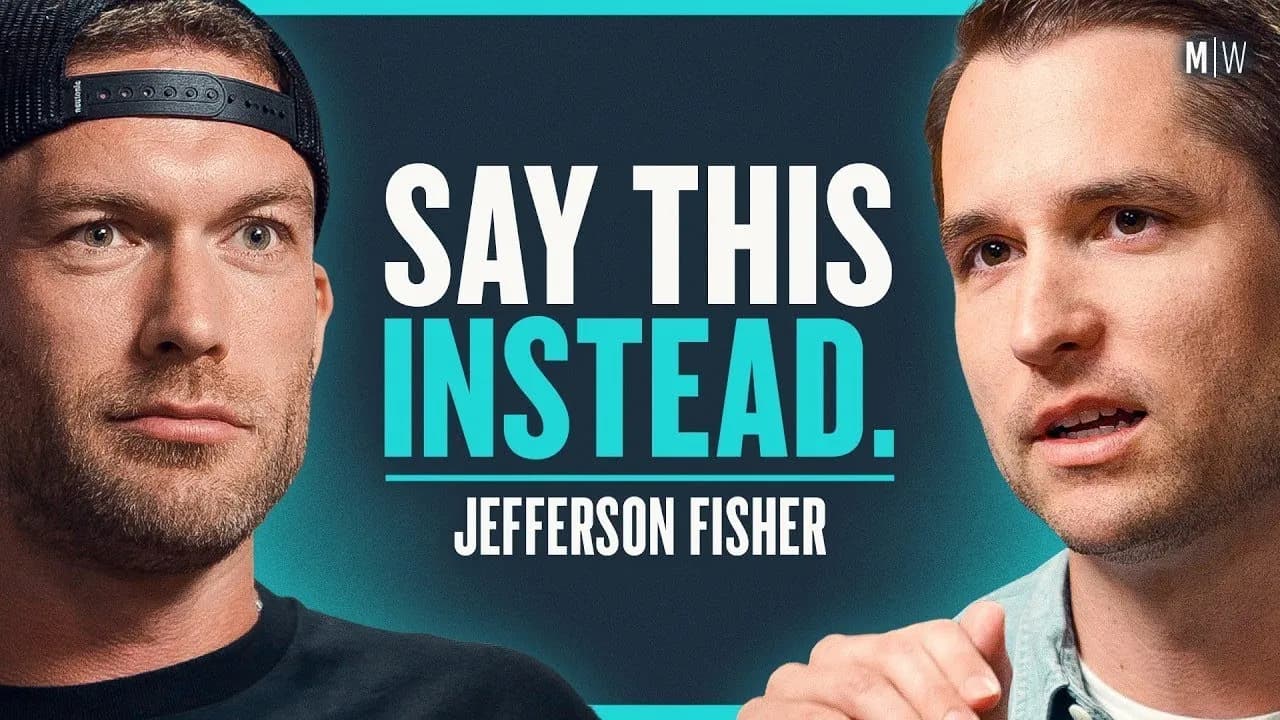
The Ultimate Comeback to Any Insult - Jefferson Fisher
In a Nutshell
Jefferson Fisher advises responding to insults with 5-7 seconds of silence to let their words hang, then calmly ask them to repeat it ("Say that again"), question their intent ("Did you mean for that to hurt me?"), or seek clarification on what they're hearing ("What did you just hear me say?"). These tactics spotlight the insulter's ugliness, force them to own their words without repetition or escalation, and deflate their power by staying calm—manipulators fear composure more than anger. Rooted in his experience deposing liars, the approach leaves them trapped in their own intent while you walk away unscathed.
These notes were generated by AI and may contain inaccuracies.
Respond to an insult with 5 to 7 seconds of silence. Let their words fall and give them a moment to reflect: you good with that? You still proud of that? You can take it back, but I'm not taking it. Mindset: I'm not taking it. I don't have to pick it up. That's not mine. We feel obligated to catch what is thrown, but it's not tennis or volleyball—you don't have to hit it back. Let it be there.
Ask them to repeat it: "I need you to say that again." Nobody repeats it because they don't want to highlight their ugliness. They expect the dopamine hit from you firing back, giving them control. This spotlights their behavior, making it not fun. They want out. Saying it again forces them to remember and regurgitate their words. People don't like extending past feeling reasonable.
Jefferson Fisher has deposed thousands of people, seen lots of liars and manipulators. They never want to come across as unreasonable. Manipulators fear calm more than anger. Don't rise with "How dare you?" or "Who do you think you are?" Calm is scarier: "I need you to say that again."
Most try to justify: "Well, I mean..." or adjust. If they double down and repeat, say "I thought so. Thanks." Let it go—you're leaving them with it. They'll remember what they said; you won't.
Ask: "Did you mean for that to sound as insulting as it did? Did you mean for that to embarrass me? Offend me? Hurt me? Belittle me? Make me feel less?" Questions like "did you mean," "did you intend," "did you say that in order to" probe the root of their heart: why did they say that? They said it to hurt you, cause pain. Or maybe you took it wrong.
In text, we read everything negative—never positive. "We need to talk" is never read as exciting. "Did you mean" double-checks. Example: Wife texts quickly; he replies, "Did you mean for that to sound short?" "No, I was in pickup or grocery line." Gives benefit of the doubt.
Even with unambiguous meanness, this brings their ugliness forward. People feel justified: "You deserved it," or "I'm righteous." With heat dying down, ask without the powering emotion—in a sterile, plain environment. Forces admission of intent.
Analogy: Like asking a girl out and she says, "I didn't hear you. Never mind." You don't want to repeat. They realize it didn't feel good; they want out of the trap. Revealing ugliness: darkness hates light.
Ask: "What are you hearing from me? What did you just hear me say? How are you interpreting that?"
Related to steel man (strongest version of argument) vs. straw man (weakest). This is reverse or invited steel man: "Can you tell me what you're hearing me say?" Then correct: "No, not quite." Invites them to steel man their own insult, defusing the nuclear warhead (or septic tank puddle of shit).
"Is that shit or soup? It looks and smells like shit. Making sure we're not confusing what this is."
Hidden power: "Tell me what I'm missing. Something else is going on." In depositions, catch liars (people lie under oath). Have evidence they don't know about. Blatant liars contradict everything: Say "You're upset," they say "No." Use open-ended where questions over statements: "What am I missing here? I hear you saying this—where are you getting to?"
With insults: "You say I'm the worst—say it again because something's missing; it's not hitting like you want." "Where is that coming from?" Creates wet blanket feeling: it didn't work. They intended pain because they're in pain; causing yours felt better than dealing with theirs.
Most in 30s train hard, protein dialed, sleep better, discipline strong—but recovery differs. Strength gains slower, margin for error shrinks. Mitoure from Timeline: clinically validated urolithin A (human trials). Promotes mitophagy—clearing damaged mitochondria, renewing healthy ones. Supports mitochondrial function, muscle strength in older adults. Supports cellular machinery. 30-day money-back guarantee, free US shipping, international. 20% off: timeline.com/modernwisdom, code modernwisdom.
Keep Chris Williamson in your library
Save the videos and channels worth coming back to, and find them again in one place.