The Vote; Up in the Air; Sacha Baron Cohen | 60 Minutes Full Broadcast
In a Nutshell
FBI agents raided a Georgia election facility seizing 2020 ballots under a criminal warrant, while the Justice Department is demanding voter data from states and threatening election officials with prosecution over non-citizen voting claims. Trump has repeatedly claimed votes can't be trusted and urged supporters to "cheat like hell," with polls showing only half of Americans expect fair midterms. Meanwhile, Iran's war has cut one-third of global helium supply, threatening semiconductor production and military capabilities as prices tripled and US labs face severe shortages.
These notes were generated by AI and may contain inaccuracies.
Armed federal agents seized ballots from a local election facility in Georgia this past January. Fulton County Commissioner Dana Barrett received a text message and rushed to a warehouse near Atlanta where FBI agents were conducting a criminal search. The agents had vests, guns, and equipment as if raiding a drug house. Dozens of agents used a criminal search warrant to seize ballots and election materials from the 2020 election. They worked all day packing more than 600 boxes of election records. After nightfall, Director of National Intelligence Tulsi Gabbard arrived and the boxes were loaded onto trucks and disappeared.
Barrett stated there was no way to refuse the agents because they had a valid warrant signed by a judge. When asked where the ballots are now, she replied, "We have no idea." She described the raid as "political theater aimed at undermining the 2026 and 2028 elections" and part of a "concerted effort that's happening nationwide to undermine faith in elections."
An internal FBI email was obtained that temporarily reassigned 260 analysts to work on a priority investigation into the Georgia materials three months ago, but nothing has come of it yet. There have been dozens of probes into the 2020 election in Georgia and none have moved the needle.
Lieutenant Governor of Utah Deidre Henderson, a Republican in a state Trump won by more than 20 points, described unprecedented interference from within the federal government. The Justice Department demanded statewide voter registration lists containing confidential personal information including social security numbers, full dates of birth, and driver's license numbers. Henderson refused to comply, stating officials "weren't given very good answers" about what the federal government would do with that data.
Officials in 29 other states, both Democrat and Republican, also refused to comply. The Justice Department has sued all of them, claiming it needs access to voter rolls to ensure non-citizens don't vote. State audits have shown non-citizen voting is extremely rare. In Utah, Henderson found only 52 questionable cases out of more than 2 million voters, representing 2,000 of 1%.
Henderson has been notified that if she knowingly allows any non-citizens to vote in Utah, she could be prosecuted and sent to prison. Secretary of Homeland Security Mark Wayne Mullen stated that individuals can be held accountable by fines, penalties, and prison time.
President Trump posted on social media about California election officials, stating they will "all go to jail for a long period of time." California election officials have been threatened with prosecution for counting mail-in ballots from approximately 20,000 people the Trump administration claims are likely non-citizens. When asked if she was concerned about going to prison, one official replied, "We're not going to prison. No, it's silly."
Wyoming Governor Mark Gordon pushed back when Justice Department election monitors demanded access to voting machines in August. Gordon stated, "I feel very strongly about federal government coming in and taking our guns. I don't like that and I don't like the federal government coming in and taking our votes either."
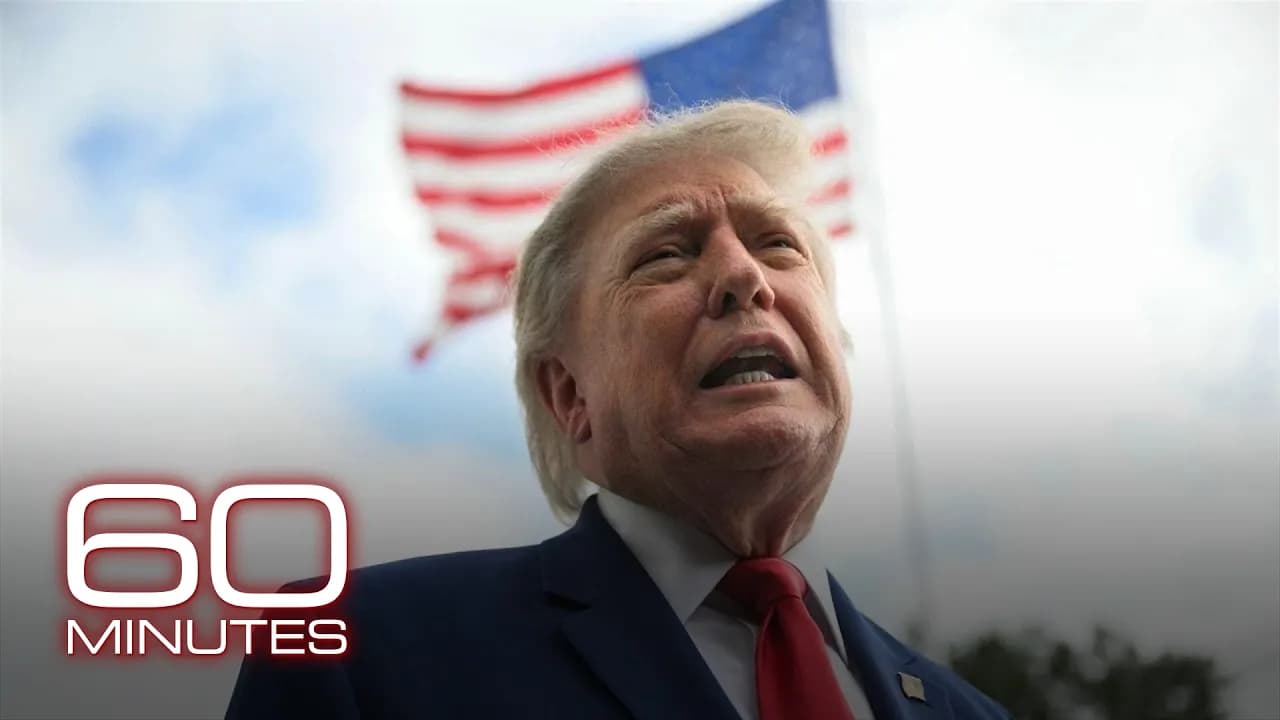
President Trump stated on a podcast, "The Republicans should say we want to take over. We should take over the voting in at least many 15 places. The Republicans ought to nationalize the voting." In America, elections are run by towns, counties, and states under Article I of the Constitution, and the president has no role in running them.
Harmy Dylan, head of the Civil Rights Division of the Justice Department, stated the administration is prosecuting non-citizen voting crimes "for the first time really in volume." She noted the Biden administration prosecuted 13 people for non-citizen voting. When pressed about the small numbers, Dylan stated they've had investigations ongoing for over a year and there are "literally thousands of them out there that we are looking at."
Dylan dismissed concerns about ICE agents at polling places and called the notion that President Trump might challenge midterm results "paranoia." When asked if non-citizen voting would lead to challenging an entire election, she stated it would lead to that person's vote being challenged but not the entire election.
President Trump has said the vote can't be trusted more than 150 times during his second term. At the Republican midterm convention last month, he asked supporters to promise: "I will go out with my family, my friends. I'll do it anyway. I don't care if I'm registered or not. I'm going to try and cheat like hell like they do."
Polls show that only half of Americans expect the midterms to be free and fair with 16 days until the election. Henderson stated, "Candidates who lose can do so much good by graciously conceding. That will instill confidence in the public."
Since the war with Iran broke out, gas prices have spiked more than 50% since January. The closing of the Strait of Hormuz in February trapped one-third of the global helium supply. Iranian strikes on Qatar's major gas facility at Ras Laffan further rattled the supply chain.
Helium is required for cell phones, laptops, cars, MRI machines, and missiles. At the University of Chicago, Joe Saken uses 100 liters of helium every couple of months to stabilize nuclear magnetic resonance machines at 452 degrees below zero Fahrenheit. Without helium, the magnets break. Saken's lab has been put on allocation, receiving only 50% of what they used last year.
One-third of the world's helium is consumed by the semiconductor industry. At Polar Semiconductors outside Minneapolis, helium is used in hundreds of steps of the chip manufacturing process. Approximately 40-50% of machines in the factory use helium. If the facility loses helium supply, "everything gets shut down." The company plans to double production capacity to 140 million chips per month, but demand for helium will continue growing due to AI data centers and electrification.
The United States is the other major producer of helium besides Qatar. Most US helium comes from a single facility in Wyoming. US helium exports are up 70% since the war began. The Topaz Project in Minnesota has drilled seven wells around a 100 square mile plot, but getting new helium to market will take years even in the best case scenario.
Helium consultant Rich Brook stated spot market prices have tripled this year. When the Ras Laffan facility went down, countries like Korea, Taiwan, and Singapore immediately turned to US suppliers. The US has two helium storage caverns made of salt that are naturally impermeable.
Satellite imagery analyst Joe Bermudez examined images of Ras Laffan from before and after the Iranian strikes. He identified an area that appears to show water or firefighting foam that dried to make a black stain on cement, indicating something necessitated hosing down pipes and equipment.
Cliff Kane of the Topaz Project briefed Pentagon officials, stating the US has "a single critical point of failure in the system" with the Ras Laffan facility. Without helium, modern warfare becomes more difficult because fiber optics, munitions, and electronics cannot be produced. Nearly two dozen ships have been hit while attempting to pass through the Strait of Hormuz since September.
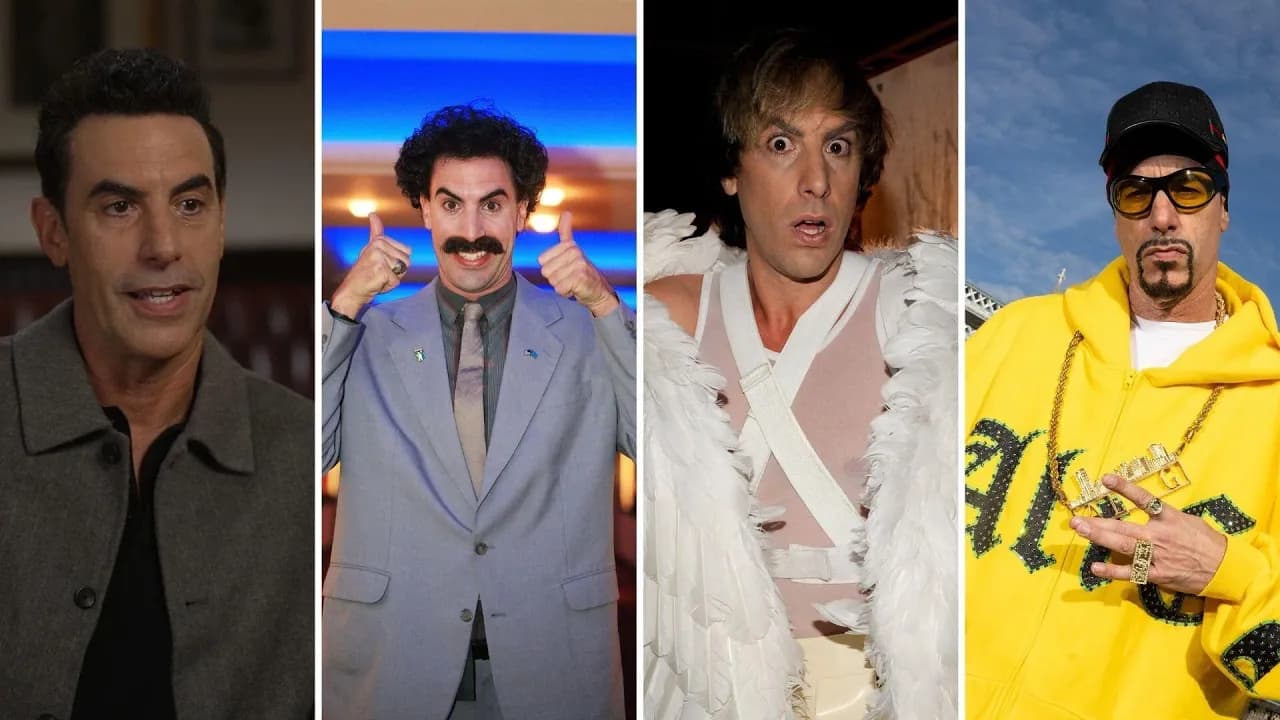
Sacha Baron Cohen has made a career in entertainment out of rendering himself unrecognizable through characters including Borat, Bruno, and Ali G. These characters are deployed to trick real people into exposing their real beliefs. At 55, Baron Cohen has been doing undercover comedy for more than half his life, with the complexity, moral stakes, and physical danger of his deceptions increasing over time. He sometimes requires trap doors and getaway vans to escape situations. He represents a rare combination of a mission-driven public intellectual and an adrenaline junkie who invented his own genre of comedy.
Baron Cohen was interviewed at Cambridge University, where his parents sent him hoping he would become a lawyer. He wanted to be a comedian but was embarrassed to tell anyone, comparing it to saying "I want to be a supermodel" when people would respond that he wasn't actually very good-looking. Baron Cohen had been experimenting with a version of the Ali G character for years - an upper class kid using the same catchphrases as Ali G.
Baron Cohen took his prototype Ali G character for a test drive among skateboarders in London with the intention of airing the sketch on a youth culture show he was hosting on cable. After skateboarding terribly, he revealed he was pretending to be a character, and the skateboarders were shocked. The head boss called him afterward and said if he tried that again he would be fired. This confirmed he was on to something. Ali G was honed into a white imbecile and hip-hop journalist who wants to be a black rapper, debuting on a satirical late night talk show in 1998, leading to The Ali G Show, an HBO series, and a feature film.
The core idea of Ali G was to see if it would be funny to have the world expert in something with the biggest idiot in the world, and whether the juxtaposition would be funny if the world expert takes it seriously. Baron Cohen unleashed Ali G on dozens of credulous authorities, with a notable interview with former Surgeon General of the United States C. Everett Koop, asking questions like whether the heart was "a bit crap" and suggesting it should have a different rhythm.
After more than 20 years in remission, Ali G returned with the character visiting Buckingham Palace, commenting on landmarks like Big Ben. When asked if he brings any element of his actual self to characters, Baron Cohen responded: "If I knew who I was, then I could answer that. But I don't know."
Baron Cohen grew up in Northwest London as the youngest of three boys, son of a fitness instructor and an accountant. His mother was hilarious though probably not intentionally, with a distinct voice that everyone in his high school could imitate. He had a passion for break dancing and early hip-hop, even providing entertainment for his own bar mitzvah. He studied history at Cambridge University where he discovered the stage and realized he loved making people laugh but also really liked making them cry on stage.
When Baron Cohen finished Cambridge and said he wanted to be an actor, his parents thought it was a ridiculous idea and an impossibility. They were right that it would have been irresponsible to support him because the likelihood of success seemed impossible. He pursued his goal by studying with Philippe Gaulier, the Stanislavski of clowns, who taught that clowning meant being the stupidest creature that can ever be on stage, saying "More stupid than this and you die." Baron Cohen learned everything from Gaulier and considers him his mentor.
Baron Cohen brought his training to Borat, the beloved, bumbling anti-Semite Kazakh reporter who toured America in 2006. When making Borat, they meticulously planned ahead with a huge amount of behind-the-scenes work, including reviewing who they were interviewing. The movie was both hysterical and revealing, an experiment where interactions with real people moved the plot forward. Borat made $260 million. Baron Cohen notes that Borat shows the kindness of people who are nice to him, but also exposes layers of hate and bigotry below the surface that people normally wouldn't show.
Baron Cohen's undercover comedy ventures into morally complex territory, creating ethically questionable bargains where the worse people look, the better it is for him. When asked if he felt conflicted or guilty about baiting someone into making a fool of themselves, he responded that a lot of the time they're not making fools of themselves, and many Ali G interviews actually come across well.
The encore of Borat was Bruno, a flamboyant fashion reporter who wanted to become the biggest Austrian superstar since Hitler. The movie was conceived as a gay romcom, which normally end with a kiss in a scenic and sentimental setting. Instead, they did it in a cage match where Baron Cohen and his love interest kissed, wanting to see what would happen with the crowd. When asked about the ratio of fear to thrill during dangerous scenes, Baron Cohen said he's thinking about the scene almost entirely in that moment.
Baron Cohen's work has earned Golden Globes and BAFTA awards as well as Oscar nominations for Borat and his dramatic role as 1960s activist Abbie Hoffman in The Trial of the Chicago 7. He played Israeli Mossad agent Eli Cohen in a miniseries called The Spy and starred opposite Will Ferrell as French NASCAR driver Jean Girard in Talladega Nights. During Borat shooting, he decided to create a French character based on his old French clown teacher.
Philippe Gaulier remains Baron Cohen's favorite comedian of all time because he completely inhabited the character, was laugh out loud funny, and used silly voices. In Baron Cohen's new movie Who is America? (referred to as "Ali G, Who is I?"), his directorial debut, he plays a deranged leftist professor and a former Mossad agent who interact with unsuspecting strangers. The result is designed to expose the extremism at both ends of the political spectrum and is as disturbing as it is funny.
In Who is America?, Baron Cohen wanted people to laugh really hard and examine the idea of conspiracies and lies - whether in a matter of hours they could turn intelligent people who believed in the theory of race replacement into murderers. The scale of the challenge was unlike anything he had undertaken, requiring prosthetic teams working for years and animatronic teams, with hundreds of things that could go wrong. When asked if he feels like he's holding up a mirror to society or a warped funhouse mirror, Baron Cohen stated the primary objective is to get people to laugh really hard, with satire smuggled in, hoping people come out of the movie theater and think.
Baron Cohen is trying to show that democracies depend on shared truths and autocracies survive on shared lies. He says he's just doing silly voices, but for more than half his life his characters' curiosity, stupidity, and charm have also revealed our character. His dream was to make one classic comedy, and he felt like with Borat he did it, considering anything else really gravy. He feels very lucky.
Keep 60 Minutes in your library
Save the videos and channels worth coming back to, and find them again in one place.