This Changes Everything About Nattokinase & Clogged Arteries (New Study)
In a Nutshell
A new study found that nattokinase dissolves blood clots faster in people with blood type O positive than in other types, especially AB negative, due to lower von Willebrand factor levels making clots structurally weaker. Age was the strongest predictor of reduced effectiveness, with older adults having lower natural clot-dissolving capacity. Practical takeaway: know your blood type before using nattokinase, start at 2,000 FU if appropriate, and consult a provider—especially if on blood thinners—since dosing should be personalized.
These notes were generated by AI and may contain inaccuracies.
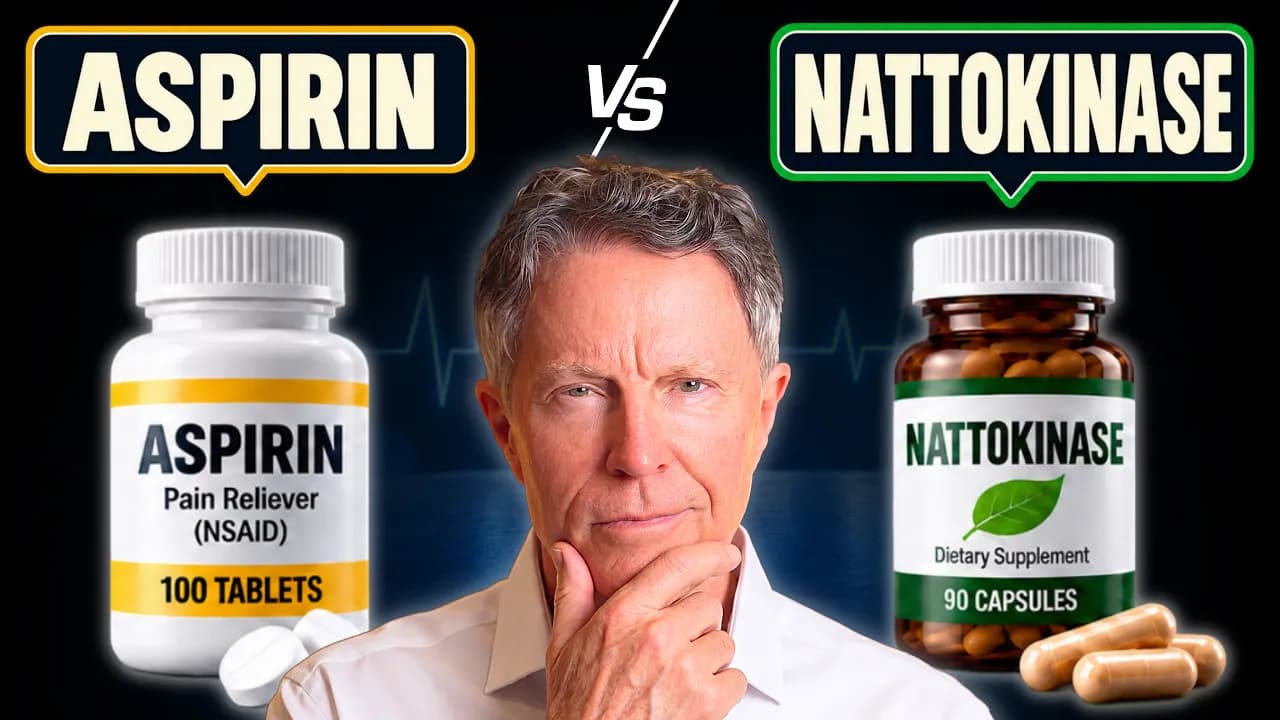
Nattokinase has become one of the most talked about supplements in heart health. Some people take it hoping that it's going to improve their circulation. Others take it because they've heard it'll break down the clots associated with heart attacks and strokes. A brand new study has uncovered something that nobody was really looking at before. The researchers found that one characteristic that you've had ever since you were born may significantly influence how well nattokinase actually works for you. And if it's true, it changes the conversation completely. Because the supplement that seems to work well for one person may not work the same way at all for someone else. By the end of this video, you're going to understand what actually happens with nattokinase, what it does inside your arteries, and what this new study actually found, and what you should know before deciding whether nattokinase belongs in your supplement cabinet.
Most people who've heard of nattokinase know it as a heart supplement, something that helps with clotting, so therefore it's got to be good. Very few people can actually explain what it does inside the body. Enzymes basically are biological tools. They're proteins that your body uses to speed up a specific chemical reaction. In this case, the reaction nattokinase speeds up is the breakdown of blood clots. Our body's clotting all the time, and it needs some way to break those down. That's why we have the ability to break down clots. Nattokinase speeds that up. It comes from a traditional Japanese fermented food called natto, fermented soybeans. The bacterium that ferments the soybeans produces this enzyme as a natural byproduct. That enzyme turns out to have a very specific and powerful effect on the structure of blood clots.
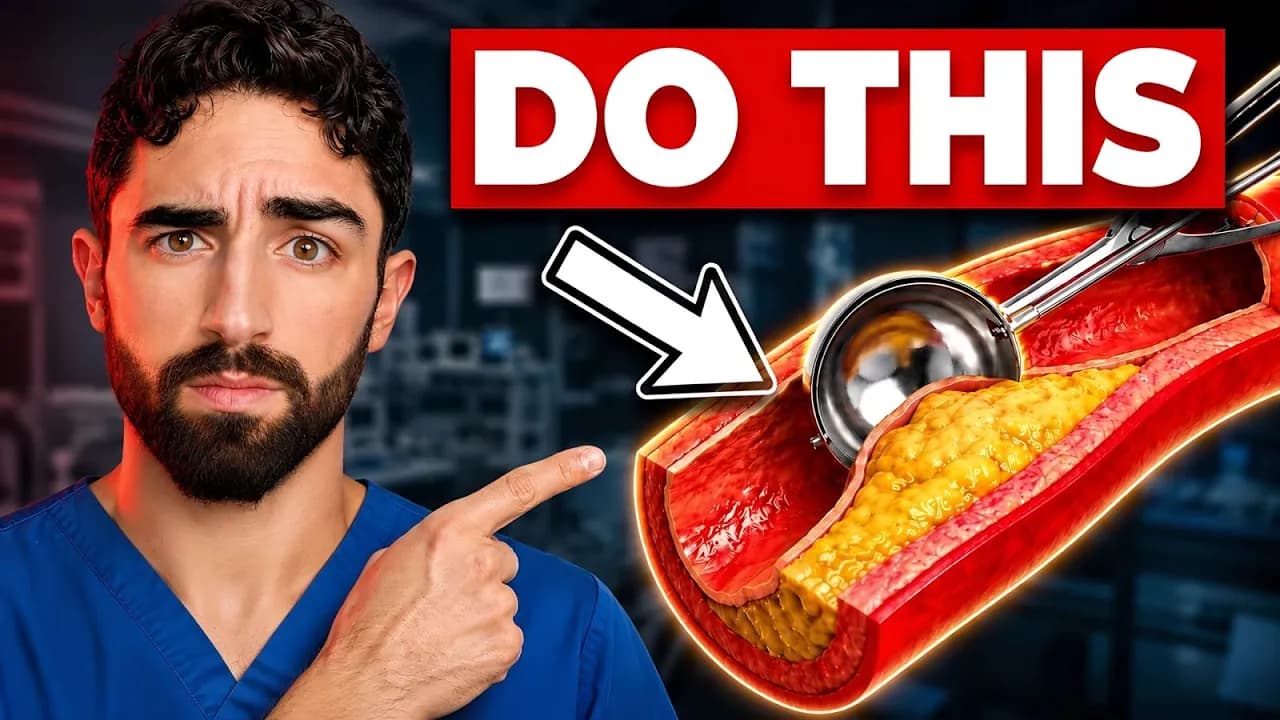
When a blood clot forms in your body, it's not just a blob of congealed blood. It has a structure. The backbone of that structure is a protein. It's called fibrin. Think of fibrin like a net. It's a mesh that forms around the clot and through the clot and holds the whole thing together. Red blood cells get physically trapped inside that mesh, compressed, deformed, unable to carry oxygen the way they normally would because they're not going anywhere because they're stuck inside this mesh. And that's what makes a clot dangerous. Not just that it blocks blood flow, but that the tissue downstream stops getting oxygen. That's what a heart attack is. That's what a stroke is. You block off the artery before that tissue and it can't get oxygen anymore. That causes the damage to heart tissue or brain tissue in a heart attack or stroke.
Nattokinase cuts through that fibrin mesh directly. When it does, the clot breaks apart. The red blood cells trapped inside can even recover their normal shape. Blood flow can resume. And nattokinase therefore is not really doing something vague. It's targeting a specific protein structure inside a clot. Now, your body does need to clot, so let's not do away with clotting completely.
How quickly can nattokinase get through that structure, that clot, that mesh? It turns out how quickly it does that may depend significantly on the person taking it and what you were born with. The study, earlier this year, February 2026, is a study that came out in Scientific Reports, that's part of the Nature Publishing Group, one of the most respected scientific publishers in the world. The researchers wanted to answer a question that seems simple, but was never actually studied before. Does nattokinase work the same way in every person?
To find out, they collected nearly 2,000 blood samples, 1,800 of them actually, from people aged 10 years old all the way up to 70. Every blood type, all eight and Rh combinations, those are blood types, A, B, O, and Rh means positive or negative, so A negative, A positive, B negative, B positive, AB negative, so they're those combinations. For each sample, they formed an actual blood clot in a controlled setting, and then they added nattokinase and measured exactly how long it took to fully dissolve that clot. Now, this is what we would call an in vitro, in other words, in the lab as opposed to in vivo, inside the body.
They used an electron microscope to visually confirm what was happening at the cellular level, and they ran a molecular analysis to understand why certain samples dissolved clots faster than others, much faster. And then they validated the whole thing in a completely separate group, 562 additional samples from nine different cities. The results were striking. Among all the factors they measured, one stood out above everything else, one factor. The fastest responders had their clots dissolved nearly 19 minutes, almost 20 minutes faster than the slowest responders. And that difference appeared to come down to blood type.
This study highlights something we almost never talk about in preventive medicine. The same supplement may behave differently depending on the biology of the person taking it. That's also true for medications. That's also true for nutrition. And this study suggests it may be true for nattokinase as well. And I suspect it is. That's the real headline here, not that one blood type is better than another, but that individual biology matters, and we knew that. And that personalized prevention is not a luxury, it's the standard we should all be held to.
It ranked blood types from fastest to slowest response to nattokinase. The order was this: O was the fastest, then B, then A, then AB. O positive showed the fastest dissolution times in the entire study. AB negative showed the slowest.
The explanation comes down to a protein called von Willebrand factor. von Willebrand factor acts as a reinforcement protein. Its job is to help stabilize and strengthen blood clots to make that fibrin mesh tighter and more resistant. People with blood type O naturally carry lower levels of von Willebrand factor than people with non-O blood types. So, their fibrin mesh is less tightly constructed. Nattokinase gets through it more readily. Non-O blood types, A, B, and AB, have progressively higher von Willebrand factor levels. Their clots are structurally more dense. The fibrin mesh is more resistant and dissolving those clots for A, B, and AB takes longer. The electron microscope images confirmed this directly. At the moment type O positive clots were fully dissolved, AB negative samples still had red blood cells partially trapped inside fibrin.
This does not automatically mean that people with non-O blood types need higher doses. The study wasn't designed to answer that question, although it does raise it. What it does tell us though is that clot structure appears to differ in meaningful ways between blood types. These differences in blood type and von Willebrand factor may influence how quickly nattokinase can do its job and therefore interesting science is not always the same as a clinical recommendation. That's an important distinction.
Blood type wasn't the only factor that the study identified. There's a second variable layered on top of blood type. One that compounds the picture further. Rh factor, the positive or negative sign attached to your blood type. People who are Rh positive carry an additional protein on their red blood cells. The study found that this protein appears to interact with nattokinase in a way that may help the enzyme work more efficiently. So people who are Rh negative don't carry that protein. The effect is still being characterized. This is early science, but the pattern was consistent enough across the data set to be worth knowing. And when you combine Rh negative with a non-O blood type, you're potentially losing two separate biological advantages at once.
The variable the study found to be the strongest predictor of all is called aging. Age. Your body produces its own clot-dissolving enzymes naturally, but from middle age onward, that natural capacity to dissolve clots, it declines. You don't dissolve clots as well anymore. The enzyme that does the dissolving decreases. Just like the type of protein that makes your skin tight when you're younger and have wrinkles and bags when you're older. It's because a protein called elastin. That happens as you get older. Aging is a number one driver of insulin resistance because aging causes insulin receptors to get more resistant. This protein that blocks the dissolving, this protein increases as you age. So, the older you are, the more you may need to have external fibrinolytic, you know, clot busting support. But, also the harder that job becomes biologically. The worst combination in the entire study was AB negative in the 66 to 70, the older age group. Least favorable blood type, no Rh factor enhancement, and the lowest natural fibrinolytic capacity of the age groups. Two variables encoded in your biology since birth, both completely ignored by every standard nattokinase dosing recommendation that I've ever seen.
The most important thing this study tells us isn't that everyone should rush out and change their dose. It's that biology matters. So, before you assume nattokinase is working for you or not working, make sure you're measuring the outcome that actually matters. Maybe you want to start by knowing your blood type. That's the baseline. If you're O positive, the study suggests nattokinase is likely working with your biology at standard doses. If you're not O positive, and most people aren't, your clot architecture may be more resistant. And maybe that's worth a conversation with a healthcare provider who actually understands this stuff, if you can find one.
On dosing generally, nattokinase is a supplement, but supplementation is not harmless. Bleeding risk is real, especially at higher doses. For a typical patient, no plaque, no aspirin, no other fibrinolytic mechanisms, no antiplatelet mechanisms like baby aspirin, start at 2,000 fibrinolytic units. That's how nattokinase is measured, by the way, not milligrams or grams. It's FU, fibrinolytic units. And if you and your provider decide to go higher, increase gradually, every two to four weeks, with monitoring. And if you're on aspirin or any other blood thinner, that conversation needs to happen before you change anything. The combined effect on clotting, it can become unpredictable.
The bottom line is this, check your blood type, understand where you sit in this picture, and work with someone who can help you measure what you're taking, and help you make sure that you know what you need to do. Because personalized prevention isn't about finding the perfect supplement, it's about understanding your own biology well enough to make decisions that are actually calibrated to you.
Keep Thomas Fordham Brewer MD MPH in your library
Save the videos and channels worth coming back to, and find them again in one place.