Tuesday's Children helps kids who lost a parent in 9/11 attacks | 60 Minutes Archive
In a Nutshell
Tuesday's Children provides long-term support—counseling, mentoring, and service trips—to the roughly 3,000 children who lost a parent on 9/11. Five years later, these now-teenagers and young adults are still grappling with grief, media reminders, and fading memories, but many find healing by helping others, pursuing their fathers’ careers, and forming bonds with peers who share the same loss. The program’s commitment extends through college, underscoring that recovery is measured in decades, not days.
These notes were generated by AI and may contain inaccuracies.
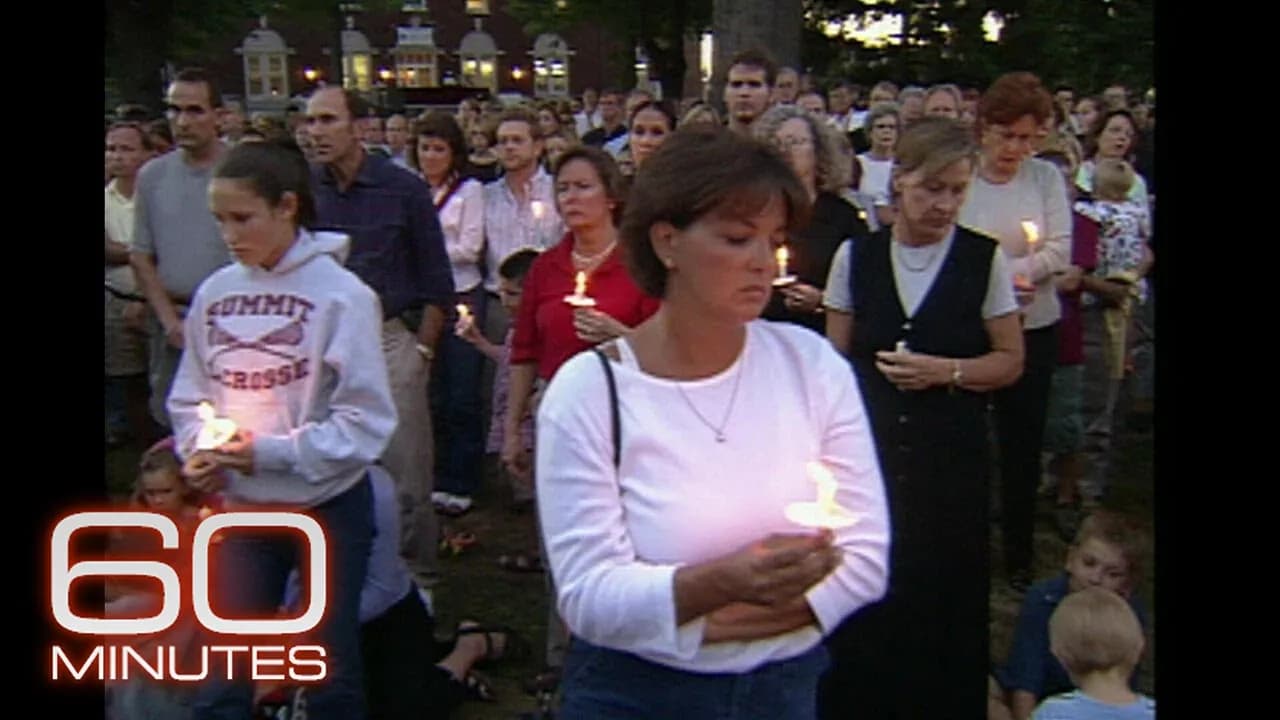
Of all the things heard about 9/11, among the most troubling is that about 3,000 children lost a parent that day. Their average age was 9 years old. With the 5th anniversary, questions arose about what had become of this 9/11 generation. For many, it has been a bewildering, painful time. For some, it feels like it's still September the 12th.
To help them move forward, a group called Tuesday's Children has organized counseling, mentoring, and summer trips to help shepherd the children who lost a parent all the way through college.
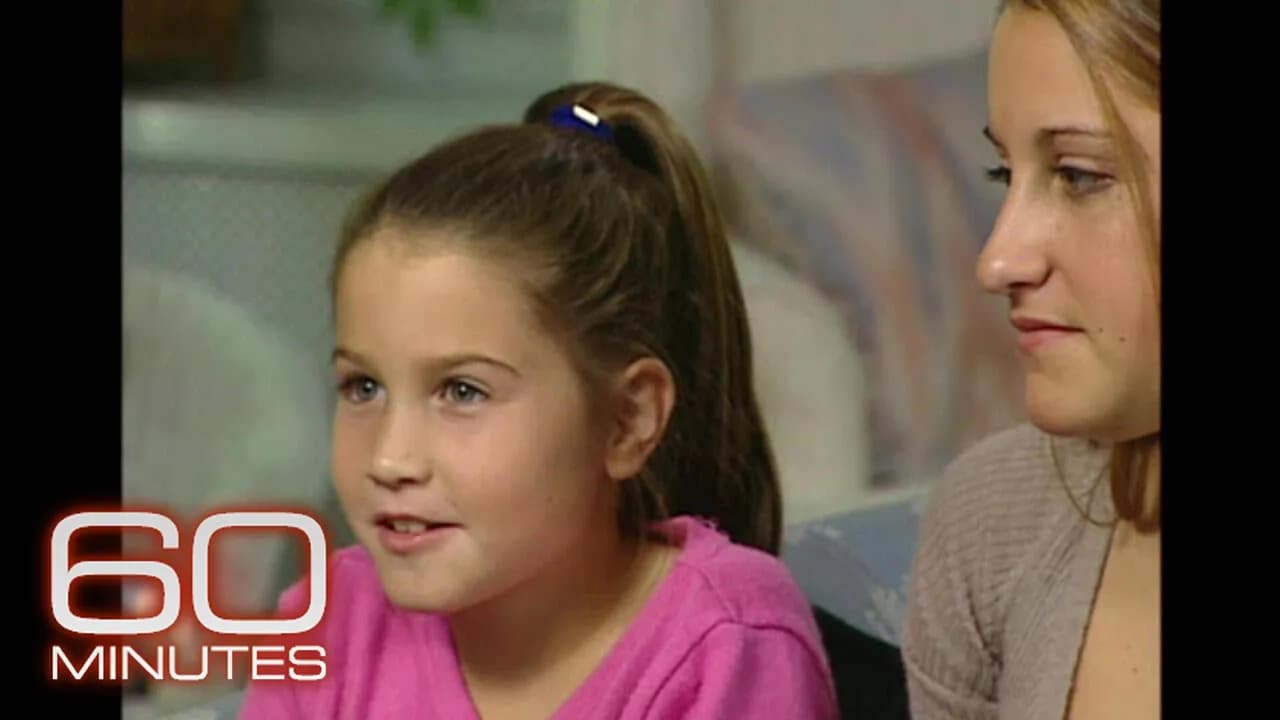
Two of Tuesday's Children are Bridget Fisher and Brielle Saracini, best friends who never would have met had Brielle's dad not been a captain for United Airlines and Bridget's dad a security specialist at the World Trade Center.
Bridget was in school at lunch when she got pulled into the guidance counselor's office. The counselor immediately reached for the tissue box and handed it to her. Bridget remembered thinking, "Why are you giving this to me? My dad's fine. I don't understand. My dad will be fine."
Bridget's dad, John Fisher, had left the World Trade Center before the attack, but ran back when he heard the explosion. Fisher helped direct the evacuation from the command center. As he went in, pilot Victor Saracini's hijacked 767 was zeroing in on the second tower.
Saracini's daughter, Brielle, was 10 when her mother came to pick her up at school. Her mother took her aside and said, "Dad's hurt." Brielle responded, "Oh, okay," just thinking nothing of it. Then her mother said, "He's really hurt. I don't think we're ever going to see him again."
Victor Saracini left behind two daughters. John Fisher was the father of seven, Bridget's brothers and sisters.
After it happened, Bridget stayed up with her siblings and comforted them. There were so many that her mom couldn't take care of them all, so Bridget helped her with that. She was more of the strong one. She couldn't let her family see her cry. It was weird.
Bridget went to school the next day, and people were shocked to see her there. She tried to be normal, but always secretly hoped. Months after, she would still hope that maybe he just couldn't remember where he lived or he was just in the hospital recovering, but she eventually realized that he's just not coming back. That's difficult, but you just got to move on.
To find out how far the 9/11 generation has moved on, Tuesday's Children went on a summer trip to Costa Rica. The kids like to be together because they understand each other. There's no pity or awkward conversation because they're all coming from the same place.
- Amy Gardner, 14 years old, dad Thomas Gardner was a fireman
- Kyle Fisher, dad John Fisher worked in the World Trade Center designing security systems
- Eric Abrahamson, dad William Abrahamson worked for Marsh & McLennan
- Ryan Mackerrin, dad John Mackerrin worked for Cantor Fitzgerald
- Tom Fergus, 15 years old, dad Edward Fergus
- Shannon Fergus, 16 years old, dad Ed Fergus worked for Cantor Fitzgerald
- Rena Wong, 15 years old, dad Raymond Wong worked for Cantor Fitzgerald
They volunteered to talk even though the questions would be hard to answer and frankly, hard to ask. It was found that 9/11 is still present even in kids eager to move on.
After 9/11, one participant used to hate everybody around them and was so mad. When asked if that feeling was leaving, they responded that it's gone now. They used to hate just everyone, how they looked at them, everything.
One participant always thought their dad would be there forever, but realized people who did this don't know that you can't destroy love no matter what you do.
Losing a parent in 9/11 is unlike anything else. There were no goodbyes. The murder was so public and the reminders never end. There's a feeling of helplessness still, and that's what Costa Rica was all about.
Tuesday's Children brought them there to lend a hand easing poverty. The village school sorely needed repairs and paint, and the Garcia family which only had an outhouse would get a bathroom built by the end of the week.
Kathy Murphy is with Tuesday's Children. She organized this their first trip centered on helping others. She explained that they need to start giving back to help ease their pain. They're trying to turn the pain into something more positive. Giving back is a tool that will build resilience in the children.
The youngest child in Tuesday's Children is four and a half. When asked how long they go on, Murphy stated they certainly go on to see that four and a half year old completely through college for sure and then into the job market. This means another 18 or 20 years.
The idea of summer camps for 9/11 kids started right away in 2002. America's Camp was visited in Massachusetts, with 250 9/11 kids. Jennifer Angelini is 12 years old, her sister Jacqueline is 10. They found comfort in the company of kids because everybody knows how everybody else feels. They know what they're going through. They're not afraid to be embarrassed, and they can talk about how you feel because they can say they feel the same way.
On 9/11, the Angelini kids lost their father and their grandfather. Both New York City firefighters. They were Joseph Senior, Joseph Junior, and Joseph Angelini III who was three on 9/11. Joseph III forgot who said it, but they said that his grandpa went in after his dad because he knew that his dad would go in there. Even if his dad was home, he would have went because they called all firefighters all over the world. If you were on the other side of the world, you would have had to come in.
In these first five years, the 9/11 generation has been growing up. Some, like Joseph, are in grade school with very few memories of that day. Others are in college now.
Zack Zion was first met in 2001, weeks after the attacks. He was 18 when he told about his dad, Chuck, who was a senior vice president of the financial firm Cantor Fitzgerald on the 104th floor of the World Trade Center. When he saw the building actually collapse, he knew that it was really unlikely his dad survived.
Zack was in high school when first spoken to in 2001, and this is Zack today. After 5 years, he's finishing college. When asked if September 11th, 2001 feels like it was yesterday or a long time ago, he said it feels like it was very recent. It's very there in your past, but at the same time, you have so many opportunities to see it all over again. Every time you pick up a paper, turn on the TV, there's always reminders there.
Reminders come in the most unexpected ways, like a receipt from his father's desk that was found burned and blowing down a street in Brooklyn. An artist found it and framed it.
Zack said his dad was such a great teacher, and he was taken away right when he was about to start teaching. He's come to realize that from his father's perspective, he was probably just on the verge of being able to really teach him.
A mentor in Zack's chosen profession, his father's profession, finance. Many 9/11 kids want to follow their dad, like Captain Victor Saracini's daughter, Brielle.
Brielle is taking flying lessons now because when she's up in the air flying around, it'll give her a sense that she could be connected to her dad, and she knows that one day he was her age sitting in a plane flying around.
What it's like for her in the cockpit is a mixture of emotions. She feels really happy just knowing that her dad used to do this stuff, and this was his profession.
They're holding on in every way they can, because once they lost their dads to terror, now they're losing them to time. Sometimes one participant remembers when their brother put on his cologne, they remember his smell, but they don't really remember him. When you lose someone, those memories tend to fade when you don't see them all the time. It's sad.
After 5 years, some memories are fading away and in a way it kind of scares them because they don't want them to be gone. They remember his voice because their mom keeps it on his voicemail. He gets on the phone and says, "Hi, this is Victor. I'll get back to you as soon as I can. Please leave a message. Thank you." And then he hangs up. Sometimes it bothers them because they know he won't get back to them, but it's the best they can do.
The kids also told that some of the worst memories don't fade because the media won't let them. They got an earful about showing those pictures of 9/11 over and over again. Even when you're just sitting down eating dinner or watching TV, you'll see pictures of 9/11. You can't escape it. It's everywhere you go. They're showing my dad's death and everyone else's, and it's just really offensive. Every time I see it, it brings up so much and it actually really hurts.
Eric, who lost his dad William, may have had a harder time than many. You can almost see it in his eyes. He told that the hatred he felt for everyone has faded and just now he's putting some distance between himself and 9/11. These past 2 years maybe with this year he's started to really come to grip of what went on and how he was affected by it and how much he's changed from it actually.
9/11 will always be about the sky. After an airplane killed his dad, Eric was afraid. Afraid of planes, afraid of flying, afraid of remembering. Today in the same skies of New York, Eric puts 9/11 behind him by soaring straight into it. He's starting to actually do the takeoff now, concentrating on not screwing up. Once you're at a certain altitude they let you go and then you just start soaring. It's really great. If you look out the window you see everybody flying by you but you're the one that's flying. And then you just kind of go right up and by then you're just kind of climbing and climbing. So it's really great feel.
The passage of 5 years has been a transforming time. The 9/11 generation is raising the courage to face what was painful. And in searching for meaning they found answers in themselves.
One participant doesn't think they would be the same person if 9/11 didn't happen to them. They wouldn't wish it, would change it if they had the chance of course, but it has made them realize that they need to be nicer to people and maybe if they can help give back it'll spread and people won't do things like hijack airplanes and take the lives of other people.
After 9/11 happened, one participant was laying with their sister, remembering telling her, "I'm so sad. How am I going to make myself happy?" And they figured it out. It's by making other people happy. Other people around you. It's by doing good deeds for other people. That's what makes them happy. Some people never figure out that secret of life. They're lucky. They're lucky in so many ways.
Keep 60 Minutes in your library
Save the videos and channels worth coming back to, and find them again in one place.