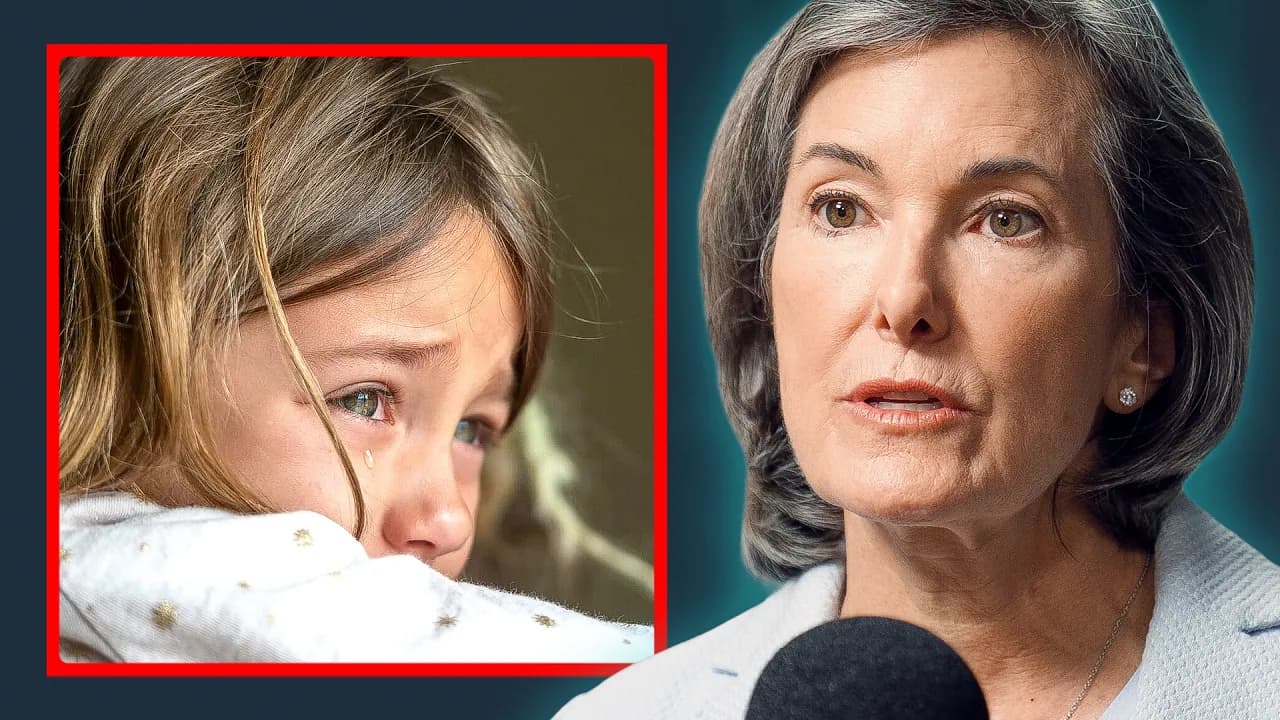
“Divorce is like death for a child” - Erica Komisar
In a Nutshell
Divorce feels like death to children, shattering their essential illusion of parental permanence, perfection, and a stable "safe nest" that builds resilience and trust in relationships. Children blame themselves via magical thinking ("If I caused it, I can fix it"), get stuck in grief stages like anger or denial, and suffer attachment wounds that persist into adulthood. Parents must prioritize kids by communicating collaboratively, seeking therapy to avoid burdening children with their pain, and reassuring them of unconditional love to mitigate long-term trauma.
These notes were generated by AI and may contain inaccuracies.
Divorce is experienced by children almost like a death in the family. Better to have two parents, a mother and father, because they serve different functions. As they say in the UK, better to have an heir and a spare. With two parents, if you lose one you have another. A nuclear family with two parents creates the illusion of a safe nest, a safe, stable environment providing emotional security for healthy development. That stability offers shock absorbers for resilience against adversity.
Life has no permanence—parents could die, get sick, or get hit by a bus—but children are born needing that illusion of permanence. Healthy defenses allow optimism and coping despite world craziness. Divorce shatters this illusion before children are ready. Every child is born needing a sense of omnipotence in their parents: believing parents are perfect, can do anything, and will protect them.
Story: Erica's husband as a little boy—father always drove (traditional setup, mother never drove). He sat in back feeling father knew every road on every map in the whole world. Childhood is feeling protected, parents as bigger-than-life characters.
Divorce reveals parents' imperfections, seeing them as human before ready, plus impermanence of relationships and lack of trust. Children from divorce often have trouble trusting permanence of marriage and connections later (not all).
To help: How parents talk to them, treat each other, care as divorced couple, work together, collaborate, cooperate, communicate. Put children first, sacrifice desires and needs for fairness. This dictates if child sees relationships as trustworthy.
Isn't it crazy the idea of fairness that that needs to be put to one side that there is something unfair to the parents that is adaptive for the kid that's good for their upbringing?
Children often blame themselves for parents' divorce due to magical thinking.
Magical thinking: Children very young believe they are center of the universe (good for security, steadiness). Example: TV commercial—little boy in Darth Vader outfit with lightsaber tries on family car; father remotely starts it, boy thinks "I turned it on with my lightsaber".
Children outgrow it but it provides early security. If angry at parent (e.g., didn't get toy, wish they'd die—normal fantasies) and bad thing happens (e.g., parent dies in car accident), child feels responsible. Common for children to believe they caused parents' breakup.
In book: Talk to children to disavow illusions—they are not responsible, parents will always love them. Divorce breaks sense of permanence and trust. Children think: If parents can leave each other, can't they leave me?
Parents need specific way to talk about divorce.
Similar to attachment wounds replayed in adult relationships: If I caused it, I can fix it. Like: If taught as child you need to work hard to be loved, if not feeling loved, work harder.
Get support during divorce (not everyone needs therapy, but many do for transitions/traumas). Divorce is trauma for parents and children. Parents need support to not leak pain onto children—avoid oversharing loneliness, pain, sex lives; don't treat child as therapist.
Parents need therapy to raise children without burdening them. Children need therapy for safe space (not parents) to express feelings—addresses conflicts/traumas early, prevents carryover to adulthood.
Same as any mourning process—grief is grief, a death. Follows Kubler-Ross stages: disbelief, sadness, anger, acceptance.
Problem: Getting stuck in a stage (e.g., anger, sadness, despair for decades). Meant to move through. Jewish tradition: Mourning one year, then unveil stone and move on. People hold on like scratch in LP record, stuck in depression, disbelief, anger—many don't reach acceptance. Children also get stuck.
Non-alcoholic brews taste like the real thing (IPAs, Hazy Goldens). Enjoy ritual without hangover, 3 a.m. panic, wasted Sunday. Available at grocery/liquor stores or online variety pack. Up to 15% off first order: athleticbrewing.com/modernwisdom, code modernwisdom.
Keep Chris Williamson in your library
Save the videos and channels worth coming back to, and find them again in one place.