When Did Trying Hard Become Lame? - Joe Santagato
In a Nutshell
The core message is that trying hard has become socially mocked in favor of ironic nonchalance, but this stems from insecurity and robs people of real growth. The key takeaway is that embracing effort and risk—doing hard things for personal satisfaction rather than perception—creates meaningful wins that actually change you, while easy or ironic detachment leaves you stagnant.
These notes were generated by AI and may contain inaccuracies.
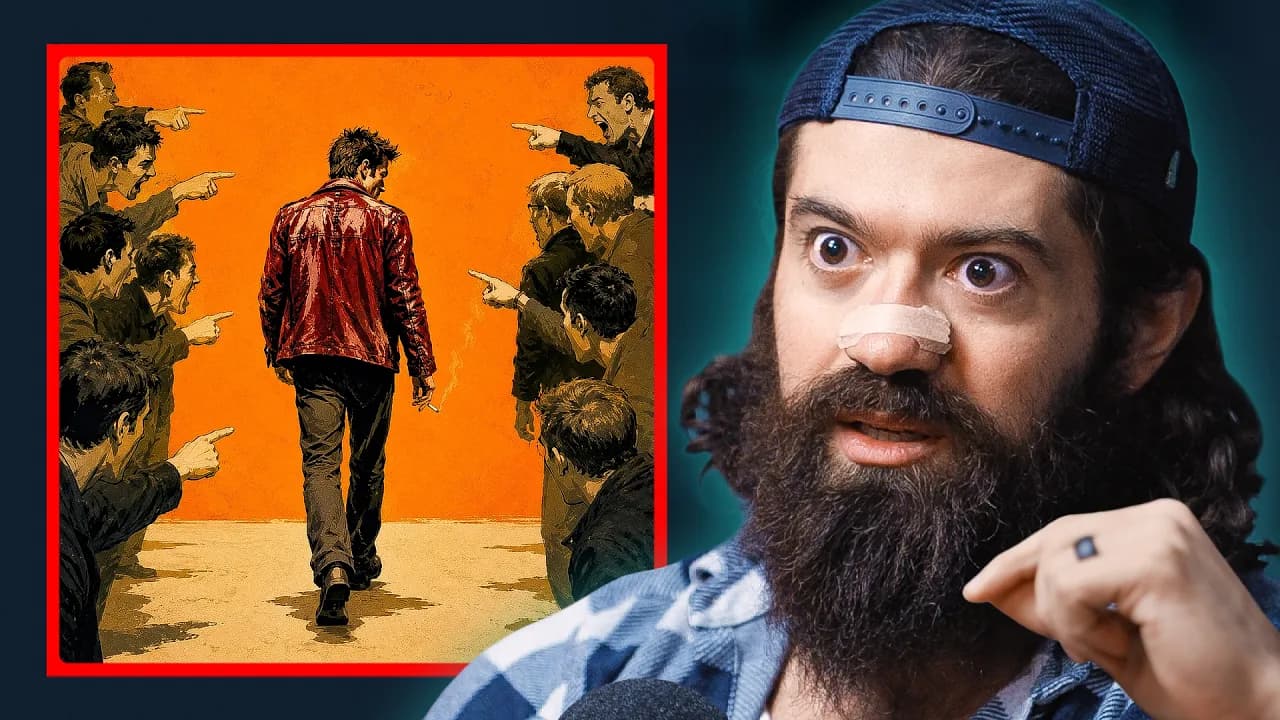
The current trend involves people trying to appear nonchalant. Trying hard is considered lame to certain people, especially on the internet. There is a world that only communicates through irony, making only ironic statements. Nobody stands for something legitimately; they only stand against things, mock stuff, or suggest ideas indirectly.
In the UK, there is tall poppy syndrome where people who try really hard are called "too keen." Enthusiasm is looked down upon, especially for those from working-class backgrounds. People are encouraged not to get too big for their boots and not to have dreams that are too big.
Acting nonchalant about things one is actually passionate about manifests insecurity. The speaker states they are not insecure about their pursuits, so they are willing to try really hard, fail, and fall on their face. This willingness gives them an advantage over people who refuse to take risks.
The speaker is not nonchalant because they are not performing for perception; they are doing it for themselves. When they say they want to earn something, it is not for outside validation. Knowing they worked hard and earned something provides an amazing feeling when going to sleep at night.
Do hard shit not because it's fun, but because the win actually means something. You bled for it. You broke for it. You earned it. Easy wins are forgettable. Hard ones change you.
This quote from Mark Manson emphasizes that hard wins change you. The world of AI may be robbing people of the sensation of working hard for achievements. The payoff comes from watching old work and recognizing personal improvement over time.
Improvement happens one rep at a time. The speaker references watching old videos and first shows, recognizing they are better now than before. Someone created a compilation analyzing the speaker's first podcast episodes from 2018, noting the early episodes did not suggest future success as a podcaster, despite 1,100 episodes having been recorded since then in Newcastle.
Keep Chris Williamson in your library
Save the videos and channels worth coming back to, and find them again in one place.