Why Do Humans Look So Different If We're All the Same Species?
In a Nutshell
Humans share 99.9% of their DNA, yet visible differences arose mainly after a small group left Africa 60-70k years ago. Serial founder effects reduced genetic diversity with distance from Africa, while natural selection shaped traits like skin color for UV protection or vitamin D production, eye and body shapes for climate, and some traits from genetic drift or archaic interbreeding. Most human genetic variation exists within populations, not between them, making geographic differences recent, superficial adaptations rather than deep biological divides.
These notes were generated by AI and may contain inaccuracies.
You and a complete stranger on the other side of the world share 99.9% of the same DNA. Every human being alive today is descended from a population of modern humans who lived in Africa. Roughly 60,000 to 70,000 years ago, a group of those people left, carrying only a fraction of the full genetic diversity that existed in Africa at the time. They moved north, then east, then eventually in every direction across the Middle East into Asia, eventually into Europe, across land bridges into the Americas, island hopping across the Pacific.
Every time a small group split off from a larger one and moved into new territory, they took only a portion of the genetic diversity of the group they left. Each new population was a subset of its parent population, which was itself a subset of its parent population. Scientists call this the serial founder effect. The further a population moved from Africa, the more genetic information was left behind at each step. This is why Africa today has more genetic diversity than the entire rest of the world combined. Every non-African population is genetically a subset of African diversity, not the other way around.
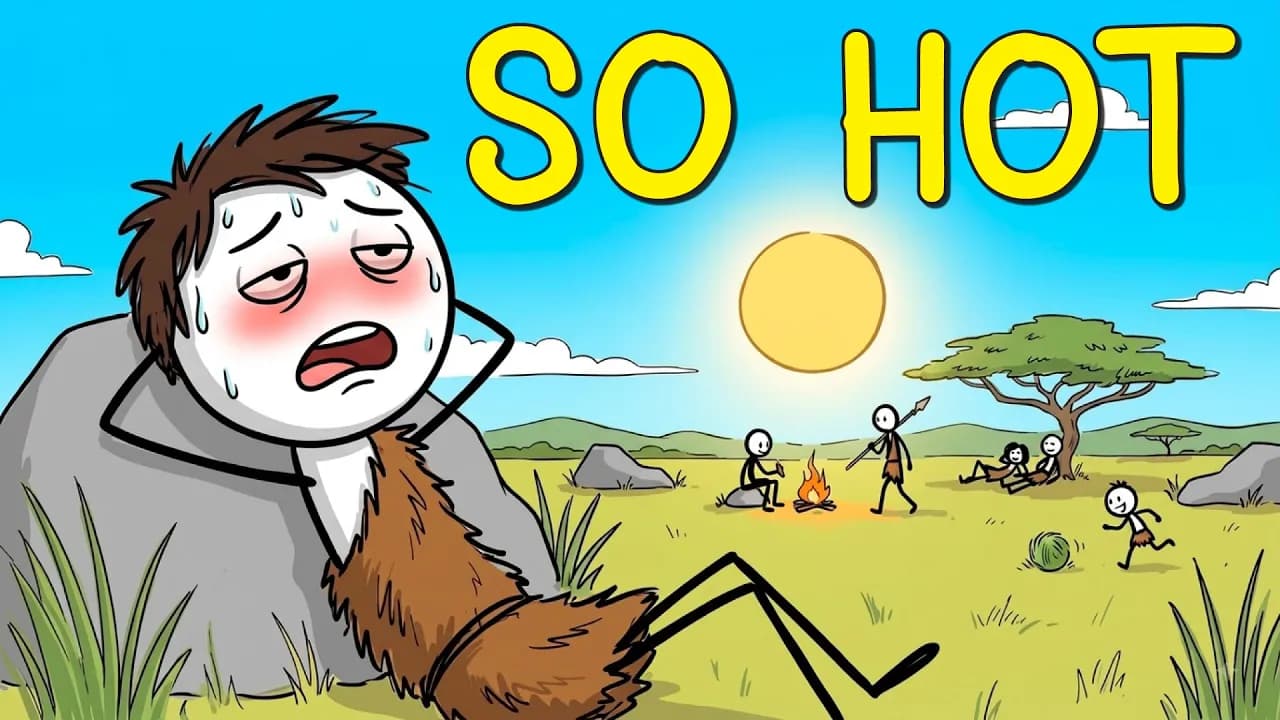
The founder effect only explains why distant populations became genetically distinct from each other in subtle ways. It does not explain why people in different parts of the world ended up looking so visibly different. For that, you need natural selection. Melanin is the pigment that determines skin color. Its primary biological function is to protect DNA from ultraviolet radiation. UV radiation from the sun causes DNA damage in skin cells. Enough damage over a lifetime leads to cancer. UV radiation also destroys a vitamin called folate in the bloodstream. Folate is essential for healthy fetal development. A woman with low folate levels during pregnancy faces dramatically higher risks of neural tube defects in her child. Near the equator where UV radiation is intense and consistent year round, dark skin is a serious biological advantage. It protects DNA. It protects folate. It protects the next generation.
Moved north or south away from the equator, UV radiation gets weaker, especially in winter. Your body needs some UV radiation to produce vitamin D in the skin. Vitamin D is essential for bone health, immune function, and dozens of other biological processes. Dark skin, which is very effective at blocking UV, becomes a disadvantage in low UV environments because it blocks so much radiation that the body cannot produce adequate vitamin D. The people whose skin produced less melanin, lighter skin that allowed more UV through, had a biological advantage at higher latitudes.
Penn State anthropologist Nina Jablonsky spent a decade building what became the first comprehensive scientific theory of human skin color. She and her colleague George Chaplan published research in 2000 showing that skin reflectance, how light or dark a population's skin is, correlates with UV radiation levels at their latitude with extraordinary precision. The correlation is so strong that you can predict what skin tone a population would evolve given only their latitude and the UV levels there. Skin color is not arbitrary. It is not cultural. It is not random. It is one of the clearest examples of natural selection ever documented in any species.
Skin color is not a reliable indicator of how closely related two populations are. Two populations at the same latitude on opposite sides of the world who have had no contact with each other for tens of thousands of years will often evolve similar skin tones independently because they are both responding to the same UV environment. Two populations that split from the same common ancestor but moved to different latitudes will diverge dramatically in skin tone within a few thousand generations. The color of your skin tells you where your ancestors lived relative to the equator. It tells you almost nothing else.
The epicanthic fold, the fold of skin over the inner corner of the eye that is common in East Asian populations and some Arctic populations, appears to be an adaptation to specific environmental conditions in extremely cold, windy or high glare environments such as open tundra or high altitude plateaus. Protection of the eye from cold air, wind-driven particles, and intense reflected light from snow is genuinely important. The epicanthic fold reduces the exposed surface area of the eye in exactly the conditions where that exposure causes problems. This feature appears in populations that are not closely related to each other, both in East Asian populations and in some Arctic populations from different lineages, suggesting it may have evolved independently more than once in response to similar environmental pressures.
Tightly coiled hair creates a layer of air between the hair strands which acts as insulation against intense equatorial heat and also reduces the amount of direct sun hitting the scalp. It is in essence a natural cooling system that evolved specifically in high UV high heat equatorial environments. As populations moved to cooler climates where this insulation was less critical and where the body's relationship with heat and cold completely changed, hair texture diversified in different directions.
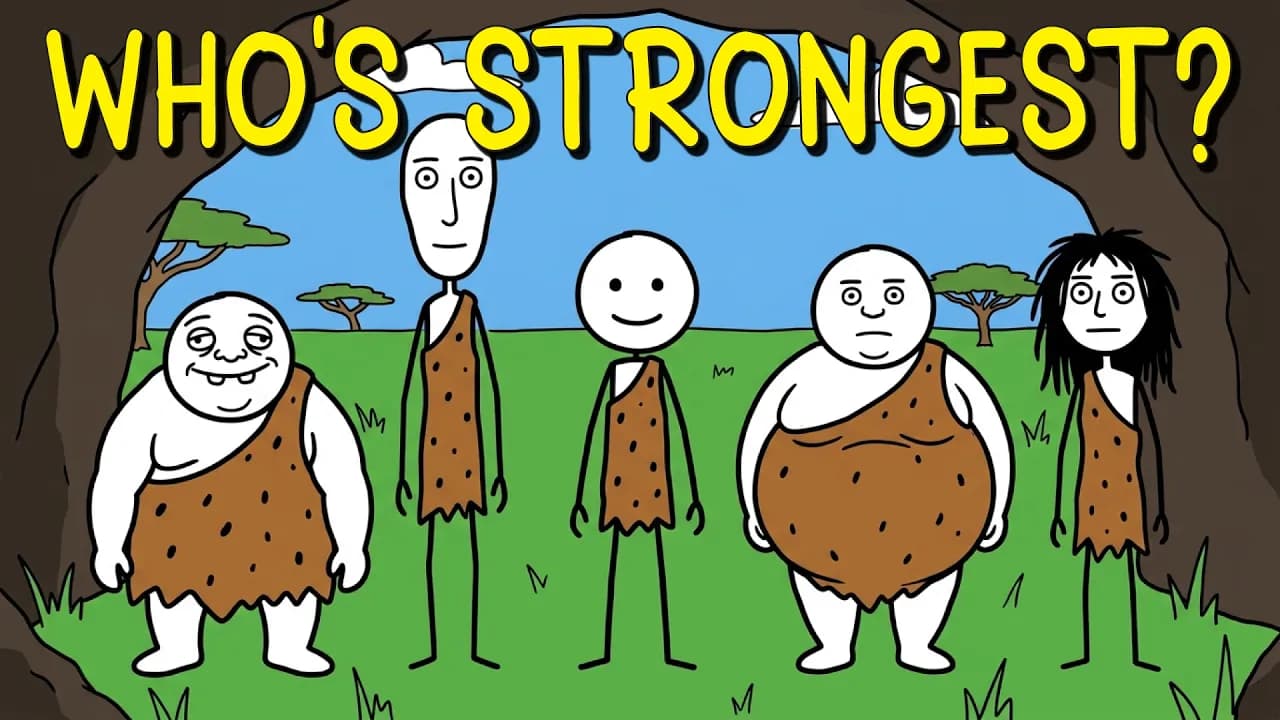
Populations in cold environments tend to have stockier body shapes that minimize surface area relative to volume, reducing heat loss. A principle called Bergman's rule that applies across many mammal species. Populations in hot environments tend toward leaner, longer body types that maximize heat dissipation. Broader nostrils allow more air flow and work well in warm, humid environments, while narrower nostrils warm and humidify cold, dry air before it reaches the lungs.
Not everything you see when you look at a person from a different part of the world is there because natural selection put it there. Some of it is there because of pure chance. When a small founding population settles a new territory, the traits that get amplified in that population over time depend partly on which specific individuals happened to found it, partly on who survived random events, and partly on the random mutations that occurred in that specific lineage. This is genetic drift. A trait can become common in a population not because it was advantageous, but simply because the person who carried it happened to survive and have many children, and over generations, that trait spread through the group. Some of the physical variation between human populations is drift, the accumulated weight of chance events that had nothing to do with adaptation.
About 74,000 years ago, a super volcano in what is now Indonesia erupted in an event so large that it triggered a volcanic winter lasting years, collapsing food chains across enormous stretches of the planet. Genetic analysis of every human alive today suggests that the entire human population may have dropped to somewhere between 3,000 and 10,000 individuals in the aftermath. Every person alive on Earth today descends from that tiny surviving group. The genetic diversity of the entire human species passed through that needle's eye. When the population recovered and eventually spread around the world, it did so from an extremely narrow genetic base. This is why despite all the visible variation humans display, we are one of the most genetically uniform large mammals on the planet. Most of our variation is recent post bottleneck and surface level.
Modern humans as they spread out of Africa did not simply replace the archaic human species they encountered. They interbred with them. Most people alive today who are not of purely subsaharan African descent carry somewhere between 1% and 4% Neanderthal DNA in their genome. People of East Asian ancestry carry slightly more Neanderthal DNA than people of European ancestry. People of Melanesian and Aboriginal Australian ancestry carried DNA from a separate archaic group called the Denisovans. Research published in 2016 identified a Denisovan gene variant associated with high altitude adaptation that is present in Tibetan populations today suggesting that when the ancestors of modern Tibetans interbred with Denisovans they inherited a biological tool that helped them survive at altitude.
Humans share the vast majority, 99.9% of our DNA. The genetic variation between all humans across every population on every continent is smaller than the genetic variation within many other species. Approximately 93% of all human genetic variation exists between individuals within the same population, not between populations from different parts of the world. Two people from the same village in Nigeria may be more genetically different from each other than either is from a person in Norway. The differences between groups that people have historically treated as the most significant thing about each other are genetically almost nothing. What actually exists in humans is continuous variation, traits that shift gradually across geography, not traits that snap into discrete categories at continental borders.
About 60,000 to 70,000 years ago, a small group of people left Africa carrying a fraction of the continent's genetic diversity. As they spread across the planet over thousands of years, each group that split off carried an even smaller fraction. Small isolated populations evolved different physical traits in response to different environments. Dark skin near the equator to protect against UV. Lighter skin at higher latitudes to allow vitamin D production, cold adapted eye shapes in Arctic environments, heat efficient body shapes near the tropics. Random genetic drift amplified certain traits in small founding populations for no adaptive reason at all. And some populations picked up genes from the ancient humans they encountered along the way. All of it happened within the last 60,000 years, which is why the differences are mostly visible and surface level rather than deep and biological. You share 99.9% of your DNA with the person on the other side of the world who looks most different from you. The 0.1% that varies contains almost all of what makes humans biologically individual. And most of that variation exists within populations, not between them. The stranger across the world is carrying almost your entire genome inside their cells. The differences between you, which can feel so significant when you look at them, are the product of tens of thousands of years of your ancestors adapting to different levels of sunlight, different temperatures, and different environments. You are, in every meaningful biological sense, the same kind of thing. You always were.
Keep Axen in your library
Save the videos and channels worth coming back to, and find them again in one place.