Who Was the Strongest Ancient Human Species?
In a Nutshell
Neanderthals were physically the strongest, built like tanks with 10-13% more muscle mass than modern humans, while Homo erectus excelled at endurance hunting through cardiovascular fitness. Modern humans won through superior teamwork, projectile weapons, and cognitive strategy despite being individually weaker. The only surviving human species succeeded by trading brute strength for larger brains and cooperative hunting tactics.
These notes were generated by AI and may contain inaccuracies.
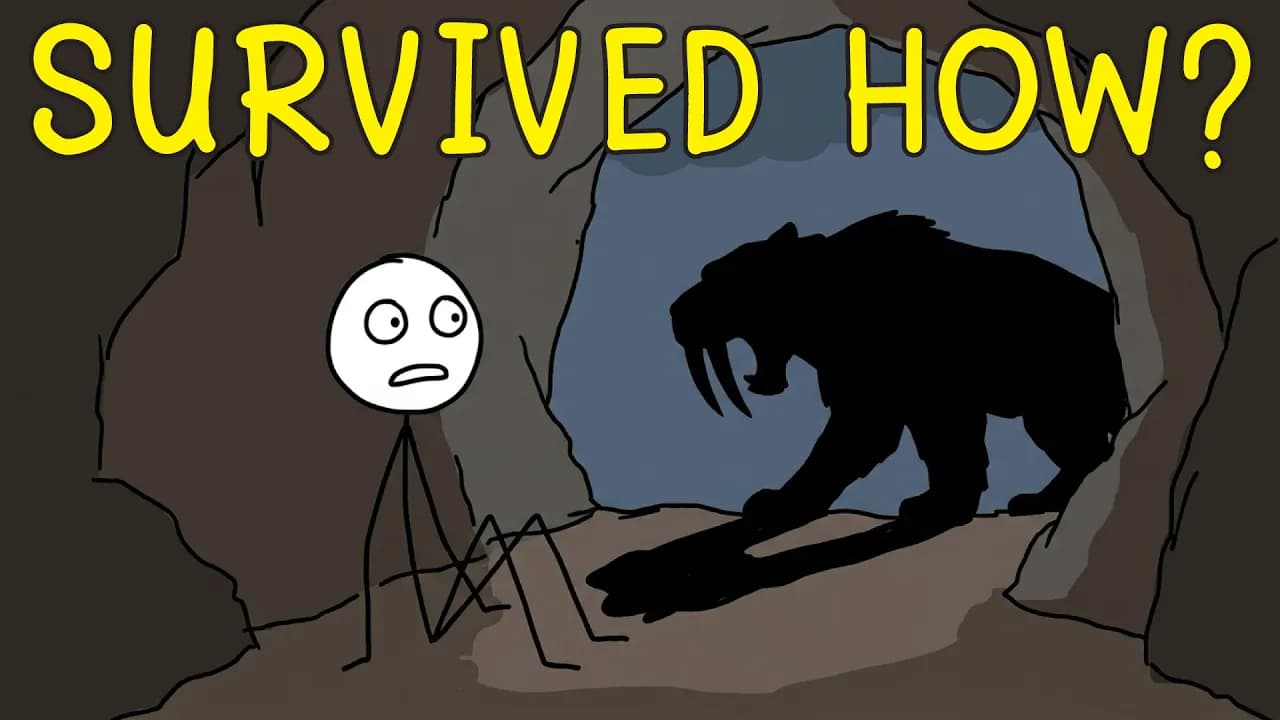
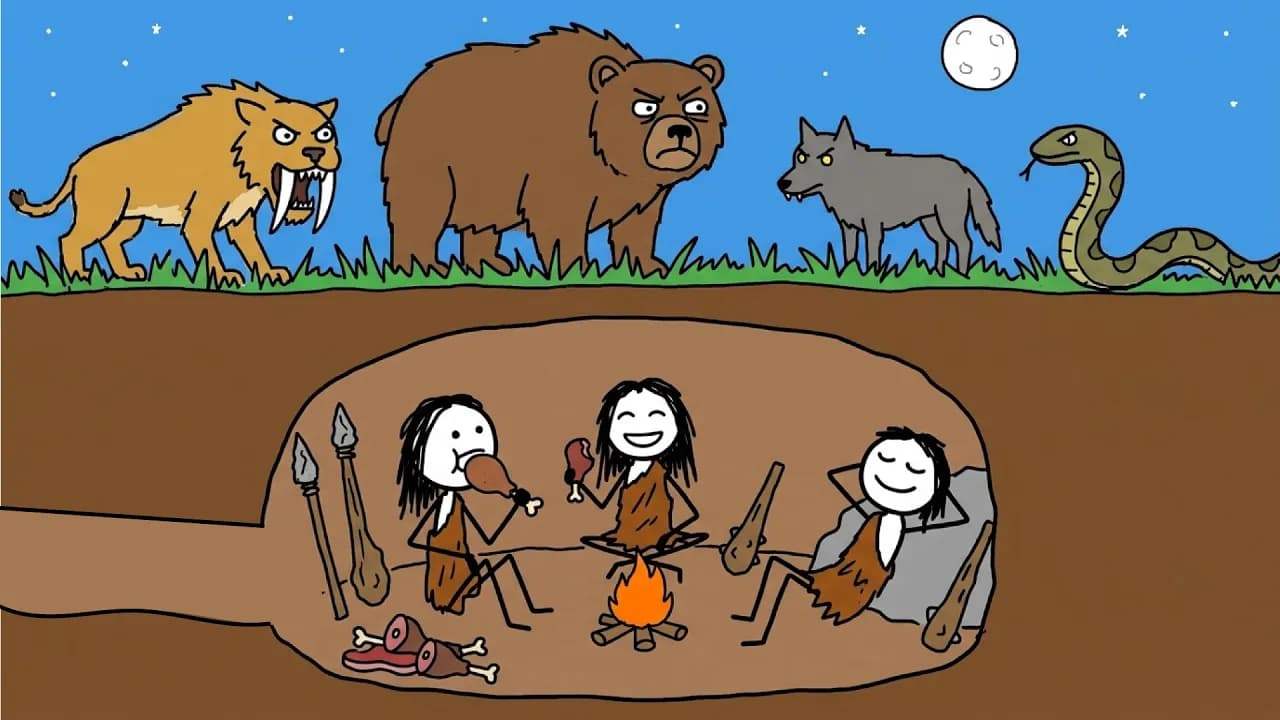
Homo sapiens has only been around for about 300,000 years. The human story stretches back over 2 million years. For most of that time, multiple human species existed simultaneously. These included Neanderthals, Denisovans, Homo erectus, and Homo habilis. Different species of humans lived alongside each other, sometimes interbreeding but also competing for food, shelter, and survival. The prehistoric landscape contained saber-tooth cats, dire wolves, and massive cave bears.
Neanderthals emerged around 400,000 years ago and lived across Europe and parts of Asia. They were the closest cousins to Homo sapiens, sharing a common ancestor just a few hundred thousand years back. Neanderthals were built for power with stocky, barrel-chested builds and thick bones with heavily muscled limbs. Neanderthal men averaged around 5'5" tall but weighed between 140 to 180 pounds. They were shorter than modern humans but much more robustly built.
Neanderthal skeletons show adaptations for strength including pronounced brow ridges that may have protected eyes during physical confrontations. They had wide hips and a long, broad pubic ramis serving as anchors for massive leg muscles. Their hands were proportionally larger with wider fingers built for gripping and tearing.
Neanderthals were skilled hunters taking down large prey like mammoths, woolly rhinos, and giant deer. They used close-range thrusting spears, requiring both strength and courage. They lived in cold, harsh glacial conditions of ice age Europe. Some researchers suggest they had a higher basal metabolic rate than modern humans, requiring many calories for hunting and processing animal protein.
Denisovans are a more recently discovered human species with fragmentary remains including teeth, jawbones, and a piece of a pinky finger. The pinky bone found in Denisova Cave in Siberia is unusually broad. Denisovan molars are massive with roots twice the size of modern human teeth. A Denisovan jawbone from Tibet is nearly twice as big as a modern human jawbone.
These fragments suggest Denisovans were large and robustly built on par with Neanderthals. They overlapped with Neanderthals in some parts of Eurasia and probably had a similar body plan adapted for strength and cold resistance. Denisovans lived in challenging environments including the Tibetan plateau, a high altitude low oxygen environment.
Homo erectus first appears in the fossil record around 1.9 million years ago. They were the original globe trotters of the human family, spreading from Africa into Asia and Europe long before modern humans. They averaged around 5 feet tall and 100 to 150 pounds, but were lean and muscular with body shapes tuned for running and chasing prey in hot savannahs.
The famous Turkana boy from Kenya died around 1.6 million years ago at age 8 or 9. When he died, he was already 5'3" tall, and would have topped 6 feet as an adult. He had a narrow pelvis and long legs built for striding. His spinal cord was as thick as modern humans, suggesting well-developed back and abdominal muscles. His rib cage was funnel-shaped, narrowing from top to bottom - a shape seen in top endurance athletes today that allows for bigger hearts and lungs.
Homo erectus were pursued predators who chased prey for hours under the African sun until animals collapsed from heat exhaustion. This required endurance and cardiovascular fitness rather than raw power. They expanded the boundaries of what a hominin body could do, earning them recognition as the first superhuman.
Anatomically modern humans are taller than Homo erectus and Denisovans but more slightly built. Our skeletons are more gracile, thinner, and less robust. We have less muscle mass compared to body size. A study found that Neanderthal women had 10 to 13% more muscle mass than modern European men. Even Neanderthal children were more muscular than modern humans. Any extinct relative could likely overpower an individual modern human in a one-on-one fight.
Humans rarely fight alone. What we lack in individual brawn, we make up for in teamwork and coordination. Early modern humans pioneered throwing spears around 300,000 years ago in Africa. These lighter, aerodynamic weapons could be launched from distance, making hunting safer and requiring accurate throwing skills.
A site in Mexico dated to around 14,000 years ago contains piles of butchered mammoths with spear points scattered among the bones. This represents planned, systematic slaughter where humans drove entire herds of mammoths off cliff edges. This shows the power of human cooperation and planning - a prehistoric assembly line.
In individual contests of strength, Neanderthals or Denisovans might best Homo sapiens. But in group conflicts, modern humans would dominate through strategizing, laying traps, and adapting tactics. We had projectile weapons and cognitive skills to use them effectively. We are still here while all other human species have been absorbed into our gene pool or vanished entirely.
Our more graceful bodies may have been an advantage, allowing resources to be diverted from brute strength into bigger brains, more complex language, and longer childhoods for learning and cultural transmission. We essentially domesticated ourselves.
For raw explosive power and muscularity, Neanderthals take the crown as they were built like tanks. For endurance and cardiovascular fitness, Homo erectus gets recognition as the original marathon runners. For overall evolutionary success and ability to thrive in every environment, the title goes to Homo sapiens - the only human species still standing.
Our world-conquering power can be used to lift up fellow humans or tear them down. It can sustain our fragile biosphere or destroy it. Strength is about more than physical capability - it's about adaptability, cooperation, and using gifts to create a better world. The ghosts of the strongest humans who ever lived remain in our DNA as a reminder of how far we've come and how far we can still go if we work together.
Keep Axen in your library
Save the videos and channels worth coming back to, and find them again in one place.