Why Domain Experts Are Winning Right Now
In a Nutshell
Experienced founders with domain expertise are winning because they know how to direct AI models to produce world-class output rather than generic slop. Bryant Chou's Ploy demonstrates this by distilling 13 years of Webflow marketing and design knowledge into an AI platform that rebuilds websites, maintains brand consistency, and autonomously runs marketing operations like SEO, content, and lead generation. The key advantage is that expertise becomes a force multiplier—allowing solo founders to navigate the idea maze directly and execute at 400-1000x their normal capacity by feeding models structured context, curated examples, and opinionated guardrails.
These notes were generated by AI and may contain inaccuracies.
You need to have a certain amount of expertise to know what to do with the boundless intelligence imbued in the model. Folks with experience who have spent a decade plus in this industry know how to create something like this because they can leverage the model's underlying capability to create something that is world-class.
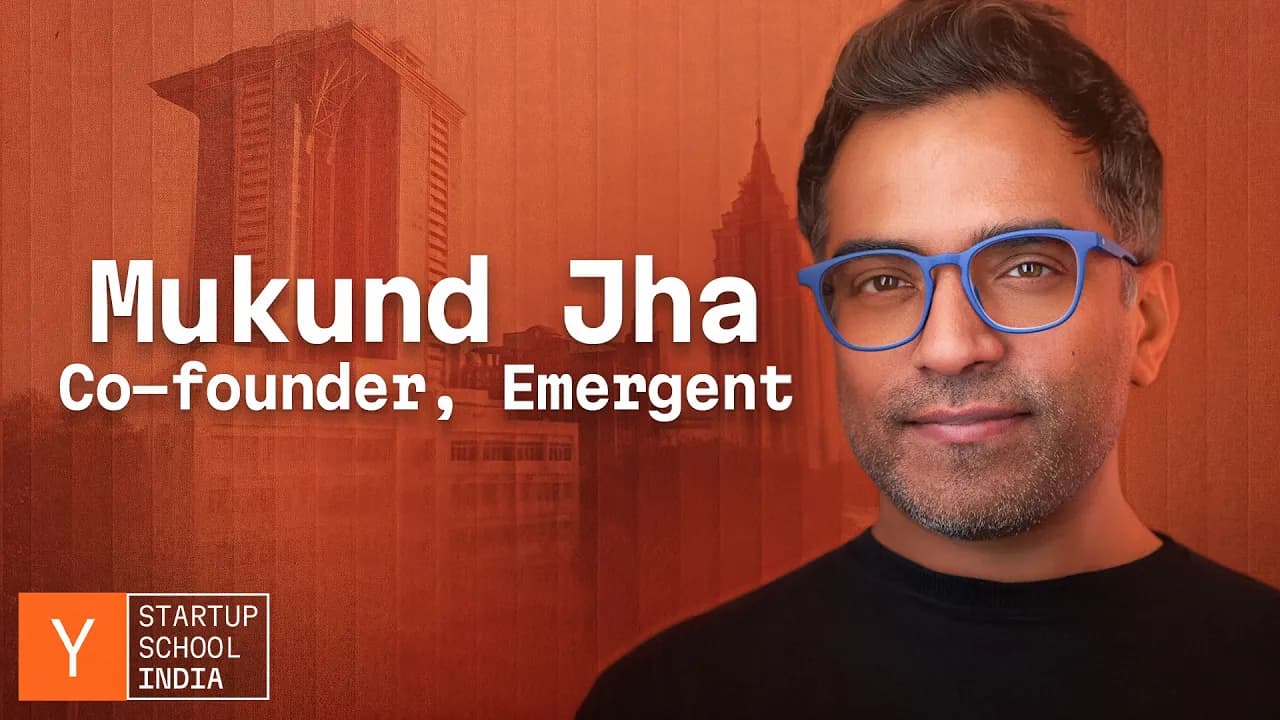
Welcome back to another episode of The Light Cone. Today's guest is Bryant Chou, co-founder and CTO of Webflow, which created 1% of all websites live today. Bryant is back in the current YC batch with a brand-new startup called Ploy.
Ploy is a website platform where users can build incredible bespoke, award-winning websites. Beyond website creation, the premise is that the website has traffic and data, and Ploy builds an entire marketing platform to help run the business, run ads, find customers, make website copy, and help get found by ChatGPT, Perplexity, and Claude so businesses can run marketing on autopilot.
Bryant started as CTO of Webflow but also led marketing teams and started sales teams. He is taking all that knowledge and baking it into Ploy. The vision is to help the other 98% of websites that could use this capability.
Users get all integrations out of the box plus traffic. The system demonstrates web design skills by taking old startup websites and recreating them in Ploy.
Gary's old startup Postorius from 2008, originally a simple blog-by-email service, was recreated. The output is described as 2026 Postorius. The system understands context about how to create Google VO-style videos and embeds that knowledge.
Once in the land of image generation and video generation, there is significant work around curation and proper prompting. Being able to start with the thousand examples already pulled together represents context in action.
Jared's old startup Screed from 2007, described as YouTube for documents, was redesigned. The original was hosted on a physical server in a dorm room closet before AWS existed.
The system goes to the Wayback Machine URL, understands the contents, understands the context of the business, and redesigns it for the modern era.
Harj's Automatics from 2007, software for small businesses to sell online by managing eBay auctions, was redesigned. The new version includes product mocks of the actual product.
The dashboard generation is the kind of software the hosts build. The system works backwards from who the customer is, what they want, and the jobs to be done.
The output is not just prettier visually. The content is better too. If it were AI slop, the improvements would not work.
Diana's company from 2017 built an API for AR on phones. They hired a designer and it took about two months to create assets. Ploy recreated the site with cool screenshots and created an AR video in three or four prompts.
About 12% of the YC batch uses Ploy. One of the biggest pieces of feedback is that founders are able to tell their story more coherently and concisely, which is the most important part of a website.
Webflow democratized web development and web design. Ploy aims to democratize marketing and demystify growth. Incredible YC founders have built incredible products and are starting to understand how to talk about them, but face rote and arduous SEO marketing tasks they would otherwise need to hire for.
Founders who were at companies facing cost cuts could potentially do the whole thing themselves as they are as good as the founders. Especially for people who are a little older, it is hard to fill in every skill. Not everyone is a triple threat like Bryant.
Founders resemble Dungeons and Dragons characters with different hit points and characteristics. Some are mages, some are barbarians. This extends to founder capability. Because Ploy exists, someone who is 200 IQ and nearly non-verbal like a codex can make hardware or software that literally no one else could. In the past, being OP in one stat meant struggling with other things. Now that person can deploy and win in the marketplace.
A demonstration shows signing up for Ploy. The system knows who the user is and what domain they are coming from. In the example, Bryant pretends to be someone from Cursor.
The Ploy Slurper is a purely deterministic method to take an existing website and create not just a design system but all the components that belong on the website. Subsequent generations stay on brand with consistent buttons and header fonts. Design consistency becomes important as a business scales.
During the slurping process, the system asks what is important. In the example, the goals are to get found in search and AI and to turn more visitors into customers. In about 75 seconds, the existing site is slurped, all components are recreated, it is refactored, and a new version is delivered.
The work is equivalent to a team of three to five engineers and front-end people working at least a week. Other tools like Claude Code or Cursor produce much worse versions.
Hover effects and CSS details are captured. You need to have an opinion about how websites should be made to achieve this. The point is not just to recreate something. After the website is done, the question is what it can do to work for the user.
Other vibe coding tools are not consistent. They remix and forget design consistency. Ploy maintains consistency.
In the age of AI, a certain amount of expertise is needed to know what to do with the boundless intelligence in the model. Folks with a decade plus of experience know how to leverage the model's underlying capability to create something world-class.
Ploy has integrations with 50 different tools. It connects to the code base, Figma, analytics tools, CRM, and spreadsheets. It can draft emails based on who is coming to the website. The system becomes a company brain for marketing.
The approach reminds of Rippling in early days when the first thing Parker built was an offer letter generator. Everyone has offer letters and is hiring people. That becomes an HR system, then auth, then a company App Store OS. The first thing with a website is the homepage, and everything else flows from there.
The system thinks about what to do while the user is sleeping. Every night it looks at all traffic, checks Google Search Console, and sees the pipeline. It offers suggestions such as active target accounts or someone engaging with a campaign. It can tell who is coming to the site and what actions they took.
The esoteric niche thing Open Claw users know about with a dream cycle that iterates and improves skills is being done for everyone else through Ploy for businesses.
Ploy was wired to Y Combinator's Google Analytics and Google Search Console. Right out of the box after a couple of OAuth flows, it gave a full SEO report with suggestions. Without Ploy, Claude Code would require figuring out APIs, sucking in data, and extensive prompting because it does not know how to do SEO optimization out of the box.
The best companies in YC are on the right side of model development. With a little steering and a lot of data, there is significant alpha that can be derived by feeding the model structured and unstructured data.
Lessons from Webflow are distilled into Ploy. Behind the scenes there is a lookbook showing a curation of what is believed to be the frontier of web design. This collection cannot be found anywhere else.
A collection of models including OpenAI's ChatGPT images is used. 3,500 prompts for web designs were created that Ploy takes inspiration from. The output is not an exact replica but takes the vibes of these sites. This emulates how real human designers work by getting inspiration.
Ploy is the anti-slop. Given the corpus of data and context given to agents, it overwhelms their inbuilt predilections. Models love certain patterns like the left-hand rule with rounded corners. There are many AI tells in web design. Ploy works to eliminate them through prompts, guardrails, and steering so the essence of the human individual and the business's bespoke brand representation is reflected.
The best analogy for where we are in the AI cycle is Andy Warhol, who created paintings but the work eventually ended up at a factory that used machines to recreate prints. It is still Warhol. The models are essentially the factories for human creativity. This is what Ploy wants to deliver for digital marketing.
The web is still one of the most transformational technologies. Despite changes in media consumption and respect for media organizations, the democratization and dissemination of information on the internet remains exciting after working in the space for dozens of years.
Businesses still need to be found. There will be way more small businesses in the future rather than massive companies dominating. Entrepreneurship might become way more important. Small businesses need to be found, tell their story, and represent their brand well.
This is 13 years after Webflow. Bryant came in with the best visual graphical user interface for building a website because it was built directly off of CSS. It was the first no-code application that was out there and powers a big portion of the internet today.
Bryant did office hours with PG. PG could not figure it out and it started to stress Bryant out. PG knows HTML tags and could put font properties on them, but that was about the extent of his understanding. For someone as technical as PG who built Hacker News, it was surprising he could not get it.
In 2013 the market for website builders was extremely competitive. There were probably eight of them.
The team identified eight core elements that contributed to Webflow's success, with four still remembered clearly. Co-founders Sergie and Vlad were perfectionists who stressed over every detail. This focus on craft helped the product communicate professionalism and quality from the start.
The conversation shifted to how the startup landscape has changed since ChatGPT launched. Early batches had a green field of opportunities, but now founders face more competition even with new ideas. The question centered on how to build confidence when entering competitive spaces and identifying defensible edges worth pursuing.
With Ploy, the approach differs from Webflow's narrow focus on roughly 50,000 freelance web designers. Ploy targets tens of millions of users by solving broader problems. This scale is now possible with AI, representing a "boil the ocean" strategy that was previously unfeasible but can now reach award-winning quality.
After nearly 20 years in tech since 2006, the founder noted how cloud computing introduced untapped compute, networking, and storage. A couple of years ago, intelligence emerged as a new primitive that makes building in this space irresistible.
During YC 2013, the Webflow team worked extensively and manually coded substantial product functionality over three months. The current environment differs significantly because everyone can code without extensive background in infrastructure or systems design. Models now handle these tasks effectively.
The major difference lies in output volume. AI enables more tests, greater code coverage, and expanded functionality than previously possible. However, determining what to focus on and how to shape the product remains unchanged. Strong vision and product-building track record continue to benefit experienced founders when working with AI assistance.
Years spent in visual builders informed key design decisions. The team initially planned to include drag-and-drop panels, resizing controls, and flow management tools. Instead, they deferred these features and now rely on providing models with context through screenshots and images.
Ploy's annotation feature allows users to click on elements and issue natural language commands such as rewriting copy or making text bold. The system functions as an embedded web designer that interprets user intention and produces high-quality outputs without traditional visual tooling.
While future model improvements cannot be predicted, demand will persist for opinionated solutions addressing specific customer problems. General-purpose models excel across many domains, but purpose-built products remain necessary to help customers achieve particular outcomes. Pure SaaS products can leverage model capabilities while maintaining focus on end-user value.
Building high-quality content creates marketing and SEO/GEO loops where improved messaging drives user acquisition. In the future, companies not using tools like Ploy risk falling behind competitors. This mirrors the current state of coding tools where not using Cursor or similar products would leave developers unable to keep pace.
Software engineers frequently switch tools when new options emerge, creating a highly competitive, lowest-common-denominator market focused on token availability. The founder prefers targeting customers with genuine pain points, specifically small businesses and startups, rather than chasing engineer adoption.
Value can still be created by building harnesses that guide models toward correct outcomes. Experience accumulated over 20+ years helps direct model focus effectively. Anthropic's approach with Claude Code demonstrated how thin layers can produce powerful results, and similar opportunities exist across many domains including website creation.
Ploy provides opinionated databases designed for website and CRM use cases. Small business owners and CMOs avoid managing Postgres instances or stitching together MCP connections. These harnesses ensure reliable operation without requiring users to handle infrastructure concerns.
The YC batch shows growing focus on making products agent-friendly through proper llms.txt implementations and similar standards. Ploy includes built-in AEO features such as FAQ sections, structured schema markups, and bot crawling connections. Agent sign-up functionality is under development so agents can directly use Ploy to build sites.
Rather than MCP, Ploy will implement a CLI with skills. The CLI approach suits the breadth of actions possible within the product, providing agents greater freedom compared to constrained interfaces.
Experienced founders bring lived experiences and appreciation for execution complexity, though this knowledge can sometimes reduce risk appetite. Younger founders may benefit from greater bravado while experienced founders can learn to value getting fundamentals right, such as building authoritative content rather than producing volume without strategy.
Founders with substantial experience can navigate directly to previously explored areas of the idea maze. With a large company like Webflow, organizational momentum limits time for exploring adjacent opportunities. AI now enables both maintaining core focus and investigating additional paths simultaneously.
AI enables replicating founder capacity not only in product development but also in company operations. This creates abundance rather than the scarcity of time and personal bandwidth that typically constrains founders.
All calls are transcribed and entered into CRM systems. Proposals are automatically drafted and email follow-ups scheduled. These automations allow handling significantly more activity while preserving time for strategic thinking.
Using tools like Open Claude to query weekly learnings about personal patterns, YC, or companies surfaces insights that might otherwise be missed. This capability enhances navigation through the idea maze by combining mapped experience with multiple AI instances operating in parallel.
Parker Conrad's experience at Zenefits informed Rippling's development. After two years of work with a small team, the company launched a complete HR and onboarding package including insurance, avoiding incremental scaling requirements. This demonstrated the value of loading prior knowledge directly into new ventures.
Current AI tooling enables producing the equivalent of 400 to 1,000 clones of a founder, measured in millions of logical lines of code. What previously required weeks, months, or years can now be accomplished in minutes, hours, or days. A 20,000 to 40,000 line codebase that would take a typical engineer a year can be built in several days.
This shift enables experienced solo founders, not necessarily 40 years old but possessing developed taste, to execute at unprecedented scale. The combination of direct idea maze navigation and multiplied execution capacity represents a fundamental change in startup building.
Founders can now concentrate accumulated experience, customer knowledge, and market cycle understanding to ignite startup growth. This focused application of background and technical insight accelerates traction.
Keep Y Combinator in your library
Save the videos and channels worth coming back to, and find them again in one place.