Why Dr. Andrew Huberman Changed His Mind About Psychedelics
In a Nutshell
Huberman reversed his cautious stance on psychedelics after four clinically guided MDMA sessions and high-dose psilocybin sessions revealed unconscious patterns that standard therapy missed. The most effective protocol combined MDMA followed hours later by 4-5g psilocybin, which eliminated post-MDMA depression and produced lasting insights into self-sabotaging behaviors that remained stable over a year later. He stresses these powerful substances require trained clinical support and should never be used recreationally, with neuroplasticity—not the drug experience itself—as the primary therapeutic goal.
These notes were generated by AI and may contain inaccuracies.
Andrew Huberman discussed how his perspective on psychedelics has evolved since previous conversations. He previously approached psychedelics with significant caution after recreational use during his teenage years, which included both positive and negative experiences. He experienced one bad trip that lasted for hours without any guide present, which contributed to his long-term cautious and almost paranoid stance toward these substances.
Huberman underwent clinically supported MDMA sessions following the standard MAPS protocol with approximately 125 milligrams, sometimes including a booster dose around 90 minutes into the session. A trained guide was present throughout, and talk therapy occurred before, during, and after each session. The MDMA experience was characterized as empathogenic rather than psychedelic, raising both dopamine and serotonin simultaneously while dramatically increasing oxytocin levels. The empathogenic effects are not solely attributable to oxytocin, as control studies administering only oxytocin do not produce the same clinical outcomes, suggesting the cocktail effect and synergy of compounds may be important.
He completed a total of four MDMA sessions separated by months or a year, finding them tremendously helpful for feeling emotions fully and recognizing whole-body feelings. The experience did not involve dancing or sexual urges but rather some shaking and emotional processing.
Following the MDMA work, Huberman participated in a high-dose psilocybin experiment on the recommendation of his clinical group. Psilocybin was described as receding the waterline on the unconscious mind, revealing the structure of thinking through symbolic representations and analogies. The insights were presented in the form that matched his natural thinking style, which relies heavily on analogies.
The psilocybin sessions revealed specific patterns in his life that were not serving him well, including a form of self-seduction that took eight distinct forms. One example involved being seduced by the enchantment of unrealistic future outcomes. Once these patterns became visible, they could not be unseen, making the experience particularly valuable for understanding both beneficial and detrimental thought structures.
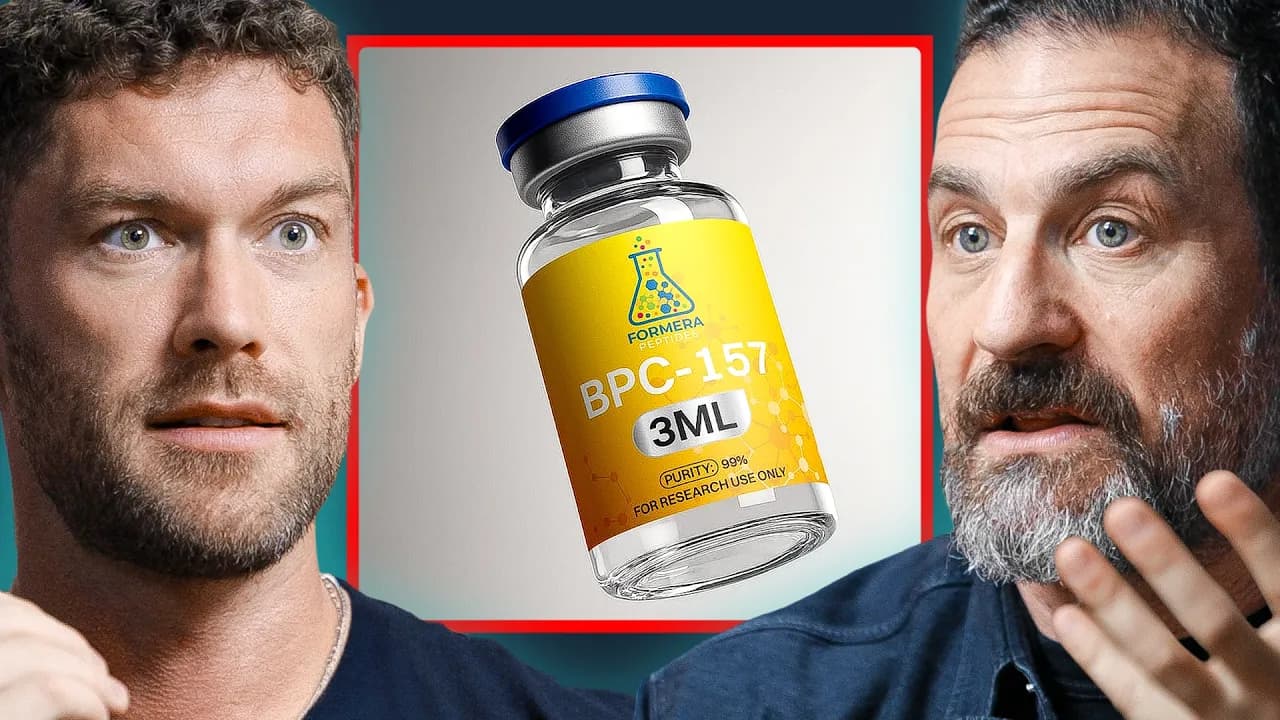
Huberman described his most challenging therapeutic work as combining MDMA followed a couple hours later by high-dose psilocybin, which he only did twice. This combination eliminated the typical post-MDMA drop that usually occurs, and he experienced some of his best workouts and work weeks following these sessions. The combination proved remarkable for avoiding the typical post-MDMA depression.
During MDMA sessions, he noted the danger of being pulled into force fields of thinking where everything feels profoundly important when it may not be after the session ends, underscoring the necessity of trained guides.
Psilocybin alone was described as a very dark and harrowing experience with significant purging and vomiting occurring about halfway through. Doses ranged from 4 to 5 grams of dried psilocybin mushrooms. The experience was terrifying without support, but the MDMA combination provided what felt like having a supportive friend present, enabling him to lean into the hardest work rather than avoid it.
The combination session led to confronting the problem of things that didn't happen in his life rather than focusing solely on what did happen. This included both self-inflicted and non-self-inflicted difficult experiences from childhood and throughout life. The session involved a brutally hard voyage through recognizing lacks and absences that he was previously in no position to address, which standard therapy had never explored.
The therapeutic guide prevented avoidance strategies, such as listening to music instead of doing the work, emphasizing that the process required active engagement with difficult material.
The session outcome was described as beautiful, providing clarity about what he could now create in his life and specific directions to aim for. The insights remained stable well over a year later without requiring additional substances. This led to concrete steps in steering his life in desired directions, with the recognition that practice would be needed to develop these new capabilities.
Huberman emphasized that these medicines are immensely powerful and precarious, requiring proper support. He was advised during sessions about appropriate boundaries and when not to pursue certain directions. He strongly stated these substances should not be used recreationally, particularly for people like himself, and noted that young people and certain individuals should not take them.
The core insight was that neuroplasticity is the goal, directed toward issues that often cannot be identified through standard therapy. The combination approach revealed both what needed work and allowed real-time processing, resulting in a clear mission for daily life that proved very effective. This challenged the typical single-compound view, suggesting that in specific cases, combined approaches may be the appropriate tool.
Keep Tim Ferriss in your library
Save the videos and channels worth coming back to, and find them again in one place.