Why Exercise Slows Aging | Lifespan with Dr. David Sinclair - S2, Ep. 6
In a Nutshell
Exercise is one of the strongest predictors of longevity—cardiorespiratory fitness (VO2 max) outperforms smoking, diabetes, and hypertension as a mortality predictor. Movement shifts the body from "abundance mode" (storage, inflammation, aging) into "adversity mode" (repair via AMPK, sirtuins, autophagy), reversing biological aging at the molecular level. The sweet spot is 2.5–4.5 hours of moderate activity weekly; the biggest gains come from moving from nothing to something, with consistency and variety (aerobic + strength + power) mattering more than intensity.
These notes were generated by AI and may contain inaccuracies.
Low fitness predicted mortality more strongly than smoking, diabetes, hypertension. Those in the lowest fitness percentiles have four to fivefold higher risk of death compared to those in the highest percentiles. Humans evolved to move. Our biology expects it. When movement disappears, systems drift out of calibration. We age more rapidly. The problem is exercise does not fully offset prolonged sitting. Moving from nothing to just something delivers a large return on investment.
Welcome to Lifespan, a show where we discuss the cutting-edge science of aging and how to live healthier at any stage of life. David Sinclair is a scientist and professor working on understanding why we age and discovering new ways to slow and even reverse the aging process. On this show, he shares an insider's look at the latest from his lab, the field, and what's just around the corner.
This episode, part two of physical activity and exercise, explores exactly why physical activity is so good for us. Marissa, the chief of staff, demonstrated the sitting rising test properly off camera. The team had a competition to see who was best at it. Sometimes it just takes reading a new powerful paper on the science of exercise to nudge getting off the butt even more.
The health and education platform at lifespan.com is now live. The mission is to help you and your loved ones live your longest, healthiest life. When you join at lifespan.com, you get early access to lifespan episodes, a newsletter, updates about clinical trials, comprehensive show notes, and Lifespan magazine, the world's first longevity magazine written by scientists. Also included are Ask Me Anything Sessions, a book miniseries and movie club, behind-the-scenes content, and much more.
Lifespan is proud to support the Lifespan Foundation, a nonprofit whose mission is to fund the careers of young researchers and to support the most exciting longevity research.
Today we're going to talk about physical activity. We're going to look at exercise from a perspective you might not have before and dig deeply into the science, discussing what's real and what's not. Exercise in its various forms is one of the most reliable ways to live longer and delay most diseases, including disability and frailty in older ages.
Cardiorespiratory fitness, which is your body's ability to deliver oxygen to your muscles and keep going, is one of the strongest predictors that we have of long-term health and survival. One of the most reliable ways to maintain cardiorespiratory fitness is to be consistent with intentional movement. Exercise also preserves muscle mass and of course strength, endurance, and even power. These are qualities that naturally decline with age, especially over the age of 40, unless we actively counteract them. Stronger muscles help you stay independent, maintain balance, and avoid frailty decades later.
Movement influences nearly every biological system. With sensible regular activity, you think more clearly, feel better, regulate your metabolism more effectively, and support your immune system. Metrics like VO2 max track your biological age more accurately than even years on your birth certificate.
Under the surface, exercise triggers molecular pathways that govern how long and how well we live. When we're inactive, sit around all day, or just overeat, our biology shifts into what has been called abundance mode. This is when repair pathways such as AMPK and the sirtuins shut down and go quiet relative to growth mode. Exercise reverses that by putting our bodies in what is called adversity mode. It activates ancient survival circuits like AMPK and the sirtuins on the repair side and mTOR to maintain and build muscle when appropriately balanced.
Exercise is hormesis in action and hormesis is essentially what doesn't kill you makes you stronger and longer lived. It's a controlled biological stress that tells our cells and our tissues to prepare, repair, and be more resilient.
The story of why physical activity is so good for us begins more than 2 million years ago. We didn't evolve sitting at desks or staring at screens. We evolved to move constantly. Our ancestors walked, climbed, ran, carried babies, carried food, tracked animals, and explored daily because movement meant survival. With two legs instead of four, we were never the fastest hunters on the plains of the Serengeti. But we were the fittest.
Evidence from modern persistence hunters like the San hunters in the Kalahari give us a good idea of what our ancestors lived like. There was 2 to 6 hours of continuous hunting every day. There was alternating jogging, fast walking, and often during the heat of the day, they were out when prey were overheating the fastest. Early humans could cover 10 to 15 kilometers per day, not for fitness goals, but because survival demanded it. We could outlast almost anything.
This is where persistence hunting or the endurance pursuit hypothesis comes in. The idea is simple. Humans could chase prey for hours in the heat until the prey overheated. A healthy antelope can sprint far faster than a human, but it cannot sweat efficiently. Eventually, its core temperature rises to lethal levels.
We have sweat-based thermoregulation with millions of eccrine sweat glands, and other species just pant. We lost our hair to enhance the cooling of the body. We have relatively long legs compared to other primates. Our spring-like Achilles tendon stores and releases elastic energy. The nuchal ligament helps steady the head during motion. Even inside our cells, we're different.
The mitochondria support long duration activity. Movement upregulates genes like PGC-1 alpha, which stimulates mitochondrial biogenesis. Variants of the ACTN3 gene influence fast versus slow twitch muscle performance. Regular physical activity boosts BDNF supporting neural health and plasticity.
Early humans lost the function of the CMA gene about 2 to 3 million years ago and this is likely linked to increased endurance tolerance compared to other mammals. This gene change removes a sugar molecule called Neu5Gc from our cells on the outside and this may have increased oxygen use and fatigue resistance relative to other primates. The same mutation has been linked in some studies to enhanced inflammation and cancer risk when consuming red meat during immune reactions to this Neu5Gc which is absent in humans.
Just recently in July 2025, there was a study by Maca and colleagues published in Nature Communications and they found that a gene variant inherited from Neanderthals affects the AMPD1 enzyme and this helps muscles recycle energy during activity. The title of the paper is "Muscle AMP deaminase activity was lower in Neanderthals than in modern humans." Modern humans who carry this Neanderthal version have lower enzyme activity, meaning their muscle cells are less efficient at regenerating energy during sustained activity or intense exertion.
This variant is found in a small percentage of people outside Africa in about 8% of Europeans and about 2% of South Asians and it's absent in Africans and East Asians. For those with an active lifestyle, this variant of the gene may have little downside. But in a sedentary environment, if you don't exercise enough, this variant may subtly reduce exercise performance and energy metabolism, making it harder for the carriers of this variant to benefit as much from physical activity as people without it.
This brings us to what's known as the mismatch theory. The idea that we evolved for regular varied movement spread across the day, not structured workouts, but far more physical activity than modern life typically demands. Walking, lifting, climbing, sprinting, carrying, playing. These weren't hobbies. They were daily survival tasks. At the same time, evolution also wired us to conserve energy. Food was really unpredictable. So, our biology learned to favor rest whenever possible. That impulse kept our ancestors alive, but it's also why exercise can feel unnatural.
We weren't designed to jog on treadmills while staring at walls. We were designed to move with purpose within a team, to hunt, to forage, play, and explore. Fast forward to the modern world. That ancient signal to conserve energy is still there, but the environmental pressure to move is gone. Instead, we have chairs and cars and screens, elevators, delivery apps. Even our suitcases have wheels on them. The result is a profound mismatch between what our genes expect and now how we live.
Hunter gatherers only sit around for about 3 to 4 hours a day. Contrast that with today's world. The typical US adult sits for up to 9.5 hours a day, either sitting down or lying down. For office workers, it's even worse, 10 to 12 hours a day. This includes time spent working at a desk, driving, watching TV, or streaming, and using our phones and computers. This doesn't even include sleep. Rates of cardiometabolic disease rise sharply as movement declines, particularly when modern diets are layered on top.
Modern life has pushed us out of sync with our biology and our genetics. The solution isn't fighting our biology, it's restoring it. When we choose to move, we reactivate systems that evolved to keep us resilient. Exercise is medicine. Most drugs target one pathway or one symptom. Physical activity works everywhere. It improves the health of our heart, muscle, metabolism, immune system, and even our brain.
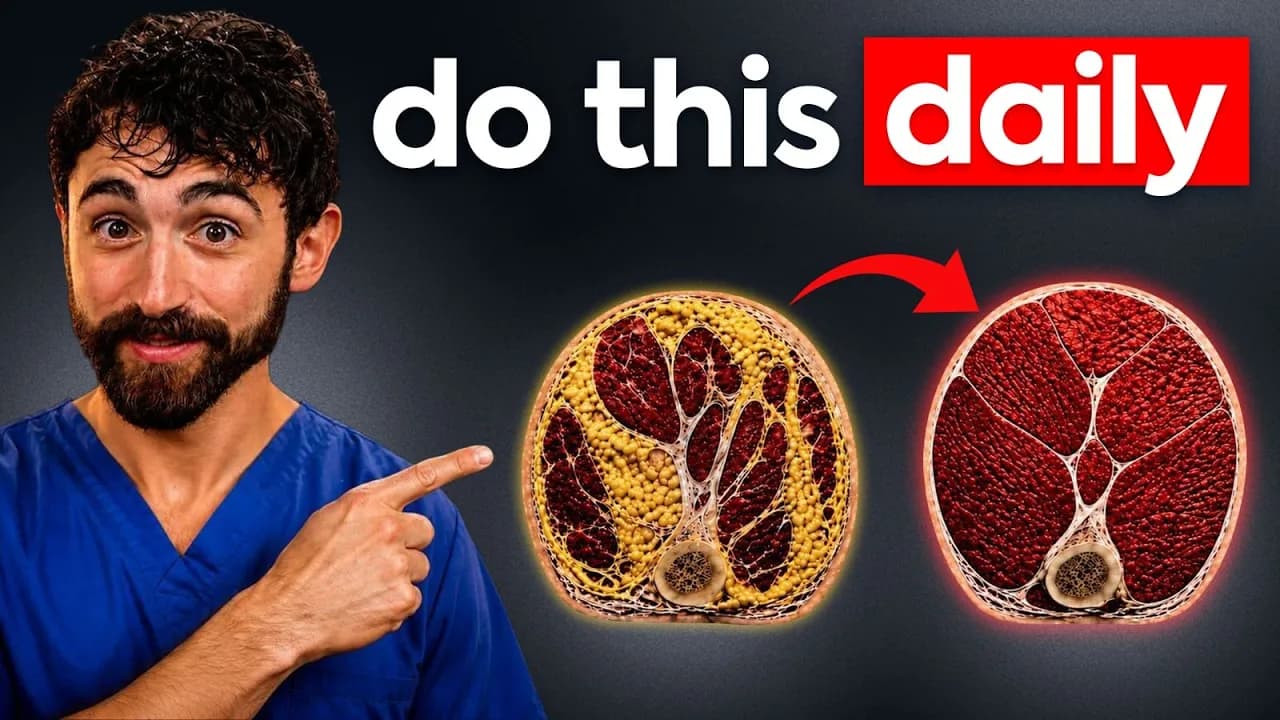
When we stop moving, the body shifts into storage mode and what we also call abundance mode. The excess nutrients are shunted into fat and repair pathways come down. Inflammation goes up and physical capacity just erodes over time. Importantly, even small amounts of movement and activity reverse that signal, redirecting energy towards maintenance, repair, and longevity. Exercise provides a controlled transient biological stress that tells cells to adapt. Over time, our body becomes harder to break.
Movement was never meant to be solitary. We humans evolved to move together. Whether it was when we were walking, hunting, gathering, or even dancing, physical activity strengthens not only our bodies but our social bonds. Moving with others enhances our adherence, motivation, and psychological well-being.
There's also the active grandparent hypothesis. In ancestral societies, physically capable older adults who could move, teach, carry, and protect likely improved the survival of all their offspring and the multiple generations after them. Staying active later in life may have conferred evolutionary advantages that extended well beyond the individual.
For years, the dominant idea was that total daily energy expenditure is capped and that if you burn more calories exercising, the body then compensates by spending less energy elsewhere. The recommendation was you don't need to overdo it because it will be a waste of time. Some of the strongest early evidence cited was from studies of the Hadza people, a modern hunter gatherer population in Tanzania. Despite walking long distances daily and living highly active lives, their total energy expenditure once adjusted for their body size was like that of people of industrialized countries.
The interpretation was that humans may reallocate energy away from other physiological processes such as immune activity, reproduction, background inflammation to keep total energy burn within a relatively narrow range. But this view is changing. More recent research suggests that humans have a higher metabolic ceiling than other primates. What this means is we can actually increase our energy expenditure through activity without impacting these other hard constraints or even affecting other systems that we need to survive.
A 2025 PNAS study titled "Physical activity is directly associated with total energy expenditure without evidence of constraint or compensation" found that across typical activity ranges people who moved more truly burn more. Resting metabolic rate was not suppressed and participants did not compensate by moving less the rest of the day. This supports a more additive view of energy expenditure. The authors suggested that earlier findings of strong compensation were probably influenced by less precise measurements.
This does not mean that exercise guarantees weight loss. It does mean that you should combine exercise with precise control over how much you're eating. Exercise thermogenesis, the calories you burn through movement and exercise, typically accounts for only 5 to 15% of your daily energy expenditure for most people. There are actual practical limits to how much intensity and volume can be sustained. As fitness improves, efficiency increases, meaning you burn fewer calories doing the same work.
After intense exercise, your appetite is actually influenced by a number of hormones and metabolites. Initially, you won't feel hungry, but later on, you might find that you get really hungry. There's a special exercise-induced metabolite called Lac-Phe which is N-lactoyl-phenylalanine. This was very recently discovered as a hunger suppressing molecule that gets induced by exercise, first published in June 2022. It's produced when lactate and the amino acid phenylalanine combine during vigorous workouts. This combination is what suppresses your appetite.
Ketone IQ contains R-1,3-butanediol, a naturally occurring molecule that your liver converts into BHB and it happens in minutes instead of the day or two it normally takes through fasting. One of the studies on BHB was by Steven Krehen and colleagues. Their work in 2016 showed that while the aging brain loses its ability to use glucose efficiently, its ability to use ketones remains largely intact. Quinonius and Lemon published a randomized trial in 2022 in the journal Nutrients showing that ketones help preserve reaction accuracy during prolonged mentally demanding exercise. Another study in that same year found that patients with severe COVID-19 had impaired ketogenesis. In their experiments, adding BHB improved both the CD4 and CD8 T-cell functions.
After vigorous exercise, you've used up stored fuel like glycogen in your muscles, and your metabolism is working to recover and restore the balance. As a result, your brain and your body begin to trigger signals that say, "We need food to refill those reserves and support recovery." One of the key players is ghrelin, the classic hunger hormone that rises when energy stores are low. Meanwhile, hormones that normally make you feel full, like peptide YY or PYY and GLP-1, are temporarily altered or returned to baseline once the immediate post exercise period passes, reducing their appetite suppressing effect.
Fitness is multi-dimensional. We need endurance, strength, speed, balance, mobility, coordination. Each of these contributes to how well you function across your lifespan. Cardiorespiratory endurance reflects how well your heart, lungs, blood vessels, and mitochondria work together. Muscular endurance determines how long you can sustain effort. Strength is the ability to generate force, and power is how quickly that force can be expressed. Balance, stability, and coordination protect against falls, while mobility and flexibility preserve range of motion and reduce injury risk.
There's no single best type of exercise for longevity. Just as with nutrition, variety and consistency matter. A balanced movement diet that you enjoy and can sustain for decades beats any optimal program that you'll just abandon after 2 weeks. Aerobic exercise strengthens the cardiovascular system, improves insulin sensitivity, and supports mitochondrial health. Resistance training preserves muscle mass, bone density, and metabolic function. Both of these types of exercise are non-negotiables for healthy aging and a vigorous life over 80.
Power training deserves special attention. We lose power, the ability to generate force quickly, earlier and faster than we lose strength. This loss contributes to falls, frailty, and loss of independence later in life. Appropriately scaled explosive movements help preserve this capacity. Stability training such as standing on a platform and maintaining your balance improves neuromuscular control and reduces fall risk later in life. Coordination training sharpens motor patterns and maintains brain-body integration. Flexibility and mobility work together to improve joint health and movement efficiency.
A Brazilian study using the sitting rising test or SRT, which is basically you sit cross-legged and you have to stand up in one movement, showed that people who could do this without using their hands or getting on their knees or even a chair had substantially higher survival rates. First published scientifically in the European Journal of Preventive Cardiology, over 2,000 adults aged 51 to 80 were assessed by the SRT. Over a follow-up period of about 6 years, lower SRT scores out of 10 were strongly associated with higher cause mortality, and a one point higher SRT score was linked with about a 21% reduction in mortality risk. Even after adjusting for age, sex, and BMI, a larger follow-up study published in 2025 in the same journal expanded these findings in a cohort of over 4,000 adults.
The takeaway is simple. Real world function predicts your long-term survival. Fitness is not just about how fast you can run, how long you can run, how good you look. It's about your capacity, your ability to move through life for much longer. People often ask what type of exercise they should prioritize. The honest answer is build variety first, develop baseline competence across endurance, strength, power, balance, and mobility. But consistency matters much more than intensity. Enjoyment also matters. The goal is not perfection. It's about participation repeated over years.
You can improve all of these aspects of fitness from certain sports. There are two large studies that have found that racket sports, especially tennis, are associated with some of the longest lives. It all started with a 2016 study in the British Journal of Sports Medicine which followed more than 80,000 adults in the UK and it found that people who played racket sports like tennis, badminton, and squash had a 47% lower risk of dying from any cause. Compared with activities like running, cycling, swimming, soccer, even aerobics, these racket sports came out on top.
Then in 2018, a long-term study published in Mayo Clinic Proceedings tracked over 8 and a half
A 2018 long-term study published in Mayo Clinic Proceedings tracked over 8,500 adults in Copenhagen for nearly 25 years. Playing tennis was associated with almost a 10-year increase in life expectancy compared with being sedentary. Other activities also provided benefits but none matched tennis: badminton added about six years, soccer nearly five years, cycling and swimming 3 to 4 years, and gym-based cardio closer to 1 to 2 years. Cardiologist Dr. James O'Keefe, one of the study's authors, called tennis the world's healthiest sport, arguing that the data for tennis is stronger than for any other sport.
Tennis is played by people generally with greater income, which is known to track with longevity. Basketball was not even in the list in these two studies.
A follow-up study from the same Copenhagen group followed nearly 9,000 healthy adults for over 25 years and examined how the amount of weekly sports activity related to longevity. The study found a clear U-shaped relationship between exercise and mortality. People who did no sport had significantly higher risk of death. Those doing very high volumes of sport, more than 10 hours a week, also had higher risk of death compared to people who exercised moderately. The lowest risk of dying from both cardio and all causes was seen in people who exercised about 2.5 to 4.5 hours per week.
The sweet spot was regular moderate participation in sports, not extreme training or endurance obsession. This pattern held up even after adjusting for age, sex, smoking, alcohol, body weight, blood pressure, cholesterol, and other factors. It also persisted when the first 5 years of follow-up were excluded, suggesting the results were not simply due to pre-existing illnesses. Exercise is powerful medicine, but like most medicines, dose matters. Pushing the body relentlessly may blunt some of the longevity benefits associated with physical activity. For long-term health and longevity, consistency beats extremes, and recovery is just as important as movement.
Current guidelines recommend at least 150 minutes per week of moderate intensity aerobic activity or 75 minutes of vigorous activity, or a combination of the two spread across the entire week. Hitting this minimum is associated with roughly a 14% reduction in all-cause mortality. Benefits begin well below that threshold. Just 75 minutes per week of moderate activity, which is only about 11 minutes per day, is associated with a meaningful reduction in the risk of premature death and cardiovascular disease. Moving from nothing to just something delivers a large return on investment. Large cohort studies consistently show a dose-response relationship. More activity generally confers more benefit but only up to a point. The largest gains are between 5 and 10 hours per week of moderate activity.
Analyses of national data sets with millions of people show that those who accumulate around 3 hours of activity per week have the lowest risk of accelerated biological aging, with diminishing returns beyond that range. There is no single optimal schedule. Adherence beats optimization.
Exercise does not fully offset prolonged sitting. Regular movement throughout the day, standing up, walking, and any brief activity breaks add independent benefits beyond structured workouts. Recommendations include getting a standing desk that can be lifted up and down during the day, and a small treadmill for home use.
After decades of studying aging, it is impossible to consistently improve anything that is not measured. A Wing body scan scale measures body fat, muscle mass, visceral fat, and includes an FDA-cleared ECG. Wings products have been used for well over 10 years. The Wings silver scan watch Nova continuously tracks heart rate, sleep, activity, temperature trends, and blood oxygen. Wings also makes a blood pressure monitor, sleep analyzer, and smart thermometer. Longevity involves measuring what matters, making small improvements, and letting those improvements compound over the years. Visit wings.com/lifespan and use the code lifespan to receive 10% off.
For children and adolescence, at least 1 hour per day of moderate to vigorous activity supports musculoskeletal development, metabolic health, and long-term habits. For older adults, it is never too late to start. Even people in their 80s and beyond show improvements in aerobic capacity and strength even after short training interventions. Biology responds to stimulus at any age. The central message is to do enough to matter and just keep doing it. Longevity is built through accumulation. Start where you are. Progress gradually. Stay consistent.
Cardiorespiratory fitness is the strongest predictor of longevity. It is not body weight, cholesterol, or blood pressure. Epigenetic clocks that incorporate fitness metrics show younger biological age in individuals with greater fitness. Cardiorespiratory fitness reflects how well the heart, lungs, blood vessels, and muscles work together to deliver and use oxygen during sustained effort. It integrates multiple systems into a single functional outcome.
The gold standard metric for cardiorespiratory fitness is VO2 max, the maximum amount of oxygen the body can use during intense exercise. It is a direct window into whole body physiological capacity. VO2 max is grounded in the Fick principle: cardiac output multiplied by the arteriovenous oxygen difference. Without regular training, VO2 max declines roughly 10% per decade starting in early adulthood. By age 70, the decline accelerates. This loss reflects reductions in maximum heart rate, stroke volume, and peripheral oxygen extraction. With consistent training, that decline can be cut roughly in half. Fitness does not eliminate aging, but it can meaningfully slow this functional decline.
A 2018 study published in the Journal of the American Medical Association involved over 120,000 people and looked at their cardiorespiratory fitness using treadmill tests as a proxy for VO2 max. The fitter a person is, the lower their risk of death, with no upper limit where the benefit disappeared. Low fitness predicted mortality more strongly than smoking, diabetes, or hypertension. Improvements do not require elite performance. Just moving from low to moderate fitness produces the largest survival gains. Fitness also predicts outcomes late in life. In adults over 80, those with preserved aerobic capacity have dramatically lower mortality risk than their less fit peers. Fitness is not a snapshot of what was done last week. It is an accumulated record of how consistently physiology has been challenged over years. VO2 max is earned.
VO2 max is typically measured with a face mask or mouthpiece to directly measure oxygen consumption using indirect calorimetry. Laboratory VO2 max tests typically cost a few hundred dollars and are not appropriate for everyone, especially those with underlying cardiovascular disease unless medically supervised. Wearables can estimate VO2 max using heart rate, pace, age, sex, and body weight. These estimates can be useful for tracking trends over time, but they are not precise measures of true maximal oxygen uptake. Other protocols include the six-minute walk, the 12-minute Cooper movement test, and step tests, which estimate aerobic capacity without requiring maximal exhaustion. These methods trade precision for accessibility.
The Cooper test measures how far a person can run or walk in 12 minutes. Kenneth Cooper coined the term aerobics in the 1960s. His book Aerobics helped move exercise from something just athletes did to something medicine can prescribe. Cooper is now 94.
Prediction equations based on age, resting heart rate, body composition, and activity habits can provide a reasonable approximation without using a device. What matters most is not the exact number, but the trend. Improving fitness over time, even modestly, is strongly associated with better health outcomes.
Fitness interacts with strength. Studies comparing grip strength and cardiorespiratory fitness show consistently that higher aerobic fitness lowers mortality risk across all strength categories. Strength matters, but fitness often carries more weight. Strength independently predicts survival and functional independence. The greatest protection comes from combining aerobic fitness and muscular strength.
Beyond VO2 max, several simple heart-based measures can reveal a great deal about health and aging. They are easy to track, inexpensive, and strongly predictive.
Resting heart rate is the number of beats per minute when fully at rest. For most adults, it is between 60 to 80 beats a minute, but physically fit individuals often sit lower, sometimes in the 40s or 50s. A lower resting heart rate generally reflects higher stroke volume of the heart, better capillary health, and better autonomic balance. A higher resting heart rate is independently associated with higher risk of all-cause mortality. For every 10 beat per minute increase, it is associated with roughly a 15 to 20% increase in risk.
Those who do not exercise and have a low resting heart rate tend to live longer. Some people have a naturally slow resting heart rate due to high vagal tone. The number of heartbeats does not determine how long a person lives. A rat lives about 3 to 4 years, while a bat with roughly the same kind of heartbeat can live 30 years. Species that have slower heart rates do live longer, but not because of the heartbeats. Habitual exercise lowers average heart rate despite transient increases during workouts. Fit individuals accumulate fewer total heartbeats per day than sedentary people, which is a sign of greater cardiovascular efficiency.
Heart rate recovery measures how quickly the heart rate drops after exercise. It reflects parasympathetic reactivation. A drop of 20 beats per minute or more in the first minute after exercise is generally considered healthy. Slower recovery is associated with higher risk of cardiovascular events and mortality. Heart rate recovery gets worse with overtraining, illness, or chronic stress. It functions as both a fitness metric and an early warning signal.
Heart rate variability (HRV) is one of the better measures of cardiovascular fitness. A healthy heart shows quite a lot of variation in the time between each heartbeat. When HRV drops below normal baseline, the heart behaves more like a metronome, meaning the fight-or-flight system is taking over. The body is under stress and has less capacity to adapt. This can result from psychological stress, poor sleep, illness, fatigue, or a heavy training load. HRV can be useful as a check engine light for recovery. It can be measured with most wearables. What matters most is the trend. A sustained drop of around 10 to 20% below baseline, especially alongside a rising resting heart rate and worsening sleep, is a signal that the body may need more recovery.
There are two main ways to measure HRV: RMSSD (root mean square of successive differences) and SDNN (standard deviation of normal to normal intervals). RMSSD is the gold standard marker of parasympathetic recovery and is used by Whoop.
Whoop continuously tracks sleep, resting heart rate, heart rate variability, respiratory rate, daily strain and recovery, and other aspects of health. In 2022, Miller and colleagues published a study in the journal Sensors comparing six leading wearable devices against clinical grade measurements of sleep, heart rate, and heart rate variability. Whoop was among the most accurate for measuring overnight heart rate and HRV.
Typical adult values are between 20 and 50 milliseconds. For optimal health and longevity, higher HRV relative to one's own baseline is what matters most. People who are physically fit, sleep well, manage stress, and recover properly tend to sit above average for their age, between 40 and 70 milliseconds or higher. Low HRV is associated with increased risk of cardiovascular disease, metabolic dysfunction, cognitive decline, and mortality. HRV tends to decline with age, but it can be modified. Exercising, sleeping well, and managing stress can raise HRV. Alcohol, poor sleep, illness, stress, and overtraining can reduce HRV. Trends matter more than isolated readings.
Resistance training matters independently of aerobic fitness. Just one to two strength training sessions per week are associated with much lower mortality risk. Going far beyond that does not appear to add substantial longevity benefits at the population level. Strength training includes squats or sit to stands, deadlifts, hip hinges, push-ups or bench presses, rows or pull downs. What matters is progressive resistance. Working the muscles against the load done consistently, just 30 to 60 minutes per session, even once or twice a week, is enough to preserve muscle, bone, insulin sensitivity, and independence. Muscle mass and strength decline with age, a process known as sarcopenia. This loss accelerates after midlife and contributes to frailty, loss of independence, metabolic dysfunction, and increased mortality.
Grip strength is one of the simplest ways to assess muscular health. It is an imperfect proxy, but remarkably predictive. Lower grip strength is consistently associated with higher risk of death, cardiovascular disease, disability, and cognitive decline. Grip strength typically peaks in early adulthood and declines steadily thereafter. The rate of decline accelerates after about age 70, particularly in the absence of resistance training. Every additional kilogram of grip strength is associated with a meaningful reduction in mortality risk. The hand is a bellwether representing overall fitness.
Reasons for getting weaker include not just muscle shrinkage, but also motor neurons firing less and making less contact with the muscles. Motor neurons that contact the muscle retract. Hormonal changes include declines in growth hormone and testosterone, both important for maintaining muscle mass. Muscle power, the ability to generate force quickly, declines earlier and faster than strength. This loss strongly predicts falls, fractures, and loss of functional independence. Starting around age 40, 0.5 to 1% of muscle mass and strength is lost per year. After 40, 2 to 4% of muscle power is lost per year due to motor neuron loss and denervation, as well as preferential atrophy of fast twitch or type two fibers. Catching oneself when tripping or standing up from the floor reacting to a sudden loss of balance depends much more on power than on maximal strength. Muscle power may be a stronger predictor of mortality than muscle strength alone. Preserving power is central to healthy aging.
Training only for strength while ignoring power misses a major piece of the healthy aging puzzle. Muscle functions as an endocrine organ, releasing myokines during contraction that influence metabolism, inflammation, brain health, and immune function.
The misconception that physical activity matters only in a narrow window early in life is unsupported by evidence. Muscle loss during aging is not inevitable and is often simply disuse. Muscle stays young if it is used. While regular movement early in life builds capacity and establishes habits, starting later—even at 90 and 100—produces meaningful gains. Biology remains responsive to stimuli well into advanced ages.
Researchers studying sedentary octogenarians found large improvements in aerobic capacity and workload tolerance after only a few weeks of training. Gains in older people generally fade faster than in younger individuals if training stops, reinforcing that consistency matters more than intensity.
Exercise improves resilience during illness and recovery. Older adults who remain active recover faster from hospitalization, surgery, and acute illnesses than their sedentary peers.
A 2025 study published in Aging Cell led by Abel Plaza Fido with collaborators from UC Irvine, Copenhagen University Hospital, and Lund University examined people aged 100 to 104. After just a brief bout of physical activity, centenarians showed a measurable drop in inflammatory proteins and activation of protective immune and stress response pathways that were largely silent at rest. These were not lifelong athletes, yet their cells still responded to movement.
There is no expiration date on adaptation. The body does not need perfection—it needs stimulus. Start where you are, progress gradually, and repeat.
Exercise influences nearly every hallmark of aging through coordinated molecular and cellular responses. Regular movement increases mitochondrial number and efficiency. Pathways involving AMP kinase, PGC-1 alpha, and SIRT1 become activated, improving energy production and metabolic flexibility.
Exercise promotes autophagy, the cellular recycling system that clears damaged proteins. Single bouts of resistance exercise transiently suppress autophagy to prioritize muscle growth, but repeated training increases baseline autophagic capacity over time. Endurance exercise appears to activate autophagy across multiple tissues, though long-term human data are still emerging.
Exercise mobilizes stem cells, improves proteostasis (maintenance of proteins), and enhances stress response pathways that maintain tissue and function with age.
At the epigenetic level, physical activity reshapes DNA methylation, histone modifications, and non-coding RNA profiles in a direction opposite to age-related drift. Trained tissues consistently show a more youthful molecular signature. These effects are observed across muscle, blood, brain, liver, and adipose tissue.
Epigenetic clocks estimate biological age by measuring DNA methylation patterns. Exercise actively pushes biology in the opposite direction of aging. Higher physical activity and cardiorespiratory fitness are associated with younger epigenetic ages across multiple clocks, including GrimAge, PhenoAge, and the DunedinPoAm clock.
A 2023 study in Aging Cell examining over 3,500 adults in Germany showed that higher physical activity, including more steps and greater energy expenditure, is associated with lower GrimAge and PhenoAge rates of change. The association between movement and clocks is dose-dependent, with moderate to vigorous activity showing stronger links to slower epigenetic aging than light activity alone.
Steve Horvath co-authored studies showing that higher physical fitness is associated with younger biological age based on DNAmFitAge, which incorporates V2 max, walking speed, and grip strength. Highly active individuals can be between 1.5 and 2 years biologically younger than sedentary peers. Longitudinal studies show that individuals who remain active over years exhibit slower biological age acceleration than those who become sedentary.
A 2024 study of over 400 Hungarian athletes found that athletes had lower rates of biological aging. US Olympians live about 5.1 years longer than the general population. Hungarian Olympic champions had slower epigenetic aging rates compared to non-champions.
A 2023 meta-analysis of over 3,000 human skeletal muscle samples found that higher aerobic fitness was linked to younger epigenetic and gene regulation profiles. Exercise training shifts muscle toward a more youthful molecular state, while muscle disuse ages the cells.
Meta-analyses show consistent anti-inflammatory adaptation with regular training. Acute exercise increases inflammatory signals, but chronic training lowers baseline inflammation and reduces age-related inflammaging. Acute exercise mobilizes immune cells, particularly natural killer cells and cytotoxic T cells. A 2025 study of older adults showed that long-term endurance training led to an increase in natural killer cell activity. Moderate consistent training improves immune readiness, while excessive training without adequate recovery can transiently impair certain immune parameters.
Physical activity is one of the most powerful interventions for the brain. Regular movement improves attention, processing speed, and executive function across the lifespan. Exercise increases brain-derived neurotrophic factor (BDNF), which supports synaptic plasticity, neuronal survival, and learning. Higher BDNF is consistently associated with better cognitive performance.
In rodents, exercise stimulates hippocampal neurogenesis. In humans, structural and functional imaging studies support improved hippocampal integrity with regular aerobic activity. Physical activity improves cerebral blood flow, enhancing oxygen and nutrient delivery to brain tissue. This vascular contribution likely underpins exercise's protective effect against cognitive decline.
Exercise reduces symptoms of depression and anxiety and is comparable to first-line therapeutics for mild to moderate depression. Even moderate exercise and consistent activity produce meaningful improvements in mood. A 2019 prospective cohort study following older adults for over a decade found that higher physical activity levels were associated with significantly lower dementia risk even after accounting for genetics and vascular risk. Exercise is associated with lower circulating neurodegeneration markers including neurofilament light chain.
Regular movement improves sleep quality and circadian regulation, which supports memory consolidation and emotional regulation.
Exercise improves insulin sensitivity by increasing glucose uptake into muscle through insulin-dependent and insulin-independent pathways. GLUT4 transporters move to the cell surface to extract glucose from the bloodstream, with contracting muscle acting as a powerful glucose sink. A single bout of exercise improves glucose control for hours, while repeated bouts produce durable improvements in insulin sensitivity and glycemic regulation.
Physical activity reduces visceral fat and improves lipid metabolism by raising HDL cholesterol, lowering triglycerides, and improving lipid particle size and function, contributing to reduced atherosclerotic risk. Exercise reduces the risk of metabolic-associated fatty liver disease and improves hepatic insulin sensitivity. Many metabolic benefits arise independent of weight change.
A 2023 randomized clinical trial published in Scientific Reports comparing aerobic and resistance training over 16 weeks in middle-aged sedentary women found improvements in skin elasticity and upper structure in both groups. Resistance training uniquely increased dermal thickness and dermal biglycan. Regular exercise is associated with increased cutaneous blood flow. Tendons and ligaments strengthen with exercise, supporting joint integrity and reducing injury risk. Disuse reduces collagen turnover, increases stiffness, and raises injury risk.
Approximately 30% of adults after age 40 have some form of rotator cuff tear, with rates rising substantially with increasing age.
Humans evolved to move. Biology expects movement. When movement disappears, systems drift out of calibration and aging accelerates. When movement returns, many systems realign. Physical activity is a systems-level signal engaging cardiovascular function, skeletal muscle, immune function, metabolism, brain health, skin, and connective tissue. Exercise slows functional decline, preserves capacity, and compresses morbidity—more years spent capable, independent, and engaged.
The evidence is strongest for cardiorespiratory fitness, muscular strength, and power. The largest gains occur when people move from inactivity to modest, consistent movement. Adaptation persists into advanced age. Movement and exercise are foundational for healthy aging and longevity, remaining available to nearly everybody every day.
Keep David Sinclair in your library
Save the videos and channels worth coming back to, and find them again in one place.