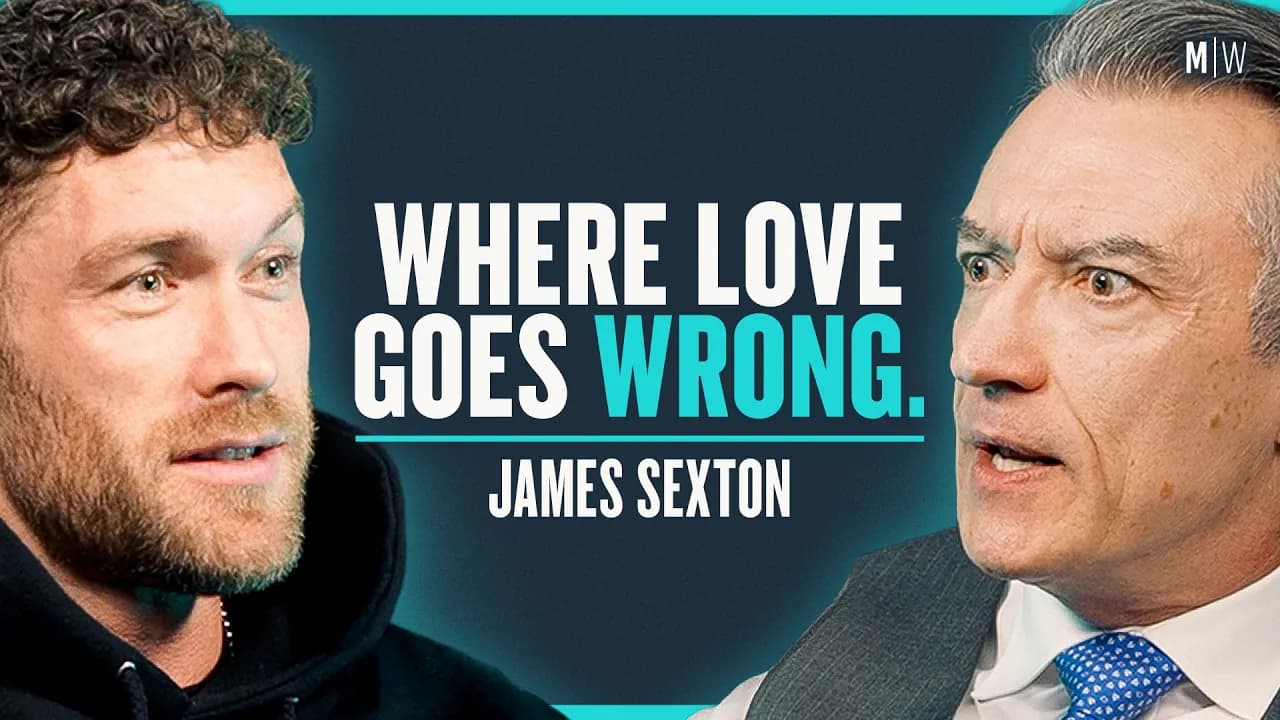
World No.1 Divorce Lawyer: This Is A Sign You’ll Divorce In 10 Years!
These notes were generated by AI and may contain inaccuracies.
Once a week, tell your partner three things you love about them and three things they could have done better. Some people resist this because their partner might cringe, but the bigger question is what's uncomfortable about it. Dave can't name three things he likes about you? That's not a big ask. High-achieving clients like athletes and entrepreneurs struggle with this too because people fear poking at what you love about me or what I'm getting wrong.
James shares a personal story: his mom died 10 years ago after a long battle with cancer. There was much unsaid between them, and he wishes he could apologize for things he got wrong. People avoid temporary discomfort. Love and commitment require courage to give someone the opportunity to hurt you.
Your marriage will end. It ends in death or divorce. For two people at the end of their relationship to say, "This person helped me become the most authentic version of myself." That's the greatest gift you could give to another human being.
James just proposed to his fiancée, as shown in a photo. He seeks advice on not messing it up. The number one reason a woman like her would divorce a great provider and protector is that it's not obvious to everybody.
Approaching a significant subscriber milestone; 69% of listeners haven't subscribed. Hitting subscribe helps the show improve and allows team celebrations.
James is thrilled about the engagement because Steven loves deeply and found his favorite person. > "You're my favorite person." And that person says it back and means it.
Every marriage ends in death or divorce. I hope yours ends in death. When it ends, she says you helped her become the most authentic version of herself and you're still her favorite person.
Even knowing the risks and odds, pursuing this is beautiful.
Society is in an uncomfortable moment: craving real connection post-pandemic, sick of screens, wanting warmth of real people. Yet, fewer tools for finding and staying connected—two different skills. Hungrier than ever but no idea how to cook.
For high achievers like Steven with chaotic schedules, the top reason a fiancée would seek divorce: slipping in the rankings of important things. She feels not seen or noticed amid travel, invitations, and triage.
It's not the lifestyle but failing to fit her in consistently: e.g., "I have a minute between recordings. I was thinking of you." Or "Heard a song that makes me think of you." Even with kids, dogs, sick parent—let her know she's important.
That's the number one complaint from women divorcing great providers.
Steven explains his focus: when present, he's completely there, forgetting everything else—including checking in for 14 hours. But when scheduled with her, he's fully present, no phone.
That's a tremendous priority. Many couples are together but not together—on phones.
Steven chose someone opposite to him; friends like him did too. Two intense people like that would be overwhelming. People assume others share their perspective, leading to misunderstandings. Solution: learn to check in.
She loves it; she thanked him for promising daily FaceTime, even one minute, while away.
Trying to improve is beautiful. Society celebrates self-improvement books like The Power of Habit or Seven Habits of Highly Effective People for success, but stigmatizes books like How to Stay in Love. Why not acknowledge we're bad at maintaining connection, feeling loved, and helping partners feel loved?
Dating is a job interview: sending resumes, finding fit, compensation, contribution. Get the job, excited about office and growth. Three years later: "That job sucks."
Relationships start as something aspired to: favorite person, seeing blind spots, growing together through amazing and terrible things, never alone.
Yet odd to check in, have performance reviews. Steven runs teams with reviews.
Assumption via media and social media: relationships effortless. Instagram shows perfect couples (e.g., one followed for 5 years, but guy cheating). Two-dimensional window hides mess; problems don't drive followership.
Romcoms are emotional pornography: stylized falsehood amplifying compelling aspects. Conflict cleans up neatly; ends with "Tada, in love," walking into complex life.
Progress on non-binary views (gender roles, career vs. family), but relationships still binary: effortless or hard drudgery.
Not simple to navigate—56% end in divorce. Hard if it means paying attention. Paying attention isn't hard; create reminders to keep her in line of sight.
Surface reasons: met someone else, terrible fight with irreparable words, financial failure, betrayal.
Underlying: lost the plot. Origin story: two people wandering, complimentary pathologies.
Partners develop complementary pathologies over time and find each other among 8 billion people. Their paths intersect, forming a connection: the 'you', the 'me', and then the 'we' in a Venn diagram filled with shared people and experiences. Marriage is just a stop along the way, an incredible moment like a comma—a punctuation mark in life alongside events like having a kid or losing a job. It can be the beginning of the end or the end of the beginning; you get to write that chapter.
This moment is beautiful because it's one of tremendous optimism where you declare each other your favorite person and commit to writing the next chapter together. The title and ring are symbols of commitment and promise—an intention to not be alone anymore but to do life together. Reaching this place confirms you don't feel alone.
This is a story. Where does this story go? You want it to go to a future featuring the two of you old together, maybe with children or companion animals.
The most likely reason to lose the plot is stopping paying attention—doing the opposite of what got you to this moment. You arrived by prioritizing the relationship, keeping it front of mind, and valuing each other. Getting on one knee symbolizes humility, offering a gift, and hoping for acceptance. Wearing a suit signals taking something seriously.
Slippage occurs unintentionally when people think the big milestone is done and shift focus elsewhere, leading to small disconnections. No single raindrop causes a flood, but accumulating slippage becomes the giant marriage killer clients cite in divorce.
People spot slippage but dismiss it as not big enough to address due to cognitive bias and aversion to temporary discomfort over joy. Humans prioritize escaping pain, fueling issues like the opiate crisis over cocaine. The narrative that love should be effortless exacerbates this—if it's uncomfortable, it's wrong or not your soulmate.
Even after 20 years of therapy at 53, the speaker understands his partner at best 70%. Expecting 100% understanding because of intimacy or sleeping together is wildly unfair. It's okay for relationships to be uncomfortable; truth sometimes hurts, but it's necessary. The speaker tells clients truth, not comfort—relief is a byproduct.
Everyone can identify something worsening: arguing style, less listening, rising tone or anger. Act now before flooding—when there's just a puddle.
As a trial lawyer, the speaker manipulates emotions to favor his client. Apply this ethically in relationships to maintain connection. Avoid defensive narratives like 'something's wrong'; instead, note changes non-accusatorily:
Have you noticed something changed? Remember when we used to talk? The tone seems different lately. Is it just me?
Display wedding photos to recall mutual infatuation.
Accusatory phrasing about less sex blows up. Instead:
Remember that weekend away when we didn't leave the room? I love feeling that connected. Lately, we might not be as close—if I'm contributing, I want to get it right.
Apologizing first shows humility and value.
With aggressive new lawyers, apologize first:
I'm sorry if my tone or interruption offended you—I apologize if I did.
This disarms, calms, and invites dialogue without escalation. Use for small maintenance without fights.
Early in the relationship 7 years ago, more patience existed; now rushing problem-solving. Playing it forward risks poor long-term skills. Solution: listen intently to the other's viewpoint. Brains move fast; interrupting assumes knowledge, often wrongly. Men and women differ in navigating experiences, societal treatment, and communication—neither superior.
Men often seek solutions from male friends. Women typically want to be heard and supported, not fixed. Explicitly discuss:
When you share problems, I default to solutions. Do you want that, or just listening? How can I improve?
State needs clearly; opposites often apply (e.g., she wants presence/advice, he wants silence).
Offer a menu of responses:
I've got options: 1) Listen and say I love you. 2) Give solutions. 3) Distract with a story. 4) Physical play/tickle/sex. 5) Walk and talk or not. Which one? If unsure, I'll pick one—no offense if wrong.
Takes 30 seconds versus blind guesses.
Once a week, tell partner three things you love about them (different each time). Advanced 5-minute version:
- Three things you love about them.
- Three things they did this week that made you feel loved (e.g., a message making you feel soft).
- End with three things they did that made you want sex with them.
Like the Dalai Lama story: no time for 15-minute meditation? Do an hour. No 5 minutes weekly for partner? You'll need hours later. Systematic approach from speaker's next book.
They think it's pointless, relationship too far gone, or are terrified—not of the future, but of unworthiness. Core fear: 'If you knew the real me—all weakness, fear, selfishness—you wouldn't love me.' Only showing best parts. Exercise pokes this:
- Three things I love about you.
- Three things you did that made me feel loved.
- Three things I/you could do better.
- Three things that made me want sex.
If partner resists verbal, write it (email/text). Anyone committed can name three positives—call BS on excuses.
Some crave intimacy yet fear it deeply, struggling to articulate. Keep simple: three things liked, three shared laughs. Joy in hearing appreciations. Client privilege acknowledged.
Do you think the whole idea of people being avoidant or anxious with attachment styles tracks to what you've seen? It does. We treat connections to other people differently than exercise. If you haven't been to the gym in a while, you go, get sore, start slow, and for a couple days you're sore. If you say, "I was very sore, I'm not going back," you'll never get fit. You have to move through the uncomfortable part to feel really good and not as sore. Sometimes you'll still be sore if you push too hard, but other weeks you feel strong and healthy. Moments in relationships might feel weird, awkward, or sore. A simple practice like listing things your partner did that made you feel loved might feel uncomfortable, but that conversation prevents slippage. Isn't that better than distance growing into an impossible chasm?
Attachment style theory has truth; we're creatures of our upbringing. As a 53-year-old man in therapy, many challenges root in seven-year-old Jim. Knowing theory is different from practice. You'll never hear me use my relationships as examples because you can be skilled at theory but have unique practical challenges. Using your own friendly divorce as example is dangerous—it's a shallow sample size unique to your ex-wife, you, and circumstances.
My greatest challenge in every relationship, including professional ones, is acknowledging when I need help. Raised where needs weren't met—father a serious alcoholic, mother tending to him. Asking for something young brought shame, like "I'm hungry" met with "What's wrong with you, can't you make your own breakfast?" Lived in a lonely, sad room at nine years old in Okinawa practicing Goju Ryu karate, with Bruce Lee and Chuck Norris posters. Loved martial arts for clear masculinity: protective, strong superpower built through discipline and practice, not gifted genetically. That young man afraid to ask for help still exists. Wanted to do it all myself because terrified of shame if asking "could you be nice to me?" Learned to do everything well—cook amazingly, good at most things. This built career, security, financial success, notoriety, but was the greatest obstacle. At 53, through therapy, I say to him, "I hear you, you're glad you're there, don't be scared anymore." Make peace with him. There's a little boy in you feeling lost and lonely—acknowledging that voice isn't weak or unmasculine. It brought you here but held you back. Hear it as a voice that saved you, but don't let it drive the car.
Kids don't have hate in their hearts—they hate naps, but want to love, hug, play. When they hurt someone, they stop, scared they didn't mean to. We become creatures attacking each other. All we want is to reconnect to that warm, open self before the world beat us down. Love is an opportunity to reconnect to simple desires: I want you to love me, be loved by you, feel worthy of your love, you feel worthy of mine. Why so hard?
Stan enables working for yourself, selling digital products, courses, memberships scalably. Turn ideas into income. Dare to Dream challenge for shifting from thinking to building—enter to win $100,000 at daretodream.stan.store.
PipeDrive is a sales CRM for pipeline visibility, automates tedious sales tasks, syncs with multiple email inboxes. Over 100,000 companies use it. 30-day free trial at pipedrive.com/ceeo.
People early independent due to absent parent or alcoholic—adult children of alcoholics archetype: control everything because life chaotic with unpredictable caregiver. Creates heightened need to hold on tight, drives incredible independence. Independence and connection on opposite spectrum ends. Very independent friends struggle most forming relationships; they've built castle with moat. Society glorifies independence, not dependency—"be your own boss, stand on own two feet."
Defining 30s/40s: two Jim Sextons. Forward-facing: lead pipe cruelty, mercenary—weaponize skills. Hidden: misty-eyed about love, cries at dogs, weeps watching Love on the Spectrum. Felt like warring forces; tried to beat soft "wuss" out to become courtroom machine like Yo-Yo Ma with cello. Ex-wife said: > "You will never love any woman as much as you love the law... every woman second fiddle to courtroom. Great in courtroom, no idea what to do in living room."
Courtroom: defined rules, cadence, controlled chaos. Tried blaring Nine Inch Nails to become machine, couldn't eliminate soft side. Realized through this work: not warring, two authentic aspects creating each other. Tremendous sensitivity/empathy makes better lawyer. See opposite traits as aspects to let dance—mission-driven self leads sometimes, soft sometimes. Men taught rigidity: Clint Eastwood or Richard Simmons. On Brazilian jiu-jitsu mat 20 years, toughest guys warmest because authentic aspects. Letting soft out makes better at focused part, more authentic, doesn't diminish it. Broader menu of possibilities.
For those struggling in love, seeing others "work it out": great start asking "why me?" Look when it started, consistent thread, ask people who know/love you honestly, or resources. Solution not pretending fine—we live gag reel, watch greatest hits, encouraged to say crushing it. Terrified admitting drowning. Honesty beautiful: people say I'm real, blunt. Say out loud "I don't know, don't have it figured out—and that's okay." High-achievers, celebrities have train-wreck aspects. Stop bullshitting: "Great here, train wreck there." Make space like workout routine or birthday.
Little space for connection challenges because not prioritized. Become what we behold; prioritize conspicuous consumption, financial success as measure. Barreling to nothing. Change to joy, peace, balance individually. Simple word: how do I feel? Tune out feelings for world's view. Internal compass tells daily how you feel, but beaten out. Metric becomes followers, riches.
Most shameful parent moment: son (now 28, lawyer, married September) at 5-6 cried over hurt feelings. I (24 when born) grabbed him: > "Control yourself. Calm down and control yourself."
Ashamed—didn't want his pain, uncomfortable seeing it; signaling world unkind to feelings, hide them. Wrong: don't tell boys (anyone) control feelings, stop feeling. Difference: don't govern by transient feelings. Lean into feelings first—identify what we/partner want to feel. Exercises: When did I make you feel loved? Things making feel loved/desire/less connected. Help identify/feel feelings. More Mr. Rogers, less intense self-help—not control, figure out/feel them. Many distract to avoid feeling.
Even practical ways to reconnect with feelings are interrupted by doom. The best definition of addiction comes from therapist Dave Klugman: addiction is anything you do to get away from feeling what you would have felt if you'd done nothing at all. Work is my favorite narcotic. The most productive times in my life coincided with awful personal events like getting divorced or my mother dying. Work provides a sense of control and competence, gauging aspects of life I don't want to feel. The best therapy question is: what is it I'm afraid to feel?
For people struggling in love, stop distracting, avoiding therapy, or brushing issues under the carpet. Professional success, wealth, nice house, holidays are great, but looking back, highest life moments are when feeling loved or loving someone else—ideally both. Celebrity praise is the love of strangers: sweet like neutrueet, but not the same as genuine love from someone who knows you deeply with shared history. Romantic love offers a pair bond: making one person your person. Most try and fail, but don't give up—figure out when it works, as it's incredibly good. Talk to anyone with a great long-term relationship, even if it ends; 10-20 years of deep intimate connection, sexual satisfaction is profound. In monogamous marriage, you sleep with as many as you want (one), and when full, not hungry—no need for more.
Marriage means sharing space, journey, playing key roles in each other's lives with romantic/sexual exclusivity beyond friendship. State desires out loud: deep connection that grows, emotional/physical safety. Keep it lovely by agreeing upfront on maintenance.
Yes, prenups help marriages last. Least profitable for divorce lawyers—now automated, AI will handle soon. Get a prenup because it'll be written by state legislature or you and your partner. Who do you trust more? State DMV or legislature (which changes, and everyone distrusts at some point) over your chosen partner out of 8 billion? If scared to mention prenup, do it—signals fear of hard conversations, essential for marriage as life brings many.
If partner says no, citing lack of trust or unsexy: trust is mutual; not trusting fairness if marriage ends. Why marry someone you doubt will be fair? Prenup protects against government rules on divorce, not each other.
Friend's divorce: 7 years of onslaught, two lawyer sets fighting; he paid her lawyers (presumption higher earner covers reasonable fees of lower-earning spouse). Her lawyer went from small office to skyscraper via tens of millions in fees. Lawyers inflate assets with partisan experts (dueling valuations); find experts to say anything (like cigarette doctors claiming health benefits). Impeach data or conclusions. In your divorce, wife's lawyer would claim podcast worth billion (entitling 500 million, payable over time as distributive award); yours argues zero with discounts (key man, marketability, lack of). Lawyers charge $1000/hour to navigate/create chaos. Good lawyers build reputation by not amplifying conflict unnecessarily—e.g., top NYC adversary settles fast to preserve rep; word gets out in reputation-driven business.
Prenup isn't about breakup likelihood, trust referendum, or screwing partner—it's a rule set creating tranches: yours, mine, ours.
- Dating: No common law marriage/palimony in most jurisdictions post-marriage equality (no quasi-marital status; married or not).
Marriage: You (some separate property), me (some separate), we (community property acquired during marriage, e.g., California). Starts distinct, but co-mingling mixes it.
With prenup: Keeps simple—yours (your name), mine (her name), ours (joint), divided 50/50 or as agreed. Can add post-marriage (e.g., bonus to 'we'). Without: After 7 years California or co-mingling NY, all becomes community property—pre-marriage assets included, subject to identification, valuation, division. Impossible to sort (cracked M&Ms? whose fault? value debate?). Prenup allows intentional control via conversations on titling.
Financially motivated partner avoids prenup to hit 7-year community property (e.g., half-billion after 7 years with billionaire). Flip: billionaires spike divorces at 6.5 years. Avoid sunset clauses (e.g., prenup expires after 10 years)—creates icky 9.5-year questions, like betting on half pre-marital assets. People wait for milestones (e.g., 20 years for higher alimony). Government sets arbitrary numbers (e.g., 55 mph vs. 56 mph crime levels). Question for prenup: do I trust the government to pick the number?
Do not trust the government to pick asset division numbers. If you choose someone out of 8 billion, have enough faith to create a simple rule set: If it's in my name, it's mine. If it's in your name, it's yours. If it's in our name, it's ours. Discuss why things are in joint or separate names to address safety needs. Both parties want to feel safe—physically, emotionally, financially. You cannot protect from everything, like a nuke, but do your best. She wants you to feel safe, not taken advantage of, loved for who you are, not just money. Her love is for your unique combination, including success that makes her feel secure for a bright future.
Keep ongoing conversations about feeling safe. In 'gorgeous and rich' dynamics, discuss needs early when madly in love, not during breakup. Have it during proposal optimism. For him: "I'm contributing financially—Birkin bag, car, bills—am I entitled to give 100% or 50% of everything? Everything earned post-marriage split?" Prenup allows custom rules.
Money is like M&M's—pieces of paper with attributed value.
Had conversation with partner; she supports prenup to protect her assets and business. Acknowledged earning more, so if big family (4-5 kids), contribute more to ensure she's fine. Reasonable response: She's focusing on non-financial pursuits for world good, helping people—not aiming to be CEO. Prenup can specify: If no kids, this; if kids, that.
Petnup: Created trustedpetnup.com—free, pay-as-you-wish, 100% to 501c3 animal shelters. Addresses custody-like cases for pets (dogs, cats, birds). Pets emotionally invested in, but law long treated as chattel (property)—replacement value if killed.
Common: Bought pet together, unclear ownership; divorce fight. Or got pet while dating, merged homes, both attached like stepchild after 5-10 years.
Do in advance like prenup. Petnup rules:
- Joint medical decisions guided by vet.
- Right of first refusal for adoption.
- Joint euthanasia decision; both present for goodbye; agree on ashes/burial or split ashes.
- Visitation schedule if separate.
Pets didn't ask for breakup; rare breakups over pets. Rules in advance adjust behavior.
Divorce rate slowly going up; low during pandemic due to court access. Rate based on final certificate of dissolution of marriage. Excludes separations without finalization, miserable stay-togethers, or move-outs. Post-pandemic filings spiked, now steadily up.
Marriage rate down, average marriage age up. Millennials/Gen Z: Rates plummeted—marry later, cohabitate first, more selective, stable marriages.
Gray divorce: Over 50 doubled since 1990, over 65 tripled. People live longer, better quality life (erectile dysfunction meds last 20 years, hormone therapy). 70-80-year-olds sexually/romantically active, decide "I've got 10 more years, not staying unhappy."
Millennials not married long yet; divorces like bankruptcy—slowly then all at once.
Reasons: Boomer/Gen X women have careers, retirement savings—can afford to leave. Menopause experts see women decide to leave. Reduced stigma—divorce not moral failure, ending of chapter, new beginning. Better if tried fixes, now happily ever after separately.
Millennials: Realistic expectations—not expecting partner as everything, know self not figured out.
How to Stay in Love (by divorce lawyer) out longer, 4th printing. First by divorce lawyer on how not to get divorced. Resonates: Learn from mechanic (sees failures), not new car dealer.
Two contradictory assumptions to avoid:
- Marriage changes the other: "He'll come home more post-marriage." "She'll stop worrying about temptations."
- Nothing changes post-marriage: Wall protects the lovely dynamic, version of self you love.
Hope things change, some don't. Coexist by talking: Point out changes without judgment/anger. "Remember these two people? That guy's different—is it okay? Why? Good/bad? Miss it? Adjust?"
Found value in each other, love person and self with them. Marriage ends—hope in death, saying "She helped me become most authentic self, still my favorite person." Worth all M&M's.
Authenticity: Not becoming her vision of you. Like Kahlil Gibran in The Prophet on children: Living arrows—your aim, but wind factors. God loves steady archer and straight arrow. Duty: Service to her authentic self. See blind spots. Promise: Help become most authentic you; core loved remains favorite.
Brave because scary; prize: Figure self, help partner, transform family/community/culture/world.
Dream of mom (died 10 years ago, cancer battle). Unsaid things, wished to apologize, understand better. She sat silently (usually talkative, energetic, cried tears of joy), patted leg while he talked. Woke calm, felt spent time.
Lesson: Words got in way; being next to each other mattered. Now: Stop talking more with loved ones/sons—just be present.
All roads lead to love.
Someone asked on stage last week while speaking in the Middle East what everybody wants, and the answer was love. People are confused about the path to it. Some think getting the number one podcast means they are worthy of love. Accomplishment has become associated with being worthy of love. That's all it is. Otherwise, what's the purpose? How many supercars can one person have, and how much joy can they really give? You can only drive one at a time. It is about feeling worthy, proud of who you are, which means worthy of love. Everything comes back to love.
The two things late middle age reveals: the hardest thing is becoming your authentic self, and all anyone wants is to be loved and to be worthy of love. Everything you have adds up to nothing other than the people you love, the people who love you, and the experiences with them. That's all that matters. Everything else is noise.
James, thank you. Thank you. Always good to see you. Good to see you, too.
YouTube's new algorithm uses AI and viewing behavior to suggest the perfect next video, personalized for each viewer. Check it out.
Keep The Diary Of A CEO in your library
Save the videos and channels worth coming back to, and find them again in one place.