New Study: Lowering Inflammation Does NOT Stop Heart Attacks (Really?)
In a Nutshell
The Zeus trial found that lowering IL-6 inflammation with siltive vacumab did not reduce heart attack or stroke rates despite successfully decreasing inflammatory markers, challenging the assumption that all inflammation reduction prevents cardiovascular events. Established anti-inflammatory treatments like colchicine and canakinumab have shown cardiovascular benefits, indicating that specific inflammatory pathways—not inflammation itself—drive plaque rupture and clots. The key takeaway is that not all inflammation is vascular or harmful, and the goal should be identifying and stabilizing dangerous low-attenuation plaque rather than broadly targeting inflammatory markers.
These notes were generated by AI and may contain inaccuracies.
A new study called the Zeus trial is making headlines suggesting that lowering inflammation might not be as important for preventing heart attacks and strokes as previously thought. The trial raises questions about whether previous statements on the importance of inflammation for cardiovascular disease were wrong.
The Zeus trial was a double-blind placebo-controlled trial enrolling over 6,300 people with cardiovascular disease, kidney disease, and inflammation measured with high sensitive CRP levels. The trial also measured interleukin-6 (IL-6) as another inflammation marker. Novo Nordisk tested a new drug called siltive vacumab at 15 milligrams once a month versus placebo.
The drug lowered inflammation and lowered IL-6, which was the intended point of the drug. However, heart attacks didn't change compared to the placebo group - the rates were basically the same. This raises the question of whether lowering inflammation doesn't matter for cardiovascular outcomes.
The Zeus trial was a well-designed, well-funded study. It was double-blinded and randomized with all standard measures to ensure quality. The trial came from big pharma (Novo Nordisk), but the results were not favorable for the company, which is notable since they produce Ozempic semaglutide and would have benefited financially from positive results.
Statins, bempedoic acid, and PCSK9 inhibitors are all anti-inflammatory. Colchicine has become a standard treatment for cardiovascular disease due to its anti-inflammatory effects. Canakinumab also demonstrated anti-inflammatory benefits. These established treatments show that inflammation has been proven to play a role in cardiovascular disease.
Not every autoimmune inflammatory disease leads to heart attacks. Not every inflammatory process causes vascular inflammation. Some gut inflammatory conditions cause vascular inflammation while most don't. Among arthritic conditions, rheumatoid arthritis and psoriatic arthritis cause vascular inflammation, while osteoarthritis does not cause vascular inflammation despite some inflammatory processes.
The inflammation panel used does not include IL-6 or any of the interleukins. There wasn't enough evidence previously to include IL-6 testing, though some papers have associated IL-6 with cardiovascular events and heart disease. The drug siltive vacumab was designed to lower IL-6 with the hope it would reduce cardiovascular events.
The Cantos trial tested canakinumab, which was given as a one-time shot that lasted for a long time. Canakinumab did decrease heart attack and stroke risk. However, it also decreased the immune response to infectious processes, resulting in as many deaths from infectious processes as were saved from cardiovascular events.
Inflammation has several pathways through which it can damage the cardiovascular system. The approach of targeting one interleukin at a time is being used to determine which inflammatory pathways actually impact cardiovascular outcomes. The key question is what's driving the inflammation and addressing the root cause rather than just treating the inflammatory response.
Inflammation is not the cause of heart disease. The disagreement centers on whether LDL and ApoB-laden particles create inflammation in the inner layer of arteries, or whether insulin-resistant metabolic disease is associated with most pathways causing arterial plaque. Some particles and molecules such as cholesterol could be associated with inflammation in one pathway.
The human body's immune reaction is not a simple one-item process but rather a very broad, complicated process. Just because one type of inflammation or immune reaction creates problems in one person doesn't mean the same reaction causes the same problem in other people.
Steroids weren't tested due to significant side effects. Non-steroidal anti-inflammatory drugs (NSAIDs) like Advil were tested and didn't work for cardiovascular outcomes. This demonstrates that not all anti-inflammatory drugs are effective for preventing heart attacks and strokes.
Don't assume that this one trial means vascular inflammation is not a major cause of heart attack and stroke. Don't assume that because this one anti-inflammatory drug doesn't work that others don't work either. Low-dose colchicine has been shown to work for cardiovascular outcomes.
Low-carb diets are not necessarily equivalent to meat-based diets. The science shows what happens with low-carb food and vascular results. Both plant-based and meat-based approaches can work depending on individual response. The Blue Zones concept is considered marketing rather than science.
There are proven connections between oral health and cardiovascular health. Studies have shown significant correlations between bacteria in heart attack clots and bacteria in the mouth. The number one cause of oral health problems is diabetes. The number one cause of vascular disease is diabetes and metabolic health problems. Insulin resistance may exist for 5-7 years on average before diabetes diagnosis, and only 1 in 20 people with insulin resistance know they have it.
A 75-year-old fit male patient eating well and exercising has normal LP-PLA2, MPO, and A1C, but CRP is elevated at 2.2. He has a CIMT arterial age of 80+ and calcium score of 2100. This shows a signal of generalized inflammation rather than clear vascular inflammation. Most cardiologists and internists only measure CRP for inflammation assessment and don't measure LP-PLA2, MPO, or other markers.
I have personally had a CRP of over 10. It happened one time. It lasted about a month or two. And it came right on the heels of having one of the worst sore throats I've ever had. The rest of my numbers were always fine. And CRP has always been fine, except for that time period. So the point behind this is CRP alone does not mean vascular disease. That's why you need to be getting some of these other tests.
Cheryl from Missouri called in about an integrated NAC product developed by Italian doctors during the COVID crisis that supposedly gets rid of 99% of all COVID spike proteins. The caller asked whether she should refrain from taking other supplements like copper while on this detox product, concerned it might steal minerals from her system.
Skepticism was expressed about the detox product. There is a huge market for something that will detox and get spike protein out of people, but usually detoxes of that type just don't work. You can't take some kind of pill, protein, or supplement that's going to make your immune system start changing a specific mechanism. If it actually did work, it would have been widely known about.
The recommendation was to continue taking other supplements, though this is an assumption without knowing the product's specific contents. The suggestion was to do a line-by-line comparison and enter the supplements into an AI to check for interactions.
NAC (N-acetylcysteine) is really good to support liver function. However, thinking that NAC alone is going to remove all toxins in the body and heal people is considered a stretch. Supplements targeting the liver can overload the liver with supplements that it also has to metabolize, and problems with liver and kidney have been seen from this.
The bottom line is to be very cautious with the word detox and thinking that it's going to solve and clean the system. However, NAC is liked as an option to support liver function, and no more than that.
Dr. Brewer AI can be used to check supplement interactions. For cross-reactions specifically, the AI provides better responses than human recall. The AI excels at remembering things like cross-reactions, which is where AI really shines, though it may go down rabbit holes with judgment calls.
Cheryl was offered a six-month free trial of Dr. Brewer AI and the team will research the integrated NAC product to see if there's evidence behind it.
The question was raised about how many people in their late 70s or 80s have been able to remove plaque built over decades. The answer is that in the practice, well over a thousand people have been seen, but only three people had documentation of reversal of plaque, and none of them got to zero plaque.
Building plaque for 50 years and then trying to remove it through 5, 10, or 20 years of healthy lifestyle may not be enough. Most people don't have the luxury of early intervention with the best preventive care. The goal should not be cleaning the artery completely, but making whatever plaque exists stable enough so it doesn't rupture.
The arterial age on a CIMT report can be distracting because people interpret it as having arteries of an 80+ year old. However, arterial age is based on how thick the artery is, not necessarily plaque. On a CIMT, the focus should be on whether plaque exists and how much is stable versus unstable.
A calcium score of 2100 indicates a lot of calcified stable plaque. The goal is plaque stabilization rather than complete removal. Everyone can decrease their risk, and plaque stabilization is the practical goal.
Research through Dr. Brewer AI found that NAC can have interactions with heavy metal chelation therapy, nitroglycerin, and blood thinners. There are also mild interactions with supplements like vitamin C and E.
Brian from Alaska has an aortic root of 4.2 with moderate aortic valve regurgitation and wants to get blood pressure down from 120/80 to a steady 110/70 without medication. He asked about sustained release L-citrulline for increasing nitric oxide and reducing arterial inflammation, plus opinions on berberine and taurine.
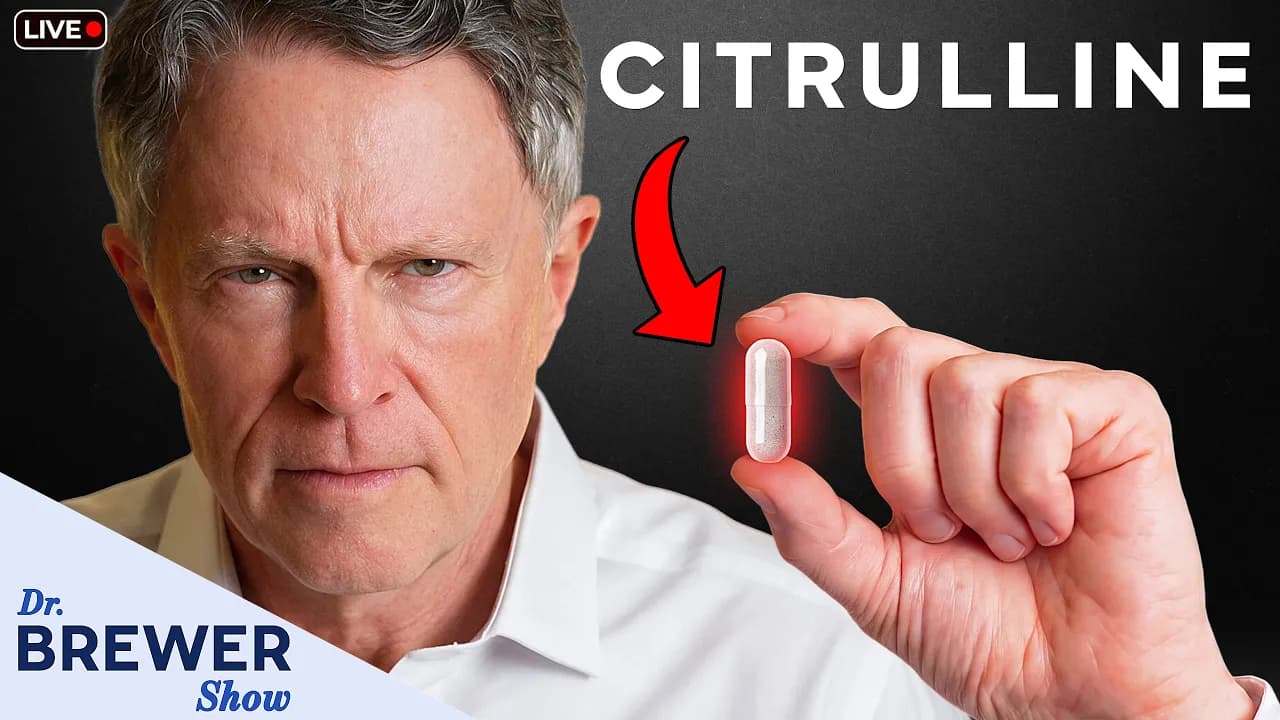
L-citrulline is recommended and used because it's converted into arginine, whereas taking arginine directly gets metabolized before having an impact. Increasing nitric oxide through L-citrulline appears to help with inflammation, though it's a secondary process rather than primary. Inflammation actually results in decreased nitric oxide.
Berberine is favored because it helps with cellular metabolism and is one of the core items in the glucose manager supplement. A video on taurine is planned for the coming weeks.
There is skepticism about strong, reliable, evidence-proven sustained release forms of L-citrulline being significantly different from regular L-citrulline. For aortic aneurysm, lifestyle measures are more important than supplements, including keeping blood pressure down through weight management and isometric exercises.
For blood pressure issues, an OGTT (oral glucose tolerance test) and insulin response test are recommended because high insulin causes high blood pressure. The approach should be to test, don't guess, rather than making assumptions about causes.
Hibiscus tea is a good non-medication option for blood pressure. Three cups a day of hibiscus tea has been proven to lower blood pressure similar to low-dose captopril. The tea can be prepared and consumed cold, using 250 milliliters per serving.
Creatine is strongly supported and taken daily at 5 grams. It's an amino acid with positive effects beyond muscle, including evidence for brain health benefits. Urolithin hasn't been researched deeply and isn't currently used.
A comment was shared about calcium score increasing after switching to carnivore diet, attributed to existing soft plaque turning into calcified plaque. Additional testing like CIMT with reading of the comment section (not just arterial age) is recommended, or CT angiogram with AI analysis to determine if calcium score increases reflect soft plaque conversion.
Andrea from Georgia has been on a strict carnivore diet (mainly chicken and fish, not red meat) for 18 months and lost 50 pounds. However, her FFR dropped from 0.88 to 0.86, she has greater than 70% stenosis in the LAD, 72% non-calcified plaque with only 1% low attenuation, hs-CRP of 0.5, and coronary artery calcium progressed from 355 to 406 while on Repatha.
She is trying to stop disease progression and is concerned about needing a stent. The response indicated that many patients come in being told they need stents with 70-100% blockages.
When patients report doing high intensity interval training but still having low perfusion concerns, the question is whether they're actually getting that low of blood supply. Arteries are muscular living things that can expand to meet needs, unlike stiff copper pipes.
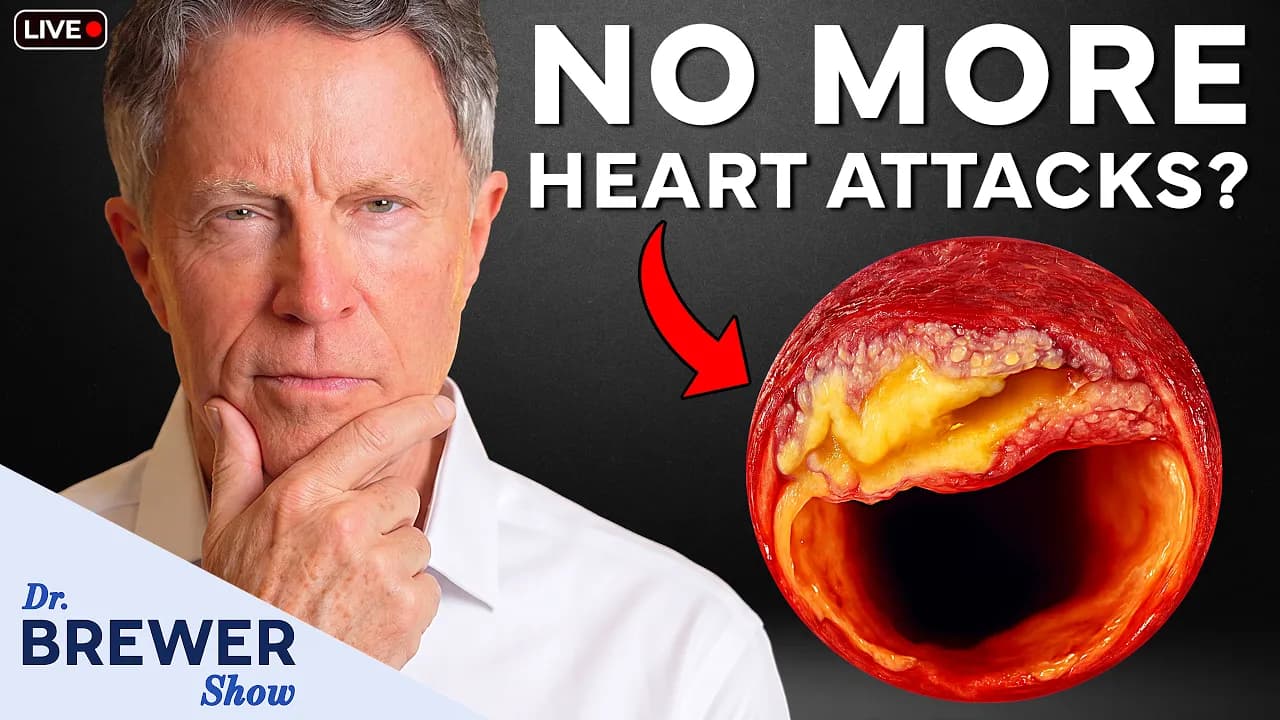
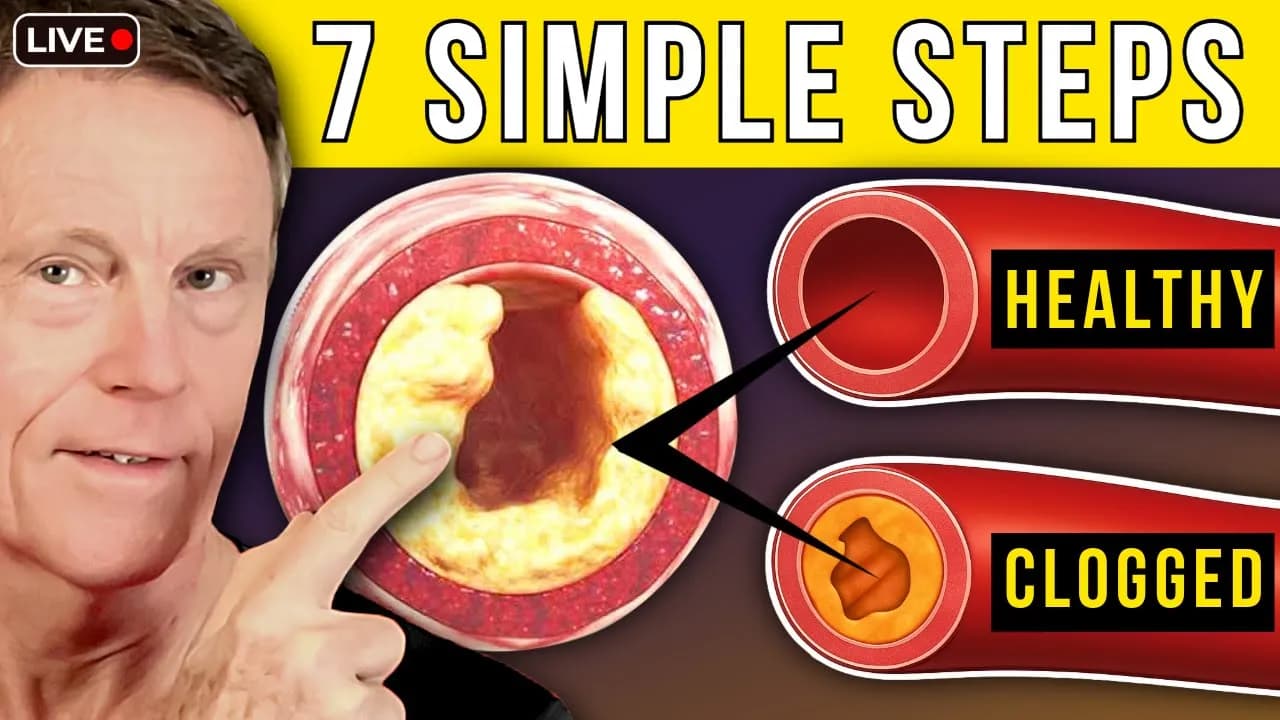
Low attenuation plaque is the soft plaque that is inflamed and causes danger. The vast majority of heart attacks and strokes happen in arteries with less than 50% occlusion, so the mechanism is not a plumbing process. The mechanism is when soft plaque is inflamed and causes a clot.
With CTA and AI analysis, the plumbing measurements should be ignored in favor of focusing on the percentage of low attenuation soft plaque. Less than 2% low attenuation plaque is considered very comfortable territory. The speaker's own low attenuation plaque is less than 1% of total plaque.
Fear of triggering heart attacks through high intensity exercise when having significant non-calcified plaque is understandable. However, the speaker continued running (including marathon and ultramarathon distances) even after discovering their own plaque, recognizing that running and even intense exercise was beneficial despite initial anxiety about the discovery.
Andrea's call prompted a discussion about staying within proper professional boundaries. When callers share personal health questions and history, there's a risk of assuming the role of their doctor. The recommended approach is to provide general information and things to consider without overstepping into personalized medical advice.
For those seeking more personalized assistance beyond the educational content, several options are available:
- Call 859-721-1414
- Visit the website listed in the video description
- Scan the QR code shown on screen
These services include help applying the education to individual cases, potential prescriptions, closer follow-up, and health coaching for accountability.
Dr. Brewer is noted as likely the only preventive medicine specialist licensed in all 50 states. Services available include:
- Direct care with Dr. Brewer
- Care from a team of nurse practitioners
- Health coaching programs focused on lifestyle components
The health coaching emphasizes lifestyle-first approaches to assess current status and achieve goals for preventing heart attacks or strokes.
The show concludes with acknowledgment of new member Alex Vincent. Dr. Brewer shares a memorable closing statement: "As you know, growing old is not for sissies." He notes being 69 years old and emphasizes that while aging presents challenges, it's significantly better with healthy arteries. Andrea is identified as already using Dr. Brewer AI, with potential consideration of providing her a Heart Reveal lab panel valued at approximately $500, subject to producer approval.
Keep Dr. Ford Brewer MD MPH in your library
Save the videos and channels worth coming back to, and find them again in one place.