TUDCA: The Ultimate Driver of Clean Arteries
In a Nutshell
TUDCA, a gut-derived bile acid supplement, dramatically reduces atherosclerosis plaque formation in animal models of high-fat/high-sugar diets by suppressing ER stress, ATF4 activation, and inflammasome signaling in artery walls—improving macrophage cholesterol efflux without altering cholesterol levels. This interrupts the inflammatory cascade turning macrophages into dysfunctional foam cells, offering a promising alternative or statin adjunct (countering statins' reduction of UDCA/GLP-1). Evidence-based dosing starts at 250mg/day with food, titrating to 1,750mg split 2-3x daily; well-tolerated but lacks human RCTs due to low profit incentive.
These notes were generated by AI and may contain inaccuracies.
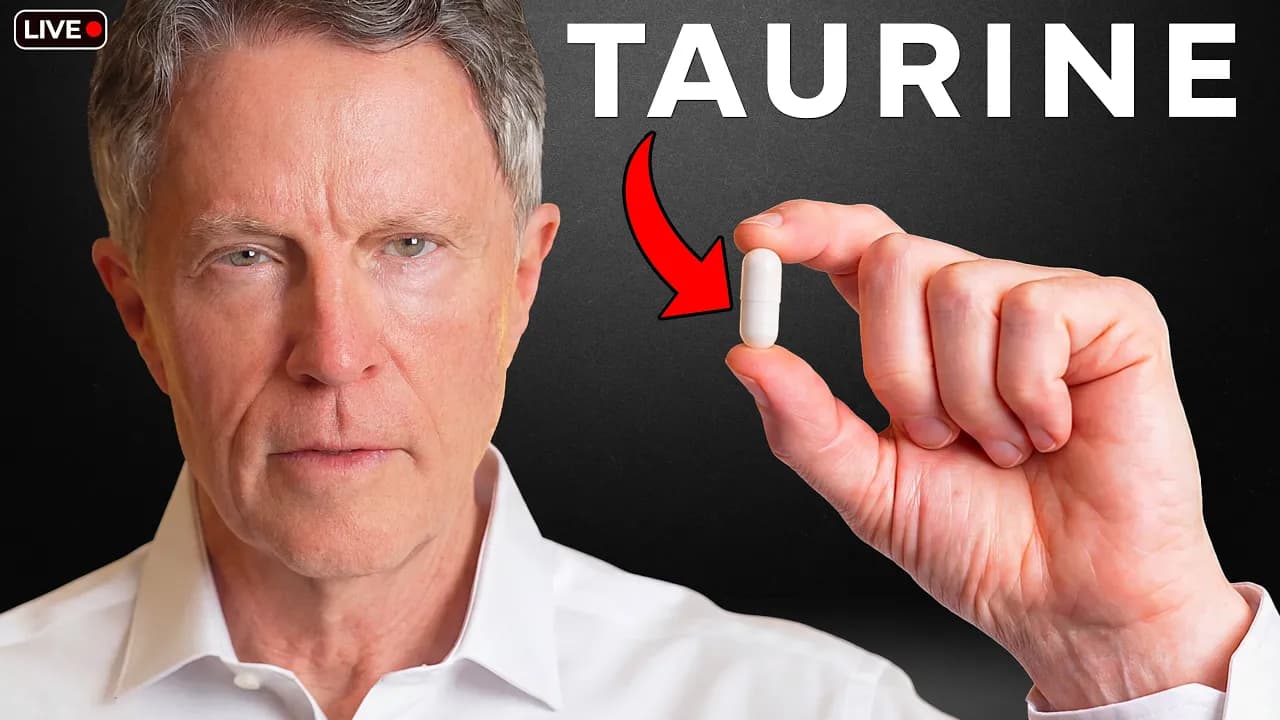
A hormone and trending supplement made by your gut, TUDCA, has the potential to slow or maybe even stop atherosclerosis, the buildup of fatty plaques in arteries that can lead to heart attack, stroke, and death. TUDCA is a bile acid that fights heart disease not by lowering cholesterol, but by altering inflammatory pathways, the inflammatory foundation that drives plaque formation in arteries. As a supplement skeptic, this one might live up to the hype. We'll unfold the data, introduce key players, and explore how your gut controls your heart. It's not a miracle but a compelling signal. TUDCA dramatically reduces plaque formation, supports gut health, liver function, mitochondrial function, and maybe even neuroprotection. For extra details, nuances, and references, check the associated State Curious Metabolism newsletter linked below.
Animals were fed a high-fat, high-sugar Western-style diet designed to induce heart disease, atherosclerosis. One group received TUDCA, dramatically reducing plaque formation.
Five chapters: (1) Key players, (2) How diet drives the inflammatory cascade, (3) Enter TUDCA, (4) Isn't that ironic? A commentary on statins, (5) Evidence-based dosing protocols.
TUDCA (tauroursodeoxycholic acid) is a bile acid made by the gut or taken as a supplement that circulates throughout the body as a hormone with broad metabolic effects. Popular in metabolic health for supporting gut health, liver function, mitochondrial function, and maybe neuroprotection. Focus here is on cardiovascular health.
Endoplasmic reticulum stress (ER stress): The endoplasmic reticulum is a cell's protein factory. When overloaded from oxidized, damaged cholesterol or toxins, it misfolds proteins and triggers ER stress, like panic mode for the cell, leading to inflammation and cell damage key to plaque formation.
Inflammasomes: Alarm systems inside immune cells that detect danger and stress, triggering release of inflammatory cytokines.
ATF4: Regulatory protein, the alarm button.
Review: ER stress is the cell's protein machinery in panic mode. Inflammasomes are the alarm system. ATF4 is the alarm button. Ultimate consequence: foam cells, angry, transformed macrophages metabolically overloaded (e.g., by oxidized cholesterol), becoming dysfunctional and inflammatory, key in early plaque formation and atherosclerosis.
In atherosclerosis, macrophages in artery walls take up too much oxidized, damaged LDL particles, triggering ER stress via ATF4 activation and inflammasome, pushing macrophages into dysfunctional state, driving inflammation and atherosclerosis. This reduces their ability to remove cholesterol and fatty deposits (cholesterol efflux). Helper cells become harmer cells, propagating plaque growth.
Mice fed high-fat, high-sugar diet showed ER stress and inflammasome activation in arteries, triggering ATF4, core to atherosclerosis pathologies.
Human data: Carotid artery plaques from 32 patients analyzed for ATF4 and inflammasome markers. Diseased arteries enriched in ATF4 in macrophages (CD68 marker), shown by arrowheads. More ATF4 alarm bells trigger inflammatory and immune cell invasion, more inflammation, less cholesterol efflux, progression of atherosclerosis.
Repeating experiment with TUDCA: No alteration in cholesterol levels, but significant reduction in arterial fatty deposits, improved plaque status. TUDCA suppressed ER stress, inflammasome activation, enhanced cholesterol efflux capacity of macrophages, improving cholesterol removal from arterial walls.
Summary: High-fat, high-sugar diet triggers inflammation, inflammasome signaling, ER stress in artery walls, transforming macrophages into angry foam cells, fueling inflammation and plaque growth—a vicious cycle. TUDCA interrupts it by quieting the inflammatory storm, suppressing ER stress and inflammasome activation, improving cholesterol clearance, leading to healthier arteries and reduced plaque progression.
Study limitations: Primary experiments in animals. No human randomized control trials showing TUDCA reverses or slows atherosclerosis. Absence of human data reflects research incentives—no business model for massive profit means no large trials. Individuals must decide: wait for gold standard proof or act on available data.
TUDCA featured in prior video on statins. UDCA (similar to TUDCA) available on Amazon. Statins are first-line for cardiovascular disease but slash GLP-1 levels (targeted by weight loss drugs). Human trials with atorvastatin showed statins decrease UDCA via gut microbiome impact. TUDCA is UDCA with taurine molecule; consuming TUDCA raises UDCA levels. In statin patients, improves insulin sensitivity, restores GLP-1, potentially reduces diabetes risk, improves blood sugar control.
Common protocols: 250-500 mg/day, higher doses split into 2-3. 500-1,500 mg typical for liver conditions; up to 2,000 mg/day in ALS trials.
Animal studies used much higher doses, suggesting good safety profile but caution in extrapolation.
TUDCA generally well-tolerated; GI symptoms (bloating, loose stools) most common. Long-term safety shown in liver disease.
Recommendation: Start at 250 mg once daily with food, titrate up by 250 mg/week to max 1,750 mg/day, split 2-3 doses. Continuous use generally safe; high-dose long-term not rigorously studied. Many cycle 2:1 (e.g., 4 weeks on/2 off, 8 on/4 off).
Sourcing details in State Curious Metabolism newsletter. Speaker gets from 100 Health app marketplace (personalized metabolic health AI tool).
TUDCA not a miracle pill but compelling signal. Changes terrain for plaque growth by dampening ER stress, quieting inflammasome, improving cholesterol efflux. No human RCTs yet, predictable given profit-driven research. Weigh promising mechanistic/pre-clinical data against lack of clinical proof—the art of applied science. I'm not telling you what to do, just what to do-UDCA.
Keep Nick Norwitz in your library
Save the videos and channels worth coming back to, and find them again in one place.