My Exact 7-Step Protocol to Reverse Dangerous Plaque
In a Nutshell
Dr. Brewer reversed his own dangerous soft arterial plaque (reducing arterial age from 73 to 53) using a 7-step protocol rooted in addressing metabolic disease (insulin resistance/pre-diabetes) as the true cause, not cholesterol alone: 1) Test for plaque (CIMT, CT angio) and metabolic markers (OGTT, hsCRP); 2-3) Low-carb diet (track via CGM), HIIT/resistance exercise, sleep/stress management; 4) Targeted supplements (berberine for 3.2% regression, nattokinase, omega-3, K2, D3, niacin, magnesium); 5) Low-dose meds if plaque confirmed (5mg rosuvastatin 2-3x/week, aspirin, metformin); 6) Build personalized plan via self-education; 7) Continuous learning. Even 1% plaque reversal cuts heart attack risk by 25%; prioritize stabilizing soft plaque over calcified, use AI-CT angio for accuracy, and combine with his Glucose Manager supplement for insulin sensitivity. Q&A covers bleeding risks (low with nattokinase/aspirin), plaque types, high LDL on keto/carnivore (check metabolic health), and personalized tweaks like adding carbs for muscle-building.
These notes were generated by AI and may contain inaccuracies.
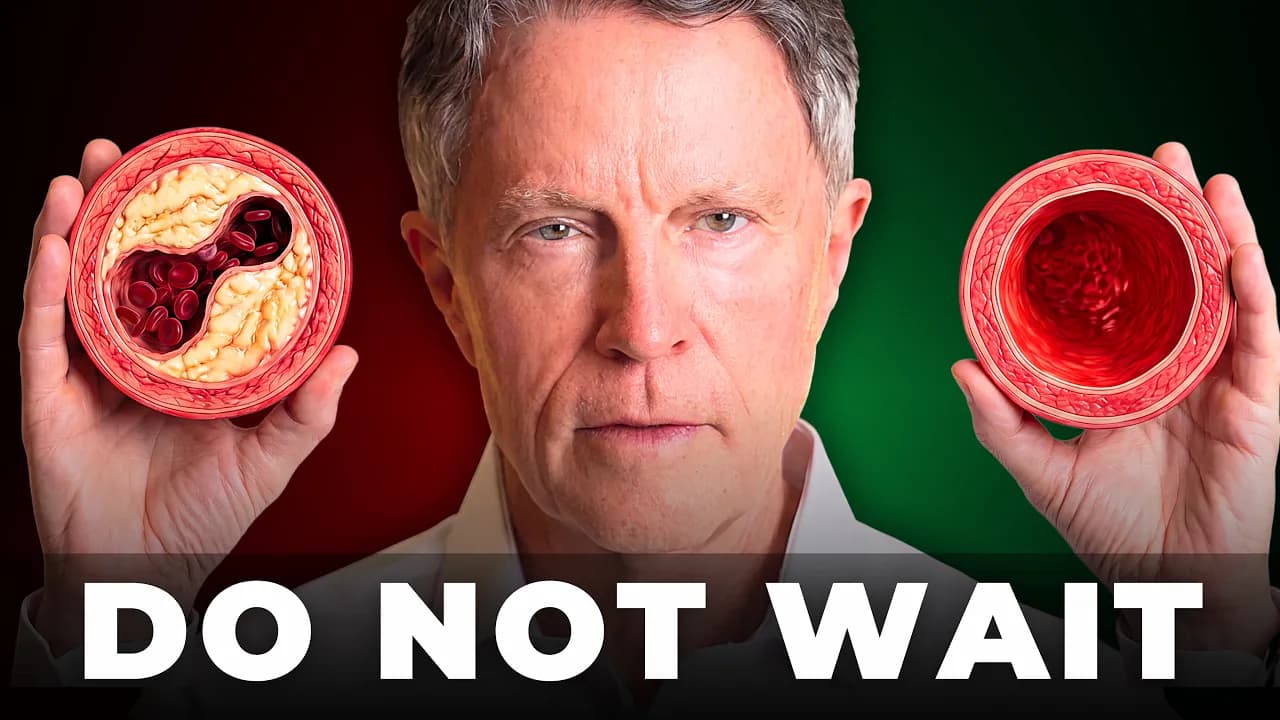
Reversing plaque in arteries by just 1% drops heart attack risk by 25%. This is real measurable change. The speaker had plaque in arteries, the soft, unstable kind, and reversed it through the right steps.
If told cholesterol is a little high, or calcium score came back unexpectedly, or fearing not being around for grandkids, this protocol helps. Walks through exactly what was done to reverse plaque: protocol from patient cases, peer-reviewed science, and personal experience. Download protocol for free via link or QR code.
Personal Story: At 57, felt healthy: jogging 5 days/week, marathon training, watching weight, eating decent. Attended prevention conference with Brad Bale and Amy Doneen (upcoming show guests). Learned about CIMT (carotid intima-media thickness test), ultrasound of neck arteries for plaque. Expected to pass, but had significant arterial plaque: two detectable plaques, one on each side, ~1.2 mm each. Arterial age calculated at 73 years old based on plaque. Hit hard; feared dying during runs. After a year of science research, testing markers, lifestyle changes, reversed plaque in left carotid artery, stabilized the other. Arterial age dropped by 20 years.
Refined system into 7-step protocol.
Plaque and heart attacks not caused by cholesterol alone. 68% of heart attacks in arteries with <50% blockage. Doctors often miss plaque, then prescribe cholesterol pill. Arterial plaque from metabolic disease: pre-diabetes, insulin resistance, diabetes (affects up to 50% US adults, starting age 18; 80% unaware). Doctors don't diagnose it properly (shown by science).
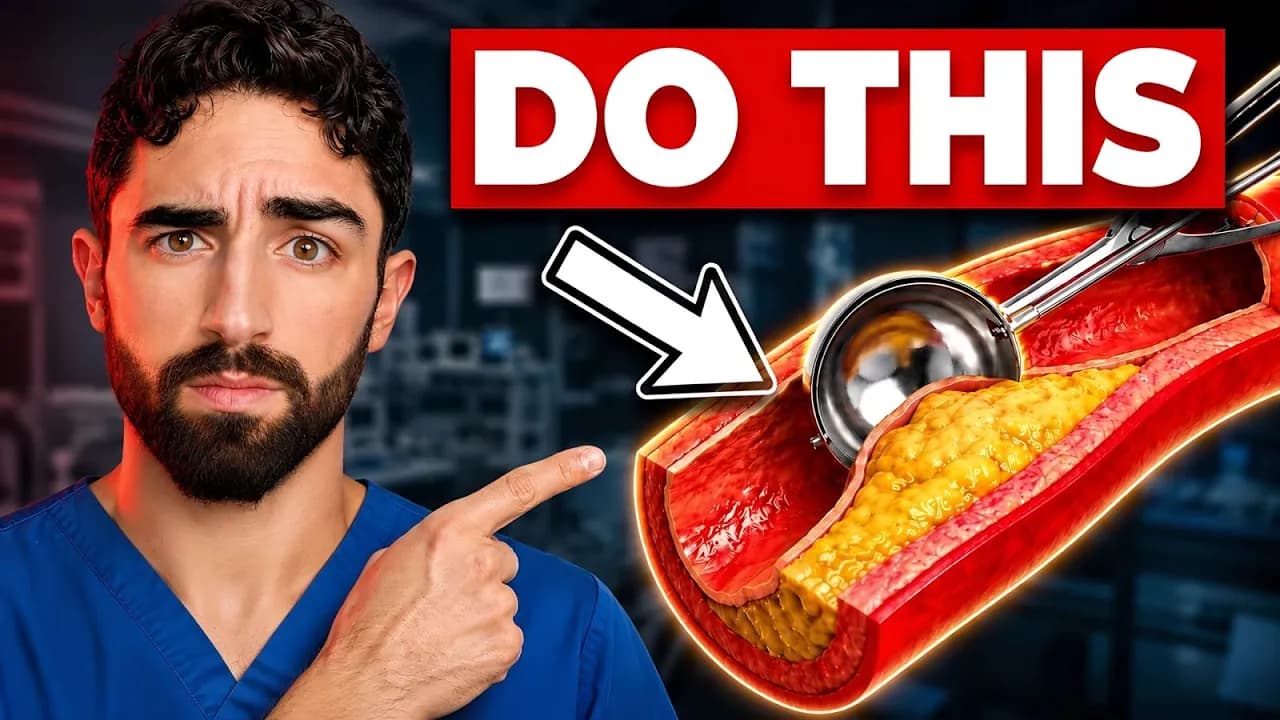
Not all plaque same: soft plaque (dangerous, ruptures, causes clot → heart attack/stroke); calcified plaque (healed, stable). People with calcified plaque often have significant soft plaque if poor metabolic health/lifestyle. Goal: stabilize/reverse soft plaque.
Evidence: 2008 review explains insulin resistance/pre-diabetes as root cause of clogged arteries: raises LDL/APOB, causes inflammation, damages glycocalyx (functional artery lining), promotes plaque.
Tests for Plaque and Risk
Test, don't guess:
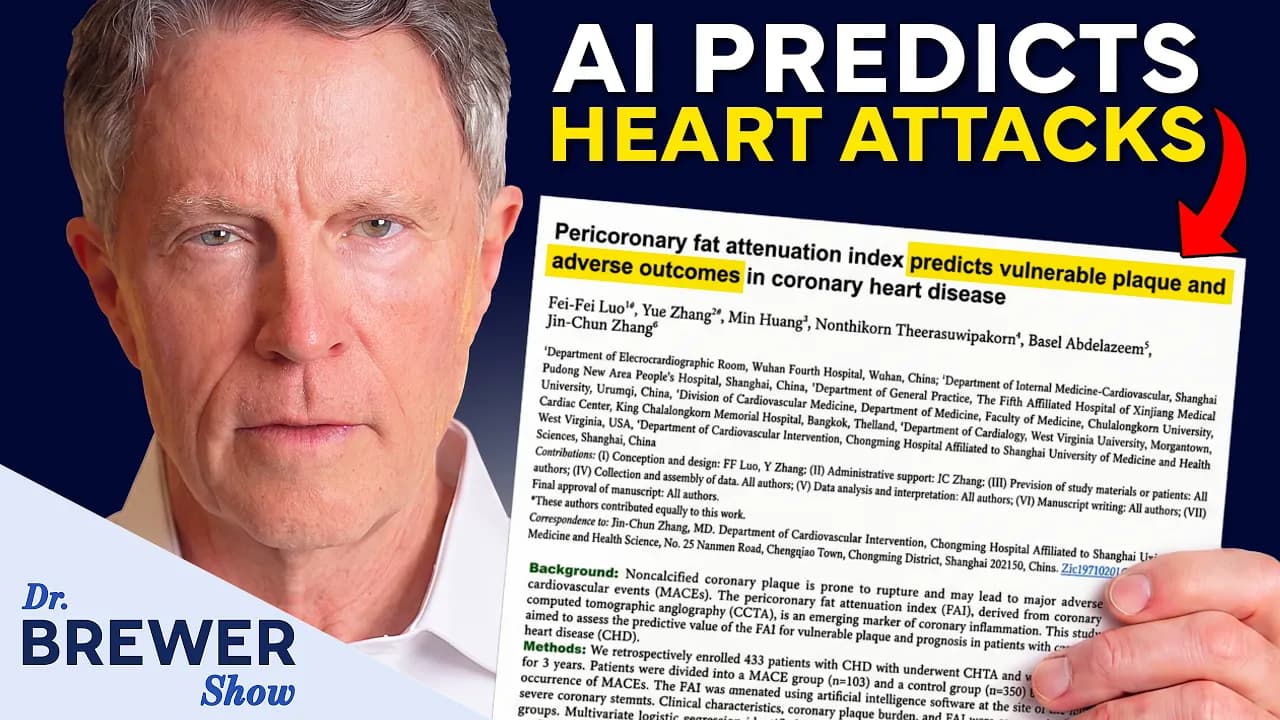
- Plaque: CIMT, calcium score, CT angio with AI (industry standard).
- Metabolic disease: OGTT (insulin response), triglycerides over HDL, lipid fractionation.
- Inflammation: hsCRP, microbiome creatinine ratio, myeloperoxidase.
Up to 98.6% heart attacks had dangerous plaque on CIMT (original studies). Inflammation panel (e.g., Cafe-to-Cave study) has high predictive value.
Low-carb activities: track with CGM (continuous glucose monitor) and Cronometer. Blood sugar >140 mg/dL builds plaque/inflammation.
Exercise: Resistance training, HIIT, HIT, rHIT (reduced exertion high-intensity interval training). Speaker ran marathons at level 2 but missed intensity for mitochondria training. Also lacked sleep, stress management (slow breathing), relationship focus (purpose ok but losing focus).
Low-carb diet: associated with up to 9% plaque regression. HIIT: 1.2% plaque regression (1% = 25% risk drop).
Berberine: Works; 500 mg for 4 months → 3.2% plaque regression.
- Nattokinase: Decreases clotting.
- Omega-3 fatty acids: Decreases clotting, improves oxidation; associated with 4% plaque volume decrease.
- Vitamin K2: Impacts metabolic disease (not just moving calcium to bone).
- Vitamin D3: For metabolic disease, mental health.
- Niacin: Decreases triglycerides/LDL, increases HDL, decreases Lp(a).
- Magnesium (glycinate, threonate), CoQ10.
Supplements > expensive urine.
Uses low-dose statins (5 mg rosuvastatin/Crestor, 2-3x/week), low-dose aspirin (only if plaque), metformin (500 mg, 3-4x/week) sparingly (~1% statins vs typical doctors).
- Statins: Not for LDL; only if plaque for pleiotropic effects (decreases inflammation; low dose suffices).
- Aspirin: Only if plaque (not age-based like 55/60).
- Metformin: For metabolic disease (impacts cAMP, cell metabolism, gut biome); low dose, not 2g/day.
Evidence: Rosuvastatin 5 mg decreases plaque. Aspirin: countless studies decrease risk (no direct plaque regression studies).
Plaque regression rare, but risk reduction common in thousands of patients. Even without regression, risk drops.
Take control with guidance. DIY health engagement improves outcomes (hundreds of studies). Common referrals from poor doctor care. Caveat emptor for chronic disease/cardio/metabolic.
50% US have metabolic disease age 18+; >90% by 60 have ≥1 component. 3/4 doctors can't diagnose/treat (evidence).
Don't depend only on doc; avoid "pill or stent fixes it" mindset. Read/watch trusted sources presenting data. Speaker taught prevention at Johns Hopkins.
Evidence-based decisions, self-engagement. Growing old easier with healthy arteries.
Shoutouts to new members (prioritized): Dan Snider, Jeffrey Hulabus, EJ 363, Ronell Edmonson, Laura Paulie, Nancy. Exclusive monthly Q&A video for members.
Q: Secondary prevention - bleeding risk with baby aspirin + nattokinase? (JMK/JK) A: No for most at low doses (81 mg aspirin; nattokinase 8-14,000 FU, but cap at lower if on aspirin).
Q: Aspirin + fish oil/garlic/Vit D3 bleeding risk? (Borard Woods) A: Practical basis no (tons of people combine); theoretical risk. See latest aspirin video (shocking truths) for supplement blood thinners. Speaker takes all except post-AFib diagnosis switched to Eliquis then Xarelto (no aspirin with those); avoids 3-4g fish oil (bleeding levels).
New member: Tatiana Gomez Duran.
Q: After year good metabolic health, 2nd CIMT: no soft plaque but increase heterogeneous/echogenic plaque. Doing something wrong? Worry? (Donald/Trail dad, Wuhan) A: 3 plaque types: soft (unstable/dangerous), echogenic (stable, risk same as no plaque per Honda study), heterogeneous (stable/organized/healed; can revert to soft if fall off wagon). Increase likely CIMT artifact (interrogation angle/wand position variability; follow-up finds more existing plaque). Solution: CT angiogram with AI (now reliable/affordable standard). Cadence: CTA AI once, then CIMT x2 years, CTA every 3rd year.
Q: How nattokinase absorbed (protein/enzyme hydrolyzed/inactivated in intestine)? (Ruben OM) A: Processed/absorbed in intestine (lose ~70% activity); high doses needed (e.g., study 10,800 FU). Liver first-pass doesn't inactivate. Recommend 6,000 FU (2/day), not 2,000 FU pills. See Saturday nattokinase video. Analogy: Citrulline → arginine (absorbed); arginine not (arginase converts).
Labs Teaser: Developing in-house labs (e.g., OGTT insulin response, per Ellie/Lily BP5). Coming soon.
This is a great question. I think this is one of the root causes
American Heart Association recommends lowering LDL below 70 for high-risk patients. This is based on evidence showing correlations between lower LDL levels and reduced risk, but causation is not the same as correlation. Metabolic disease causes LDL to rise for various reasons. The community focused on LDL as the major cause is shifting to ApoB, which includes large triglyceride-laden particles like IDL, VLDL, chylomicron remnants.
Metabolic disease and insulin resistance raise LDL and ApoB levels as a consequence of inflammatory response and poor metabolism, creating havoc with lipoproteins and high cholesterol. AHA misses the mark by focusing on lowering LDL and ApoB without addressing underlying metabolic disease, which helps control cholesterol levels.
Metabolic disease is the root cause, triggering inflammation that increases cholesterol levels and leads to plaque buildup, not cholesterol directly causing heart attacks and strokes.
Glucose Manager supplement developed after months of research and quality controls due to unregulated supplement industry. Ingredients:
- Berberine
- Alpha-lipoic acid (ALA)
- Mulberry Leaf (special presentation called Reduc, reduces glucose spikes up to 40%)
- Acetyl-L-carnitine
- Ceylon cinnamon
- Fenugreek seed powder (helps absorption of berberine)
- Benadium
- Chromium
This blend supports insulin sensitivity, reduces inflammation, and keeps blood sugars in check. Does not replace lifestyle changes; lifestyle comes first. Cannot out-supplement a poor lifestyle. Link in description or scan QR code. Recommended to patients dealing with metabolic disease for extra support to minimize inflammation. Evidence shows berberine impacts arterial plaque, manages glucose levels and inflammation, root causes of heart attacks and strokes.
Major problem in managing metabolic disease and aging is seeking an easy button with supplements alone. Too many supplements hawked without simplifying. Upcoming House Calls series video with Hobie, who requested help simplifying supplements.
House Calls videos: end of this month/beginning of next, and January. Dr. Brewer visited two volunteer patients in Dallas for free, spent weekend cleaning up lifestyle. Comment on video for link to form if interested in personalized care. Open to US residents; Dr. Brewer licensed in all 50 states. Accept sharing story to provide hope.
Upcoming video with Dave Feldman (engineer behind Lean Mass Hyperresponder studies on keto patients with low triglycerides, high HDL, high LDL) 8 days after Saturday, discussing HeartFlow CCTA vs Cleerly CCTA comparisons.
Example: Nattokinase 4,500 fibrinolytic units, K2 MK-7 600 mg, 81 mg aspirin, eating natto, plus blood pressure and chronic heart failure meds work with right guidance.
For Lp(a), recommend niacin 250 mg to 2 grams per day (do not exceed 2 grams). Most multis have inadequate amounts (50-150 mg). Patient dropped Lp(a) from 80-100 to 25 on 250 mg; others need up to 2 grams.
Fasting blood sugar 100-130, spikes to 180 on low carb high protein fat diet despite exercise. Possible dawn phenomenon (cortisol spike) due to low insulin on low carb. High protein/fat low carb can spike over 180 if insufficient muscle to manage glucose.
Recommendations:
- Build metabolically active muscle, especially legs (quads, hamstrings) via resistance training, HIIT.
- Consider adding carbs to 100-120g/day, especially around exercise, to build muscle and handle spikes better with muscle than insulin.
New to low carb may have 100g carbs/day as 'low', minimal exercise (5-10 min walking), high body fat (40%+), 4+ lbs visceral fat causing insulin resistance. High visceral fat means lots of glucose stored as glycogen in liver (5-10 lbs liver mostly glycogen + water). Body releases glycogen when blood sugar drops, takes time to deplete.
Both speakers take metformin: low dose (500 mg, 3-4x/week) for anti-aging, not affecting performance.
At 67, likely some calcium, but doesn't detect soft plaque. Prefer CINT or CT angiogram with AI. Use calcium score for motivation (e.g., fridge photo). Speaker had zero calcium score, CINT showed 20-year-old neck arteries despite pre-diabetes due to youth.
Furberg trials showed LDL in 20s possibly safe (small sample, couple dozen people). PCSK9 inhibitors push LDL too low (e.g., from 100-200 to 20s). LDL has U-shaped association with heart disease: very low or very high increases risk. Threshold around 100-120 mg/dL doesn't trigger inflammation.
Vasolabs (Chicago, easy as dentist appointment) does good CINT scans; used for many patients including speaker's. Comparable to Cardiorisk.
In metabolically healthy, not worried about high LDL (e.g., 390). Metabolically unhealthy, LDL can be issue. Check Lean Mass Hyperresponder (dramatic carb drop raises LDL); see Dave Feldman video. Other stroke causes: undiagnosed rheumatoid arthritis (inflammation risk equal to diabetes), atrial fibrillation (biggest stroke risk factor, often undiagnosed). Some don't thrive on strict keto/carnivore; inflammation rises, need to find suitable diet.
That is actually going to work for you. Remember that person that tells us that after they stopped eating butter, their joints stopped hurting and their CRP went down. Some people will benefit from changing and adjusting depending on what they haven't tried and that actually works for them. Some people can tolerate oxalates, so they can do more like a heavy plant-based diet. That's the stuff we do every single day trying to find what works for you depending on what you want to do and the results you want to get. I'm being honest. I eat a lot of red meat. I love it. I'll keep doing it, especially when I'm paying for it. That's the one that tastes better.
I'm not sure the carnivore diet will at least on a strict carnivore diet work for me. Despite what you see sometimes on podcasts that say straight carnivore is the solution, everybody should be doing straight carnivore, I don't think that's the case. Just like I don't think long-term keto is the best for everybody. There's always nuances. There's always things that change. Everybody's gut biome and metabolism is different. You need to find what fits better for you.
Carnivore diet is great for a whole lot of folks. I personally love salads and if I go straight carnivore, I'm probably a lean mass hyperresponder as well. My LDL shoots up from usual 70 to 80 up to like 180. I'm not worried about that. Here's the problem. I enjoy salads, so I enjoy some other plant-based foods. It's just revisiting what worked for you. Test, don't guess.
I will acknowledge again, I'm glad you mentioned atrial fib. For anybody worried about stroke, you really need to look at atrial fib. You don't have to have that fluttering in your chest. A lot of people don't feel anything at all and still have it.
If you're interested in getting a second opinion, if you're frustrated with your current medical care, if you think your doctor is not looking at the right places to try to help you out, give us a call 859-721-1414. Dr. Brewer is one of the, if not the only, preventive medicine doctor licensed in all 50 states. Less than 1% of doctors are actually specialized on that yet don't have a license in all the country. It's like a handful of doctors, less than 20, that actually have licenses in all 50 states. Dr. Brewer can be everywhere.
What he has been doing for the last couple of years: he trained a couple of nurse practitioners and health coaches like me. We are physicians elsewhere but we're health coaches in the United States. We don't prescribe medications but we can talk a lot about lifestyle components and help you identify what would work better for you to improve your cardiovascular risk. All of that is just based on Dr. Brewer's teaching and we meet with him every week to discuss cases and get the best treatment for you. Give us a call 859-721-1414 if you're interested.
Big shout out to MTN man, 266, 20 bucks. Thank you very much again. It really goes a long way.
SFB friend. I'm on scan through Medicare. It's an HMO. Could I still use your PrevMed? You can use some of the components of it and actually you can use the entire part of it. I've got a long history in Medicare Advantage. I was the chief science officer for Physician Partners, a very big group, one of the biggest groups in Florida. It's now expanded into other parts of the country. I built a program in Medicare Advantage for the state of Alabama. Physician Partners did acquire that program.
Bottom line is we were hoping that we could get more of a Medicare Advantage program going and it we just couldn't make it work. It was a financial issue. The way Medicare is arranged and set up, you just could not do multiple states like we do and still get Medicare Advantage use. We're trying to make other types of programs available: programs that you might want to look at like looking at the labs, looking at digital twin using that to help diagnose with your labs or to give you information about your labs, supplements. Obviously the premier part of this program that we're doing is this. It's the YouTube channel because it's all about education.
Donald clocking. I think this is a great example of how everybody's different. I am carnivore for one year, down 95 pounds. That's the power of the carnivore diet. I acknowledge that, especially as a first step when trying to hit metabolic disease and my LDL has been climbing the last few blood tests under 150. I know I should be taking a statin because of my heart disease but I stopped. I take Cetami 5 milligrams. Cetami has significant benefits for inflammation as well. We do use it for some people especially those who are concerned about LDL. You can target both LDL and inflammation and with very few side effects with Cetami.
There's a study that combines Cetami and low-dose atorvastatin actually has impact on arterial plaque and you can see that on one of our videos that says statins work. You just need to do this. I'll try to put a pin on the link in the comments as well, maybe on the end screen if you want to go ahead and watch that one. There's a study, the LODAT study, that shows it can impact arterial plaque beyond just cholesterol.
Everybody is very different. Everybody's body is different.
Let us know in the comments if there's any specific thing on this seven-step protocol Dr. Brewer shared that you would like to know more about so we can do a maybe a long form video, maybe short, maybe something else that you guys can watch, enjoy and find useful. Thank you so much. Thank you very much for staying with us. Thank you for your interest.
Keep Thomas Fordham Brewer MD MPH in your library
Save the videos and channels worth coming back to, and find them again in one place.