Eat This Daily to Clean Out Your Arteries
In a Nutshell
The root cause of heart attacks is unstable soft plaque driven by small dense LDL particles created from excess carbs and triglycerides, not total cholesterol. Statins fail to address this by ignoring endothelial damage, inflammation, and foam cell buildup from oxidized LDL. Daily aged garlic extract (2,400 mg), low-carb eating, intermittent fasting, exercise, and magnesium reduce soft plaque and stabilize arteries by lowering inflammation and triglycerides.
These notes were generated by AI and may contain inaccuracies.
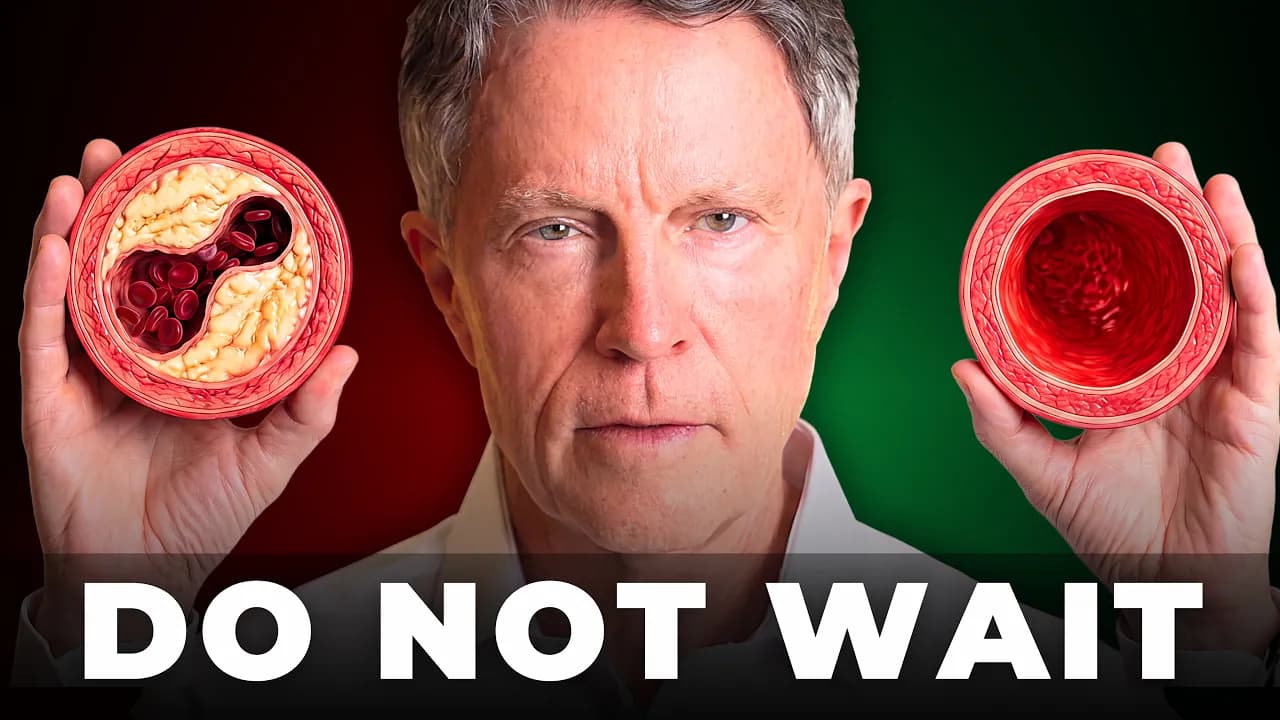
Eating certain foods every single day helps clean arteries and prevents plaque buildup. Even with existing plaque, the recommended approach minimizes and reverses plaque. A major misconception is that heart attacks occur when arteries fill completely with plaque. A heart attack typically involves a small amount of plaque, specifically the unstable soft type, which ruptures and triggers an immune response that forms a clot blocking blood flow.
Hard plaque is calcified and stable. Soft plaque is unstable and prone to rupture. Even 20% plaque buildup can cause a heart attack if the soft plaque ruptures, leading the immune system to create a clotting reaction.
Cholesterol receives blame but is not the actual cause. Most people with high cholesterol receive statins, which produce side effects without addressing the root cause.
Downstream events include plaque buildup, symptoms, heart attack, and potential death. These develop over 10 to 30 or more years. Upstream events represent the root causes that medicine typically ignores, focusing instead on symptom management.
The endothelium is the thin inner layer of arteries that maintains blood flow and prevents substances from entering the arterial wall. Nitric oxide supports artery contraction and relaxation. The endothelium can be damaged by smoking, chronically high insulin from elevated blood glucose, and ingredients in ultra-processed foods. This damage resembles sandpaper roughening a fragile surface.
Damage to the endothelium creates inflammation and a wound-like state inside arteries. White blood cells are recruited to repair the damage.
HDL transports cholesterol from tissues back to the liver. LDL deposits cholesterol in body tissues. Two LDL types exist: large buoyant particles, which float through arteries without damage, and small dense particles, which invade arterial walls and trigger inflammation.
Standard blood tests measure total LDL without distinguishing particle size. An advanced lipid profile is required to assess particle size accurately.
Small dense LDL particles become trapped in arterial walls, causing inflammation. Macrophages (a type of white blood cell) engulf the oxidized LDL but continue eating without stopping, forming bloated cells visible under a microscope as foamy. These are called foam cells.
Foam cells eventually die, creating a graveyard of dead white blood cells beneath a thin cap in soft plaque. Calcium enters as a band-aid alongside some cholesterol. Statins lower cholesterol but do not address the immune reaction, foam cells, or this underlying graveyard structure.
A UCLA study of over 135,000 heart attack patients found that 75% had normal LDL levels, indicating cholesterol is not the root cause.
Small dense LDL particles originate from excessive triglycerides produced when the liver processes too many carbohydrates. Excess carbohydrates convert to triglycerides for storage. Chronically high carbohydrate intake overloads the liver and generates small dense LDL particles. These particles oxidize due to prolonged circulation, triggering immune reactions.
A study claimed only a 5% risk of muscle problems with statins. The CTT organization conducting the study has not released raw data despite repeated requests. The CTT received approximately $200 million from pharmaceutical companies, creating a conflict of interest. Observational studies show higher risks of muscle damage and side effects than reported.
The study included a run-in period where all participants received the drug first, and those who reacted poorly were removed before randomization. This practice hides adverse reactions from final results. Statins also block coenzyme Q10 production, a nutrient essential for mitochondria.
Aged garlic extract at 2,400 mg per day was tested in two randomized controlled trials using angiogram studies. Results showed it stabilized the condition and reduced soft plaque. Hard plaque is calcified and stable and rarely causes problems, while soft plaque requires primary concern.
Aged garlic extract also moderately lowers blood pressure, acts as an antioxidant, and thins blood. Consultation with a doctor is necessary when taking blood-thinning medications alongside aged garlic extract. Regular crushed garlic effectively lowers blood pressure and reduces clotting but lacks the studied plaque-reducing effects of aged garlic extract.
Exercise increases nitric oxide, particularly when performed outdoors in sunlight, supporting arterial health and blood flow. Magnesium serves as a cofactor for mitochondria, heart, and arteries while controlling excess calcification. Fish oil, specifically cod liver oil containing vitamins A and D, helps reduce soft plaque though less effectively than aged garlic extract.
Intermittent fasting reduces inflammation and insulin resistance. A low-carbohydrate diet prevents excess triglyceride formation that leads to small dense LDL particles. These combined approaches lower dangerous small dense LDL levels.
The next step involves understanding a healthy ketogenic diet combined with intermittent fasting.
Keep Dr. Eric Berg DC in your library
Save the videos and channels worth coming back to, and find them again in one place.