All Things Peptides — Dr. Andrew Huberman
In a Nutshell
Peptides like GLP-1 agonists (Ozempic, Mounjaro, Retatrutide) produce robust weight loss by raising circulating levels a thousandfold, but they also cause muscle loss and can increase apathy. Growth-hormone secretagogues (Sermorelin, Ipamorelin, Tesamorelin) raise GH/IGF-1 modestly and improve deep sleep, yet they fall short of pharmaceutical GH for fat loss, tissue repair, and well-being. BPC-157 shows strong tissue-healing effects in animals and is popular for injury recovery, but it lacks human trials; clean, prescription-grade sourcing is essential, and routine use without injury is not advised.
These notes were generated by AI and may contain inaccuracies.
Peptides are short chains of amino acids, with insulin being one example. People frequently ask about various peptides, and some suggest that for certain goals like increasing testosterone or growth hormone, it may be more straightforward to use cypionate and HGH. However, peptides are not expected to deliver the same anabolic growth or feelings of well-being as these substances.
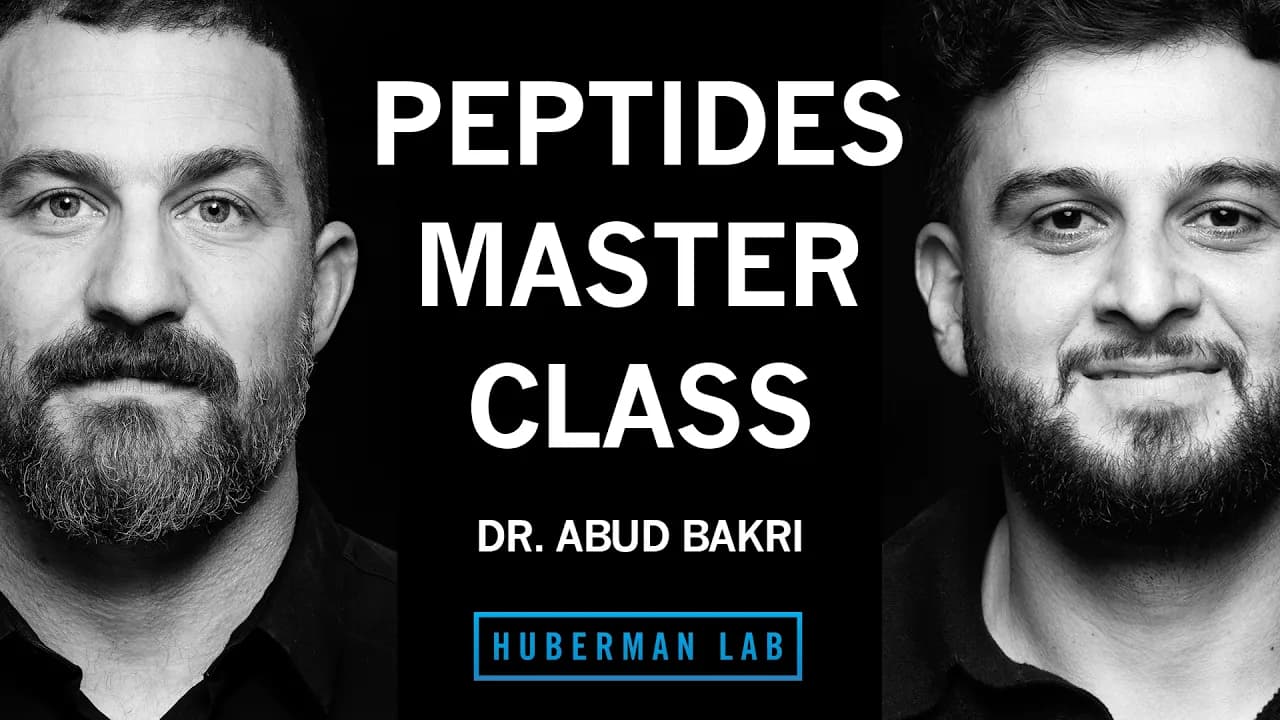
Abu Bakr, an MD, discussed peptides on a podcast, noting that for hundreds if not thousands of years, medicines have been sought in plants, and pharmaceutical companies continue to do so. Now, people are searching for medicines within the body itself. Peptides serve as a strong example of this approach.
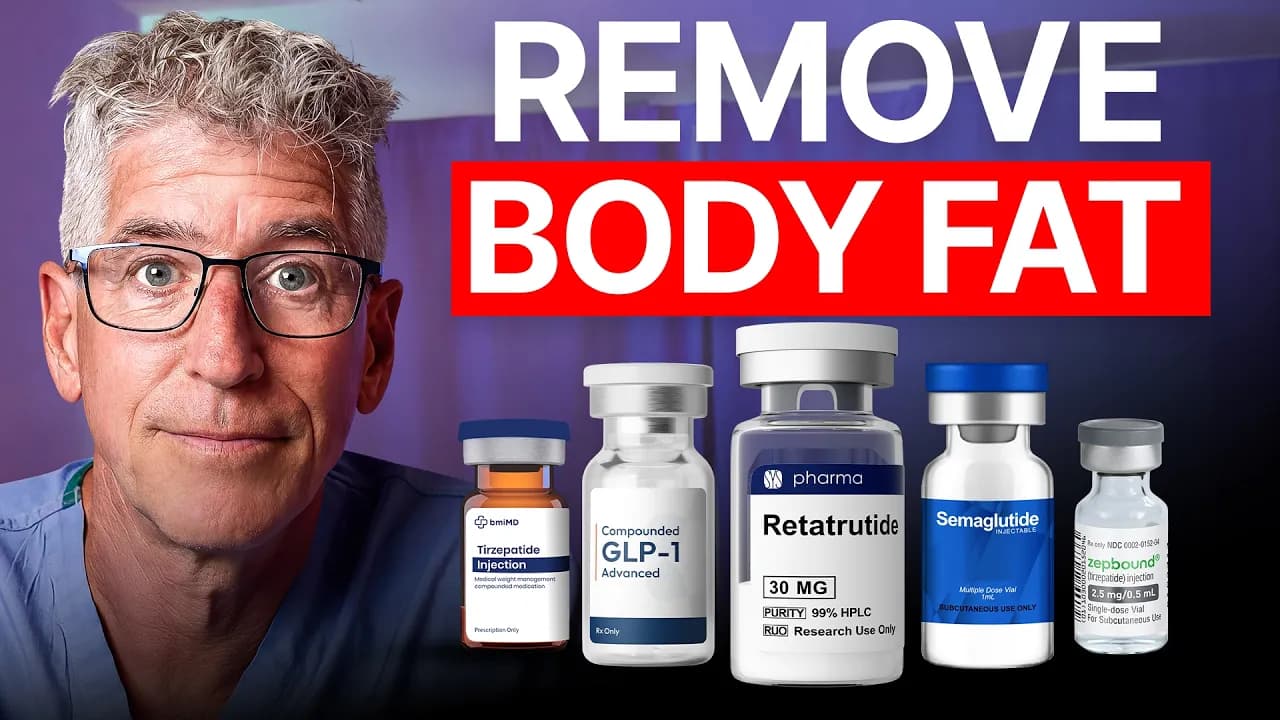
GLP agonists such as Ozempic, Mounjaro, and the upcoming Retatrutide by Eli Lilly are peptides that increase circulating GLP levels to a thousandfold above normal. These drugs produce robust weight loss. Retatrutide affects the GLP, GIP, and glucagon systems. Caution is advised with microdosing these medications. At standard dosages, they may increase apathy and reduce cravings for alcohol and possibly cravings in general. Some individuals experience nausea, leading some to take lower doses while still achieving weight loss benefits with reduced nausea.
GLP drugs that raise levels 100-fold were initially used to treat diabetes and are still used for this purpose, but they did not induce significant weight loss. In contrast, those that increase GLP levels by a thousandfold or more lead to robust weight loss, including muscle loss. Retatrutide, which hits GLP, GIP, and glucagon systems, produces the most robust weight loss among these agents and may spare some muscle. Resistance training is recommended to offset muscle loss.
The gray market consists of peptides sold online labeled "for research purposes only," which is legal, but not intended for animal or human use. Concerns include contamination with substances like lipopolysaccharide and the risk of not receiving the intended compound. Many people are already using Retatrutide, even before its formal release, as it is relatively easy to synthesize.
Growth hormone secretagogues such as Sermorelin, Ipamorelin, and Tesamorelin stimulate brain neurons that project to the pituitary, promoting growth hormone release at night. Users typically avoid eating a couple of hours before sleep. These peptides can produce a three- to eight-fold increase in growth hormone and IGF-1. Some, like MK-677, stimulate appetite significantly. Huberman tried Sermorelin briefly and noted it dramatically increased slow-wave deep sleep but reduced REM sleep and raised prostate-specific antigen (PSA) levels, which normalized after discontinuation. He did not observe substantial fat loss or strength gains.
CJC and its variants can lead to some insulin resistance but may increase growth hormone more. Overall, these secretagogues do not appear to produce robust fat loss, especially compared to the GLP drugs now available.
If affordable and prescribed, pharmaceutical-grade growth hormone such as Pharmatropin or Omnitrope may be preferable to unknown secretagogue peptides. Clinical trials often use one to two IUs of growth hormone five nights per week, which can dramatically increase deep sleep, support fat loss, tissue repair, healing, feelings of well-being, and cognitive function. Users report improved joint comfort and readiness for activity in the morning. This is not as anabolic as testosterone.
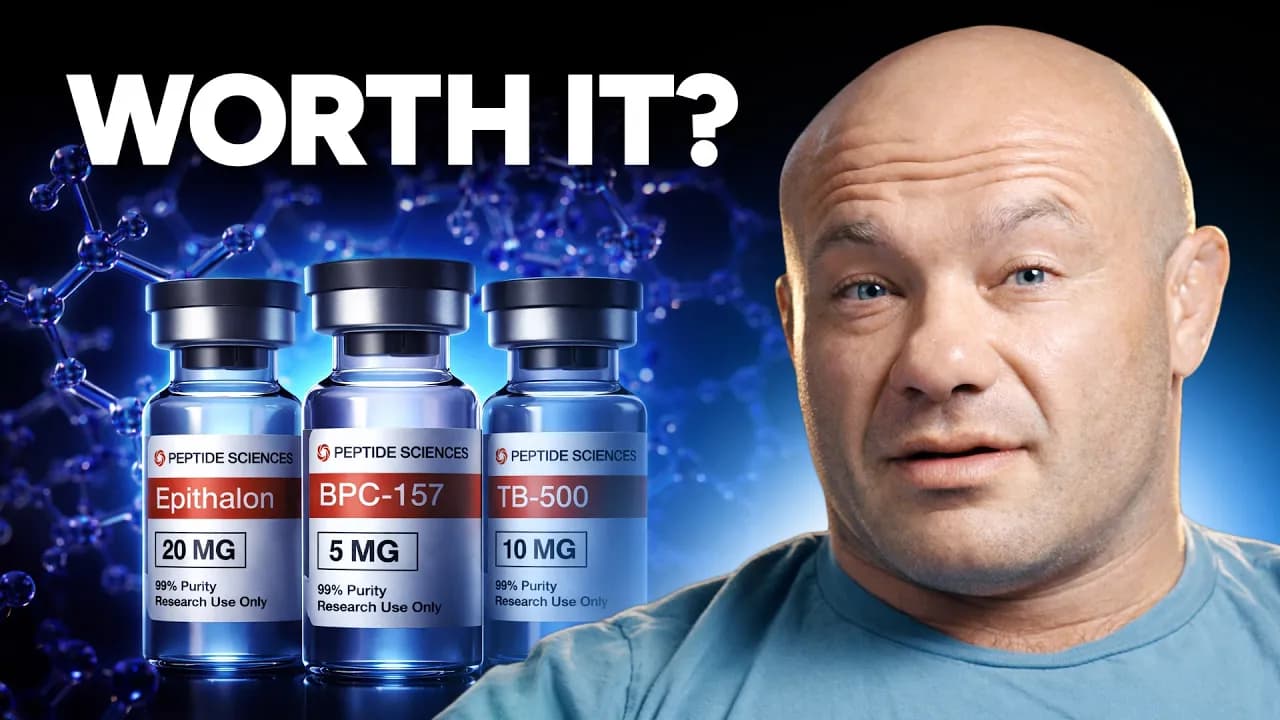
BPC-157 (body protection compound 157) is an amino acid chain found in gastric juice. It is popular but often used for reasons not supported by strong evidence. Animal data show impressive effects including cartilage regrowth, fibroblast migration, angiogenesis, and nerve regrowth. There are no published human trials. BPC-157 goes systemic, making controlled experiments difficult. Capsule forms are available, but their efficacy is uncertain. Local injection near an injury may be helpful. Huberman keeps BPC-157 in the fridge for strains and injuries. Pentadecapeptide is a related form with similar function and is easier to obtain from compounding pharmacies.
BPC-157 can be obtained from compounding pharmacies with a doctor's prescription. Compounding pharmacies such as Tailor Made, Upstate, and Revive are considered more trusted. These pharmacies are permitted to compound drugs during shortages and generic drugs, and they compound peptides. Gray market sources are less clean than compounding pharmacies.
TB-500 is sometimes combined with BPC-157 in the so-called Wolverine stack. Huberman has not tried TB-500. BPC-157 was originally used at high doses in enemas in clinical trials for gut issues. Abu Bakr reportedly had a side practice providing gastric juices to address ulcers, as gastric juices contain beneficial peptides.
BPC-157 should only be considered for injury recovery, using clean compounded pharmacy product, either locally or systemically. Ongoing use without injury is not recommended. For general recovery from exercise, one to two IUs of growth hormone each night before sleep may be more effective.
Keep Tim Ferriss in your library
Save the videos and channels worth coming back to, and find them again in one place.