Dr. Explains Peptide Stacks Used for Fat Loss
In a Nutshell
Injectable peptides like CJC-1295 + Ipamorelin and Tesamorelin boost growth hormone pulses to burn visceral fat, while GLP-1 agonists (Ozempic, Mounjaro, Retatrutide) suppress appetite and improve metabolic control; additional options like AOD9604, MOTS-c, and 5-Amino-1MQ target fat breakdown and cellular energy. Risks include side effects like nausea, muscle loss, water retention, unknown long-term effects from stacking, and caution for cancer risk due to growth stimulation. Peptides are tools, not foundations—lifestyle (nutrition, sleep, exercise, stress) drives sustainable visceral fat loss by naturally optimizing hormones.
These notes were generated by AI and may contain inaccuracies.
Injectable peptides are the new frontier in the war against fat. A few injections and suddenly the fat you've been fighting for years starts coming off. As a physician researcher, I've spent my career helping people eliminate the single most dangerous substance in their body, visceral fat. Because so many people are turning to these peptides for a solution, I feel a responsibility to explain the actual science behind them. By the end of this video, you'll understand the hormonal pathways that actually control fat storage and fat burning, how different peptide stacks are designed to target those pathways, and the real risks that get glossed over online.
To understand how these peptides work, you first have to understand the hormones that control whether your body stores fat or burns it. Think of your pituitary gland as the control tower for your metabolism. Every time it sends out a growth hormone pulse, it tells your liver to produce IGF1. Growth hormone has a direct fat burning effect. It breaks down stored fat, especially visceral fat, the dangerous fat that wraps around your organs.
When you're younger, that control tower is firing on all cylinders: strong growth hormone pulses, efficient fat metabolism, high energy. But as you age and with disease, those pulses weaken. As they weaken, visceral fat starts accumulating. It's a slow process that most people don't even notice until the damage is already done.
Visceral fat drives inflammation and insulin resistance. When you're insulin resistant, your body is essentially locked in fat storage mode. It doesn't matter how little you eat or how much you exercise, if the hormonal environment is wrong, the fat stays and accumulates.
And then there is GLP1, the hormone that controls blood sugar and appetite. You've probably heard of it because of drugs like Ozempic and Wegovy. That's the pathway those drugs are targeting.
Now that you understand the hormonal picture, let's talk about what people are actually using, starting with the foundational peptides, the growth hormone secretagogues.
The most common combination is CJC-1295 paired with Ipamorelin. The logic is straightforward: CJC-1295 sends the signal to release growth hormone. Ipamorelin amplifies that signal. Together they create a stronger, more natural pulse of growth hormone. CJC wakes up the control system. Ipamorelin turns up the volume and that amplified pulse directly stimulates fat breakdown especially visceral fat.
Then there's Tesamorelin. This one is worth knowing about because it is actually FDA approved. It was approved for HIV-associated lipodystrophy, a condition where medication causes visceral fat to accumulate. This is a peptide that was specifically studied and used to reduce visceral fat in humans. That is not theoretical. That's clinical data.
If you've been paying attention over the last couple years, you've heard about this category of GLP1 agonist drugs like Ozempic, Wegovy, and Mounjaro. Semaglutide, the compound in Ozempic, works by mimicking the GLP1 hormone your body naturally makes. It regulates blood sugar and significantly reduces appetite. So people naturally eat less.
Then came Tirzepatide, the compound in Mounjaro. This one targets two receptors: GLP-1 and GIP. That dual action improves metabolic control even further.
And now there's Retatrutide. This is a triple agonist of GLP1, GIP, and glucagon. That third pathway, glucagon, directly influences fat burning in the liver. In early studies, subjects saw very significant reductions in body weight.
There are also compounds like amylin analogues that improve satiety and can be used alongside these pathways.
The big idea here is these peptides don't just affect hormones, they influence appetite, blood sugar, and metabolic signaling at multiple levels.
Beyond the mainstream compounds, there are additional peptides that target fat loss in different ways.
AOD9604 is one of them. It's a fragment of growth hormone that was isolated specifically for its fat metabolism effects. Instead of stimulating full growth hormone activity, it focuses more directly on fat breakdown.
Then there's MOTS-c. This is a mitochondrial peptide. It doesn't primarily act on appetite or hormones. It works at the cellular level. It helps improve how efficiently your cells use energy which improves metabolic flexibility and insulin sensitivity.
There's also 5-Amino-1MQ. This works by inhibiting an enzyme called NNMT which is involved in metabolic regulation. By inhibiting that pathway, it's associated with increased metabolic activity and NAD levels.
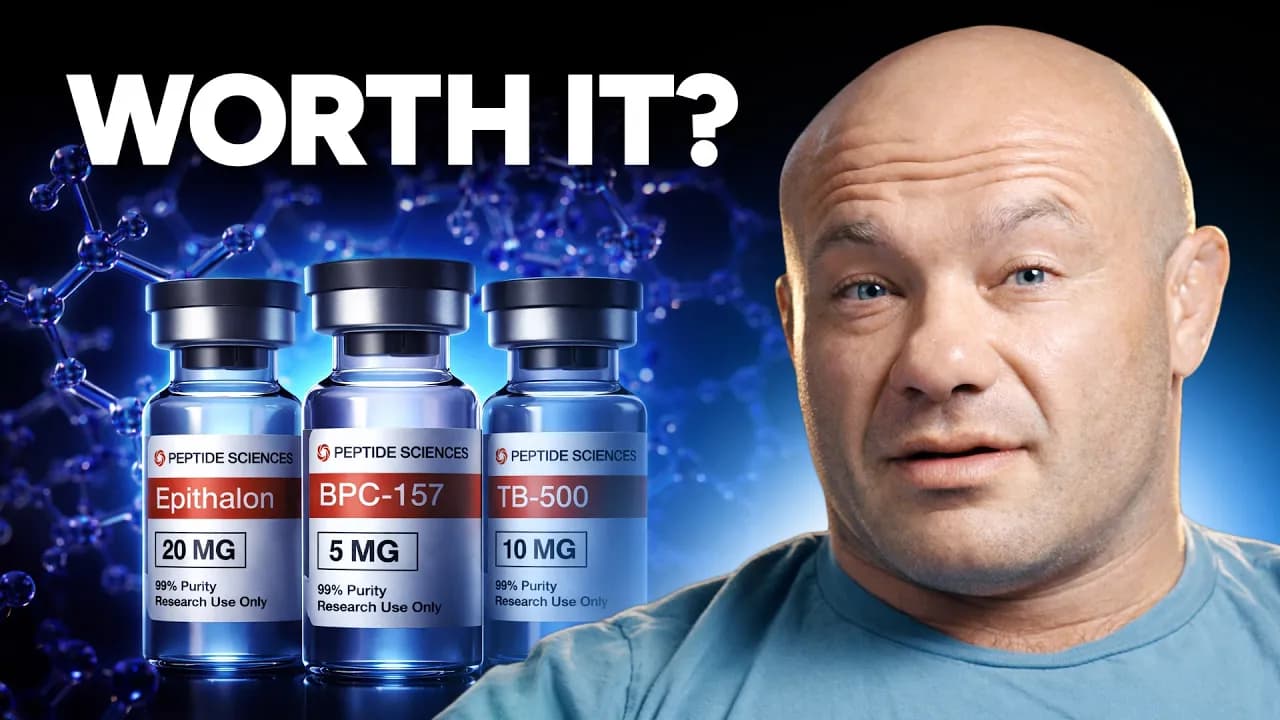
And then there are peptides like BPC-157 and TB-500. These are primarily healing peptides. They support tissue repair and reduce inflammation. And that matters because inflammation is closely tied to insulin resistance and metabolic dysfunction. So, while they're not directly fat burning peptides, they can support the environment that allows fat loss to happen.
It's important to step back and talk about risk. These are biologically active compounds. They're not just supplements.
GLP1 drugs, for example, can cause side effects like nausea, vomiting, excessive appetite suppression, in some cases, a lot of muscle loss.
Growth hormone related peptides can lead to water retention, joint discomfort, and potential effects on insulin sensitivity.
And with many of the advanced peptides, we simply don't have long-term human data yet, especially when people start stacking multiple compounds together.
There's another aspect that almost nobody's talking about. The natural peptides that your body makes, these natural substances that are the target for these synthetics that are coming out, those natural ones are produced in environment where control exists by your beautiful body. They come built in with a control system. These other synthetics are missing that. We don't have the ability to reliably say that the control system is going to work the same way for the synthetics that it works for your natural ones. That could mean that we're going to find long-term side effects that are very concerning.
There's also an important medical consideration. If someone has cancer or even is at high risk, stimulating growth hormone pathways is something that should be approached very carefully.
The key takeaway here is that more compounds does not automatically mean better outcomes. Context matters.
At the end of the day, peptides are simply tools. They are not the foundation. The real drivers of fat loss and visceral fat reduction specifically are still lifestyle-based: nutrition, sleep, physical activity, exercise, stress, alcohol.
When you address those fundamentals, you improve the hormonal environment naturally. And when the hormonal environment improves, the body starts regulating itself the way it's supposed to. That's where real sustainable change happens.
Now, if you want to understand exactly what I mean by that, the foundational steps that actually work to eliminate visceral fat without any of these compounds and their associated risks, click this video here. In that video, I break down the specific approach I use with my client patients to get rapid, sustainable fat loss by fixing the root cause.
Keep Sean OMara, MD JD, Health & Performance Optimizing in your library
Save the videos and channels worth coming back to, and find them again in one place.