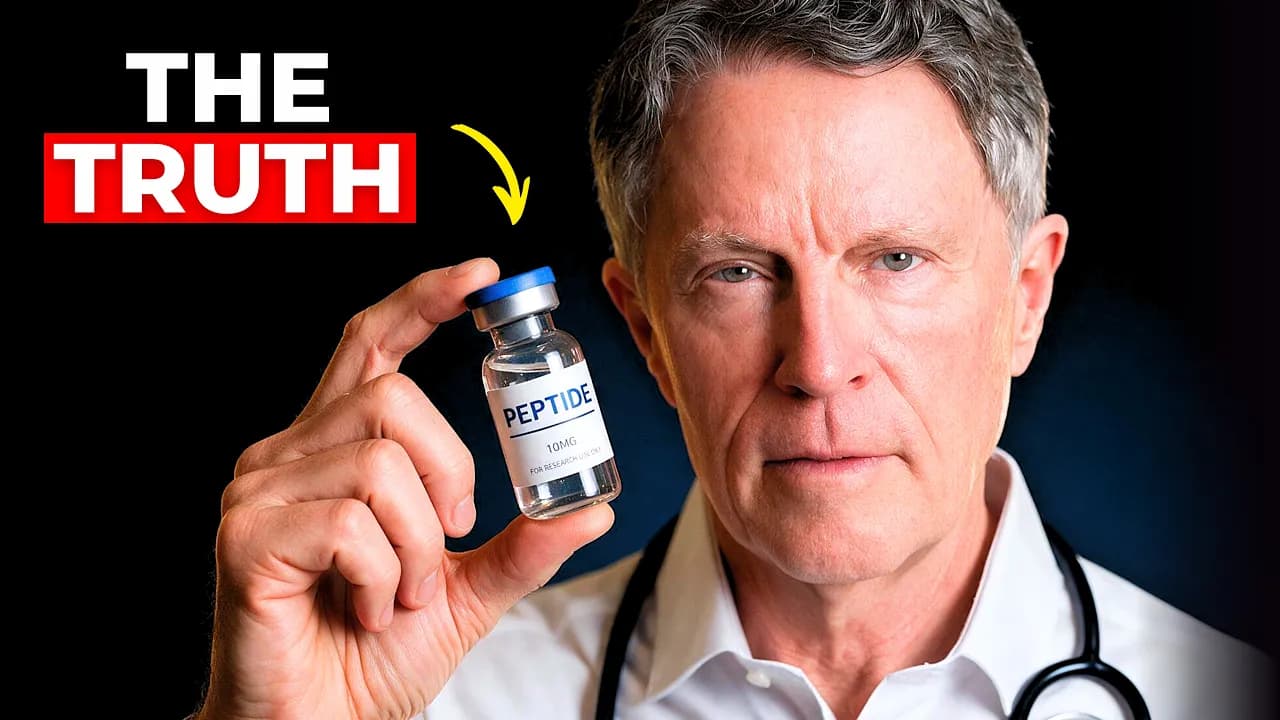
Peptides Are Everywhere!
In a Nutshell
Retatrutide is a promising triple agonist in phase 3 trials that simultaneously targets GLP-1, GIP, and glucagon receptors for appetite suppression, glucose control, and increased energy expenditure, but it carries early signals of potential nerve damage and should not be used until more safety data exists. GHK-Cu and BPC-157 lack meaningful human evidence and are similarly cautioned against due to unknown purity and safety risks. The core message is that peptides should never precede foundational lifestyle work—optimizing nutrition, training, sleep, and glucose control must come first, with medications like Mounjaro considered only afterward under medical supervision.
These notes were generated by AI and may contain inaccuracies.
Retatrutide is a legitimate triple receptor agonist currently generating significant attention. It activates three mechanisms simultaneously: GLP-1 (similar to Ozempic), GIP (similar to Mounjaro or tirzepatide), and glucagon receptors. This combination reduces appetite, improves glucose control, and increases energy expenditure at the same time. The glucagon component is responsible for the energy expenditure increase. Retatrutide is currently in phase three clinical trials, meaning it is being tested in large human populations before potential FDA approval.
Retatrutide stands out among current peptides as particularly worth monitoring due to its novel mechanism profile. While it is possible to obtain it before approval, there are reports of people already trying it, though a signal regarding potential nerve damage exists. Waiting for more safety data is recommended.
GHK-Cu is a copper-binding peptide widely discussed for skin repair, collagen remodeling, and wound healing applications. The research supporting GHK-Cu is primarily preclinical, consisting mainly of animal studies and laboratory work with limited human evidence available. While the underlying science is interesting, GHK-Cu does not have the same level of development or evidence as retatrutide.
BPC-157 is popular in recovery and biohacking communities for tendon repair, gut health, and inflammation management. The enthusiasm surrounding BPC-157 is substantial, and interesting mechanistic information exists, but the evidence is almost entirely animal data with mechanistic speculation rather than high-quality human trials.
None of the three peptides (retatrutide, GHK-Cu, or BPC-157) should be taken until substantially more certainty exists regarding both safety and purity. The risk profile may be significantly higher than the potential reward because the full range of risks remains unknown at this stage.
The speaker takes Mounjaro personally and previously used Ozempic at very low doses, not primarily for weight loss but for diabetes management and metabolic support. The most notable observed benefit was improved sleep quality. However, this personal experience does not translate to a general recommendation that others should experiment with these compounds.
Most individuals pursue peptides before addressing the underlying lifestyle factors that created the need for intervention. This represents the incorrect sequence. The proper order is to first optimize nutrition, resistance training, sleep, and glucose control. Only after establishing these foundations should a conversation with a knowledgeable physician occur regarding whether a medication like Mounjaro has a remaining role based on individual biomarkers. Peptides are not the starting point and cannot substitute for foundational lifestyle work.
Keep Thomas Fordham Brewer MD MPH in your library
Save the videos and channels worth coming back to, and find them again in one place.