America Can’t Build Ships Anymore. Anduril Has a Plan
In a Nutshell
Anduril, founded by Palmer Luckey, is deploying autonomous undersea vehicles like the DiveLD—equipped with sidescan sonar, subbottom profilers, multibeam echo sounders, magnetometers, and cameras—to revive U.S. shipbuilding amid China's dominance (200 boats to America's 1). DiveLD, tested off Massachusetts, uses ruggedized flooded designs and Lattice software for real-time seafloor mapping and object detection, scaling production to 200 units/year at a new Rhode Island facility. Larger DiveXL supports extended missions, including classified ops and Royal Australian Navy's Ghost Shark, to rebuild uncrewed maritime capabilities without human crews.
These notes were generated by AI and may contain inaccuracies.
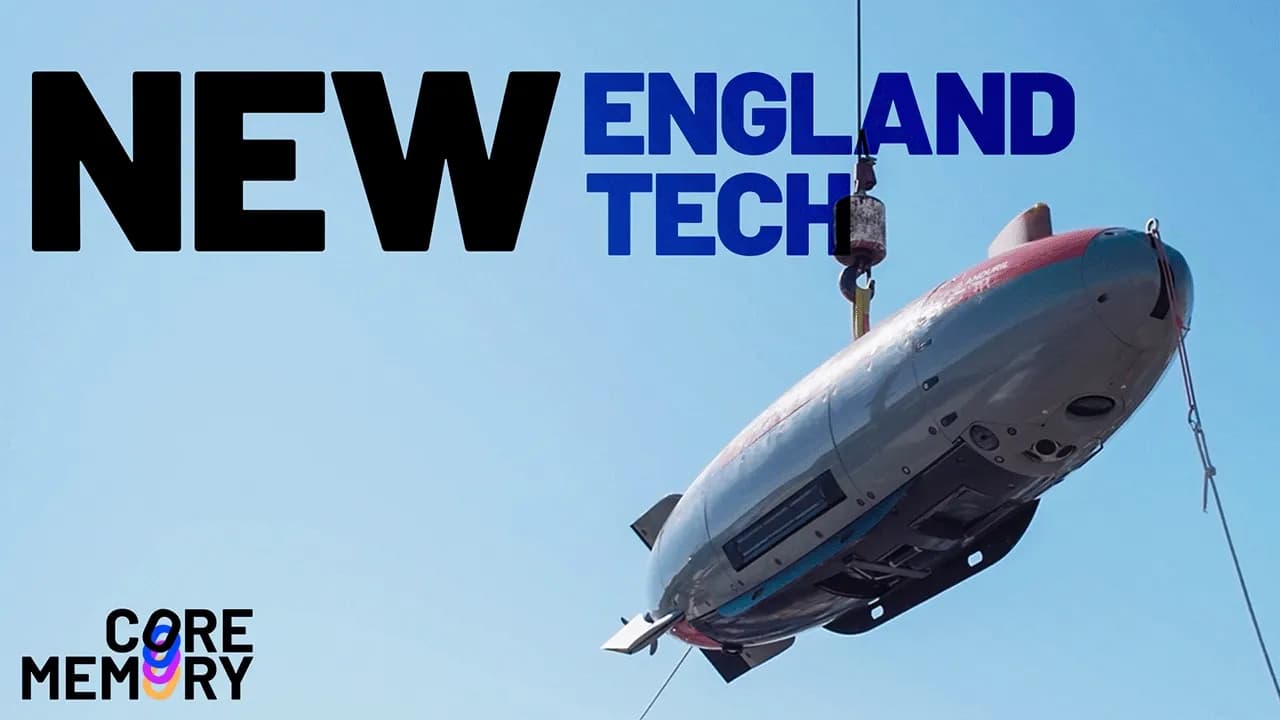
The DiveLD autonomous undersea vehicle from Anduril is a robot submarine designed to swim underwater. Anduril is a defense technology company started by Palmer Luckey, the Oculus headset inventor.
Do you think that NATO should be armed with squirt guns? How about sternly worded letters? Would you like that?
Anduril aims to make a full arsenal of autonomous weapons for the US and its allies, including drones, planes, weapon systems, and software like Lattice to tie them together. Anduril has submarines: the smaller DiveLD for looking at and listening to ocean activity, and the larger DiveXL for missions that can't be discussed in detail.
Quincy, Massachusetts (pronounced Quinsey), just outside Boston, was an industrial hub and lively shipbuilding center last century, but those days are gone, as seen with an ancient sub. The US can barely make ships now. Anduril wants the US to build super modern ships again, without humans inside.
James runs Anduril's submarine division and previously worked at Dive Technologies, the precursor to Anduril's maritime operations. Since early 2022 acquisition by Anduril, they've ruggedized the original DiveLD concept. On the Encourager, helmed by Captain Jarrett, they're testing DiveLD in a survey zone southeast of Mass Bay, after a 1 hour 20 minute steam from Quincy basin.
The DiveLD panels are reinforced composite. Inside, small tubes protect dry electronics and computers; everything else is flooded with water, unlike traditional submarines that keep everything dry. Panels are made in Quincy now, soon in Rhode Island.
Anduril cut the ribbon on a 150,000 sq ft facility in Quonset Point, Rhode Island, with capacity to build up to 200 DiveLDs per year, compared to current rate of 12 per year.
This DiveLD is configured for geophysical inspection sweep with five payloads:
- Sidescan sonar: produces acoustic imagery of the seafloor like a photograph, used to locate objects like undersea cables.
- Subbottom profiler: detects transitions like mud to gravel to rock.
- Multibeam echo sounder: for mapping.
- Magnetometer: like a metal detector.
- Camera: takes real pictures.
The vehicle dives at 400 ft per hour. Lattice is Anduril's software for tracking autonomous systems, with maps, diagnostics, and mission tools. Data shows vehicle at 20m (60 ft) altitude off bottom, completing survey box tracks.
Engineers and software developers can follow along remotely.
Operated over a known feature. Sidescan sonar image shows rocks on ocean floor, matching prior maps. Acoustic image reveals two old ship anchors on seafloor.
Hey, maybe something is new that didn't used to be there. Or there's an object in the area that I want to go investigate. And you'll know exactly where it is. And you can go back to that spot. You can take a closer look at it if you need to. You can move or recover the object.
Anduril's DiveXL does longer missions, holds more payloads, developed alongside Royal Australian Navy for Ghost Shark. US needs to relearn making maritime hardware; China builds 200 boats for every one the US makes.
Keep Core Memory in your library
Save the videos and channels worth coming back to, and find them again in one place.