Anderson Cooper's favorite 60 Minutes stories | Full Episodes
In a Nutshell
Anderson Cooper revisits his most impactful 60 Minutes stories, focusing on diving unprotected with great white sharks to reveal their curious nature rather than mindless aggression, and Plumpy’nut paste that rapidly reverses severe child malnutrition in Niger. The segment also exposes the slaughter of mountain gorillas in Congo to protect illegal charcoal production and details the systematic use of rape as a weapon of war, where Dr. Denis Mukwege treats thousands of brutalized women amid ongoing conflict.
These notes were generated by AI and may contain inaccuracies.
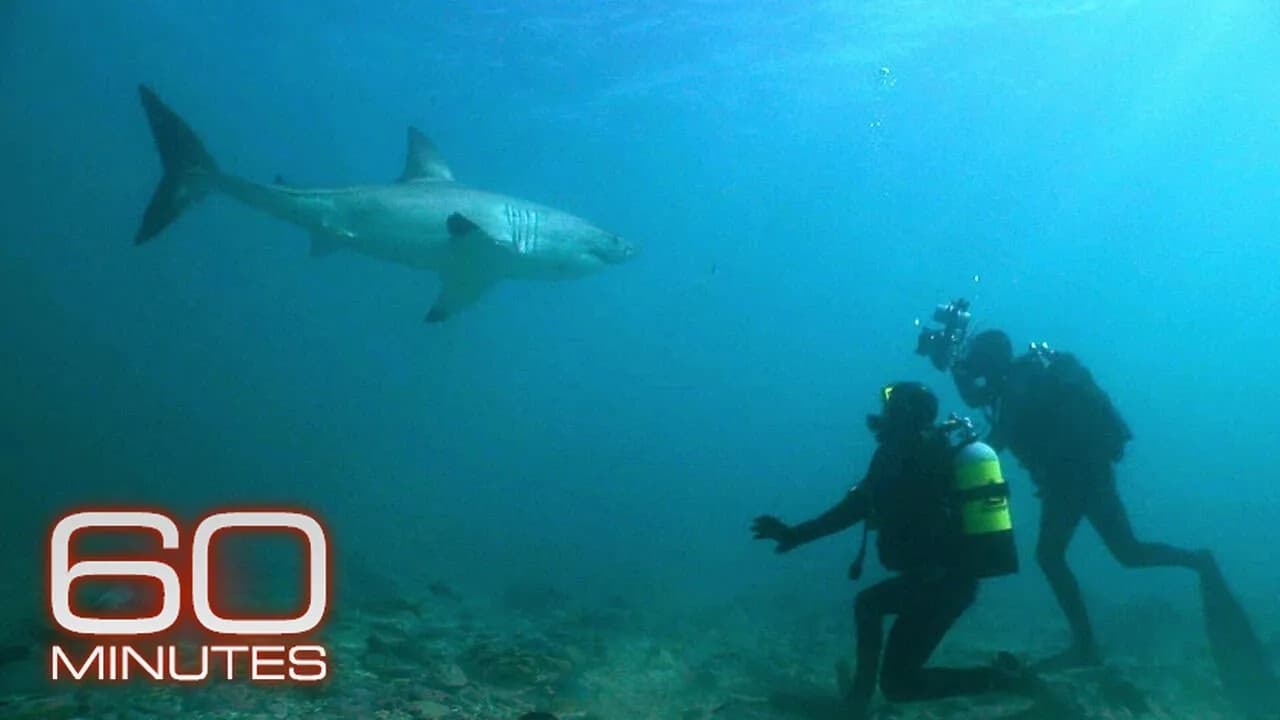
Anderson Cooper recounts one of his favorite 60 Minutes pieces involving Mike Rutson, known as the Shark Man in South Africa. Cooper got scuba certified specifically for this story and had never dived before encountering great white sharks. Rutson advised him not to breathe when sharks were close because they dislike scuba air bubbles, though Cooper found it nearly impossible to hold his breath as his heart raced. A 15-foot great white swam directly over him, causing the shark to become nervous and extend its jaws when Cooper inadvertently released air bubbles.
The segment emphasizes that no animal is feared more or understood less than the great white shark, largely because they are difficult to approach. Mike Rutson has dedicated his life to getting closer to great whites than anyone else. He believes these predators are smart and curious rather than mindless killing machines or man-eaters. Rutson searches for calm, curious sharks he calls players—those relaxed with good personalities that are willing to interact. He notes that great whites have distinct personalities and can be identified by their slow, deliberate movements while checking out their surroundings.
Rutson and his cameraman dive into chum-filled water without cages, using only their cameras as protection. He discovered that great whites avoid the feel of metal. The sharks are highly inquisitive, compared to little kids in a toy store told not to touch, though they sometimes bite out of curiosity rather than aggression. Rutson describes a mental game between diver and shark, emphasizing the ultimate trust required. He was originally a fisherman who began working with sharks 20 years ago along the coast near Cape Town, an area with the world's highest concentration of great whites due to rich nutrients attracting whales, fish, and approximately 60,000 seals.
Seals represent prime prey for great whites because of their energy-rich blubber layer. The sharks leap from the water to stun seals before consuming them. Rutson notes that great whites must outsmart seals to catch them, demonstrating intelligence comparable to or exceeding their prey. Tourist operations in Hout Bay offer caged encounters, but Rutson started his own dive operation 15 years ago as both business and mission to dispel myths about the animals.
Each year, up to 70 million sharks are killed for shark fin soup, with fins cut off while sharks remain alive and bodies discarded. Rutson believes showing people the animals' true nature improves their survival chances. After dives, he reviews footage to understand interactions. He advises making one's body smaller to appear less threatening, standing ground without chasing or fleeing, and maintaining eye contact. The sharks' eyes are described as the color of the blue sea rather than evil black. Rutson suggests great whites use their mouths to explore through touch, which can result in bites. He attributes most human attacks to curiosity rather than aggression. Worldwide, only about five deadly shark attacks occur annually despite millions swimming in oceans.
Cooper describes a positive encounter as a shark investigating, determining the person is not food or prey, then moving away without the human ever knowing. Rutson took Cooper diving without a cage in Shark Alley. Four or five great whites circled their boat after chumming. Cooper was advised to project confidence and remain calm underwater. A 15-foot great white approached immediately upon entering the water. The sharks circled without attacking, allowing close observation of their size, power, and razor-sharp teeth. Visibility deteriorated due to stronger currents, forcing an early end to the dive. Cooper found the experience terrifying yet exhilarating and was glad he participated but uncertain about repeating it.
Cooper identifies the Plumpy Nut story as one he pushed to cover at 60 Minutes. The nutritional peanut paste has saved tens of millions of children's lives worldwide. Dr. Milton Tectonidus, chief nutritionist for Doctors Without Borders, describes it as a revolution equivalent to penicillin for malnourished children. In Niger, where malnutrition kills millions and most mothers have lost at least one child, Plumpy Nut addresses barriers including lack of refrigeration, clean water, and ability to store milk. The formula combines peanut butter, powdered milk, powdered sugar, and vitamins without requiring water or cooking.
Mothers walked hours through dangerous terrain to receive Plumpy Nut at distribution sites. Each daily dose costs about one dollar. The product allows treatment at home rather than hospitalization, with mothers returning weekly for weight checks. Children showed rapid improvement, gaining weight quickly. However, some arrived too late for treatment. Rashidita Madu, 19 months old, died of severe acute malnutrition despite receiving care. Her case illustrated that Plumpy Nut cannot save children once they reach critical stages. After widespread use, the region moved from highest to lowest malnutrition rate. Doctors Without Borders treated 120,000 children that year, up from 10,000 three years prior.
Niger ranks last among 177 developing countries on the UN list. Over 70% of people cannot read, most earn less than a dollar daily, and girls often marry at age 11. The average woman gives birth eight times, yet one in five children dies before age five. Half of survivors experience stunted growth. Dr. Tectonidus advocates redirecting a small portion of global food aid toward fortified ready-to-eat products like Plumpy Nut, arguing it would solve significant preventable deaths without requiring billions in additional spending.
Cooper highlights a story about mountain gorillas in Congo, Rwanda, and Uganda. Only about 700 mountain gorillas remain, with at least 10 shot dead that year alone. Conservationists feared potential extinction. The animals live in forests spanning the three countries, where a family was massacred the previous summer. Despite appearing tough, mountain gorillas are gentle giants—playful, peaceful, and highly intelligent—one of humanity's closest animal relatives.
Mountain gorillas live in families headed by an adult male called a silverback due to distinctive coloring. Scientists have gradually introduced them to people for study, teaching them that humans won't hurt them. This year in Congo, humans have betrayed them as mountain gorillas face severe threats that endanger the survival of the entire population.
Dr. Emanuel Dearode heads Wildlife Direct, a nonprofit that pays salaries of Congo's park rangers protecting gorillas. In July, he was with rangers when they discovered four gorillas slaughtered in the night.
"It was a terrible, terrible scene to witness. It was our whole lives, everything we were working for that was shattered in front of us."
The rangers first found a female named Safari, famous because she had recently given birth. A photo taken days after her baby was born had symbolized hope for researchers. Safari was found dead with her baby missing.
"She had been shot twice through the chest and then they had poured fuel on her and set her alight."
The scene had a strong smell that penetrated clothing and lingered in the throat for days.
The next day, rangers found the body of the family's leader, a giant silverback named Sinquay. He had been shot and chased into the forest with several bullet wounds through his chest.
"Nothing prepares you for the horror of a whole group that's been massacred."
Park ranger Augustine Kambali described the scene as feeling like a dream that continues to replay in his mind.
"I don't understand why people can kill gorillas."
Rangers and villagers made stretchers to carry the gorillas out of the forest, wanting to show respect for the animals' importance.
"To show people that how this animal is very very important."
The gorillas were killed for charcoal, made by burning ancient trees in the gorilla's forest. Over a million people in the area use charcoal to cook. Mounds of wood are covered with mud and set on fire, producing brittle charcoal bricks. Smoke is visible from the air.
Rob Mure of the Frankfurt Zoological Society explained that charcoal makers are cutting down prime habitat and moving deeper into the forest. A multi-million dollar illegal charcoal business operates, backed by businessmen, soldiers, and corrupt government officials known as the charcoal mafia.
When rangers tried to stop forest destruction, the charcoal mafia killed gorillas to warn them to back off. In June, a female gorilla was found killed with a bullet to the back of her head execution-style.
"The message was if you don't stop, we can kill all the gorillas."
The rangers continued their campaign against charcoal production, and a month later the Regendo family was decimated. Alternative fuel like butane would require special stoves costing tens of millions of dollars, needing subsidies from donors such as the EU or World Bank.
Two babies were orphaned when charcoal makers killed their mothers. One baby was found clinging to its dead mother's corpse. The other was rescued by an older brother but was starving. Rangers rescued both orphans, and veterinarians are attempting to nurse them back to health.
Nearly 200 mountain gorillas live in Congo along the forested slopes of a volcano. More than a half dozen armed rebel groups are fighting government forces in and around those forests. Rangers protecting the gorillas have had to flee, leaving Congo's entire mountain gorilla population unprotected and caught in the middle of civil war.
"We can't know the situation of our gorillas."
Congo is deadly for people as well. Fighting has lasted more than 10 years with over 100 rangers killed. Over 300 rebels have surrounded patrol posts at night, shooting with heavy artillery and bombing without regard for human life.
Rangers are outnumbered and outgunned in what is described as the most dangerous park on the planet. They can only gaze at the forest from afar hoping for a ceasefire. Across borders in Rwanda and Uganda, mountain gorillas are safe for now, though they face threats from disease such as Ebola that could wipe out the small population.
In Rwanda, a family of 21 gorillas is headed by an adult male silverback named Aasha weighing more than 400 pounds. Trackers radio the exact location. The forest is dense with muddy trails. Guides grunt like gorillas to assure the animals they come in peace.
Gorillas spend days eating bamboo and other plants, consuming up to 60 pounds daily. Aasha has 11 adult females and attempts to mate with each daily. He charges when humans get too close. Mountain gorillas stare back at those observing them.
Visitors are allowed only one hour with gorillas to limit disease risk. Two gorillas in this family lost a hand to snares set by poachers targeting antelope.
"We really love these gorillas because they need they deserve this right to survive. Also they bring money in the country. Then it helps in poverty reduction in Rwanda."
Each visitor pays $500 to see the gorillas. Rwanda earns $6 million annually from gorilla tourism. Funds support guides, handicraft makers, and hotel workers. The government installed 10 new water tanks, built a health clinic and new schools, and planted thousands of trees for villagers living near the park.
Back in Congo, graves mark the burial sites of Sinquay, Safari, and other gorillas killed that year. Park rangers cannot return to the Congo side of the forest due to danger.
"When you are together them, you will see that they have some sounds."
Rangers describe being able to communicate with gorillas and interpret their vocalizations.
Anderson Cooper mentions a previous story on sexual violence against women in eastern Congo titled "the war against women." He highlights Dr. Mukwege who helped repair severely brutalized women.
A war in the Democratic Republic of Congo has killed more people than in Iraq, Afghanistan, and Darfur combined. It is the deadliest conflict since World War II, with more than 4 million deaths in the last 10 years. The most frequent targets are women, making it a war against women with rape as the weapon.
Dr. Denis Mukwege directs Panzi Hospital in eastern Congo, the front line in the war against women. One recent victim, Cifa Mkhitambala, was raped two days prior by soldiers who raided her village. They cut her in many places with a machete, including her genitals, despite her pregnancy.
Hundreds of thousands of women have been raped in Congo over the last 10 years, most gang raped. The hospital is filled with victims. Within a week, rooms will be filled with new victims.
"They're in deep pain. But it's not just physical pain. It's psychological pain that you can see."
The youngest patient treated was three years old; the oldest was 75.
The genocide in neighboring Rwanda that killed nearly a million people spilled over into Congo more than a decade ago. The Congolese army, foreign-backed rebels, and homegrown militias fight over power and land containing major deposits of gold, copper, diamonds, and tin.
The United Nations maintains its largest peacekeeping operation in history with 17,000 troops and personnel. They oversaw the first democratic election in 40 years. Now fighting has broken out again in eastern Congo, threatening all-out war.
Each battle is followed by pillaging and rape. Over 500,000 people have been uprooted in the last year. Even in supposedly protected refugee camps, women are raped daily.
"Rape is now on a daily basis, rape is the norm."
Anukica Van Woodenberg of Human Rights Watch explains the systematic nature and brutality of rape in Congo differs from other conflicts. It serves to ensure communities accept armed group authority and to spread terror.
In the village of Wongu, 24-year-old Lucienne Maroy was at home with her two children and younger brother when six soldiers broke in. They tied her up and raped her one by one while forcing her brother to hold a flashlight.
"They raped me like they were animals one after another. When the first one finished, they washed me out with water, told me to stand up so the next man could rape me."
The soldiers killed her brother when he refused to rape her. Lucienne was dragged to the soldiers' camp and raped daily for eight months. She escaped and found her children alive but discovered she was pregnant with a rapist's child. Her husband abandoned her.
When a woman is raped, the entire community is destroyed. Men flee not because their wives were raped, but because they feel they have been raped and humiliated for being unable to protect their families.
Judith Registry of Women for Women describes how rapists line up families and communities to witness the assault, creating total shame for survivors. Many women are shunned due to fears of HIV and because violent rapes leave them unable to control bodily functions.
Dr. Mukwege performs about five surgeries daily. Patients have had objects inserted into their vaginas, including broken bottles and bayonets. Some were shot between the legs.
"This is a show of force, of power. It's done to destroy the person. Sex is being used to commit evil."
Dunia Karani, an orphan with polio who cannot walk, was raped by soldiers and is now pregnant. Dr. Mukwege describes the difficulty of telling a 16-year-old that she needs a colostomy bag.
Despite challenges, Dr. Mukwege repairs damage to women's bodies and is seen as a miracle worker and one of the only men survivors can trust.
Rapes are increasingly committed by civilians. Few cases reach court. A $10 bribe can get a rape accusation investigated. The prison had no fences and guards had been expelled, with inmates controlling the facility.
"People get away with rape. They get away with murder. The chances of being arrested are nil."
Women for Women teaches survivors skills like making soap and cooking to earn money. They also learn to read and write, often for the first time.
Lucienne Maroy participates in these programs and hopes to start her own business. She named her daughter Luck, born from rape.
"I named her luck because I went through many hardships. I could have been killed in the forest, but I got my life back. I have hope."
Survivors at Panzi Hospital gather each morning to sing that their sufferings on earth will be relieved in heaven.
Keep 60 Minutes in your library
Save the videos and channels worth coming back to, and find them again in one place.