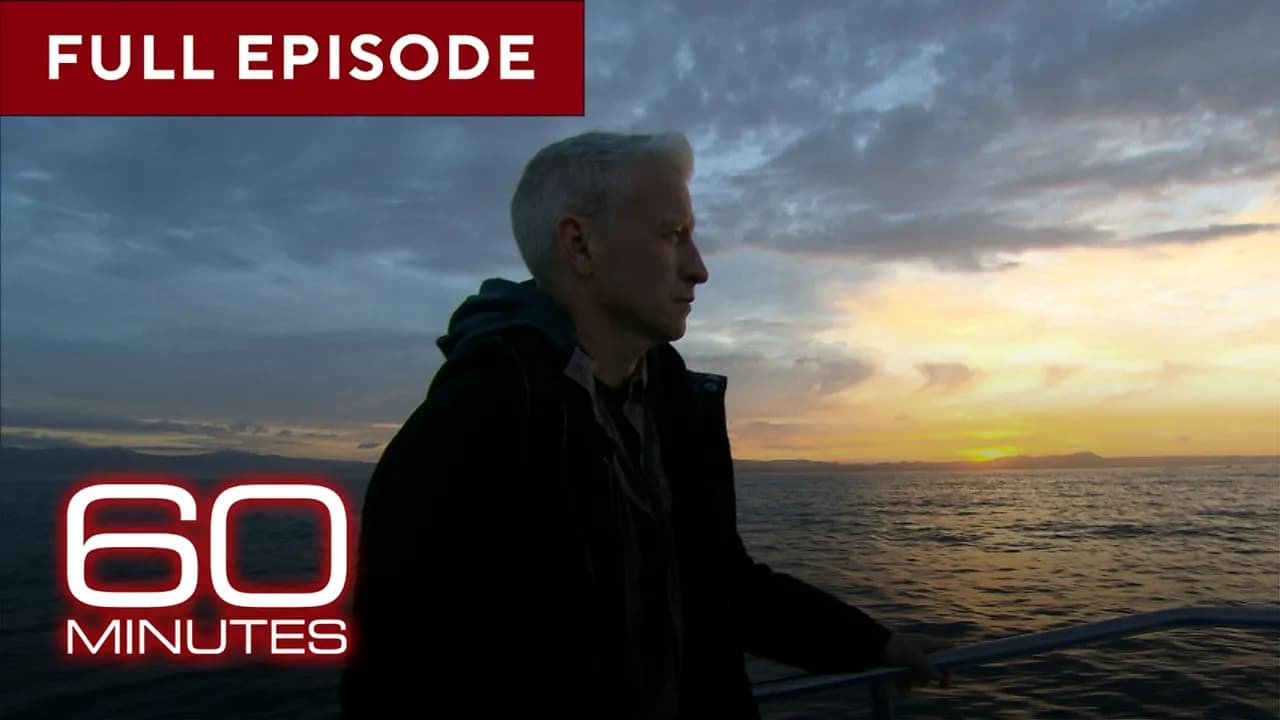
Anderson Cooper's emotional farewell to 60 Minutes after 20 years
In a Nutshell
Anderson Cooper reflects on his 20 years at 60 Minutes as the "honor of a life," highlighting the privilege of connecting with people through in-depth stories—from Holocaust survivor Irene Weiss to humanitarian efforts in Africa and child malnutrition solutions like Plumpy Nut. He recalls dangerous assignments, high standards set by legendary correspondents, and the personal impact of balancing the work with fatherhood, leading to his decision to leave to spend more time with his young children.
These notes were generated by AI and may contain inaccuracies.
Anderson Cooper reflects on his more than 20-year tenure with 60 Minutes, describing it as a "hell of a ride." He explains that 60 Minutes has been a place where correspondents step into other people's shoes, see the world through their eyes, and learn from their struggles. The show is characterized as a "magazine for television." Cooper grew up watching the program after his father's death, when there was significant silence in his house, and the family would watch the news over dinner. As a child, he felt he was getting a look at adulthood and learning from the correspondents.
Cooper recalls watching old-time CBS correspondents and knew them all by name, feeling as though he knew them personally. He notes that viewers trusted the team to deliver good stories. What made 60 Minutes great was the mix of hard-hitting journalism and investigative reports. He specifically remembers Mike Wallace entering a garage and people scattering, as well as Morly Safer's work.
After Bob Simon died, Cooper was given his office. Simon's daughter Tanya, who is now the executive producer of 60 Minutes, left a bottle of scotch that Simon had, and there is still a little bit left in it. Being in the same hallway with Bob Simon was extraordinary. Cooper describes working at 60 Minutes as the "honor of a life" and says it never felt like work.
Cooper describes the experience as stepping into people's lives, being invited into their homes and struggles. Sometimes the stories involve wonderful things people have done, and other times terrible things that have happened to them. He mentions interviewing a woman on the day she buried someone. The work feels like making human connections and having deeply personal conversations, which he calls a privilege.
Cooper interviewed Irene Weiss, a 93-year-old Holocaust survivor sent to Auschwitz in the last year of the war. Her entire family was wiped out. She was photographed at age 13 after being separated from her little sister. In the interview, Cooper asked if she still felt like that 13-year-old girl. She responded: "I am stuck there. I am really stuck there. That's really the biggest fight. How could that have happened to my family?" Cooper found the moment extraordinary when the cameras dissolved away and it became a one-on-one conversation.
Cooper interviewed actor Donald Sutherland, who shared something his mother once said. Sutherland recalled asking his mother if he was good-looking, and she replied: "Your face has character, Donald." Sutherland said the comment stayed with him for 65 or 66 years. Cooper notes that there are many beautiful moments in interviews where real conversations occur with compelling characters.
Cooper has done a number of stories in Africa. One piece focused on Justice Defenders, an organization started by Alexander McClean that helps incarcerated people in Kenya and Uganda learn about the law so they can represent themselves. He notes that the poorest people disproportionately feel the impact of the law. Another story covered sexual violence against women in eastern Congo, where women face rape and machete attacks, and entire communities are destroyed.
Cooper did a story on child malnutrition featuring Plumpy Nut, a simple product made of peanut butter, powdered milk, powdered sugar, and vitamins and minerals. The daily dose costs about a dollar and has helped bring children back from the brink of death. After the story aired, a man in rural Georgia saw it and built a factory to produce a similar product, ultimately feeding millions of children worldwide.
Cooper describes doing dangerous or "dumb" things for 60 Minutes, including diving with Nile crocodiles. He notes that crocodiles actually want to kill people, unlike great white sharks. During one dive, he saw a gleaming row of white teeth. He also dove with sharks and ran out of oxygen underwater multiple times. Cooper explains his mindset: he focuses on whether they can get the shots rather than whether they should take the risk.
Cooper worked with big wave surfer Garrett McNamera in Nazare, Portugal. They spent hours on jet skis in rough waters. The next morning, Cooper woke up blind from UV light bouncing off the water burning his corneas. He had to cancel the shoot and admits he should have worn sunglasses. He references the saying that "bad things don't happen to people on TV," which he acknowledges is ridiculous.
The bar at 60 Minutes has always been extremely high. Everyone at the program is considered the best in their profession, including sound technicians, camera people, producers, and editors. Cooper remembers the stories of Bob Simon, Mike Wallace, Morly Safer, and Ed Bradley from his childhood. He mentions Bob Dylan drinking two bottles of red wine a day and smoking 30 packs of cigarettes. The legacy of these correspondents sets the standard that current reporters try to live up to.
Cooper's full-time job has been at CNN while contributing to 60 Minutes. He has done most of his 60 Minutes work on weekends and during vacation time. CNN does not like him taking extended time off for 60 Minutes pieces. He had imagined doing only 60 Minutes stories when he no longer wanted the daily news grind, but having children changed his perspective.
Cooper shares a story from cameraman Jonno, who remembered the last time his seven-year-old son let him hold his hand walking to school. Cooper has a four-year-old and a six-year-old and wants to spend as much time with them as possible while they still want to spend time with him. He acknowledges that the days when children want that closeness are limited. Cooper says he will miss 60 Minutes and hopes the show maintains its core values, independence, variety of stories, and trust with viewers.
Cooper hopes 60 Minutes remains true to its history and the sacrifices of those who built it. He wants the program to continue for when his own children grow up and have children of their own. He notes that a good 60 Minutes story requires time, patience, money, and an appreciation of the program's history and hard work.
Cooper records his final sign-off: "I'm Anderson Cooper." He mentions that Mike Wallace once made fun of him for his first sign-off recordings. Cooper had to repeat the line approximately 20 times because he tends to mumble his own name. The final recording process involved doing three takes in a row.
Keep 60 Minutes in your library
Save the videos and channels worth coming back to, and find them again in one place.