Mike Rutzen: The Sharkman | 60 Minutes Archive
In a Nutshell
Mike Rutzen, known as the Sharkman, free-dives with great white sharks in South Africa's nutrient-rich waters near Cape Town and Gansbaai, identifying "player" sharks that are calm and curious rather than aggressive man-eaters. He demonstrates their intelligence and inquisitive nature—comparable to outsmarting seals or children in a toy store—using techniques like staying small, maintaining eye contact, and wielding metal cameras as deterrents, while debunking myths amid shark finning threats. Despite rare human attacks (only ~5 deadly ones yearly worldwide), Rutzen promotes understanding through cage-free encounters to aid shark conservation, emphasizing they're not out to kill humans.
These notes were generated by AI and may contain inaccuracies.
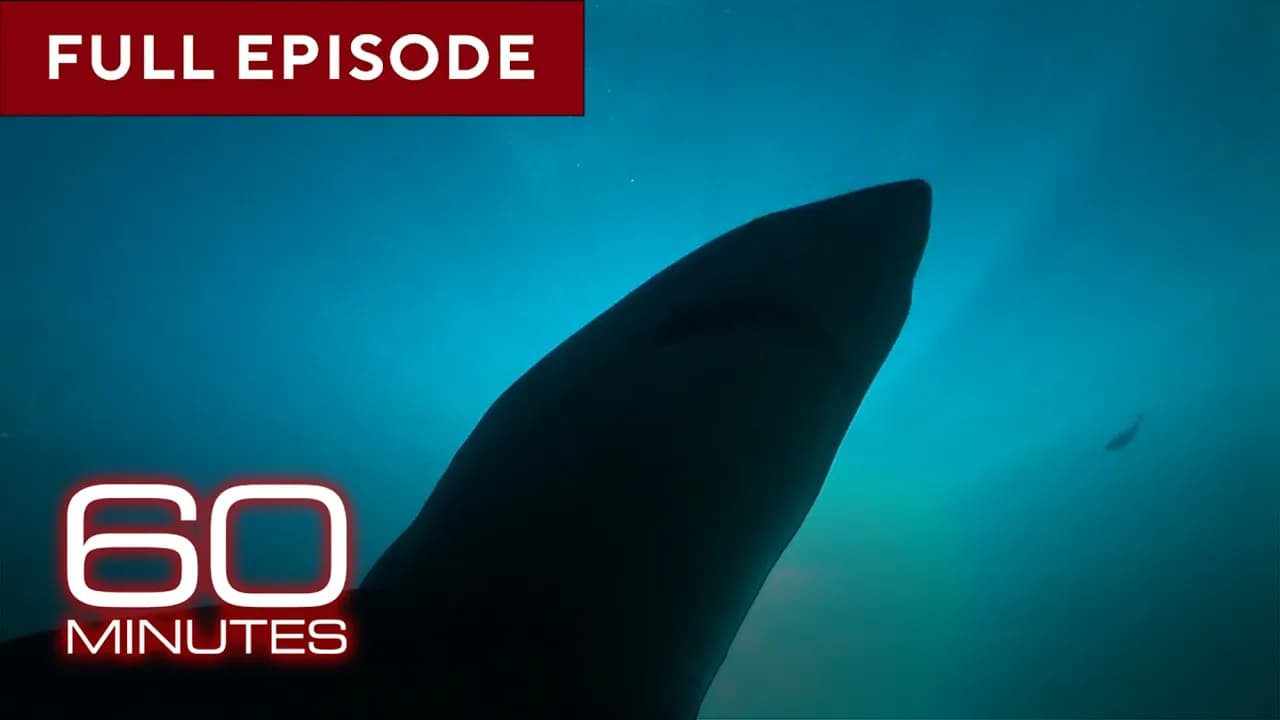
There's no animal that we fear more and understand less than the great white shark. Studying great whites hasn't been easy because it's hard to get near them. Mike Rutzen has spent his life getting closer to great whites more often than anyone else. In South Africa, where he lives, he's known as the shark man. His discoveries about these predators: far from mindless killing machines, great whites are smart, curious, and not out to kill humans. He's willing to risk his life to prove it.
Mike Rutzen is looking for a great white shark he can swim with. Before getting in the water, he needs to find a great white that's both calm and curious—a shark he calls a player.
That's a player.
What's a player? Well, player is basically the shark that's so relaxed, has a nice personality, woke up on the right side of the reef. And the animal's willing to interact with us. It's so curious.
Rutzen says great whites have personalities. They may be the top predator in the sea, but they are not the man-eating killers of nightmares.
How can you tell that's a player? Look how she's moving. She's checking everything out. Check now. Slowly she's going to do this. See how she looks at everything.
The shark is moving very slowly around the boat, checking, coming in, watching the motor.
This is a curious shark. You can work with this shark. This is a player.
This shark and several others have been attracted to Rutzen's boat by chum, a mixture of bait and fish blood. Great whites can smell a single drop of blood from 100 yards away.
Now that he's found a player, Rutzen and his cameraman Hardenberg suit up and prepare to plunge into bloody water with great white sharks all around.
There's no universities to teach you what these animals' social dynamics and social behavior are. And the only way to find that out is by getting into the water.
Immediately, a curious great white comes straight at Rutzen. His only protection: his camera. Rutzen has figured out that great whites don't like the feel of metal. Good visibility is crucial. The sharks are constantly circling and Rutzen has to continually turn around so they don't sneak up on him.
They are extremely inquisitive creatures. I like to say they're like little kids in a toy store and you just tell them don't touch. Observe. They'll touch.
Problem is when they get curious, they sometimes bite.
Yes. The animals are not trying to actively kill you. They're trying to outwit you. There's a difference. And you're trying to outwit them again. So, there's a mental battle going on or a mental game being played between you and the shark. I believe so. Yes. And that seems like the ultimate test of putting your life on the line. I would like to think that it's the ultimate trust between the animal and myself.
Rutzen is not a scientist. He was born on a farm and knew nothing about sharks until 20 years ago when he began working as a fisherman along the rugged coast near Cape Town. These waters are home to the world's highest concentration of great whites.
This is the hot spot in the world for great whites.
A perfect hot spot because it's an ideal feeding ground for great whites. It's not far from the southern tip of Africa where the Atlantic and Indian Oceans meet. The water is rich in nutrients which attract whales, huge shoals of fish, and seals—some 60,000 of them.
Seals are a prime target for great whites. Early one morning, Rutzen takes us to an area called Shark Alley. The seals pass through here searching for food.
There are plenty of fish in the sea. Why are the sharks so interested in the seal? The reason for that is the blubber. Marine mammals have a blubber layer. And that blubber... That blubber layer is extremely energy rich.
The sharks leap straight out of the water, stunning the seals before devouring them. Seals are mammals—they're quick, agile, and smart. But they're no match for the power, speed, and intelligence of the great whites.
They have to outsmart the seal. If they weren't as smart or smarter than the seal, they wouldn't have eaten it.
Watching great whites hunt has become a big business in this part of South Africa. Each year, tens of thousands of tourists flock to the town of Gansbaai. They're offered a close encounter with great whites from the safety of an underwater cage.
Rutzen started his own dive operation 15 years ago. It began as a business, but has become a mission to learn about great whites and dispel myths surrounding them.
I think that humans like to fear these animals and not understand these animals.
Each year, as many as 70 million sharks are slaughtered to make shark fin soup, a delicacy in Asia. Undercover footage shows how fins are cut off while the sharks are still alive; their bodies are thrown back into the sea.
If people can just see these animals for what they really are, I'll be happy because then they have a chance of survival.
By diving without a cage with the sharks, Rutzen is trying to show that they are much more complex animals than previously thought. After every dive, he spends hours reviewing his material, trying to make sense of how the sharks interact with him.
What are you doing with your body here? The smaller you make your body, the lesser threat you are, and then the animals should come closer. The bigger you are, the more threatening you are.
Rutzen believes the great white is extremely selective about what it eats and insists he is not on their menu as long as he stays calm and shows the shark that he has no fear.
So it's important to stand your ground. The most important thing is don't chase the animals. Don't run away from the animals. Stand your ground and keep eye contact with animal. Make eye contact. It's not like a primate. If you're looking at it, it's already lost the element of surprise.
Wow. Look at this. Nice. See that? You don't see every day. You see the eyes? The eyes are actually the color of the blue sea. It's beautiful. Do you like blue-eyed blondes? There's a blue eye that you can't match.
Great whites have been around for millions of years, but they've never been seen mating or giving birth. Their senses are highly developed, but when it comes to touch, Rutzen believes they often rely on their mouths.
So, it just uses its mouth to feel you, but that ends up being could be a deadly bite. Touch is a very important sense for a living animal. So, why shouldn't they use that sense?
Rutzen believes most attacks by great whites on humans have been the result of curiosity, not deliberate acts of aggression. Worldwide, there are only about five deadly shark attacks each year—a tiny amount considering the millions of people who swim in the ocean. Many of us have likely had a positive encounter with a shark without even knowing it.
What do you mean by a positive encounter? It's where the animal comes to look at you, sees you're not food, it's not what you're hunting, maybe very curious in what you're doing, look at you for a while and then move off again. You never know the animal's there, but the animal knows you are there. And that should tell people what? It would tell the people that these animals are not out to get us. They're not in our oceans to kill humans.
Rutzen doesn't take tourists diving with sharks without a cage.
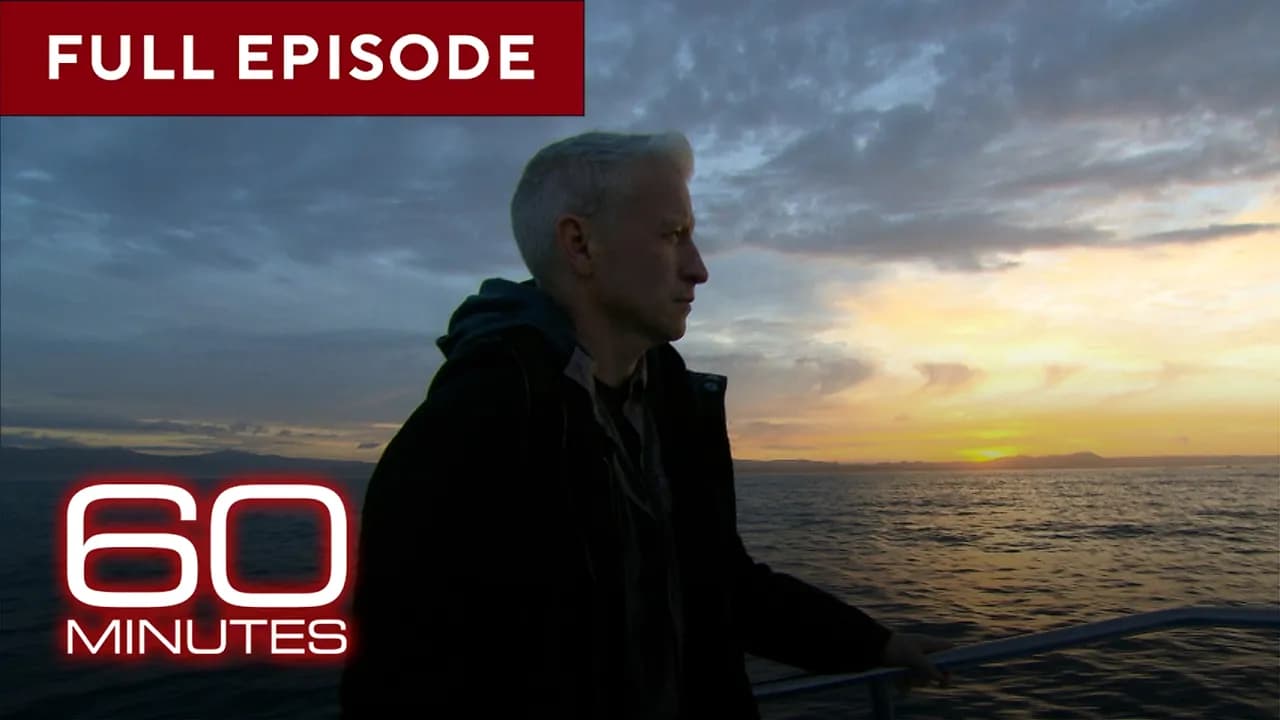
Rutzen offers a close-up look at the great whites—no cage, no protection. On a perfect calm morning, we head to Shark Alley. We drop anchor and the chumming begins. It doesn't take long for the sharks to arrive. There are about four or five great whites circling the boat searching for food.
Mike Rutzen says the most important thing to remember when underwater with great whites is to remain calm. Project confidence.
Okay. How do you feel? Feel good.
Just remember, if I get eaten, just keep rolling, cuz the only thing more stupid than being eaten would be to be eaten and not have it videotaped.
Rutzen believes the sharks now circling the boat are players—curious and not too aggressive. Rutzen goes first, then the dive begins. Immediately, a 15-foot great white swims straight toward us.
Anderson, that's a big boy.
Their size and power is awesome. They don't attack. They want to see what we are and circle us constantly.
Wow, this is amazing. It's coming right toward us.
Up close, you see their razor-sharp teeth and the strength of their bodies.
Beautiful.
It's terrifying but thrilling to be so close to such a massive predator. Seeing them in their own environment, not grabbing at bait or lunging at seals, gives a new impression of them—a more complex picture.
The current is getting stronger and visibility is deteriorating, so it's time to surface.
That's just unbelievable. It's terrifying and at the same time just exhilarating and it's unlike anything else. I'm glad I did it, but I'm not sure I'd do it again.
As for Mike Rutzen, he continues to push the boundaries. He sometimes even hitches rides on the dorsal fins of great whites. These interactions are stunning, but Rutzen insists he's not being reckless.
The more we work with them, the more careful we are because of the knowledge. It's not that we're getting complacent because we have done it so many times. You're more careful with them now than you were when you started. Yes, because we are learning small things of what makes them tick. So, we are so careful not to do the wrong thing.
You did say before though when we talked that you know you expect to die at a young age. Yeah. Well, look at my lifestyle. I smoke too much. I drink too much. And I drive my car very fast. But so you don't expect to die from a great white. No. No.
Keep 60 Minutes in your library
Save the videos and channels worth coming back to, and find them again in one place.