Comedy Stories | 60 Minutes Full Episodes
In a Nutshell
Sasha Baron Cohen, John Oliver, and Kevin Hart reveal how their comedy evolved from personal experimentation to cultural and political influence. Cohen's undercover characters expose extremism across the political spectrum while Oliver uses in-depth research to highlight systemic issues through humor, and Hart built a $650 million entertainment empire by maintaining creative control after early rejections. Their shared approach shows comedy as both entertainment and a tool for examining truth, accountability, and institutional failures.
These notes were generated by AI and may contain inaccuracies.
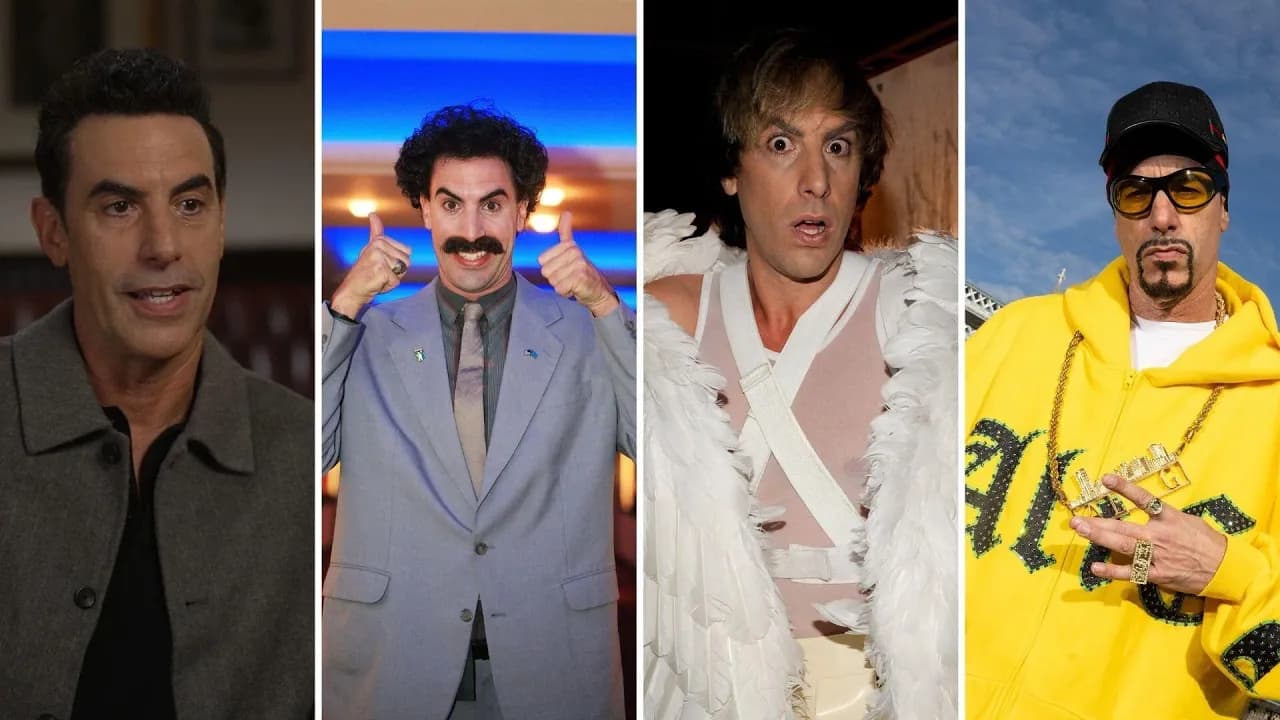
Sasha Baron Cohen has built his entertainment career by becoming unrecognizable as Borat, Bruno, and Ali G, using these characters to expose people's real beliefs. At 55, Baron Cohen has been doing undercover comedy for more than half his life, with increasing complexity, moral stakes, and physical danger requiring trap doors and getaway vans. He combines being a mission-driven public intellectual with being an adrenaline junkie who invented his own comedy genre.
Baron Cohen experimented with the Ali G character for years before its debut. The prototype was an upper-class kid using the same catchphrases as Ali G. He tested this character among skateboarders in London while hosting a youth culture show on cable, pretending to skateboard terribly before revealing he was a character. The head boss threatened to fire him if he tried it again, which confirmed he was onto something.
The core idea of Ali G was to juxtapose the world expert in something with the biggest idiot in the world. This debuted on a satirical late night talk show in 1998, leading to the Ali G show, an HBO series, and a feature film. Ali G is described as a white imbecile and hip-hop journalist who wants to be a black rapper.
After more than 20 years in remission, Ali G returned in a new movie. Baron Cohen grew up in Northwest London as the youngest of three boys, son of a fitness instructor and an accountant. His mother had a distinctive voice that everyone in high school could imitate. He had a passion for break dancing and early hip-hop, providing entertainment for his own bar mitzvah.
Baron Cohen studied history at Cambridge University where he discovered the stage, realizing he loved making people laugh and cry. His parents thought becoming an actor was ridiculous and an impossibility. He pursued his goal by studying with Philippe Gaulier, described as the Stanislavski of clowns, whose idea of clown was the stupidest creature that can ever be on stage.
Baron Cohen brought his training to Borat, the beloved bumbling anti-semite Kazakh reporter who toured America in 2006. The movie made $260 million and showed both the kindness of people and exposed layers of hate and bigotry. Baron Cohen meticulously plans ahead for these projects, with teams behind the scenes selecting interview subjects.
The encore to Borat was Bruno, a flamboyant fashion reporter who wanted to become the biggest Austrian superstar since Hitler. The movie was conceived as a gay romcom ending with a kiss in a cage match to see if the crowd would become violent.
Baron Cohen earned Golden Globes, BAFTA awards, and Oscar nominations for Borat and his dramatic role as 60s activist Abbie Hoffman in The Trial of the Chicago 7. He played Israeli Mossad agent Eli Cohen in The Spy and starred opposite Will Ferrell as French NASCAR driver Jean Girard in Talladega Nights. Peter Sellers remains his favorite comedian of all time.
In his new movie Ali G, Who is I?, Baron Cohen plays a deranged leftist professor and a former Mossad agent interacting with unsuspecting strangers to expose extremism at both ends of the political spectrum. The movie examines conspiracies and lies, testing whether intelligent people who believe in race replacement theory could be turned into murderers within hours.
Baron Cohen is trying to show that democracies depend on shared truths while autocracies survive on shared lies. His primary objective is to make people laugh really hard while smuggling in satire that makes audiences think after leaving the theater.
In the early 90s, Pep Rosenfeld and Andrew Moskow, recent Northwestern grads struggling in Chicago's comedy scene, decided to open an English-language improv club in Amsterdam. Despite the Netherlands not being known for comedy, and the tourist board advising against it, they proceeded with the idea. They named it Boom Chicago after their hometown.
The founders found a stage in the back of a bar, eventually moving to their own theater. They recruited talent from Chicago, hiring recent Northwestern grads including Seth Meyers and Peter Grosz. The club performs six shows a week with comedians committing to one-year minimum contracts. Business finances were initially kept in a boot before evolving into a multi-million dollar operation.
Boom Chicago emphasizes avoiding cheap jokes and cultural references that don't translate, instead focusing on universal concepts and themes. The club now teaches improv to more than 200 students through its Comedy Academy. Alumni include Seth Meyers, Jordan Peele, Amber Ruffin, and Jason Sudeikis.
Seth Meyers developed a touring show at Boom Chicago that caught Saturday Night Live's attention. Brendan Hunt became obsessed with European soccer at Boom, leading to the development of Ted Lasso with Jason Sudeikis and Joe Kelly. The club's rule was to make fun of themselves first before making fun of other countries.
One of Boom Chicago's biggest revenue sources is global corporate events combining banter with business. The business formed in the 90s now generates millions annually. An alumni reunion was held in June, bringing back former cast members to perform.
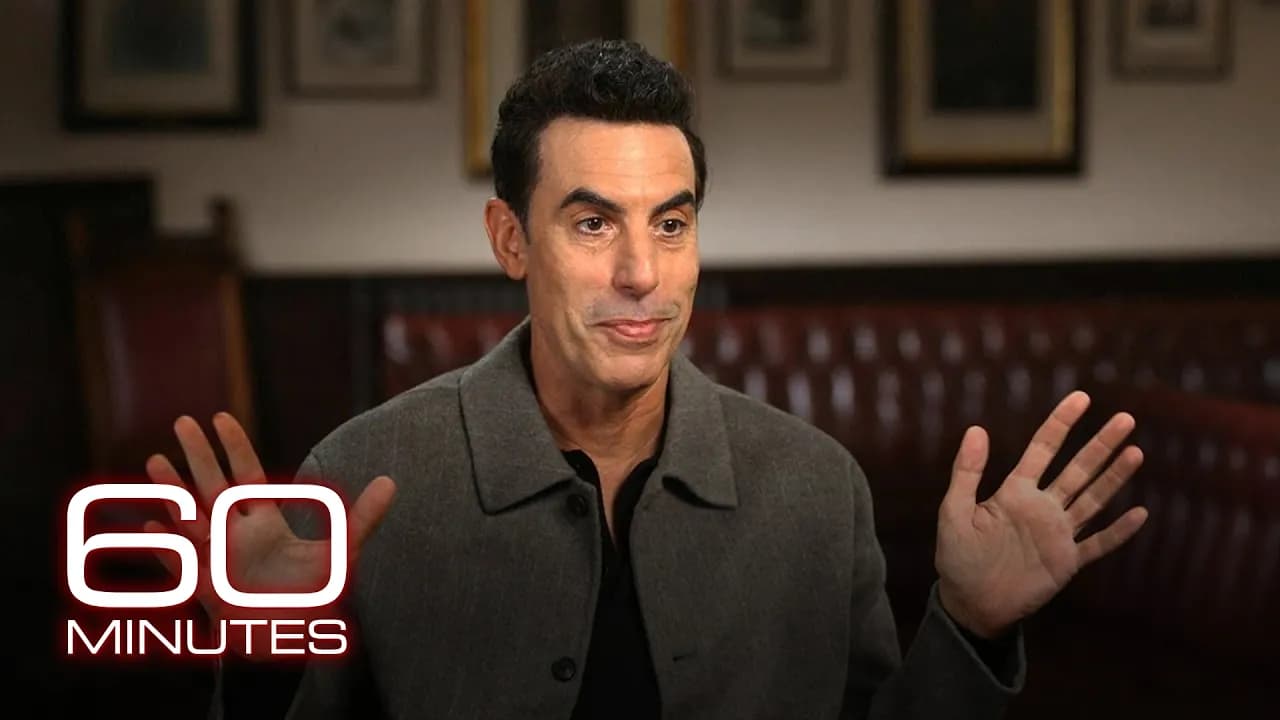
At 48 years old, John Oliver has won 21 Emmy awards, three Peabodies, and was named one of Time magazine's 100 most influential people. His show Last Week Tonight is in its 12th season on HBO. The segment transitions to exploring how a British-born middle-class grade school cutup became one of America's sharpest comedians, beginning in Edinburgh, Scotland.
Every August, Edinburgh hosts the world's largest performing arts festival known as the Fringe. The month-long event features artists from 60 countries performing nearly 4,000 shows with no act turned away. The festival embraces both great performances and "otherworldly bad" ones, as the coexistence of both is considered the point of the event.
John Oliver first performed standup at the Fringe as a 20-year-old studying English at Cambridge University. After his first performance, he immediately wanted to do it again, describing the experience as addictive. He returned year after year and performed on the Royal Mile, a cobblestone street that becomes a competitive marketplace for attention. Oliver recalls having to "almost beg for people to come and see you" when first starting out.
Oliver considers the 55-seat venue called Pleasants Below to be his "comedic Waterloo." During one performance, he planned to do an hour-long show for just four audience members. Ten minutes into the show, two people walked out, followed by a third, leaving only one woman. When she began reaching for her bag, Oliver asked if she was leaving. She confirmed she was, leaving Oliver alone with only the sound technician. When asked if he wanted to continue, Oliver declined, questioning whether the technician meant the show or his career.
Oliver initially just wanted to make people laugh, but later shifted to making people laugh about things he cared about, particularly politics in its broadest form. He describes this transition as feeling like a worthwhile risk that ultimately worked. On his HBO show, his unique political perspective distinguishes him from other comedians. He frequently covers topics like hospice care, bail reform, and organ donations, noting that while these subjects aren't inherently funny, comedy can be the best way to illuminate entrenched problems.
John Oliver grew up in the suburbs of Birmingham, England, where his father was a school principal and his mother was a music teacher. As a young comedian, he was drawn to The Daily Show and sent a sample of his work in 2006, leading to an audition. His audition tape shows him riffing with Jon Stewart about Vice President Dick Cheney shooting a friend during a quail hunt. Oliver was hired immediately and worked on the show for seven years.
When Jon Stewart stepped away in 2013 to direct a movie, Oliver was chosen as his replacement. On his first day hosting, the Edward Snowden news broke. His performance caught HBO's attention, leading to his own show with complete creative freedom. Oliver recruited Tim Carvell, head writer at The Daily Show, and comedy producer Liz Stanton to join him. They received the 11:00 p.m. Sunday slot following Game of Thrones.
Oliver created a segment about Supreme Court Justice Clarence Thomas's undisclosed gifts from wealthy friends and a favorable motor coach deal. Oliver offered Thomas a new motor coach plus $1 million annually from his own pocket if Thomas would resign from the Supreme Court. The segment aimed to demonstrate the lack of guardrails on gifts to Supreme Court justices, arguing that the fact such an offer isn't illegal reveals a systemic problem.
Oliver's staff of 83 includes former journalists and comedy writers who produce 30 shows annually. Each main story begins with hundreds of pages of research. The team creates outlines and scripts that are tested at table reads, followed by rehearsals with last-minute changes and legal review before taping. Oliver often closes shows with zany segments to balance serious topics. Liz Stanton oversees elaborate productions, noting they avoid discussing costs.
Oliver has criticized both political parties, including Biden's immigration policies which he described as "haphazard at best." He explicitly told viewers not to vote for Donald Trump, acknowledging this as a partisan position while hoping his show speaks to Trump voters about systemic problems that predate and may outlast recent presidents.
Oliver became a U.S. citizen after immigrating and married an Iraq War veteran who served as a medic in the U.S. Army. They have two American children. Despite frequently poking fun at America, Oliver argues that criticism can stem from love and a desire for improvement rather than indicating a lack of affection for the country.
Kevin Hart received the Mark Twain Prize for American Humor in March at age 44. His comedy is conversational rather than controversial, featuring personal stories about his wife, four children, insecurities, and shortcomings. Hart is the highest-grossing comedian, selling out arenas and occasionally football stadiums worldwide.
Hart confirmed his height as 5'5" with sneakers, or 5'5" and a half with boots. He frequently jokes about his height, including a story about his wife watching "tall people porn" featuring men over six feet tall performing everyday tasks like changing light bulbs and hanging paintings.
Developing an hour-long comedy special takes Hart 8-9 months of work. He returns to small comedy clubs to test material with writers Harry Ratchford and Joey Wells, who capture his ideas in bullet points rather than full sentences. Hart prefers working from a dismantled mental picture rather than a polished script, allowing him to figure out material in real time.
Hart requires audiences to surrender phones during performances to prevent recording of unpolished material. He explains that while 90% of his content may be strong, the remaining 10% might not be ready for documentation.
Hart's closest collaborators include Harry Ratchford, Joey Wells, Will "Spank" Horton, and Naim Lynn, collectively known as the Plastic Cup Boys. Ratchford focuses on joke structure while Wells concentrates on making material funnier.
Hart grew up in North Philadelphia with his mother Nancy and brother Robert in a one-bedroom apartment. His mother meticulously planned his schedule, requiring him to redo rushed homework and reread books when he skipped pages. Hart credits his mother's strict oversight with developing his drive and discipline.
Hart's father Henry Witherspoon struggled with drug addiction and was frequently incarcerated. In a 2011 special "Laugh at My Pain," Hart described his father appearing high at spelling bees and making disruptive noises. Despite his struggles, Witherspoon wanted to see his sons and once ran away upon seeing Hart on the subway because he was ashamed of his condition. Hart eventually helped his father get clean before his death in 2022.
Hart began performing standup at 18, taking gigs at bowling alleys, cabarets, and strip clubs. He recalls performing at a strip club where an audience member expressed disgust at his career choice. In 2003, Hart believed he had achieved success with ABC's "The Big House," but the show was cancelled before airing, with the news delivered by a backstage microphone operator rather than network executives.
The rejection of "The Big House" motivated Hart to take control of his career rather than depend on others' decisions. He founded Heartbeat Productions, now valued at over $650 million, and began creating his own standup specials. He markets himself aggressively through social media and has expanded into multiple business ventures.
Hart owns a nutrition supplement company, a fast food chain, a tequila brand, and a $100 million venture capital fund. Heartbeat Productions is worth more than $650 million. Hart positions himself as an investment and studio rather than just a comedian, preferring partnerships over work-for-hire arrangements. He aims to create new norms for entertainers by understanding how to be the business rather than just participating in it.
Keep 60 Minutes in your library
Save the videos and channels worth coming back to, and find them again in one place.